Trainbike46
Established Member
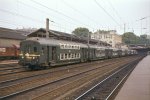
Both HS1 and HS2 (mostly*) have a European loading gauge. NPR/HS3, if it is built, would likely follow that too - though any trains that use it would be completely incapable of operating or even fitting on classic infrastructure.As you’ll see from my original post, I recognised the huge impracticalities for providing double deck trains in the UK. However that wasn’t the question, I asked whether some routes might have been costed such that they could be compared to the cost of others, because some routes might lend themselves better than others to the principle. Okay, it might be out of the question for anywhere at all, but just because it hasn’t been done before, does that make it right to dismiss it completely for any new (or perhaps one or two existing) railways?
For example, there is talk about a new route for Manchester to Liverpool. If this goes ahead - especially given that it could serve the airports for both these cities - it could become very popular with associated capacity issues at certain times. It would be a shame if double deck trains were to be dismissed without proper consideration, for a new route which might benefit from such trains. Think of HS2 - much criticism was made by badly informed journalists who said it wouldn’t be worth the huge expense of trains running at 225mph, when in fact the marginal cost of doing so wasn’t all that great, once a new line was being built. Similarly, perhaps the marginal cost of making the new Manchester to Liverpool route sufficient to accommodate double deck trains, might be worthy of consideration? (Apologies if this point has previously been discussed and I’ve missed it).
*HS1 domestic platforms have standard UK platforms, which foul the lower end of the loading gauge. International platforms do comply, which is why Eurostar can use the European-sized class 374, and double-deck TGVs are under consideration for new cross-channel trains