• Our new ticketing site is now live! Using either this or the original site (both powered by TrainSplit) helps support the running of the forum with every ticket purchase! Find out more and ask any questions/give us feedback in this thread!

Do You Agree With Ticket Barriers?

Do you agree with ticket barriers?

  • Yes, they are a good idea everywhere

    Votes: 55 35.7%
  • Yes, they are a good idea, but only in suburban/tube networks

    Votes: 74 48.1%
  • No

    Votes: 25 16.2%

  • Total voters
    154
Status
Not open for further replies.

Old Timer

Established Member
Joined
24 Aug 2009
Messages
3,702
Location
On a plane somewhere at 35,000
Then either simplify the fares for the benefit of passengers and staff. Or employ more staff to check tickets.

My basic point is that we now have a 'toxic' mix of:
  • more complicated fares
  • ticket barriers being guarded by one company with tickets being used for another
  • isolated incidence of valid ticket rejection
  • two specific personal instances of staff not trained properly
In this case I would agree with you.

It seems to me that the whole barrier issue lacks central strategic leadership and direction, and if this is not the case then such leadership is sadly lacking.
 
Sponsor Post - registered members do not see these adverts; click here to register, or click here to log in
R

RailUK Forums

yorkie

Forum Staff
Staff Member
Administrator
Joined
6 Jun 2005
Messages
78,367
Location
Yorkshire
Many advance tickets with very low fares, have prohibitions on break of journey and so could never be used. The terms and Conditions of issue of such tickets quite clearly state you cannot break journey.
Where does break of journey (BOJ) - as defined in the National Rail Conditions of Carriage - come into it?

The only way that barriers could be used to enforce BOJ is if the ticket office had windows that faced outside the station premises, and barriers existed at station entrances, and all the facilities were inside the barriers. Such an arrangement may occur at some stations but I am struggling to think of any.
 

Old Timer

Established Member
Joined
24 Aug 2009
Messages
3,702
Location
On a plane somewhere at 35,000
In terms of changing platforms, going from any other platform at Cardiff Central to platform 0 is one example. I am not 100% sure of any other examples, although I do seem to remember having to go through barriers to change platforms at london liverpool street too (though I could be mistaken on that one). And at London waterloo thinking of it....
A properly designed and implemented system would work without issue. They do elsewhere. I cannot believe that the UK would be so arrogant as to not look towards the systems in use elsewhere in the world.....then again on second thoughts.....

What do you mean "could never be used"? Going through the barriers to access station facilities does not equal a break of journey..
A break of journey is exactly what it says, a break in your journey. This occurs when you leave the train you are travelling on. There are many tickets where a specified train and connections must be used. The only break of journet permitted is between trains at a junction station - in which case it would be in order to use the facilities, but as I said many junction stations have facilities within the barrier line for that very reason.

....But what I am saying is that there is nothing staff or barriers can do if you tell them you are going through the barriers to access station facilities. Once you are through the barriers - you can just walk out. I am not encouraging doing this, or suggesting it. But it is easily possible..
If the ticket does not permit a break of journey then it is being used outside of its validity and thus the full fare from origin is payable. This would be undertaken at the barrier line.

In the event that the ticket were available for a break of journey but not for early termination, then to walk away when you have stated you were going to use the facilities is an immediate prima facie S5 and thus you can be stopped and detained.

...Perhaps, but are those rejection codes accurate? I am not sure, so it would be nice to have someone who is in the know with them to say. Certainly I have had tickets rejected on quite a few occasions for no reason I could tell.....
Why should they not be accurate ? In any case an inspection of the ticket will indicate if it is valid or if it is not. Simples.

...But it is a problem. Indeed I will give you an example.
Going from Treherbert to Cardiff central, if you break your journey at Cathays, the barriers WILL swallow the ticket. Speak with the guard? What evidence would you have that you actually had a ticket in the first place (or that the ticket you had is what you are claiming you had).
.
Why should it be a problem ???? If you are telling the truth then the ticket will be within the machine.....Again Simples

...I am very surprised to see someone try to claim a barrier wrongly swallowing a passengers ticket is not a problem..
The ticket can be recovered, or if not then a free excess can be issued to allow the journey to proceed upon providing a name and address - which would of course be verified.


Why is it that the people of the UK always start from a negative position on absolutely everything ?

It is so nice to work with Non-UK people. They are more positive and look to the benefits and positives first and foremost. This is probably why the UK has lost its lead in many areas.
 

yorkie

Forum Staff
Staff Member
Administrator
Joined
6 Jun 2005
Messages
78,367
Location
Yorkshire
A break of journey is exactly what it says, a break in your journey. This occurs when you leave the train you are travelling on.
I will take that as an old definition but this is not the nostalgia section (I know I've said this before, but I'd love to hear more about how things used to be - but in that section - from you as I do find it fascinating and interesting to compare!)

The current definition is:

For the purposes of this Condition and Condition 11, you will be treated as breaking your journey if you leave a Train Company’s or Rail Service Company’s stations after you start your journey other than:

(i) to join a train at another station, or
(ii) to stay in overnight accommodation when you cannot reasonably
complete your journey within one day, or
(iii) to follow any instructions given by a member of a Train Company’s staff.

If you don't leave a station then the journey has not been broken, by definition.
 

Old Timer

Established Member
Joined
24 Aug 2009
Messages
3,702
Location
On a plane somewhere at 35,000
Where does break of journey (BOJ) - as defined in the National Rail Conditions of Carriage - come into it?

The only way that barriers could be used to enforce BOJ is if the ticket office had windows that faced outside the station premises, and barriers existed at station entrances, and all the facilities were inside the barriers. Such an arrangement may occur at some stations but I am struggling to think of any.
The poster was suggesting that the barriers would in effect not stop someone terminating short on a prohibited ticket.

My argument is that the barrier would recognise the ticket as not being valid for exit and would therefore reject the exit. Thus a break of journey as suggested by the poster would be picked up.

Clearly this will only apply when a person tries to exit at a barrier. If they break journey and stay within the barrier however and travel on a later train then the Guard will recognise that the ticket is not valid on that service.

Certain advance tickets specify particular services to be used, which is the example I was discussing. Most advance tickets, but not all I accept, come I suspect come with designated trains services and/or seats.

In the case of a passenger terminating short then there is no dispute.
 

yorkie

Forum Staff
Staff Member
Administrator
Joined
6 Jun 2005
Messages
78,367
Location
Yorkshire
The poster was suggesting that the barriers would in effect not stop someone terminating short on a prohibited ticket.
That is correct, at the vast majority of stations.
My argument is that the barrier would recognise the ticket as not being valid for exit and would therefore reject the exit. Thus a break of journey as suggested by the poster would be picked up.
Only if the customer stated intent to exit the station, rather than use facilities.
Clearly this will only apply when a person tries to exit at a barrier. If they break journey and stay within the barrier however and travel on a later train then the Guard will recognise that the ticket is not valid on that service.
If they do not exit the station (let alone pass through a barrier) then the passenger can not be " treated as breaking [their] journey"
 

Old Timer

Established Member
Joined
24 Aug 2009
Messages
3,702
Location
On a plane somewhere at 35,000
That is correct, at the vast majority of stations.

Only if the customer stated intent to exit the station, rather than use facilities.

If they do not exit the station (let alone pass through a barrier) then the passenger can not be " treated as breaking [their] journey"
If they fail to travel on the specified service, or they terminate short where this is prohibited then there is no debate. NCoC Clause 10/12
 
Last edited:

WelshBluebird

Established Member
Joined
14 Jan 2010
Messages
5,599
A properly designed and implemented system would work without issue. They do elsewhere. I cannot believe that the UK would be so arrogant as to not look towards the systems in use elsewhere in the world.....then again on second thoughts.....

I agree. But we do not have a properly designed and implemented system in the UK. And will never have one probably.

A break of journey is exactly what it says, a break in your journey. This occurs when you leave the train you are travelling on. There are many tickets where a specified train and connections must be used. The only break of journet permitted is between trains at a junction station - in which case it would be in order to use the facilities, but as I said many junction stations have facilities within the barrier line for that very reason.

As far as I am aware, you have to leave the station for it to be a break of journey. And many stations have facilities outside the barrier line. Quite a lot actually.

If the ticket does not permit a break of journey then it is being used outside of its validity and thus the full fare from origin is payable. This would be undertaken at the barrier line.

I agree. But my point is that if the person just claims they are going to use the station facilities past the barrier, then what can be done?

In the event that the ticket were available for a break of journey but not for early termination, then to walk away when you have stated you were going to use the facilities is an immediate prima facie S5 and thus you can be stopped and detained.

While technically you are right, at a busy station (that may not have any staff if you had your way), who would be there to stop the person? In reality, a person who has passed the barriers "to use the station facilities", can just walk out of the station.

Why should they not be accurate ? In any case an inspection of the ticket will indicate if it is valid or if it is not. Simples.

Because it is clear the barriers used in many stations do not work correctly.

Why should it be a problem ???? If you are telling the truth then the ticket will be within the machine.....Again Simples

And if there are no staff at the station to check?
Or what if it is a type of barrier that just dumps the ticket into a bin (that then becomes next to impossible to recover).

The ticket can be recovered, or if not then a free excess can be issued to allow the journey to proceed upon providing a name and address - which would of course be verified.

As above, with some barriers recovering the ticket can be quite difficult.
And if the station is not manned, who is going to recover the ticket, and how would you verify a ticket found is that persons?

Why is it that the people of the UK always start from a negative position on absolutely everything ?

I am not. I just do not think barriers at every station is a workable solution.
 

yorkie

Forum Staff
Staff Member
Administrator
Joined
6 Jun 2005
Messages
78,367
Location
Yorkshire
If they fail to travel on the specified service, or they terminate short where this is prohibited then there is no debate. NCoC Clause 10/12
But in many cases to enforce that, you would need to place all the station facilities within the barriers, so that passing through the barrier equates to exiting the station. There is no way for barrier staff (or a computer) to know if a customer who is passing through that barrier, is going to use station facilities or not.

For example a passenger could pass through the barriers at Leeds, and go to Wetherspoon, have a meal in their 'beer garden' (if you can call it that!) and be valid. However if they stepped a foot outside the beer garden and onto the street outside the station premises, then they would be technically invalid (if their ticket prohibited BOJ and this was made clear in the train companies notices and publications, as per the NRCoC) and an excess fare could be charged. I await the day when a team of RPIs turns up at Wetherspoons, M&S and all the other outlets at the perimeter of Leeds station, asking people who step out of the confines of the station if they are ticket-holders and if they are, asking to see if they are breaking their journey or not. It seems unlikely to me.
 

WelshBluebird

Established Member
Joined
14 Jan 2010
Messages
5,599
My argument is that the barrier would recognise the ticket as not being valid for exit and would therefore reject the exit. Thus a break of journey as suggested by the poster would be picked up.

But what if the person says they are just exiting the barrier to access the station facilities?
Surely the staff cannot stop that?
So the person goes through the barriers.
Then instead of going to the the station shop or whatever, just walks straight out.
Or what about where "station facilities" (such as cash points as that seems a common one) are technically outside of the station (if you are at Cardiff Central, Or Exeter St Davids, and what to get money out, then you have to "leave" the station).
 

yorkie

Forum Staff
Staff Member
Administrator
Joined
6 Jun 2005
Messages
78,367
Location
Yorkshire
I agree. But my point is that if the person just claims they are going to use the station facilities past the barrier, then what can be done?
In theory, follow them to the facility the customer is visiting (e.g. Wetherspoon at Leeds), watch them go about their business (e.g. they may have a meal), and if they take a step onto the street, ask for an excess fare to be paid.
--- old post above --- --- new post below ---
But what if the person says they are just exiting the barrier to access the station facilities?
Surely the staff cannot stop that?
So the person goes through the barriers.
Then instead of going to the the station shop or whatever, just walks straight out.
Well, they could follow them and if they walk straight out, they could then request payment of an excess fare. If they used facilities, as described above it could be quite a time consuming exercise. I believe current staffing levels are not adequate to do this, and I believe a business case to increase staffing levels to allow this enforcement of BOJ restrictions would be unlikely to have a positive cost:benefit ratio, especially at a time when it is proposed to reduce staff.
 

WelshBluebird

Established Member
Joined
14 Jan 2010
Messages
5,599
In theory, follow them to the facility the customer is visiting (e.g. Wetherspoon at Leeds), watch them go about their business (e.g. they may have a meal), and if they take a step onto the street, ask for an excess fare to be paid.

Well, they could follow them and if they walk straight out, they could then request payment of an excess fare. If they used facilities, as described above it could be quite a time consuming exercise.

Of course, that is not at all realistic.
And it assumes the station is staffed.
The reality is that staffing levels need to be higher to stop such things (rather than using things like barriers to reduce staffing levels).
And station layouts really do not help it either.

My point wasn't really to go into how the railway can stop certain types of fare evasion or whatever, more than barriers alone would have no chance in stopping people from certain types of fare evasion, and so those who think they are the best thing since sliced bread probably need to look again.
 
Last edited:

Tomonthetrain

Established Member
Joined
12 Jul 2011
Messages
1,290
I agree. But my point is that if the person just claims they are going to use the station facilities past the barrier, then what can be done?
In theory, follow them to the facility the customer is visiting (e.g. Wetherspoon at Leeds), watch them go about their business (e.g. they may have a meal), and if they take a step onto the street, ask for an excess fare to be paid.
--- old post above --- --- new post below ---
But what if the person says they are just exiting the barrier to access the station facilities?
Surely the staff cannot stop that?
So the person goes through the barriers.
Then instead of going to the the station shop or whatever, just walks straight out.
Well, they could follow them and if they walk straight out, they could then request payment of an excess fare. If they used facilities, as described above it could be quite a time consuming exercise. I believe current staffing levels are not adequate to do this, and I believe a business case to increase staffing levels to allow this enforcement of BOJ restrictions would be unlikely to have a positive cost:benefit ratio, especially at a time when it is proposed to reduce staff.

Then we would see a case in Human Rights court on breeches of privacy/something stupid.
 

Old Timer

Established Member
Joined
24 Aug 2009
Messages
3,702
Location
On a plane somewhere at 35,000
My point wasn't really to go into how the railway can stop certain types of fare evasion or whatever, more than barriers alone would have no chance in stopping people from certain types of fare evasion, and so those who think they are the best thing since sliced bread probably need to look again.
Barriers will stop most forms of fare evasion, and I speak as someone with considerable experience in the field, albeit many years back. I trust you will aver to my greater experience ?

In addition I have given you very clear examples of how this can be done. I have pretty much covered all of the various scenarios, although not all.


Then we would see a case in Human Rights court on breeches of privacy/something stupid.
You have no right to privacy in respect of criminal act.


But what if the person says they are just exiting the barrier to access the station facilities?
Surely the staff cannot stop that?
So the person goes through the barriers.
Then instead of going to the the station shop or whatever, just walks straight out.
Or what about where "station facilities" (such as cash points as that seems a common one) are technically outside of the station (if you are at Cardiff Central, Or Exeter St Davids, and what to get money out, then you have to "leave" the station).
The rules on break of journey are quite clear. They are accepted by the passenger when they purchase the ticket. It is irrelevant that someone may want to go to the bank or go shopping. They have agreed to a set of terms and conditions to permit them to benefit from that afre. Where it restricts a break of journey then they should not expect to be allowed to break journey.

Fare eavsion is a criminal offence and a person may be followed and detained under S5 of the 1889 Act.

It is not unusual and has been successfully done previously with successful prosecutions.

Plain clothes operations do occur and can and do involve a lot more than this. I am not aware of any of those operations ever losing a case. Certainly I never lost one.
 
Last edited:

WelshBluebird

Established Member
Joined
14 Jan 2010
Messages
5,599
Barriers will stop most forms of fare evasion, and I speak as someone with considerable experience in the field, albeit many years back.

In addition I have given you very clear examples of how this can be done. I have pretty much covered all of the various scenarios, although not all.

You haven't answered how barriers would stop what I said.
If the person has to pass the barriers in order to get to station facilities (which is the case in many many stations), then surely someone who wants to end their journey early or break their journey against their tickets restrictions could just claim they are going to use the station facilities? The only way you could "catch" then is if you then see them leaving the station. Something that would not likely be possible when the station is busy, or if the station is unmanned.
--- old post above --- --- new post below ---
The rules on break of journey are quite clear. They are accepted by the passenger when they purchase the ticket. It is irrelevant that someone may want to go to the bank or go shopping. They have agreed to a set of terms and conditions to permit them to benefit from that afre. Where it restricts a break of journey then they should not expect to be allowed to break journey.

Fare eavsion is a criminal offence and a person may be followed and detained under S5 of the 1889 Act.

It is not unusual and has been successfully done previously with successful prosecutions.

Plain clothes operations do occur and can and do involve a lot more than this. I am not aware of any of those operations ever losing a case. Certainly I never lost one.

Yes, I am aware of all that.
However, where station facilities are passed the barrier line, then all the person has to be is claim to be going to the facilities there.
Of course, you can follow people. But how likely is that in a busy station (where those at the gate cannot see the station exit, and don't have the time to follow the person around the station)? And how on earth is it possible at an unmanned station?
Indeed, your answers to this problem prove that barriers do not solve it (because you are suggesting following people - which involves high levels of staff being present).
Barriers are not this magical thing you seem to think they are in terms of preventing fare evasion. Yes, they help for some types of fare evasion. But there are some types (like what I have suggested), where they do not help. And certainly, the issues related with them mean they defiantly should not be used at unmanned stations. The real answer to stopping fare evasion is, as I have hinted at, higher staffing levels alongside the use of barriers and such things. Barriers alone are not the answer.
 
Last edited:

Lampshade

Established Member
Joined
3 Sep 2009
Messages
3,777
Location
South London
Normally I wouldn't say anything personal such as this but Old Timer, your views are draconian and extreme, this is the railway, not HM Prison Service.
 

sonic2009

Established Member
Joined
19 Jan 2010
Messages
5,048
Location
Crewe
Ticket Barriers are going in a Gloucester with the Ticket Office Rrfurb. Also the Depot employing ticket examiners. I agree renvue is lost around this area.
 

Old Timer

Established Member
Joined
24 Aug 2009
Messages
3,702
Location
On a plane somewhere at 35,000
You haven't answered how barriers would stop what I said.
If the person has to pass the barriers in order to get to station facilities (which is the case in many many stations), then surely someone who wants to end their journey early or break their journey against their tickets restrictions could just claim they are going to use the station facilities? The only way you could "catch" then is if you then see them leaving the station. Something that would not likely be possible when the station is busy, or if the station is unmanned.
The ticket then becomes invalid. They would not be allowed to pass the barrier until they have been excessed to the full single fare or indeed cautioned and reported under S5.

Scenario for you.

Unnamed station former BR London Division.

Passenger arrives off a train which started from London and presents themselves at the barrier with a ticket from London to the station in question.

The station however is shown as a stop to "pick up only". That is the station is not available for alighting passengers.

Passenger is refused exit and is charged the single fare from Euston to the first calling point of the train. This is on the basis that the ticket was not valid on that service as the train was not calling. Covered in the NCoC.

A good example of terminating short is the megatrain ticket. This expressly prohibits the journey being ended short and prohibits a break of journey except to use connecting services.

If a person presents themselves at a barrier with one of these or similar, then the excess regulations are quite clear. Its the full fare from origin. Indeed it could well be argued that the correct action would be a S5 caution, and it would be if the right question was answered in the honest manner. We have however documented evidence on this site of at least one person proposing to do so in order to avoid paying the higher fare to the intermediate station.


Normally I wouldn't say anything personal such as this but Old Timer, your views are draconian and extreme, this is the railway, not HM Prison Service.
I am merely pointing out the correct position and the various conditions of carriage.

People enter into an agreement with the Railway when they buy a ticket. I have never met anyone who was dragged off the street under gunpoint and forced to buy a ticket and travel.

Passengers expect the Railway to honour their committments why should it be that the passengers committments are a one way street when it does not suit ?

Why is it extreme to point out such things ?

 
Last edited:

WelshBluebird

Established Member
Joined
14 Jan 2010
Messages
5,599
The ticket then becomes invalid. They would not be allowed to pass the barrier until they have been excessed to the full single fare or indeed cautioned and reported under S5.

But what if they had already gone past the barrier? (Their ticket was rejected by the barrier, but they were let through because they were "going to the station facilities").

Scenario for you.

Unnamed station former BR London Division.

Passenger arrives off a train which started from London and presents themselves at the barrier with a ticket from London to the station in question.

The station however is shown as a stop to "pick up only". That is the station is not available for alighting passengers.

Passenger is refused exit and is charged the single fare from Euston to the first calling point of the train. This is on the basis that the ticket was not valid on that service as the train was not calling. Covered in the NCoC.

Well of course. That is obvious because, as you have said, the station is not for alighting passengers. But that is not what we are talking about.

A good example of terminating short is the megatrain ticket. This expressly prohibits the jourmey being ended short and prohibits a break of journey except to use connecting services.

If a person presents themselves at a barrier with one of these or similar, then the excess regulations are quite clear.

You are assuming presenting yourself at the barrier equals exiting the station. It doesn't. On an off peak return from Treherbert to Barnstaple, that does not allow break of journey on the outward leg, I am perfectly allowed to go through the barriers at Cardiff Central (where I have to change trains anyway) in order to go to the WHSmith / Spar / M&S / whatever there (or obviously if I was going to platform 0, to go onto that platform as you have to pass the barriers in order to do so). Of course, I am not allowed to exist the station, but if I am just using the station facilities then I have not exited the station, so I have not broke my journey. My initial point was that someone could use this to their (criminal) advantage by claiming they are going to the WHSmith or whatever, but instead leave the station. Of course, it is still fare evasion. But barriers do not stop that kind of fare evasion.
 

Old Timer

Established Member
Joined
24 Aug 2009
Messages
3,702
Location
On a plane somewhere at 35,000
But what if they had already gone past the barrier? (Their ticket was rejected by the barrier, but they were let through because they were "going to the station facilities").


Well of course. That is obvious because, as you have said, the station is not for alighting passengers. But that is not what we are talking about.


You are assuming presenting yourself at the barrier equals exiting the station. It doesn't. On an off peak return from Treherbert to Barnstaple, that does not allow break of journey on the outward leg, I am perfectly allowed to go through the barriers at Cardiff Central (where I have to change trains anyway) in order to go to the WHSmith / Spar / M&S / whatever there (or obviously if I was going to platform 0, to go onto that platform as you have to pass the barriers in order to do so). Of course, I am not allowed to exist the station, but if I am just using the station facilities then I have not exited the station, so I have not broke my journey. My initial point was that someone could use this to their (criminal) advantage by claiming they are going to the WHSmith or whatever, but instead leave the station. Of course, it is still fare evasion. But barriers do not stop that kind of fare evasion.
This is why barriers always need to be manned by at least one person. The purpose of the barrier is to highlight invalid tickets. It is then for the member of staff to apply the appropriate course of action, relative to the reason for the ticket being rejected or alarming.
 

WelshBluebird

Established Member
Joined
14 Jan 2010
Messages
5,599
This is why barriers always need to be manned by at least one person. The purpose of the barrier is to highlight invalid tickets. It is then for the member of staff to apply the appropriate course of action, relative to the reason for the ticket being rejected or alarming.

But earlier you were arguing for the use of barriers at unmanned stations?
I agree barriers always need to be manned. Indeed, it is one of the things I was initially saying.
 

krisk

Member
Joined
24 Mar 2011
Messages
347
Seeing some of the blatant fare evasion I see on a regular basis, every medium to large station should have ticket checking staff but not barriers/gates. Barriers on local / suburban stations fine but bring back staff to man every platform entrance so that the ticket you are using to board that train is valid.

As an example, Piccadilly platforms 1 - 12, local TOCS use revenue staff to barrier their platform. Want to travel on a local service, walk down a platform with a Virgin / XC service in, up onto the footbridge and back down onto the platform you want for your local train home. Guard on that train knows all tickets have been checked at Piccadilly and there you have a free ride. If I have thought of that then so will other people.

There is no easy solution to fare evasion other than making the fines for ticketless travel much higher?
 

scrapy

Established Member
Joined
15 Dec 2008
Messages
2,304
That's the problem. Many stations cannot be defined as either intercity or suburban. Manchester Piccadilly is a prime example. Local services use the same platforms as long distance services so it would not even be possible to barrier just all local platforms. However many long distance trains also act as local commuter services (Virgin/XC to Stockport, Macclesfield & Wilmslow, TPE to Stalybridge or Bolton or example).
 
Joined
17 Apr 2011
Messages
190
Why is it that the people of the UK always start from a negative position on absolutely everything ?

Couldn't agree with you more about that!

I've read the many faniciful scenarios of how the barriers won't work (having a meal in Wetherspoons and then leaving was a particular lowlight), but just because barriers may not prevent 100% of fare evasion, does that mean they shouldn't be used for the other 90%?

As I previously wrote, the majority of fare evasion can be stopped by simply asking someone to buy a ticket! Is anyone seriously suggesting London Underground should be barrierless? Whenever I visit London the system seems to work pretty well. The only significant queues are in buying a ticket at busy terminal station. I usually get round this by asking for an Underground Day Ticket when buying my rail tickets to London.

I think the majority of people support barriers because nobody likes to see fare dodgers (even though they may be one and the same person depending on whether they feel they need to buy a ticket).
 

lemonic

Member
Joined
17 Sep 2010
Messages
497
I think the majority of people support barriers because nobody likes to see fare dodgers (even though they may be one and the same person depending on whether they feel they need to buy a ticket).

I agree that nobody likes to see fare dodgers. However, I disagree that this leads the majority of people to support barriers. Barriers are an inconvenience for many, which delay entrance/exit at stations and can potentially prevent people from waving people off. Thorough and regular on-board ticket checks are often an option, which can also be an active deterrent to fare dodgers.
 

AlterEgo

Verified Rep - Wingin' It! Paul Lucas
Joined
30 Dec 2008
Messages
29,460
Location
LBK
Passenger is refused exit and is charged the single fare from Euston to the first calling point of the train. This is on the basis that the ticket was not valid on that service as the train was not calling. Covered in the NCoC.

A good example of terminating short is the megatrain ticket. This expressly prohibits the journey being ended short and prohibits a break of journey except to use connecting services.

If a person presents themselves at a barrier with one of these or similar, then the excess regulations are quite clear. Its the full fare from origin.

No, where a customer breaks their journey when not allowed, it is an excess from the value of the ticket they hold to the appropriate ticket.


In the case of Megatrain, it would be a very large excess as they are typically just a pound or three in value.
 

blacknight

Member
Joined
19 Feb 2009
Messages
543
Location
Crow Park
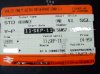
Automated Gatelines are just a cheap way to try & enforce revenue protection, for cost of part time manual gate wage bill is same nearly as for full automated gatelines. Downside is its about as effective as Maginot Line in stopping ticket fraud, basically it means passenger as to buy a ticket to travel but dont mean its correct for journey being made. Should never see ticket with 2 black lines but it happens, hers one I made earlier
For example I have seen AP ticket go through gates several times hours after train ticket was valid for had long since departed so as long as gates passes ticket extent of travel fraud will go undetected. Another problem is how can 1 person do a UFN whilst covering gates also some are staff lacking training in basic ticket knowledge & route guidence.
 

Attachments

  • ap.jpg
    ap.jpg
    108.7 KB · Views: 22
Last edited:

WelshBluebird

Established Member
Joined
14 Jan 2010
Messages
5,599
Couldn't agree with you more about that!

I've read the many faniciful scenarios of how the barriers won't work (having a meal in Wetherspoons and then leaving was a particular lowlight), but just because barriers may not prevent 100% of fare evasion, does that mean they shouldn't be used for the other 90%?

Of course, I was never saying that.
I was simply saying that barriers are not the magical solution some people seem to think they are, and they have numerous issues meaning that to be effective they need to be combined with staff.
And part of the discussion was also about how I feel using barriers at unmanned (or other very small stations) is often unworkable.
 

Greenback

Emeritus Moderator
Joined
9 Aug 2009
Messages
15,268
Location
Llanelli
Of course, I was never saying that.
I was simply saying that barriers are not the magical solution some people seem to think they are, and they have numerous issues meaning that to be effective they need to be combined with staff.
And part of the discussion was also about how I feel using barriers at unmanned (or other very small stations) is often unworkable.

Barriers are not the solution at every location. They are also not the only solution, they only work in parallel with effective on train checks, and good trainin gfor those staffing the gateline. This would also be the case with manual barriers.

I don't find using barriers much of a problem, except where the design of the station really precludes the installation of sufficient barriers. In these cases, they should not be instaleld, and I think the regulations of where andhow they operate could be reviewed in that respect.
 
Status
Not open for further replies.

Top