On the GA timetable, small delays are recovered along the journey, and bigger delays can be covered by stepping up units. It's not "hyper-optimised" (i.e. terrible) diagrams like on GTR.But 10 mins delay on one journey leads to a delayed start for the return journey, and more delays on the return etc etc.

-
Our new ticketing site is now live! Using either this or the original site (both powered by TrainSplit) helps support the running of the forum with every ticket purchase! Find out more and ask any questions/give us feedback in this thread!
You are using an out of date browser. It may not display this or other websites correctly.
You should upgrade or use an alternative browser.
You should upgrade or use an alternative browser.
Derailment at Wickford - Friday 14th August 2026
- Thread starter GEC465
- Start date
Sponsor Post - registered members do not see these adverts; click here to register, or click here to log in
R
RailUK Forums
Snow1964
Established Member
Update from Mark Francois (MP for Rayleigh and Wickford)

 www.facebook.com
Mark Francois
16h ·

Yesterday afternoon, along with several other Essex MPs and/or their staff, I attended a virtual meeting, regarding the recent derailment just outside Wickford Station, last Friday. Those participating included:
- Lord Hendy, the Railways Minister, (who chaired the discussion)
- Assistant Chief Constable Ian Drummond-Smith, of the British Transport Police
- Jamie Burles, the Great British Railways (GBR) Anglia Director
- Martin Beable, The Managing Director of Greater Anglia (GA)
We all agreed that they key point was that, mercifully, nobody was seriously injured by the incident. Essex Police arrived on the scene within 10 minutes, followed by the BTP, a further ten minutes later, as well as the other emergency services. I took the opportunity, via ACC Drummond-Smith, to thank all of the emergency services for their very prompt and professional response. The train was subsequently evacuated and passengers were led to safety.
The independent Rail Accident Investigation Branch (RAIB) has examined the scene of the accident and will subsequently issue a detailed report, about what happened. However, some basic facts are already clear. Two of the ten carriages on the early afternoon train were derailed, although most of the damage was caused by the last one, which was dragged for around a mile and a half, before the train was halted. In so doing, the carriage acted almost like a “knife,” cutting through over 3,000 railway sleepers, damaging well over a mile of track, signalling equipment and cables and some of the overhead gantries on the line, as well.
The damaged train has now been removed and repair works are already underway. Greater Anglia is, temporarily, running trains from Liverpool Street to Shenfield, where you can change and then take a “shuttle train” to Billericay and then it’s buses on to Wickford, Rayleigh and Hockley, where you can then pick up another “shuttle train” for stations to Southend Victoria (and vice versa). I used this route to get home from Westminster yesterday evening and it took me nearly two and a half hours, to complete the journey.
However, given the extensive damage I have just outlined, Greater Anglian believe it will be “at least a week” before the line can be fully re-opened, although they are working 24/7 and doing their best to keep to this, if at all possible. (Some people are alternatively travelling by C2C, which is accepting GA tickets while, anecdotally, some others have likely requested to work from home, for the remainder of this week).
During yesterday’s meeting, I strongly suggested that if, by this Friday, GA are unable to guarantee reopening by next Monday morning, they should publish an update, including on social media, to give people a fighting chance to plan alternatives.
For my own part, I will also publish a further update, once any more reliable information is available.
Mark Francois
Yesterday afternoon, along with several other Essex MPs and/or their staff, I attended a virtual meeting, regarding the recent derailment just outside...
www.facebook.com
Nicholas Lewis
Established Member
One has to presume nobody was travelling in the rear coach given how long it was dragged along the track to have not pulled the emergency alarm.
One has to presume nobody was travelling in the rear coach given how long it was dragged along the track to have not pulled the emergency alarm.
AIUI, there were several people in it.
Nicholas Lewis
Established Member
Umm the internal CCTV will be interesting but perhaps it was reasonable stable when being towed along at speed and presumably was the driver trailer at the rear so no indication of motor blocks behaving unusually to the driver.AIUI, there were several people in it.
RUK
Member
The train looks to have been travelling at quite a speed, so presumably will have taken quite a distance to brake to a stand.One has to presume nobody was travelling in the rear coach given how long it was dragged along the track to have not pulled the emergency alarm.
Nicholas Lewis
Established Member
Looks like driver only became aware when braking for Wickford stop as maybe the rear vehicle then became unbalanced with the rear wheelset not providing much braking force so dynamics of vehicle change. RAIB will no doubt give us an update before the week is out and what their intentions are which I surmise will be full investigation given unusual circumstances.The train looks to have been travelling at quite a speed, so presumably will have taken quite a distance to brake to a stand.

Umm the internal CCTV will be interesting but perhaps it was reasonable stable when being towed along at speed and presumably was the driver trailer at the rear so no indication of motor blocks behaving unusually to the driver.
Or what I feel is more likely is that these things happened within seconds of each other - people pulling alarms (or not doing so because they were so shocked and it happened quickly), and the driver already trying to react via an emergency brake or it being too late to resolve.
greatkingrat
Established Member
- Joined
- 20 Jan 2011
- Messages
- 3,289
If you are in a coach that starts shaking violently, then trying to stand up and walk to the nearest alarm probably isn't a good idea and would increase the risk of injury.

How do we know they didn't?One has to presume nobody was travelling in the rear coach given how long it was dragged along the track to have not pulled the emergency alarm.
Intercity_225
Member
I thought that the train which passed the derailed one called the GSMR when the driver spotted it?How do we know they didn't?
That doesn't mean an alarm wasn't pulled on the train.I thought that the train which passed the derailed one called the GSMR when the driver spotted it?
The first railway emergency call was from the passing train, but it doesn't necessarily mean that the derailed train wasn't stopping. The driver of the derailed train could have been braking to investigate already before the REC came in. I would hope that the driver would've been able to feel the difference in performance from the derailment.I thought that the train which passed the derailed one called the GSMR when the driver spotted it?
I thought that the train which passed the derailed one called the GSMR when the driver spotted it?
Correct. But that is completely independent from anyone on the incident train trying to raise the alarm. But again it’s just speculation at this point as to whether it occurred or whatever it would have had any meaningful impact to train movements. Pulling an egress handle or passenger alarm wouldn’t have stopped the train at that speed anyway and there would still be say at least 30 seconds between passengers recognising issue > raising alarm > speaking to driver > driver ascertain facts > bring train to a stand. Which sounds about how long it took for the REC anyway.
I understand it's been confirmed that RAIB will be investigating, so no need for any speculation as I'm sure all of this will be revealed in due course...
It's not been stated on their website yet; I will edit this post with a link and quote when available
It's not been stated on their website yet; I will edit this post with a link and quote when available
mr_moo
Member
An internal Network Rail video has stated that they are planning to re-open the railway through Wickford tomorrow (Wed 26th August).
I can't find any external press releases to that effect but RTT does support that: https://www.realtimetrains.co.uk/se...26-08-26/0000-2359?stp=WVS&show=all&order=wtt
Good progress on the recovery and well done NR.
I can't find any external press releases to that effect but RTT does support that: https://www.realtimetrains.co.uk/se...26-08-26/0000-2359?stp=WVS&show=all&order=wtt
Good progress on the recovery and well done NR.
the BBC News Essex page has this on trackwork:
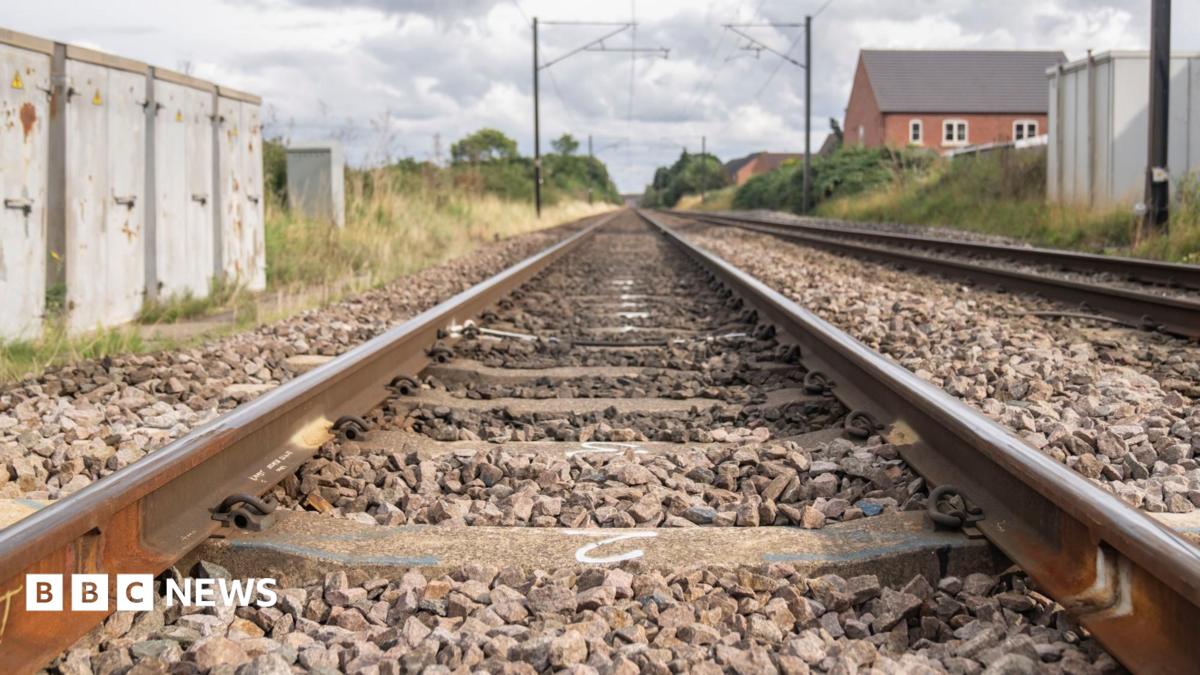
 www.bbc.co.uk
Why is cracking clay causing train troubles?
Train passengers in Essex are being warned of slower speeds and timetable changes - what's going on?
www.bbc.co.uk
A summer of record-breaking temperatures is drawing to a close - with the prolonged heat and lack of rainfall having taken its toll on the land beneath us.
Rail bosses say the clay that sits under the railway in Essex has dried out and shrunk because of the weather, leading to issues with the quality of the track.
Earlier this month, a train derailed in Lewes, Sussex, injuring 30 people, followed by another derailment in Wickford just over 24 hours later.
What are rail companies doing to make sure trains and tracks are safe? And how are they trying to protect train travel against climate change?
The GA site confirms 26th as the expected opening date. It was posted a day or two ago but I forgot to post it here.An internal Network Rail video has stated that they are planning to re-open the railway through Wickford tomorrow (Wed 26th August).
I can't find any external press releases to that effect but RTT does support that: https://www.realtimetrains.co.uk/se...26-08-26/0000-2359?stp=WVS&show=all&order=wtt
Good progress on the recovery and well done NR.
Yep everything fully opened this morning with no major issues, just some small delays.
There’s been some separate issues with track on the GEML today just up the line, but that’s been ongoing for some time.
There’s been some separate issues with track on the GEML today just up the line, but that’s been ongoing for some time.
mr_moo
Member
Great. Thanks for confirming.
Violette
Member
I always thought the trains had automatic brakes. As soon as the train derails, it would stop itself. You know like auto pilot, just for a train. What happens if the train driver becomes unconscious? He could be ill that day, nobody would know. Would the train continue on its own?The first railway emergency call was from the passing train, but it doesn't necessarily mean that the derailed train wasn't stopping. The driver of the derailed train could have been braking to investigate already before the REC came in. I would hope that the driver would've been able to feel the difference in performance from the derailment.

The train wouldn't continue on its own, as they have a vigilance device that goes off around every 90 seconds, and if not acknowledged, brings the train to a stop.I always thought the trains had automatic brakes. As soon as the train derails, it would stop itself. You know like auto pilot, just for a train. What happens if the train driver becomes unconscious? He could be ill that day, nobody would know. Would the train continue on its own?
If the carriages separate from each other then brakes will apply. But also if the driver stops responding to vigilence as miloo says, and there are a few other ways too (AWS, TPWS). Derailing while staying in one piece won't do it though, the train doesn't "know" it has derailed in that sense.I always thought the trains had automatic brakes. As soon as the train derails, it would stop itself. You know like auto pilot, just for a train. What happens if the train driver becomes unconscious? He could be ill that day, nobody would know. Would the train continue on its own?
It's a good point though, it feels like something that should be possible to detect these days.
Probably more benefit on a freight train where the driver is more remote from most of the trailing load.If the carriages separate from each other then brakes will apply. But also if the driver stops responding to vigilence as miloo says, and there are a few other ways too (AWS, TPWS). Derailing while staying in one piece won't do it though, the train doesn't "know" it has derailed in that sense.
It's a good point though, it feels like something that should be possible to detect these days.
I was going to make a point that it's not really necessary (or easy) without risking false positives and having another thing to fail. I then realised that the train coming off of the tracks could foul another running line and be more catastrophic.
I think the trouble is reliability, though it does seem like a good idea considering how lucky we were with this and the Lewes derailment not involving a second train.It's a good point though, it feels like something that should be possible to detect these days.
Violette
Member
I think everyone here is so cool. I'm learning a lot more about trains. Thanks for sharing.

Nobody I’ve mentioned my railway enthusiast hobby to has ever referred to it as “cool,” so I’ll take that.I think everyone here is so cool. I'm learning a lot more about trains. Thanks for sharing.

The RAIB have now officially announced their investigation, they've confirmed a few basic details and their lines of inquiry:

 www.gov.uk
At around 14:08 on 14 August 2026, a passenger train derailed around 2.1 miles (3.4 kilometres) south-east of Wickford station, while travelling between Southend Victoria and London Liverpool Street.
The train, operated by Greater Anglia, was formed of two class 720 electric multiple units coupled together, each consisting of five vehicles. The rearmost vehicle derailed and its wheels subsequently ran on the sleepers and ballast for around 1.5 miles (2.4 kilometres). The train remained upright throughout and there were no reported injuries to the 62 people estimated to be on board.
Preliminary analysis of the on-train data recorder (sometimes referred to as ‘the black box’) obtained from the front vehicle recorded that the train was travelling at around 77 mph (124 km/h) when it derailed. The driver reported seeing a kink in the track which rocked the driving cab as the train passed over it. Forward-facing CCTV recovered from the train involved shows a misalignment in the track at the same location as the driver’s report and the point of derailment.
The train driver was in the process of reporting the track condition to the signaller when they received an emergency call from another train passing in the opposite direction and applied the train’s brakes.
The train involved in the accident sustained damage and the train passing in the opposite direction received minor damage from flying ballast. There was significant damage caused to the track, signalling and overhead electrification equipment.
Our investigation will examine the sequence of events leading up to and during the derailment. It will also consider:
- the actions of those involved and the factors that may have influenced them
- the status of the track at this location and how it was maintained
- the effectiveness of any mitigation measures to address the risk of operating trains in hot weather
- the performance of the train during the derailment
- any underlying management factors.
Our investigation is independent of any investigation by the railway industry or by the industry’s regulator, the Office of Rail and Road.
Derailment of a passenger train at Wickford
Investigation into the derailment of a passenger train at Wickford, Essex, 14 August 2026.
Historically a driver would have stopped and used an SPT, protecting following traffic and adding the possibility of spotting a problem with the train from ballast level.The train driver was in the process of reporting the track condition to the signaller when they received an emergency call from another train passing in the opposite direction and applied the train’s brakes.

Haywain
Veteran Member
- Joined
- 3 Feb 2013
- Messages
- 24,476
Although that SPT might have been more than two miles away. And another driver wouldn't have been able to make an emergency call. Let's not get into the idea that everything was always better.Historically a driver would have stopped and used an SPT, protecting following traffic and adding the possibility of spotting a problem with the train from ballast level.