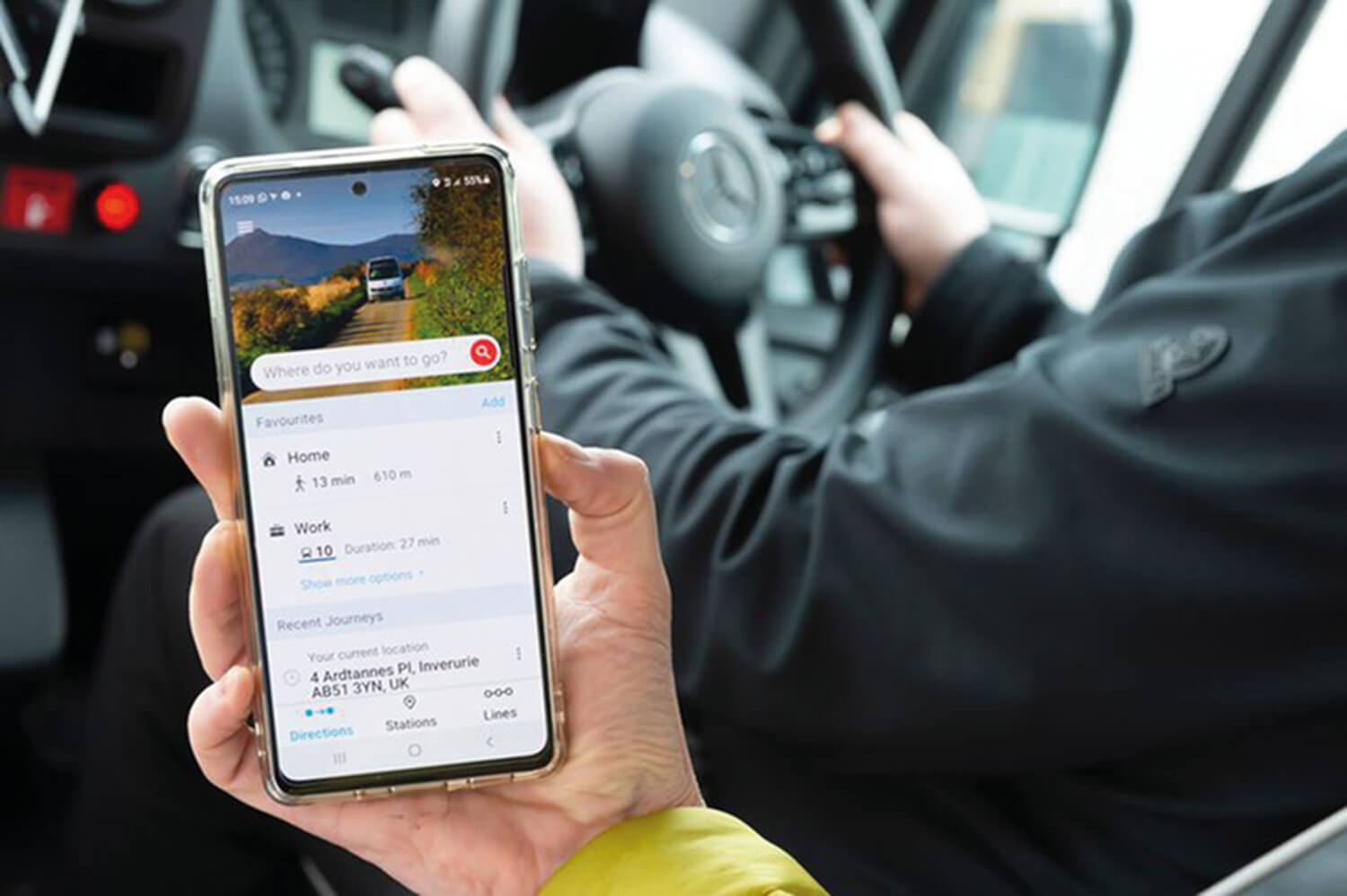
Of the many DRT systems in the UK, there may be one or two where it is possible to get a promise of a ride more than 7 days ahead, but of all those that I have seen, the vast majority open bookings 7 days ahead on a first-come, first-served basis. For the others that use the ViaVan app (eg
Warwick Uni), you can't make advance bookings at all - so by the time you discover that the vehicles(s) are in the wrong place, or committed to incompatible journeys, then it is too late to make any alternative arrangements to get to your destination on time.
So the lack of certainty is a well established characteristic of DRT in the UK. This is a predictable design feature, and surely we don't have to wait until a service is up and running to be allowed to castigate it for a design feature?
As to loadings, you are absolutely right that one assumption-heavy analysis* isn't the basis to draw safe conclusions. Unless I have missed something, data on usage patterns of existing schemes is completely missing from the DRT narrative. In the red corner, we have minibus makers and software vendors who scent the chance to seduce councillors with the promise that they can offer "the convenience of a taxi for the price of a bus". And in the blue corner? I feel very lonely in looking for some evidence that this Nirvana can be delivered for more than a small proportion of those who were served by the scheduled services that need to be cut to fund DRT.
DRT reportedly delivers well for some urban areas - but not all urban areas: it was tragic to see the Yourbus vehicles drifting near-empty around Oxford before they ran out of money and gave up on the experiment.
In rural areas, some form of demand-response could work well, but it depends on how you run it. If you had a dozen villages, each a short diversion off a main road, then you could offer a service with timed arrival at the hub, offering to serve the first six villages for which passengers made bookings, with exact departure times informed a couple of hours ahead. Those wanting certainty ahead could book as early as they wished. Passengers would enjoy faster journeys with fewer loops through villages where nobody got on or off, and the operator would get more trips out of their vehicles and waste less fuel.
But the "anywhere, anytime" promise of many DRT schemes is where I despair. A scheduled bus service converges demand, but this (seemingly very common) form of DRT promises to disperse it.
Two people, living in the same village, might find themselves on the same 0945 scheduled service as a result of compromising their ideals (A: 0830, B: 1100). Along comes DRT and they are racing each other to by being first to get through and so get their ideal timing nailed down into the schedule. If the second of them doesn't get to make their request until another dozen people have had their go, the schedule may be unable to accommodate them at anything near their target departure time. Even if both A and B do get through quickly, the DRT schedule will involve two visits to their community, and the service is losing the economies of scale that a bus can offer, and behaving more like a taxi.
And where the removed scheduled services were delivered by vehicles and drivers still needed to do school transport runs, you have a very poor "exchange rate" between service journeys removed and DRT services added. The school bus operator doesn't quote much less for cutting out the middle-of-the-day services and so you have to cut a lot of scheduled services to fund each new DRT vehicle and driver.
Fully-flexible rural DRT will deliver a service improvement - but only for the lucky few who win the scrum to get their bookings in first. The fit, healthy and well-equipped will better be placed to sit on the phone (or app) repeatedly trying until they get through than the frail or unwell. So we can add a systematic bias against the most needy to the list of weaknesses.
I'd be delighted to be proved wrong, by a thorough review of how some of the many existing DRT services are delivering. Has anyone seen one? Is there any Masters student about to publish one? Is there any hope that the 17 Rural Mobility Fund trials might have a proper evaluation as part of their specification? (Spoiler alert: I bet not. Government don't want to risk hearing bad news - cutting funds while pretending improvement doesn't need the extra challenge of finding supportive evidence).
My fear is that we about to see the "taxi for the price of a bus" version of DRT crop up again and again in the Bus Service Improvement Plans that rural authorities have to deliver by October, based on no more than the partisan promises of the vehicle and software salespeople.
[* To their shame, Derbyshire CC have only captured daily mileages and daily rider numbers - they have kept no data on how many people were on the vehicle across the day, let alone data on individuals, start/end points and timings].

 (
(