
And roughly five miles from Bristol City Centre.And for those unfamiliar with the geography of the area, Bristol Parkway is in South Gloucestershire.

-
Our new ticketing site is now live! Using either this or the original site (both powered by TrainSplit) helps support the running of the forum with every ticket purchase! Find out more and ask any questions/give us feedback in this thread!
You are using an out of date browser. It may not display this or other websites correctly.
You should upgrade or use an alternative browser.
You should upgrade or use an alternative browser.
Definitely Not MML Electrification progress updates: A6006 bridge reconstruction
- Thread starter InTheEastMids
- Start date
Sponsor Post - registered members do not see these adverts; click here to register, or click here to log in
R
RailUK Forums

GraphitProjekt
Member
Really!? Which registers in particular, I've poked around the excel sheets available for NESO's 10 Year Electricity Statement hunting for transformer MVAs, but there are quite a few railway supply sites missing that I know should be there.There are a number of non-rail projects looking to connect at this site, and other rail GSP sites, like Patford Bridge. This data is available if you go looking at NESO's registers. And you can also see some of Network Rail's future demand connections here too.
InTheEastMids
Established Member
- Joined
- 31 Jan 2016
- Messages
- 1,410
Tranmission Entry Capacity I think. It's possible not everything is there, I don't know the detailed rules around when projects go into the public version. I never saw MMLE substations listed (phew, back on topic!). HS2 ones e.g. Quainton are though, and are something like 100-120 MVA if memory serves.Really!? Which registers in particular, I've poked around the excel sheets available for NESO's 10 Year Electricity Statement hunting for transformer MVAs, but there are quite a few railway supply sites missing that I know should be there.
GraphitProjekt
Member
Just downloaded the Feb26 TEC register and can't find any railway activity although they may be hiding behind different key words. I did indeed find renewable/battery schemes connecting to some of the substations I know are 25kV only at the moment. Couldn't find HS2 which are at Ickenham, Quainton and Berkswell. I expect there to be some Scottish ones: at the grid sites Glenrothes, Stannergate, Galashiels, Clyde's Mill
This bridge forms the main access to a proposed new battery development that will connect to National Grid's network at the substation.
That’s not yet been given planning consent though, AIUI.
There’s also a solar farm proposal next door too.
I guess the batteries can charge from the Grid during the night when the railway doesn't need the power, and possibly even supply the railway during the day.
The battery energy storage system (BESS) proposed at Braybrooke is 300MW / 1.2GWh. An order of magnitude higher than any conceivable demand for power from the railway there. To put it in context, 300MW is very approximately 65% of the average traction electricity demand of the entire GB network. It’s also enough to keep the lights on in Harborough for about 2 months.
GraphitProjekt
Member
I assume these battery storages are used to smooth out demand rises while waiting to turn on generation sources that are a bit slow. I'm thinking if some windfarms were being asked to ramp up generation, it might take them some 10s of minutes to do so and in the mean time the battery can deliver the power in that area. Since Market Harborough 400kV substation has no DNO connection (currently just 2x 50kV single phase transformers!) it'd be feeding power into the surrounded NG sites which are: Staythorpe to the north (major 400kV hub as well as handling 14x 132kV circuits for the East Mids/Lincolnshire/South Yorks, and even a little supply for the ECML) and to the south Grendon and Sundon which do Northamptonshire/Bedfordshire/Hertfordshire and the latter has another MML supply pointThe battery energy storage system (BESS) proposed at Braybrooke is 300MW / 1.2GWh. An order of magnitude higher than any conceivable demand for power from the railway there. To put it in context, 300MW is very approximately 65% of the average traction electricity demand of the entire GB network. It’s also enough to keep the lights on in Harborough for about 2 months.
edwin_m
Veteran Member
From the figures below it's more ambitious than that. 1.2GWh divided by 300MW means the batteries can supply their full power for 4 hours, or maybe a bit less due to system inefficiency. Ultimately systems of this size will contribute to battery and other storage filling the gaps from no solar at night and from no wind on calm days, and almost or totally removing the need for fossil fuels in electricity generation.I assume these battery storages are used to smooth out demand rises while waiting to turn on generation sources that are a bit slow. I'm thinking if some windfarms were being asked to ramp up generation, it might take them some 10s of minutes to do so and in the mean time the battery can deliver the power in that area.
Noted thanks. The railway certainly won't be able to take all the power but having a largeish user next door should reduce transmission losses. Also having generation and storage near the main users of the power reduces the problems the grid has in creating capacity to bring it from further away.The battery energy storage system (BESS) proposed at Braybrooke is 300MW / 1.2GWh. An order of magnitude higher than any conceivable demand for power from the railway there. To put it in context, 300MW is very approximately 65% of the average traction electricity demand of the entire GB network. It’s also enough to keep the lights on in Harborough for about 2 months.
GraphitProjekt
Member
How interesting! Market Harborough's immediate neighbour Staythorpe is actually a 1.7GW gas power station which perhaps it could replace. And if they did build a 132kV DNO connection it might be able to minimise the use of the 350MW Corby gas power station as well.From the figures below it's more ambitious than that. 1.2GWh divided by 300MW means the batteries can supply their full power for 4 hours, or maybe a bit less due to system inefficiency. Ultimately systems of this size will contribute to battery and other storage filling the gaps from no solar at night and from no wind on calm days, and almost or totally removing the need for fossil fuels in electricity generation.

The main target for battery isFrom the figures below it's more ambitious than that. 1.2GWh divided by 300MW means the batteries can supply their full power for 4 hours, or maybe a bit less due to system inefficiency. Ultimately systems of this size will contribute to battery and other storage filling the gaps from no solar at night and from no wind on calm days, and almost or totally removing the need for fossil fuels in electricity generation.
Noted thanks. The railway certainly won't be able to take all the power but having a largeish user next door should reduce transmission losses. Also having generation and storage near the main users of the power reduces the problems the grid has in creating capacity to bring it from further away.
a) week day evening peaks hence the 4 hour sizing
b) mornings before solar starts being useful (smaller than a) )
Hence two cycles per day
Hi,
This is a plant designed to reduce the use of open cycle gas generation and diesels, its scale (on its own) has no material impact on the viability of wind generation.
Indeed, if we wanted to get rid of big gas generators then we are looking at a lot more wind generation and a total amount of energy storage around 3000 to 10000 times greater than is being built here (if we optimistically assume that there are never periods of greater than 10 days when the wind doesn't blow).The main target for battery is
a) week day evening peaks hence the 4 hour sizing
b) mornings before solar starts being useful (smaller than a) )
Hence two cycles per day
This is a plant designed to reduce the use of open cycle gas generation and diesels, its scale (on its own) has no material impact on the viability of wind generation.
InTheEastMids
Established Member
- Joined
- 31 Jan 2016
- Messages
- 1,410
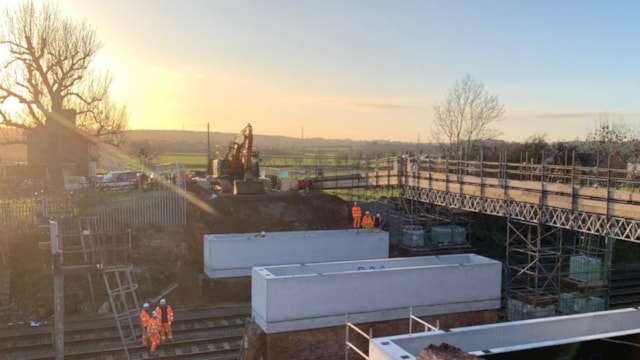
Network Rail is talking up the A6006 Kirk Hill bridge reconstruction as a key part of a number of interventions that have improved clearances on the MML to make it more suitable for freight, particularly containers.
There is a brief mention of how the new structure further provides sufficient clearance for electric or bi‑mode trains should el*********ion be resumed in future
Also, a timelapse video of the bridge demolition and a photo with the new bridge deck (installed at Christmas) at the link below.
 www.networkrailmediacentre.co.uk
There is a brief mention of how the new structure further provides sufficient clearance for electric or bi‑mode trains should el*********ion be resumed in future
Also, a timelapse video of the bridge demolition and a photo with the new bridge deck (installed at Christmas) at the link below.
Midland Main Line upgrades unlock new freight capability and resilience
Progress linked to the Midland Main Line Electrification programme is delivering lasting benefits for rail freight – strengthening one of the UK’s most important cross‑country corridors and unlocking greater flexibility for freight operators.
www.networkrailmediacentre.co.uk
zwk500
Veteran Member
At least the design work isn't being condemned to a shelf like so many other nixed schemes. Also useful in bringing down the cost & risk should electrification ever be restarted, although shows what potential associated benefits the full MMLe scheme could have brought.Network Rail is talking up the A6006 Kirk Hill bridge reconstruction as a key part of a number of interventions that have improved clearances on the MML to make it more suitable for freight, particularly containers.
There is a brief mention of how the new structure further provides sufficient clearance for electric or bi‑mode trains should el*********ion be resumed in future
Also, a timelapse video of the bridge demolition and a photo with the new bridge deck (installed at Christmas) at the link below.
Midland Main Line upgrades unlock new freight capability and resilience
Progress linked to the Midland Main Line Electrification programme is delivering lasting benefits for rail freight – strengthening one of the UK’s most important cross‑country corridors and unlocking greater flexibility for freight operators.

londonmidland
Established Member
Does anyone know if the wooden pegs, which were used for surveying(?), have come in useful, should electrification restarts again? Or would this all need to be done again, from scratch?
Merle Haggard
Established Member
Does anyone know if the wooden pegs, which were used for surveying(?), have come in useful, should electrification restarts again? Or would this all need to be done again, from scratch?
The ones on the Up side around East Midlands Parkway disappeared - presumably removed - when the electrification in the area was cancelled. Presumably the same story elsewhere.

59CosG95
Established Member
I think some have remained near Trent Jn, but have now been weathered beyond the point of legibility.The ones on the Up side around East Midlands Parkway disappeared - presumably removed - when the electrification in the area was cancelled. Presumably the same story elsewhere.
InTheEastMids
Established Member
- Joined
- 31 Jan 2016
- Messages
- 1,410
Replacing them will be the easy bit because any competent organisation will have very precise location data for them in the design information.Does anyone know if the wooden pegs, which were used for surveying(?)
I agree, but if you look a the business case for the bridge replacement, its benefits are weaker as a standalone intervention. So was it still a good use of taxpayers money at this point, or simply the least-worst option because the project had fundamentally got past the point of no return.At least the design work isn't being condemned to a shelf like so many other nixed schemes. Also useful in bringing down the cost & risk should electrification ever be restarted, although shows what potential associated benefits the full MMLe scheme could have brought.
zwk500
Veteran Member
TrueI agree, but if you look a the business case for the bridge replacement, its benefits are weaker as a standalone intervention.
As it's part of a wider gauge enhancement project, it's still a good use of taxpayers money. This is not simply rebuilding one bridge because the contracts cost too much to cancel, but making use of work already done to provide a tangible benefit (gauge enhancement) at lower cost while also leaving provision for the future enhancement originally designed for.So was it still a good use of taxpayers money at this point, or simply the least-worst option because the project had fundamentally got past the point of no return.
From the press release:
These are quite substantial additions to the freight gauge-cleared network. (Red Circle is Trent High Level/Ratcliffe Jn/Toton/Attenborough Jn, Red Line shows Trent-Nottingham-Boultham Jn.Through detailed gauging analysis and close collaboration with industry partners, Network Rail has now unlocked additional routes across the East Midlands. Trent High Level, including the Ratcliffe Junction-Toton and Attenborough Junction-Toton sections, and the Trent-Nottingham-Boultham Junction route to Lincoln, are also now available for larger freight containers.
Turqouise is W12, Light Blue W9, Dark Blue W8, Purple W7, Pink W6. Note this is normal clearance and does not include things like RT3973 form clearances.

This work now provides an alternative container route from Birmingham to Doncaster, potentially easing pressure on the Masborough-Swinton section.
(Caveat that the clearances listed on Open Railway Map may not be 100% accurate).
59CosG95
Established Member
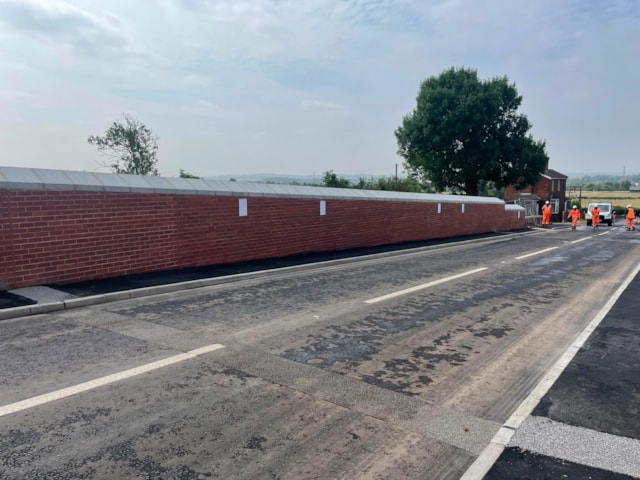
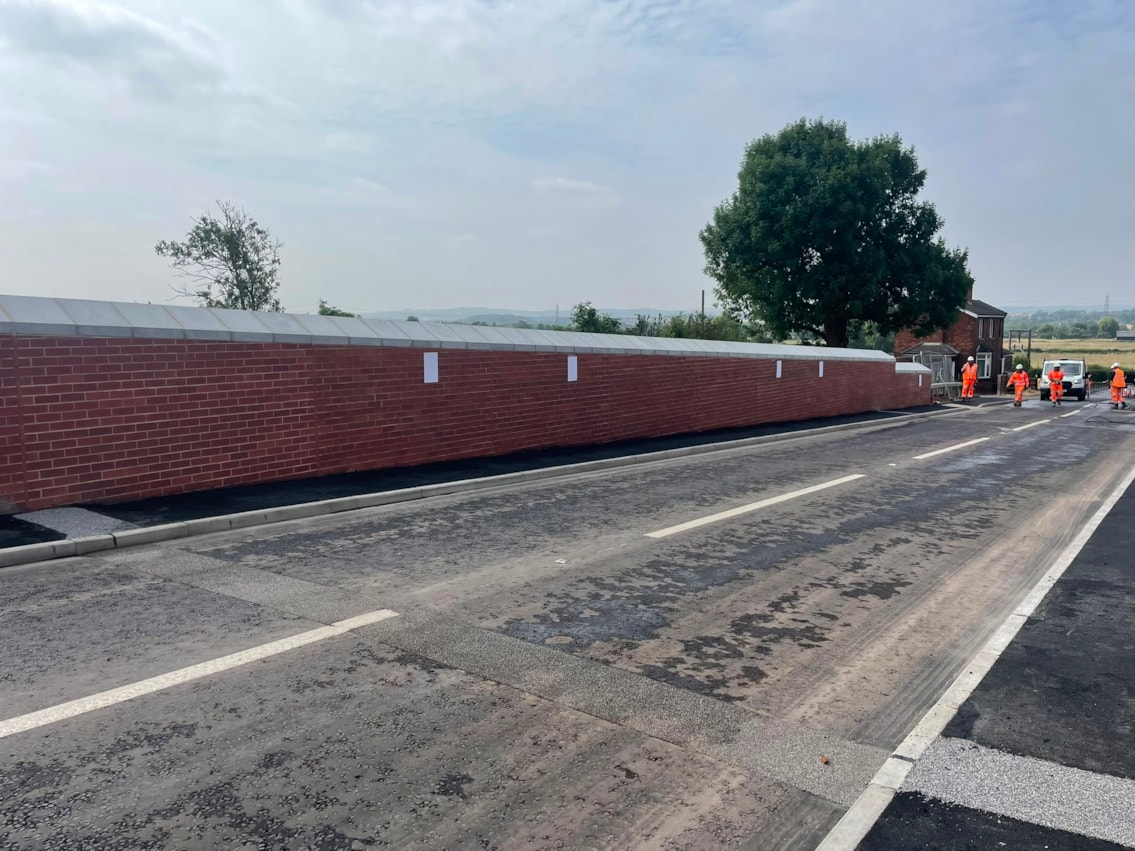
Network Rail now reporting that the bridge has reopened to vehicle traffic.
 www.networkrailmediacentre.co.uk
Major milestone for Kirk Hill bridge project as road closures end
Road closures near Kirk Hill bridge were lifted as planned on Friday 17 July as Network Rail’s reconstruction project remains on target and nears completion.
www.networkrailmediacentre.co.uk
Monday 20 Jul 2026
Major milestone for Kirk Hill bridge project as road closures end
Region & Route: Eastern: East Midlands | Eastern
Road closures near Kirk Hill bridge were lifted as planned on Friday 17 July as Network Rail’s reconstruction project remains on target and nears completion.
Because diversion routes must be the same type of road as the road being closed, several nearby roads were also closed to prevent them being used as shortcuts, allowing the Kirk Hill bridge project to be carried out safely.
All traffic restrictions were removed on Friday as planned, with Network Rail having completed the bulk of the bridge reconstruction work, which will bring benefits including:
The bridge reconstruction was originally planned as part of the Midland Main Line electrification programme. Although electrification was paused, the Department for Transport approved the project to continue because of the long-term benefits it delivers for freight and the railway, while ensuring the route is ready should electrification proceed in future.
- providing clearance for larger‑gauge freight trains – allowing more goods to move by rail instead of road, helping reduce congestion and supporting a more sustainable transport network.
- improving rail maintenance access to support progress towards removing a long‑standing speed restriction and improving reliability
- offering sufficient clearance under the new bridge for electric or bi‑mode trains, should Midland Main Line electrification be restarted in the future.
The demolition of the old bridge took place over Christmas 2025, meaning no passenger service disruption because trains do not run in this area on Christmas Day or Boxing Day. Other critical work has been carried out overnight and at weekends, allowing engineers to deliver the project while keeping the railway open.
The project has seen Network Rail teams and lead contractor AmcoGiffen install a temporary utility bridge to safely carry gas, electricity, water and broadband services throughout the work; install new bridge components; construct new parapet walls with 14,000 bricks and high-strength concrete to meet modern safety standards; install utility services into the new bridge deck; and complete highway and drainage works.
Still to be carried out ahead of the planned completion in September are the demobilisation of the work compound and reinstating the site.
Nick Wilton, Network Rail senior sponsor, said:
“The project at Kirk Hill bridge was planned to minimise disruption for passengers as much as possible while we delivered this important structural upgrade. However we recognise that there has been some unavoidable disruption for residents and businesses because of the road closures, and we’re sorry for the inconvenience caused.
“We’ve worked with the council to mitigate this as much as we could, and we’ve remained in close contact with the community. Feedback from our regular meetings with the community was taken on board from the beginning.
“We’re pleased to have reached another important milestone with the removal of road restrictions and we thank everyone for their patience as we complete the last of our tasks – taking down our compound and reinstating the site.”

Dr Hoo
Established Member
If the clearance part is “still ongoing” what’s the next location?In other words the clearance part of MMLEP (typically 25% of cost) is still ongoing, pause notwithstanding, under the guise of freight clearance (not paused).
Good on yer, Heidi!
WAO
GraphitProjekt
Member
It is intriguing that a huge amount of effort and risk has gone (and is going) into developing discontinuous electrification solutions to deal with that 25%. Of course I support progress to reduce those costs, especially the approach that recent schemes have with VCCs and other minor innovations where even GWEP would have pushed for replacing the structure.(typically 25% of cost)
Of course, figures change around a lot and I'd imagine the civil engineering enabling cost goes quite high if you have something like the Severn Tunnel on your project. But these are some numbers from Furrer+Frey which suggest just 15% go towards things I'd consider "work on structures". Perhaps this graph comes from a particular project and so 25% is more representative.
Either way, there's clearly a majority of cost that gets spent on a lot of other stuff which isn't the electrification assets or enabling work and there doesn't seem to be a lot of effort spent on trying to reduce especially when you compare that to the wonderous world of discontinous electrification, which still requires new OLE going up (and also PSU work on existing stuff) and so will still cost many things on the "indirect" side.

InTheEastMids
Established Member
- Joined
- 31 Jan 2016
- Messages
- 1,410
Many other bridges in this area were done 10 years ago. I haven't seen anything to suggest there is an ongoing pipeline of structures work that'd enable gauge clearance or electrification.If the clearance part is “still ongoing” what’s the next location
So unless we get announcements etc., I think this bridge replacement happened because of some combination of the overall condition of the bridge and/or the contract having already been awarded - ie cost to cancel made it better value to proceed with the works.
Given the cost pressures on transport, it is objectively weird to proceed with something that seems to have such weak benefits in the absence of electrification
Many other bridges in this area were done 10 years ago. I haven't seen anything to suggest there is an ongoing pipeline of structures work that'd enable gauge clearance or electrification.
So unless we get announcements etc., I think this bridge replacement happened because of some combination of the overall condition of the bridge and/or the contract having already been awarded - ie cost to cancel made it better value to proceed with the works.
Given the cost pressures on transport, it is objectively weird to proceed with something that seems to have such weak benefits in the absence of electrification
According to post #24, An application to rebuild Marle Pit Hill bridge was put in, but had been withdrawn after electrification was cancelled.
Presumably this needed greater clearances for electrification, but was it deemed fine for freight as is?
londonmidland
Established Member
I notice East Midlands Gateway to Felixstowe intermodal traffic is now routed this way, instead of the long way around via the West Midlands.
Does any other intermodal traffic use this section of the MML?
Does any other intermodal traffic use this section of the MML?
Pure conjecture but freight clearance would likely be done on a route basis, not bridge-by-bridge as one out of gauge structure would restrict the while route, making the other work pointless.
It also seems that freight clearance generally (W8) is enough for OLE, particularly with present rules.
WAO
It also seems that freight clearance generally (W8) is enough for OLE, particularly with present rules.
WAO
GraphitProjekt
Member
I think there can be situations where an unelectrified line has a certain gauge clearance and can theoretically support OLE, but if you electrify it, the gauge will decrease. So neither the higher gauge nor electrification individually requires interventions except that if you want both than you will need to rebuild things. I believe this is the case with some parts of the TRUP route
In other words the clearance part of MMLEP (typically 25% of cost) is still ongoing, pause notwithstanding, under the guise of freight clearance (not paused).
Good on yer, Heidi!
WAO
The clearance part of MMLe has definitely been paused.
So unless we get announcements etc., I think this bridge replacement happened because of some combination of the overall condition of the bridge and/or the contract having already been awarded - ie cost to cancel made it better value to proceed with the works.
Correct.
Dr Hoo
Established Member
Thanks @Bald Rick . A typically really useful post.
edwin_m
Veteran Member
It is certainly done on a whole route basis. However if a bridge needs to be re-built for other reasons then (unless there's a major reason not to) it will be re-built to provide clearances for future larger gauges and electrification.Pure conjecture but freight clearance would likely be done on a route basis, not bridge-by-bridge as one out of gauge structure would restrict the while route, making the other work pointless.
It also seems that freight clearance generally (W8) is enough for OLE, particularly with present rules.
WAO
Larger gauges generally need extra clearances in the top corners, as they are driven by carrying larger containers, whereas electrification needs more clearance above the centre of the track (extending over the pantograph width). So arch bridges are more likely to need work for gauge enhancement and beam bridges are more likely to need work for electrification.
So arch bridges are more likely to need work for gauge enhancement and beam bridges are more likely to need work for electrification.
I think ithe positin is:
Arched bridges are more likely to need work for gauge enhancement, but for OLE installation any type of bridge will need work if it is not sufficiently high over the track itself.