On the contrary, buses in this country were always meant to be profitable. From their inception to the mid 60s they by and large were (with some cross subsidisation) . Beyond this time, when private car ownership started to become the majority, plus several other social factors, how much subsidy they should receive has been a political hot potato. Even profitable services only running 7-19 on weekdays are 'providing a public service' - there has never been a consensus that buses should be providing a comprehensive service to the public whether profitable or not.Buses were never meant to be profitable, they were supposed to provide a service to the public, regardless if it’s a loss making journey or not.

-
Our new ticketing site is now live! Using either this or the original site (both powered by TrainSplit) helps support the running of the forum with every ticket purchase! Find out more and ask any questions/give us feedback in this thread!
You are using an out of date browser. It may not display this or other websites correctly.
You should upgrade or use an alternative browser.
You should upgrade or use an alternative browser.
Decline in UK bus services
- Thread starter Lewisham2221
- Start date
- Status
- Not open for further replies.
Sponsor Post - registered members do not see these adverts; click here to register, or click here to log in
R
RailUK Forums
The issue is that it's something of a chicken and egg situation. For instance, personally I do virtually all of my leisure travel on a Saturday - mostly because I know that the Sunday service is much worse and so journeys tend to be more difficult. If the service on Sunday was more similar to what is provided on Saturday, I'd certainly be more open to travelling on a Sunday, and I can't be alone in that - but why would a commercial operator take the risk of massively increasing costs by running that extra service when there's no guarantee that revenue would rise proportionately?Sundays can be an interesting one. It depends on the demographic of the route. Areas with more older people tend to have less demand for Sunday services as older people tend to stay in more on Sundays. It's much harder to plan routes as well as peoples journey patterns are different. The start and end destinations are much more spread out as there isn't going to/from school or commuting to/from work. People are going to more leisure based places or visiting friends/family. You can't plan a route to suit most people on Sundays. If the demand was there, the buses would run more on Sundays.
Bletchleyite
Veteran Member
ENCTS has a lot to answer for IMO. Buses full of pensioners on free passes don't make a profit due to the reimbursement levels. Cash single fares can be artificially inflated to boost the ENCTS reimbursement, at the expense of higher fares putting off regular fare paying passengers. Killed a lot of 11pm/post-11pm last buses.
I think what has more killed the traditional 2300-2359ish last buses was liberalisation of pub closing times meaning you don't have a big load of pub traffic fitting one bus, people drift out of pubs and pubs close as they want, in dribs and drabs, which more suits taxis than buses (or driving, and there are more cars and more people who don't drink or are willing not to drink around now).
Lewisham2221
Established Member
No doubt, especially given stories I've heard about last buses even being "duped". However, even within the last 10 years or so, 11pm+ last buses in my area were often still reasonably well used until the LA scrapped 24/7 ENCTS for the statutory minimum 09.30-23.00. It didn't simply shift all the pass holders to the earlier bus, either, as some obviously decided they didn't want to go home earlier, and instead did indeed opt for taxis.I think what has more killed the traditional 2300-2359ish last buses was liberalisation of pub closing times meaning you don't have a big load of pub traffic fitting one bus, people drift out of pubs and pubs close as they want, in dribs and drabs, which more suits taxis than buses.
One man's 'gap fillers' are another's 'competition'. I can quite see how bus company A thinking that a 30 min interval service is sufficient would view company B coming on the route as a competitive act to be combated. Company B may well be gap filling, but they will also be taking a proportion of passengers that would have travelled by Company A.What I said was 'often it will lead to flooding'. That doesn't mean always! That means more often than not. I also could have phrased my second sentence better.
The majority of the time, First will flood a corridor to get rid of competition. What D&G tend to do most of the time is fill gaps in the timetable, like they did on the 32 where D&G ran the opposite half hour to First. Like D&G did with Arriva on the Crewe 38, ran pretty much opposite Arriva so that people could enjoy a more even service. Even now on the 7A which D&G has just introduced, the times are in the middle of Firsts times to provide an even 15 minute frequency rather than compete and go 5 minutes ahead of First and steal all of the passing trade. D&G aren't competing as such. They are just gap fillers.
Bletchleyite
Veteran Member
No doubt, especially given stories I've heard about last buses even being "duped". However, even within the last 10 years or so, 11pm+ last buses in my area were often still reasonably well used until the LA scrapped 24/7 ENCTS for the statutory minimum 09.30-23.00. It didn't simply shift all the pass holders to the earlier bus, either, as some obviously decided they didn't want to go home earlier, and instead did indeed opt for taxis.
I think what's also happened with taxis is that in real terms they've really got quite cheap, largely due to a combination of market competition (once upon a time there was a black cab and that was that) and a fairly significant mostly-immigrant workforce willing to work for the pittance (and personal risk) that is involved in the minicab industry. Plus the added convenience of minicab use when all you need to do to get one is to open a phone app - before that I was very much put off by having to phone one from a potentially noisy environment, be completely misunderstood due to said noise, and be told "five minutes" even if it'd be an hour, with no clue which car would be mine.
Thus, for many if not most local urban journeys from pubs of the kind that'd previously go on the 23xx bus, if there are two or more of you going to a similar place so you can share at least part of the journey, taxi/minicab now wins on price and convenience - bus just can't compete. The only thing that might compete would be some form of DRT, but then why would you pay a similar amount for a less direct journey home?
Edsmith
Member
Yes I think that's a very good point.I think what has more killed the traditional 2300-2359ish last buses was liberalisation of pub closing times meaning you don't have a big load of pub traffic fitting one bus, people drift out of pubs and pubs close as they want, in dribs and drabs, which more suits taxis than buses (or driving, and there are more cars and more people who don't drink or are willing not to drink around now).
Here in Kent we've had considerable bus cuts since the pandemic but it really is a case of use them or lose them. Kent County Council recently funded a free bus travel weekend which got a lot more people onto buses, how many of them will continue using buses remains to be seen and presumably the £2 maximum fare can't go on forever. What more can be done to try and get people back onto buses?

In the early 2000s, it looked like Tentbarton's recently introduced network of night buses wouldn't last long.I think what's also happened with taxis is that in real terms they've really got quite cheap, largely due to a combination of market competition (once upon a time there was a black cab and that was that) and a fairly significant mostly-immigrant workforce willing to work for the pittance (and personal risk) that is involved in the minicab industry. Plus the added convenience of minicab use when all you need to do to get one is to open a phone app - before that I was very much put off by having to phone one from a potentially noisy environment, be completely misunderstood due to said noise, and be told "five minutes" even if it'd be an hour, with no clue which car would be mine.
Then there was an enormous taxi shortage. People who would never have thought of getting a bus discovered traffic queues with marshalls advising there'd be a wait of at least an hour made hourly and half hourly buses much more appealing. They were often full and standing.
It never made any sense to restrict ENCTS validity to 23.00 hours on Monday to Friday yet not at weekends. Many authorities allow free travel after 23.00 during the week but of course have to fund this as a non-statutory concession. No idea though how many pass holders are out using buses at that time of night (assuming there are any buses).However, even within the last 10 years or so, 11pm+ last buses in my area were often still reasonably well used until the LA scrapped 24/7 ENCTS for the statutory minimum 09.30-23.00.
I think what has more killed the traditional 2300-2359ish last buses was liberalisation of pub closing times meaning you don't have a big load of pub traffic fitting one bus, people drift out of pubs and pubs close as they want, in dribs and drabs, which more suits taxis than buses (or driving, and there are more cars and more people who don't drink or are willing not to drink around now).
I think you're wide of the mark. The pub trade was always a bit limited - most people drank in their "local" which was, just that, local.
A decline in other things such as bingo halls and cinemas probably had a far greater impact than a few sloshed passengers who didn't want to walk home after a skinful.
JKP
Member
What I am reading in these posts reflects changing lifestyles over the years and hence changes to bus service provision. There is also a difference between large urban areas, large standalone towns and smaller towns.
It is my opinion that Covid, financial pressures on families, an ageing population especially in rural areas, coupled with some social activities not restarting after the pandemic has reduced demand for evening travel further. In my small town there are now no buses after mid evening. The last bus leaving after 10pm on a Saturday night which 40 years ago carried 20 to 30 was carrying just one passenger up the hill when it was withdrawn 15 or so years ago.
It is my opinion that Covid, financial pressures on families, an ageing population especially in rural areas, coupled with some social activities not restarting after the pandemic has reduced demand for evening travel further. In my small town there are now no buses after mid evening. The last bus leaving after 10pm on a Saturday night which 40 years ago carried 20 to 30 was carrying just one passenger up the hill when it was withdrawn 15 or so years ago.
Bletchleyite
Veteran Member
I think you're wide of the mark. The pub trade was always a bit limited - most people drank in their "local" which was, just that, local.
A decline in other things such as bingo halls and cinemas probably had a far greater impact than a few sloshed passengers who didn't want to walk home after a skinful.
It's interesting you mention cinemas, because since COVID the selection of films has been appalling. I used to go about once a week, I've been twice in the past year. That'll have affected demand too.
It's interesting you mention cinemas, because since COVID the selection of films has been appalling. I used to go about once a week, I've been twice in the past year. That'll have affected demand too.
I'm thinking much further back - many cinemas, particularly the typical 'town centre flea pit' started to close back in the 1980s. That reduced demand for late night bus travel as people either stopped going or travelled further afield to a larger cinema.
JKP
Member
That and cinemas relocating from city and town centres to out of town leisure parks with ample free car parking but no bus services.I'm thinking much further back - many cinemas, particularly the typical 'town centre flea pit' started to close back in the 1980s. That reduced demand for late night bus travel as people either stopped going or travelled further afield to a larger cinema.
That and cinemas relocating from city and town centres to out of town leisure parks with ample free car parking but no bus services.
Not in my experience - most of the sites I know of with cinemas are also bus and or rail connected - usually they are on main roads into a town, which means there were already bus services along that corridor.
Key words are "along that corridor". A town centre location attracts public transport users from all points of the compass. A peripheral location will attract people on just one or two bus routes, the rest will drive or just not bother.Not in my experience - most of the sites I know of with cinemas are also bus and or rail connected - usually they are on main roads into a town, which means there were already bus services along that corridor.
Edsmith
Member
Yes so much has changed since the pandemic, many people switched to online shopping and getting takeaways delivered to the door.What I am reading in these posts reflects changing lifestyles over the years and hence changes to bus service provision. There is also a difference between large urban areas, large standalone towns and smaller towns.
It is my opinion that Covid, financial pressures on families, an ageing population especially in rural areas, coupled with some social activities not restarting after the pandemic has reduced demand for evening travel further. In my small town there are now no buses after mid evening. The last bus leaving after 10pm on a Saturday night which 40 years ago carried 20 to 30 was carrying just one passenger up the hill when it was withdrawn 15 or so years ago.
noddingdonkey
Member
- Joined
- 2 Nov 2012
- Messages
- 916
The point about taxis is well made. For me the cost of another pint while I wait for the next bus (that no longer stops near my house) and the bus fare is in the same ballpark as a taxi fare for a door to door service whenever I want it. For a couple it's even more of a no brainer.
Operators claim there is a lack of demand, but a lot of that is of their own making. There would be more demand for a service that was fit for purpose rather than being what is the least operationally inconvenient for the operator.
Operators claim there is a lack of demand, but a lot of that is of their own making. There would be more demand for a service that was fit for purpose rather than being what is the least operationally inconvenient for the operator.
I don't think that is quite right - the 21h30 buses took home the (ladies) bingo 'crowd'. The 22h30 took home the pub & club (working man's etc) trade , and the cinema and any other activities (snooker hall etc) . If they finished a bit earlier then they had a swift half in the pub (or a snog in a dark doorway) before getting the last bus home. The world has changed completely since those days, in more ways than one, and these flows no longer exist, or at least not in sufficient quantity at once for a bus to be economical.I think you're wide of the mark. The pub trade was always a bit limited - most people drank in their "local" which was, just that, local.
A decline in other things such as bingo halls and cinemas probably had a far greater impact than a few sloshed passengers who didn't want to walk home after a skinful.
The operators are quite right - there is demand, but for taxis at bus fares, which doesn't make financial sense. I think operators recognise that there is no longer sufficient concentration of business to make their operation worthwhile at night - leave it to the taxi trade whose costs are lower and people are prepared to pay higher fares for a convenience which the bus will struggle to match.Operators claim there is a lack of demand, but a lot of that is of their own making. There would be more demand for a service that was fit for purpose rather than being what is the least operationally inconvenient for the operator.
Bletchleyite
Veteran Member
The operators are quite right - there is demand, but for taxis at bus fares, which doesn't make financial sense. I think operators recognise that there is no longer sufficient concentration of business to make their operation worthwhile at night - leave it to the taxi trade whose costs are lower and people are prepared to pay higher fares for a convenience which the bus will struggle to match.
This is where one-to-many DRT might work, to be fair. Or UberPool, though personally I'm happier sharing a bus with 30 people than a taxi with one.
and playing bingo online and films on netflix etc etc etcYes so much has changed since the pandemic, many people switched to online shopping and getting takeaways delivered to the door.
== Doublepost prevention - post automatically merged: ==
It might, but it is telling that bus companies have not been flocking to introduce them.This is where one-to-many DRT might work, to be fair. Or UberPool, though personally I'm happier sharing a bus with 30 people than a taxi with one.
Last edited:
This was certainly true in Taunton a generation ago. The independent H&C bus to South Petherton last bus used to leave 5 minutes after closing time. It made a couple of stops in the town where the adjacent pub landlord was looking out for it. "Petherton bus" they would shout, and those for there would file out. Then the cinemas back-calculated their film finish time to do the same thing (or left bits out to fit - apparently the film distributor used to do notes for the projectionist where to do this without spoiling the sense). The bus didn't pull away from the Odeon cinema before everyone was out, it even used to say so in the timetable. If the film had broken and they were 5 minutes late finishing ... the bus waited 5 more minutes.I think what has more killed the traditional 2300-2359ish last buses was liberalisation of pub closing times meaning you don't have a big load of pub traffic fitting one bus, people drift out of pubs and pubs close as they want, in dribs and drabs, which more suits taxis than buses (or driving, and there are more cars and more people who don't drink or are willing not to drink around now).
I think ENCTS is one of the best government schemes ever invented. After all, it's not like the operator receives NO recompense, locally in Cumbria it's 58% of the ticket price, so a bus full of pensioners will actually garner as much revenue as a bus half-full of paying passengers. The thing is, of course, that outside of big cities hardly any bus service is ever likely to carry half a load of full fare paying passengers ever again, because single fares are extortionately expensive (or would be if they currently weren't kept artificially low). For example, I can drive into Penrith in my hybrid car and park free for THREE hours at a town centre supermarket, so if I weren't a pensioner why would I even consider using a bus? The cost of driving has not increased in proportion to the cost of bus fares.
ENCTS is basically social care on wheels, it gets pensioners out, gives them interest and keeps them active. No ENCTS and pensioners on a limited income who have no car or can no longer drive will not pay the extortionate fares. It's not like giving away free tins of beans because the bus ride that the ENCTS uses is very unlikely except in a tiny number of cases to be depriving a fare-paying passenger of a seat. And when the non-pensioner finds their car is in for a service or their partner takes it away for a long trip there MAY still be a bus running even though they may have to face calls of:
"Ooh, it's nice to see a young 'un use our bus!"
ENCTS is basically social care on wheels, it gets pensioners out, gives them interest and keeps them active. No ENCTS and pensioners on a limited income who have no car or can no longer drive will not pay the extortionate fares. It's not like giving away free tins of beans because the bus ride that the ENCTS uses is very unlikely except in a tiny number of cases to be depriving a fare-paying passenger of a seat. And when the non-pensioner finds their car is in for a service or their partner takes it away for a long trip there MAY still be a bus running even though they may have to face calls of:
"Ooh, it's nice to see a young 'un use our bus!"
Bletchleyite
Veteran Member
I think ENCTS is one of the best government schemes ever invented. After all, it's not like the operator receives NO recompense, locally in Cumbria it's 58% of the ticket price, so a bus full of pensioners will actually garner as much revenue as a bus half-full of paying passengers. The thing is, of course, that outside of big cities hardly any bus service is ever likely to carry half a load of full fare paying passengers ever again, because single fares are extortionately expensive (or would be if they currently weren't kept artificially low). For example, I can drive into Penrith in my hybrid car and park free for THREE hours at a town centre supermarket, so if I weren't a pensioner why would I even consider using a bus? The cost of driving has not increased in proportion to the cost of bus fares.
ENCTS certainly gets people using buses who wouldn't. My Dad never used buses until they were free, now he uses them all the time. Free is more powerful than any discount - sure, the £2 thing has been successful, but free would have got far more usage.
I don't think that is quite right - the 21h30 buses took home the (ladies) bingo 'crowd'. The 22h30 took home the pub & club (working man's etc) trade , and the cinema and any other activities (snooker hall etc) . If they finished a bit earlier then they had a swift half in the pub (or a snog in a dark doorway) before getting the last bus home. The world has changed completely since those days, in more ways than one, and these flows no longer exist, or at least not in sufficient quantity at once for a bus to be economical.
It's odd. The local trains out of Leeds between 2230 and 2320 are rammed (certainly on a Friday/Saturday), but bus operators don't see people going out.
I suspect that's partly self fulfilling in poorer areas - in Bradford there's few buses at or after 11 with some corridors barely making 10pm and now attending gigs there are always really quiet (but seeing similar bands in Sheffield they're as busy as ever). I'm lucky in that I can catch 2 of the last 3 buses out of Bradford to anywhere.
== Doublepost prevention - post automatically merged: ==
I think ENCTS is one of the best government schemes ever invented. After all, it's not like the operator receives NO recompense, locally in Cumbria it's 58% of the ticket price, so a bus full of pensioners will actually garner as much revenue as a bus half-full of paying passengers. The thing is, of course, that outside of big cities hardly any bus service is ever likely to carry half a load of full fare paying passengers ever again, because single fares are extortionately expensive (or would be if they currently weren't kept artificially low). For example, I can drive into Penrith in my hybrid car and park free for THREE hours at a town centre supermarket, so if I weren't a pensioner why would I even consider using a bus? The cost of driving has not increased in proportion to the cost of bus fares.
However, in many places is isn't 58%. And the fact that the concessionary fare is largely a factor of the non-promotional single fare keeps single fares high which puts off paying passengers.
ENCTS is basically social care on wheels, it gets pensioners out, gives them interest and keeps them active. No ENCTS and pensioners on a limited income who have no car or can no longer drive will not pay the extortionate fares. It's not like giving away free tins of beans because the bus ride that the ENCTS uses is very unlikely except in a tiny number of cases to be depriving a fare-paying passenger of a seat. And when the non-pensioner finds their car is in for a service or their partner takes it away for a long trip there MAY still be a bus running even though they may have to face calls of:
"Ooh, it's nice to see a young 'un use our bus!"
Transdev Harrogate withdrew their 2 hourly X54 Harrogate to York Express. It was regularly seeing full loads, but as most were on ENTCS it wasn't even meeting its costs.
Last edited:

markymark2000
On Moderation
Like this example from North Yorkshire. Connexions Bus owner Craig Temple reported that off a £7.50 bus fare, the reimbursement was £1.56. That is only a 20% reimbursement.However, in many places is isn't 58%. And the fact that the concessionary fare is largely a factor of the non-promotional single fare keeps single fares high which puts off paying passengers.
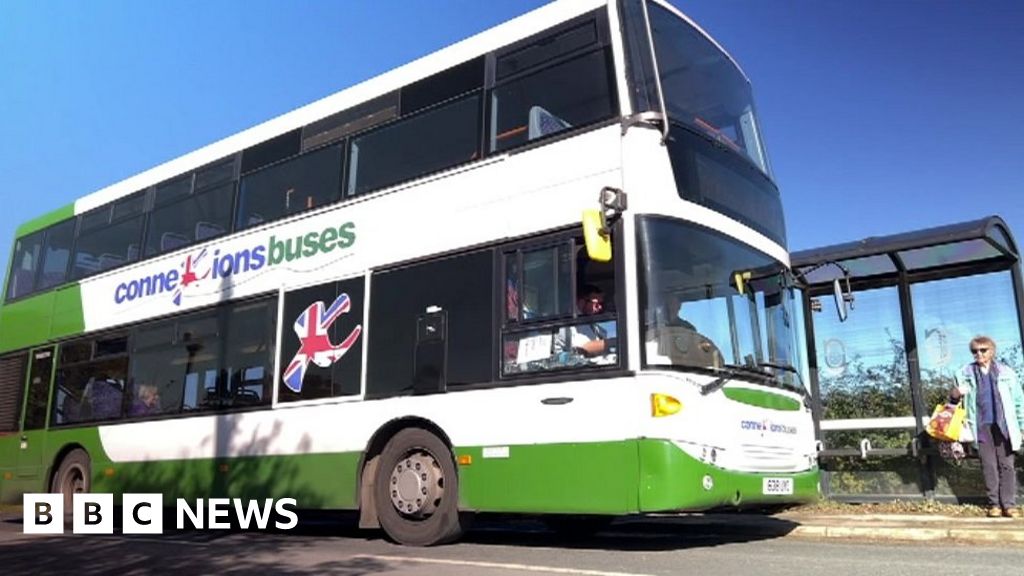
Tockwith: Villagers fear being stuck if bus route is axed
The 412 service from York to Wetherby is under threat due to rising costs, its operator says.
www.bbc.co.uk
Craig Temple, managing director of Connexions, said cutting the route "is not something we want to do".
"We have run the service at a loss for a number of years, but we are trying to serve the community we are based in," he said.
"It's one of the biggest villages around, it deserves a bus service.
"But with increasing costs and a shortage of staff, we have been left with no alternative."
He said concessionary passes have also hit the company's finances, as Connexions gets £1.56 for a return journey between York and Wetherby from a bus pass user, compared to £7.50 for a full fare.
Martin1988
Member
About a year ago at a public meeting I remember someone expressing concern that passengers were being deterred from using the last bus of the evening due to the risk of it being cancelled as a result of driver shortages and this was possibly going to lead to the operator concluding there was no demand for the later journey. Is it likely that this scenario has been borne out anywhere in the country?
Last year there was one route local to me where the late evening journeys on a Friday and a Saturday were cancelled a number of times presumably due to the driver shortage.
Am guessing that at various points operator changes must have impacted on the times of last journeys. For example since D&G took over the 38 (Crewe to Macclesfield) the time of the last bus has been an hour earlier in each direction (2235 instead of 2335). My one brief experience of catching Arriva's 2335 journey out of Crewe was I was the sole passenger on the bus so presumably that journey can't have been well used otherwise D&G would have retained it?
Last year there was one route local to me where the late evening journeys on a Friday and a Saturday were cancelled a number of times presumably due to the driver shortage.
Am guessing that at various points operator changes must have impacted on the times of last journeys. For example since D&G took over the 38 (Crewe to Macclesfield) the time of the last bus has been an hour earlier in each direction (2235 instead of 2335). My one brief experience of catching Arriva's 2335 journey out of Crewe was I was the sole passenger on the bus so presumably that journey can't have been well used otherwise D&G would have retained it?
I think that is probably comparing apples with pears though. Bus operators get paid an average reimbursement based on the average adult fare paid for their company. I should think that the £1.56 is the average reimbursement being compared to an individual ticket price. I very much doubt the average adult ticket sold by Connexions is £7.50.Like this example from North Yorkshire. Connexions Bus owner Craig Temple reported that off a £7.50 bus fare, the reimbursement was £1.56. That is only a 20% reimbursement.
Geordie driver
Member
I certainly would no longer rely on my last bus as I have little faith in them choosing to run it. They cut our evening services in half to " Improve reliability" and they became even more unreliable. You pay for a day ticket and only get one journey out of it, no point in complaining as they just ignore you. Then they wonder why people won't use them.About a year ago at a public meeting I remember someone expressing concern that passengers were being deterred from using the last bus of the evening due to the risk of it being cancelled as a result of driver shortages and this was possibly going to lead to the operator concluding there was no demand for the later journey. Is it likely that this scenario has been borne out anywhere in the country?
Last year there was one route local to me where the late evening journeys on a Friday and a Saturday were cancelled a number of times presumably due to the driver shortage.
Am guessing that at various points operator changes must have impacted on the times of last journeys. For example since D&G took over the 38 (Crewe to Macclesfield) the time of the last bus has been an hour earlier in each direction (2235 instead of 2335). My one brief experience of catching Arriva's 2335 journey out of Crewe was I was the sole passenger on the bus so presumably that journey can't have been well used otherwise D&G would have retained it?
Back when I worked for them, not running the last service was unknown, once it got to 5pm the supervisor knew if he was short and would deal with it accordingly, now they just shrug and blame the ( untrue) driver shortages.
And the toothless tiger know as the traffic commissioner let's them get away with it.
What is the point now of the traffic commissioner?
And the toothless tiger know as the traffic commissioner let's them get away with it.
What is the point now of the traffic commissioner?
What action would you have the Traffic Commissioner take?
Revoke the licence = no operator going forward as who would come forward to operate the service,
Curtail the licence = services would be cut.
Suspend the licence = no services operating.
They can fine the operator for non performance of scheduled services but that does not solve the problem if anything it could push a smaller operator under and then we get back to no operator.
The "elephant in the room" is quite frankly that a very large % of services especially the so called lifeline services need a very significant level of financial support. The problem then becomes (a) who has the money to support the service (b) does it represent good value for money? Is the real problem the cost of the driver?
The reality going on from that is very often it does not represent good value for money with a large sum of money providing a service for comparatively few people. It sounds very harsh indeed but like post offices, banks, small shops and now railway ticket offices time has moved on and for a very large % of the population the services that used to be available are no longer needed.
Given the success of technology for example Uber one has to wonder if the power of "tinternet" has to be harnessed in small towns to really promote car sharing and other cooperative ventures. I never cease to be amazed how even between small villages and towns the sheer volume of traffic that goes between the two and the number of "empty seats" that are waiting to be sat in if only we could reset our minds.
- Status
- Not open for further replies.