
-
Our new ticketing site is now live! Using either this or the original site (both powered by TrainSplit) helps support the running of the forum with every ticket purchase! Find out more and ask any questions/give us feedback in this thread!
You are using an out of date browser. It may not display this or other websites correctly.
You should upgrade or use an alternative browser.
You should upgrade or use an alternative browser.
Dawlish-Teignmouth Overtaking
- Thread starter Blobfish
- Start date
Sponsor Post - registered members do not see these adverts; click here to register, or click here to log in
R
RailUK Forums

A while back there was a policy change for signallers using bi di in the reverse direction on the western region. Before the change, much of it couldn't be used in normal operation, for regulating purposes like this impromptu overtaking manoeuvre. There were emergency scenarios that could justify its use, but late running or an opportunity to recover some delay or prevent it getting worse wasn't sufficient. Planned use outside those circumstances required advance notice in operating publications. The policy change allowed signallers the freedom to utilize bi di as they see fit for regulating.
The policy change allowed signallers the freedom to utilize bi di as they see fit for regulating.
If it's done on the fly as it were then do drivers get warned over the radio or do they just encounter an unexpected yellow - with a feather if they are lucky - and a lurch sideways?
The bi-di Cheadle Hulme-Crewe includes appropriate feather and approach release for the speed of the crossover - 60mph from memory. Trains aren’t stopped, but drivers may well be notified in advance.If it's done on the fly as it were then do drivers get warned over the radio or do they just encounter an unexpected yellow - with a feather if they are lucky - and a lurch sideways?
Used intermittently as noted above. I’ve arrived in Wilmslow p3 from Manchester, for example.
Last edited:

rmHawk765
Member
I am almost certain that it works everywhere like a regular diverging route.If it's done on the fly as it were then do drivers get warned over the radio or do they just encounter an unexpected yellow - with a feather if they are lucky - and a lurch sideways?
== Doublepost prevention - post automatically merged: ==
The issue is that there are few instances in the UK where a) there are long enough station-station distances with enough varied traffic and b) an amount of traffic that actually allows stopping everything going the other way. Crossovers simply can't be provided at every signal for multiple reasons, and honestly the Dawlish example is the best location I can think of for this sort of working.Very common in Austria too, as - as in Switzerland, I believe - everywhere is bi-directionally signaled ("wrong-line" working as a term does not exist anymore). If a stopper gets overtaken, if possible the overtaking train will use the "non-scheduled" track, so that at stations en-route, no passenger needs to change platforms at the last minute.
I believe the main reason we haven't got round to installing bi-di for disruption purposes on mainlines (with a few exceptions for short sections) is that the safety systems make it unnecessarily difficult to have a proper bi-di system, so the cost would increase dramatically as it's not just replacing interlocking that is the issue. Yet another reason to finally get round to installing ETCS L1 nationwide, which was one of the justifications for downgrading ATP to TPWS.
Last edited:
Falcon1200
Established Member
Innerwick to Granthouse (southbound) on the ECML in Scotland could be done to get round a labouring southbound freight.
We (Glasgow Control) used that facility some years ago now when two Up freights departed Millerhill in close succession; The operator wanted the order reversed so the first train was signalled over the Down allowing the second to overtake it on the Up. Luckily nothing was due in the Down direction!
swt_passenger
Veteran Member
- Joined
- 7 Apr 2010
- Messages
- 34,227
That’s not involving running in the wrong direction though, which is the main question of this thread.Once had an IET cross from the Up Main to Up Slow and then back again to get around a stopping service in P3 at Slough.

Dr Hoo
Established Member
What you witnessed was actually a fruit of the love affair with single lead junctions that was prevalent in the Glasgow/Strathclyde area back in the 1980s. Westerton and Knightswood North Junctions functioned as a 'back-to-back' pair, half a mile apart. Could be quite un-nerving. Needs a layout plan to fully appreciate the set-up.I have seen this at Westerton where the train I was on, an electric local train starting at Milngavie, was overtaken on the other side by a Class 156 diesel presumably heading down from the West Highland Line (and yes, overtaken- it went back onto the track ahead of us). Rather disconcerting!
irish_rail
On Moderation
The only warning we get is a yellow with the feather at the Warren. It's a reasonably common thing, I'd say i do it 2 or 3 times a year personally. Seems mainly to happen in the evening when up traffic is lighter.If it's done on the fly as it were then do drivers get warned over the radio or do they just encounter an unexpected yellow - with a feather if they are lucky - and a lurch sideways?
Falcon1200
Established Member
Needs a layout plan to fully appreciate the set-up.
IIRC the only crossover at Westerton is the facing one on the Dalmuir side of the station. This serves a dual purpose, allowing trains to Milngavie to cross from Down onto Up line and then onto the branch, and trains from the Dalmuir direction (normally West Highland services) to cross from Up to Down line and then onto the Maryhill branch at the Glasgow end of the station.
Something which sadly contributed to bringing the suburbs of Bellgrove and Newton into unwanted prominence.What you witnessed was actually a fruit of the love affair with single lead junctions that was prevalent in the Glasgow/Strathclyde area back in the 1980s.
coppercapped
Established Member
A point of order...the Western does not run 'slow' trains! The lines are referred to as 'Reliefs' as they relieve the load on the Mains.Once had an IET cross from the Up Main to Up Slow and then back again to get around a stopping service in P3 at Slough.
Got that off my chest...
The Sectional Appendix showing the layout you describedIIRC the only crossover at Westerton is the facing one on the Dalmuir side of the station. This serves a dual purpose, allowing trains to Milngavie to cross from Down onto Up line and then onto the branch, and trains from the Dalmuir direction (normally West Highland services) to cross from Up to Down line and then onto the Maryhill branch at the Glasgow end of the station.
Attachments
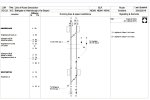
On the Teignmouth section, no warning. Single yellow cautionary encountered followed by another main aspect with a No.4 junction indicator. All down to Sectional Appendix rules and route knowledge.If it's done on the fly as it were then do drivers get warned over the radio or do they just encounter an unexpected yellow - with a feather if they are lucky - and a lurch sideways?
I wonder why these reasons don't apply abroad, as others have described. The main Swiss mountain routes have very frequent crossovers, and looking at their condition they are in constant use.Crossovers simply can't be provided at every signal for multiple reasons, and honestly the Dawlish example is the best location I can think of for this sort of working.
I do recall about 10 years ago an extended stop at Bristol Parkway on a Down service due to a medical emergency on board waiting for an ambulance, so no advance warning, and being quite struck how services in both directions were being routed around us through the Up platform, seemingly with little delay either way.
A signal and associated route indications are a signaller's intention and instruction, filtered through a safety interlocking. Assuming a driver has the route knowledge, a signalled wrong road move along the same corridor is still, in most cases, a viable route for a train to get to its next call, so it can't be a misroute, where an unexpected route will not get the train to where it's going or leads towards a section where the particular rolling stock is not permitted.
If a down Plymouth train was signalled to the Torbay branch at Newton Abbot West for example, that would be a misroute; unexpected and wrong. If some operational incident required a Plymouth train to be diverted to turn back at Goodrington, say, then the driver will expect and deserve a conversation with the signaller and no doubt a full briefing from control.
If a down Plymouth train was signalled to the Torbay branch at Newton Abbot West for example, that would be a misroute; unexpected and wrong. If some operational incident required a Plymouth train to be diverted to turn back at Goodrington, say, then the driver will expect and deserve a conversation with the signaller and no doubt a full briefing from control.

androdas
Member
It happens from occasionally between Newcastle and Benton Junction. An Ashington train will be sent down the up line to Benton junction to allow a (usually late running) fast train to head north past it. I believe all lines in the area between Benton Junctions and Tyne Yard on the ECML are fully bi-di, with SIMBIDS (Simplified Bi-Di) in other areas but I'm sure someone with more signalling knowledge will be able to correct me if im wrong.
Iron_Duke
Member
Gloucester Yard Junction to Tuffley Junction can be used reasonably frequently where a late-running GWR service for Bristol runs parallel with an on-time CrossCountry service also heading south. The reversible extends to Barnwood Junction can be used for any service but useful for freights occasionally.
Gloucester station to Over Junction is reversible on the Up Main and useful for sending early/late freights for South Wales down to Over and be overtaken by a Down service on the Down Main.
Gloucester station to Over Junction is reversible on the Up Main and useful for sending early/late freights for South Wales down to Over and be overtaken by a Down service on the Down Main.
It's a balance and related to the traffic mix and the maintenance requirements. By contrast, the Shinkansen network in Japan has very few crossovers outside major stations. Every turnout added is an asset requiring maintenance and renewal and is another failure point in the system that could lose detection in the heat or cold and revert a signal to red in front of a train. The costs and risks need to be accompanied by sufficient benefit to make them worthwhile.I wonder why these reasons don't apply abroad, as others have described. The main Swiss mountain routes have very frequent crossovers, and looking at their condition they are in constant use.
I believe, as masters of the mountain railway, the Swiss have devised a unique maintenance regime for their busy transalpine routes in which the bidi and frequent crossovers are crucial.
The infrastructure is very challenging, with tunnels, viaducts, retaining walls, buttresses and other structures, all on a massive scale and critical to reliable safe operation in very inhospitable terrain alongside power supply and signalling assets. The ability to close one track for a short distance for inspection, minor maintenance and repair is likely critical to service delivery. I expect the timetables are designed to absorb the delay impacts of one short section being temporarily singled in this way. The sections are typically between stations rather than having crossovers at every signal.
Before the base tunnel, on the very twisty and steep parts of the Gotthard north and south ramps, SBB closed a number of isolated minor intermediate stations to passengers, substituting bus routes that better served the local settlements along the valleys, which are often significantly vertically separated from the station sites. That created more capacity for freights, which would be less likely to need to overtake a passenger service by using the crossovers at these locations, and less likely to have to stop and restart on the steep gradients if conflicting with opposing traffic when attempting to do this. The crossovers remain in use at these locations for maintenance diversions however. Here's a schematic trackplan showing the north ramp. The stations closed were between Wassen and Goeschenen: https://www.sporenplan.nl/html_de/sporenplan/sbb/zug-erstfeld.html


TransportHub
Member
I heard a story from a signaller friend in Vic ASC, something had gone wrong and the bi di on the WLL needed using. The driver of a LO train stopped at the signal (with the route to the other road) rung the box to say he didn't sign the down road in the up direction......A signal and associated route indications are a signaller's intention and instruction, filtered through a safety interlocking. Assuming a driver has the route knowledge, a signalled wrong road move along the same corridor is still, in most cases, a viable route for a train to get to its next call, so it can't be a misroute, where an unexpected route will not get the train to where it's going or leads towards a section where the particular rolling stock is not permitted.
After a southern train and a couple other LO went past (using a crossover further back) he rang the box again to say he did now sign it!
Flying_Turtle
Member
- Joined
- 4 Apr 2016
- Messages
- 194
One of the obstacles for the introduction of widespread bidirectional signalling in the UK seems to be the route based signalling requiring detailed route knowledge by the drivers (with the consequent need for route refreshment if not used regularly).
On my network, having speed based signalling, route knowledge does not include the need itinerary speeds knowledge as signalling will tell exactly what speeds one needs to comply with so, even in wrong line there is no biggie regarding less used itineraries.
On my network, having speed based signalling, route knowledge does not include the need itinerary speeds knowledge as signalling will tell exactly what speeds one needs to comply with so, even in wrong line there is no biggie regarding less used itineraries.

Annetts key
Established Member
If it's done on the fly as it were then do drivers get warned over the radio or do they just encounter an unexpected yellow - with a feather if they are lucky - and a lurch sideways?
As others have said, normal junction signalling arrangements are used, either approach control / approach release or a flashing yellow(s) aspect sequence with the junction signal clearing up to a main aspect with junction (or route) indicator.I am almost certain that it works everywhere like a regular diverging route.
Full reversible signalling has normal AWS (with suppression of the AWS for the other direction) and TPWS (protecting points of conflict, same as the normal direction signalling, not normally fitted to "plain line" signals). Some SIMBIDS (Simplified Bidirectional signalling) may have longer signal sections (so less signals due to this), a lower line speed and may not have suppression of the AWS for the normal direction).
No, the reason is not the safety systems that you have listed (although these do add to the cost as well).I believe the main reason we haven't got round to installing bi-di for disruption purposes on mainlines (with a few exceptions for short sections) is that the safety systems make it unnecessarily difficult to have a proper bi-di system, so the cost would increase dramatically as it's not just replacing interlocking that is the issue. Yet another reason to finally get round to installing ETCS L1 nationwide, which was one of the justifications for downgrading ATP to TPWS.
AWS, TPWS, and GWML ATP can all cope with reversible / bidirectional operation. It's no different to using them on single line sections.
The reason is that upgrading a route relay interlocking for reversible signalling means lots of costly alterations to the interlocking and may also need new multicore lineside cables for long distances. You need good designers, good installers and good testers. And during the alterations, the line has to be closed to traffic. That means one or a series of four day blocks or a block of at least one week per reversible section (between crossover points). During the testing, no other engineering works that affect the signalling can take place, so no engineering trains, or on track machines. And If track circuits are used, no trolleys or cutting / changing rails.
Even in the past, for route relay interlocking, the extra cost if included as a new scheme has to be justified, otherwise it would not be included.
With computer based interlocking like SSI and the later systems, it's easier and cheaper to include reversible signalling. Hence it's becoming more common on new schemes.
Last edited: