• Our new ticketing site is now live! Using either this or the original site (both powered by TrainSplit) helps support the running of the forum with every ticket purchase! Find out more and ask any questions/give us feedback in this thread!

Changing ends & signalling at terminal stations

Status
Not open for further replies.

Phil25

Member
Joined
17 Sep 2025
Messages
24
Location
Poland
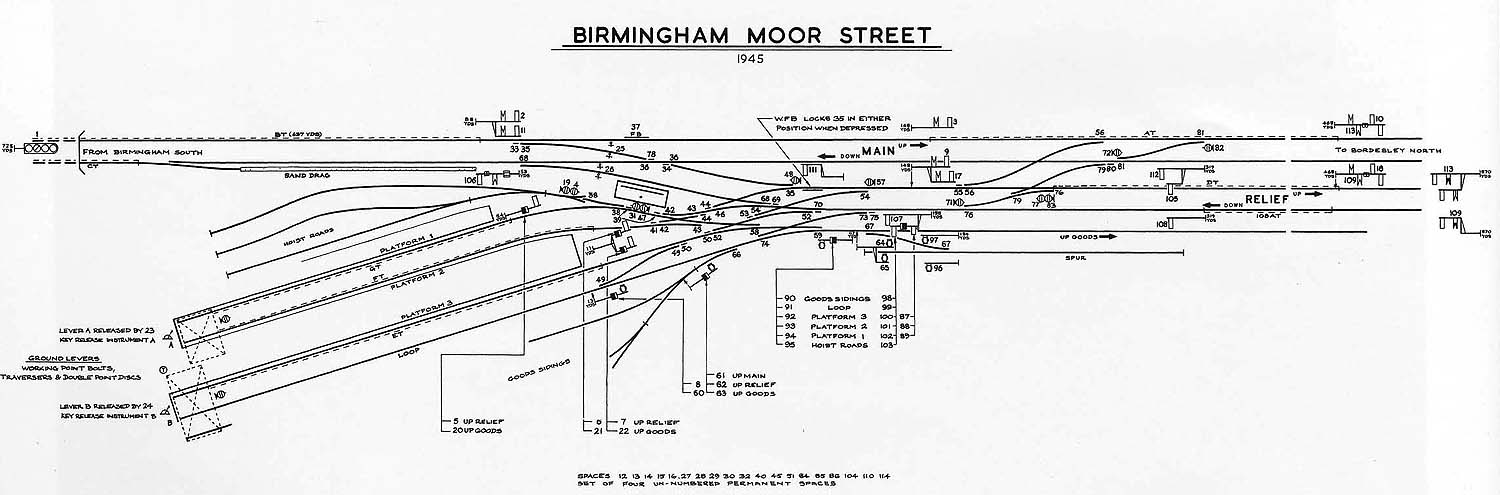
Hello. I'm curious, how did locomotives change ends at terminal stations before things such as DBSOs (Driving Brake Standard Open) become common? It is easily done when a headshunt is available at a station, however when looking at layouts of terminal stations I noticed that many of them lack this kind of track. Some older stations have a switch right in the middle of the platform (operated by a lever frame) which also made me wondering just how does the train driver come to an agreement with the signalman to operate it and where to stop at the platform. Of course when there were DMUs and EMUs operating there was nothing to worry about, but in the 20th century there were many locomotives still running. Below are provided pictures of some station layouts & model railways.
210.jpg
904.jpg
gwrms2747.jpg
1759867748401.png
Of course this question might be a bit foolish as it probably "depends on what the local needs were" but I'm open to replies.
 
Sponsor Post - registered members do not see these adverts; click here to register, or click here to log in
R

RailUK Forums

StephenHunter

Established Member
Joined
22 Jul 2017
Messages
2,916
Location
London
Another locomotive came in and pulled the carriages out, clearing the way for that locomotive to depart.
 

hexagon789

Veteran Member
Joined
2 Sep 2016
Messages
18,304
Location
Glasgow
Hello. I'm curious, how did locomotives change ends at terminal stations before things such as DBSOs (Driving Brake Standard Open) become common? It is easily done when a headshunt is available at a station, however when looking at layouts of terminal stations I noticed that many of them lack this kind of track. Some older stations have a switch right in the middle of the platform (operated by a lever frame) which also made me wondering just how does the train driver come to an agreement with the signalman to operate it and where to stop at the platform. Of course when there were DMUs and EMUs operating there was nothing to worry about, but in the 20th century there were many locomotives still running. Below are provided pictures of some station layouts & model railways.
210.jpg
904.jpg
gwrms2747.jpg
View attachment 189936
Of course this question might be a bit foolish as it probably "depends on what the local needs were" but I'm open to replies.
Most major termini were worked "shunt release".

Train arrives.

Train loco uncouples from coaches.

Station pilot arrives and couples to coaches.

Coaches taken to sidings for servicing.

Meanwhile, train loco reverses up to platform starter.

Train loco then heads to sheds for water/coal or bedding down for the night as appropriate.

Some local variations did occur of course.
 

frankmoh

On Moderation
Joined
7 May 2025
Messages
822
Location
London
Now, what would happen when coaches would be in service for the next train after? Network Southeast loco-hauled services to Exeter or Salisbury spring to mind.
 

Gloster

Veteran Member
Joined
4 Sep 2020
Messages
12,977
Location
Up the creek
One thing about a ground frame near the buffer stops that allowed a loco to use the round-round loop: it would not be worked by the driver, at least officially. Usually it was a fireman, shunter, a member of station staff or the guard: all these would have to be trained, but that was mostly a five-minute job.

The operator would contact the signal box by ‘phone, plunger or bell: the plunger would tell the signalman ‘ready to operate ground frame’ and the bell would do the same, but have other codes. The signalman would give a release, either by a lever that moved a locking bolt in the ground frame or electrically, the operator would operate the ground frame and when the loco was clear would put it all back to normal and tell the signalman the same way. There are plenty of variations.
 

Taunton

Veteran Member
Joined
1 Aug 2013
Messages
12,262
Crossovers near the bufferstops were not common, and where installed were not often used. The train would likely need to stop a bit short so the loco could manoeuvre back over it

The loco propelling the stock back out (or in) was much more common; in the many photos of coaching stock at the buffers there is no other way. At Taunton this is how it was done from the Up arrival bay to the carriage sidings to the west. The loco would propel back, with the shunter leaning out of the end droplight waving their arm slowly, sometimes aided by holding a fistful of paper towels taken from the adjacent toilet!
 

30907

Veteran Member
Joined
30 Sep 2012
Messages
21,949
Location
Airedale
Another locomotive came in and pulled the carriages out, clearing the way for that locomotive to depart.
That was true at larger/busier stations, but smaller termini rarely ran to a relieving loco, so running round using a crossover between platform tracks or a separate release road was normal. You could also propel to/from carriage sidings, or have a turntable at the end of the line.

Of the examples given by Phil25:
Bognor before electrification had release crossovers to 3 of the 4 platforms (https://maps.nls.uk/view/103675003)
Moor St famously had traversers
Reading Southern was unusual in having no release facility (even before electrification), though not unique.(Of the SR's smaller termini, Southampton Terminus and Portsmouth & S both lacked release roads).
 

75A

Established Member
Joined
31 Mar 2021
Messages
2,043
Location
Ireland (ex Brighton 75A)
Crossovers near the bufferstops were not common, and where installed were not often used. The train would likely need to stop a bit short so the loco could manoeuvre back over it

The loco propelling the stock back out (or in) was much more common; in the many photos of coaching stock at the buffers there is no other way. At Taunton this is how it was done from the Up arrival bay to the carriage sidings to the west. The loco would propel back, with the shunter leaning out of the end droplight waving their arm slowly, sometimes aided by holding a fistful of paper towels taken from the adjacent toilet!
The one at Bognor's Platform 3 (long gone) was used very occasionally for excursions from other regions. The loco would uncouple, pull forward and then use the Carriage Siding to run round it's train. I can remember seeing a Class 25 from the Midland Region on a Summer Saturday in the early 1970's.
At Littlehampton we'd bring in Football Special ECS's from Hove push them back through the Carriage Washer and run round them.
At Portsmouth Harbour we'd just couple up to the incoming train from Bristol etc, and work it away releasing the engine that brought the train in.
At Brighton trains that came in from the West would use Platform 2, and the release loco would come in from Hove and take the ECS back there where it would run round the stock and take it back to New Cross Gate.
Loco hauled trains from the North or East would normally use Platform 7, where the 350 (Class 09) would take the ECS to Lovers Walk for servicing releasing the loco - usually a Class 47.
The Brighton papers and the Eastbourne/Hastings papers ECS would be propelled back into Top Yard by the Train Loco - Class 73.
 

Cheshire Scot

Established Member
Joined
24 Jul 2020
Messages
1,676
Location
North East Cheshire
Crossovers near the bufferstops were not common, and where installed were not often used. The train would likely need to stop a bit short so the loco could manoeuvre back over it
At some locations the train would stop short, but at others it would run to the buffer stops then, when ready, propel clear of the crossover to enable the loco to run round, basically as described by @30907

That was true at larger/busier stations, but smaller termini rarely ran to a relieving loco, so running round using a crossover between platform tracks or a separate release road was normal. You could also propel to/from carriage sidings, or have a turntable at the end of the line.
This was common at at a number of locations on the rural lines in Scotland such as Wick, Thurso, Kyle and Mallaig right up to the end of loco hauled workings, and in the pre Beeching era at numerous other branch line termini
 

Rescars

Established Member
Joined
25 May 2021
Messages
2,543
Location
Surrey
Cowes (IoW) sited at the bottom of a steep gradient took a novel approach. The incoming loco would propel its empty carriages backwards up the gradient and then run forward and round its train using a crossover. The carriages were then allowed to run back down into the station by gravity, controlled by handbrake by the guard. The loco was then reattached at the other end.
 
Joined
23 Nov 2023
Messages
751
Location
Grimsby
Hull Paragon in the 1980's employed most of the methods described.
The platforms had crossovers at the buffer stop ends to enable run-around. Sometimes the locomotive would stop short of the points, and sometimes it would pull right down before shunting the coaches back a bit to give room for the loco to use the crossover.
Often though something would be occupying the adjacent platform, so the "station pilot" class 08 (usually 08777) would be called upon to pull the coaches out, allow the train engine to run out onto an adjacent line, and then propel the coaches back into the platform.
 

SuspectUsual

Established Member
Joined
11 Jul 2018
Messages
6,736
Cowes (IoW) sited at the bottom of a steep gradient took a novel approach. The incoming loco would propel its empty carriages backwards up the gradient and then run forward and round its train using a crossover. The carriages were then allowed to run back down into the station by gravity, controlled by handbrake by the guard. The loco was then reattached at the other end.

Gravity shunting was also used for the Bridport branch train at Maiden Newton.
 

Taunton

Veteran Member
Joined
1 Aug 2013
Messages
12,262
We tried to work out a while ago here the minimum manoeuvres required at Mallaig, which had an engine release road, and a separate turntable alongside the station throat, but no shunting loco, for a steam service with an observation car on the rear, to get both train loco and observation car turned and onto the opposite ends of the incoming train ready for departure, the train loco having to do everything itself. It was around 20.
 

edwin_m

Veteran Member
Joined
21 Apr 2013
Messages
28,648
Location
Nottingham
Coaches taken to sidings for servicing.

Meanwhile, train loco reverses up to platform starter.
In the heydey of these moves, such as at the WCML termini before DVTs, the loco was permitted to follow the departing train at a safe-ish distance and wait at the platform starter signal for the route to wherever it was going to await its next duty. If they couldn't do that, the loco had to wait at the buffer stops until the signal cleared, as moving later might have caused a collision with another train being signalled into the platform.

It looked scary but I'm not aware of any collisions. It was banned sometime after DVTs came in, possibly because it would have been a very occasional move and drivers less familiar were more likely to get it wrong.
 

The exile

Established Member
Joined
31 Mar 2010
Messages
9,367
Location
Somerset
At Glasgow QS the loco that brought the train in would sometimes (often?) the be used as a banker up to Cowlairs.
 

47296lastduff

Member
Joined
5 Jul 2019
Messages
131
At Manchester Picc, trains from Birmingham would enter the platform which had a crossover near the buffers. A lamp showing a red aspect would be placed at the platform edge, short of the crossover. The driver was then able to take the loco to the buffers, reverse over the crossover, and proceed to the other end of the train.
 

Harvester

Established Member
Joined
9 Nov 2020
Messages
1,759
Location
Notts
At Glasgow QS the loco that brought the train in would sometimes (often?) the be used as a banker up to Cowlairs.
Have seen photos of A4s doing this (tender first) out of Buchanan Street as far as St Rollox.
 

AndrewE

Established Member
Joined
9 Nov 2015
Messages
7,338
We tried to work out a while ago here the minimum manoeuvres required at Mallaig, which had an engine release road, and a separate turntable alongside the station throat, but no shunting loco, for a steam service with an observation car on the rear, to get both train loco and observation car turned and onto the opposite ends of the incoming train ready for departure, the train loco having to do everything itself. It was around 20.
That would make it an absolutely ideal subject for a modeller whose main interest is in operating!
 
Joined
23 Nov 2023
Messages
751
Location
Grimsby
In the heydey of these moves, such as at the WCML termini before DVTs, the loco was permitted to follow the departing train at a safe-ish distance and wait at the platform starter signal for the route to wherever it was going to await its next duty. If they couldn't do that, the loco had to wait at the buffer stops until the signal cleared, as moving later might have caused a collision with another train being signalled into the platform.

It looked scary but I'm not aware of any collisions. It was banned sometime after DVTs came in, possibly because it would have been a very occasional move and drivers less familiar were more likely to get it wrong.
It was still happening at Liverpool Lime Street in March 1995 with Regional Railways' loco-hauled services, as depicted in this YouTube video from Soi Buakhao.
(From around 05:50 a class 31 is seen pulling a rake of coaches out of the platform with the train engine, a 37, following behind).
 

ac6000cw

Established Member
Joined
10 May 2014
Messages
3,910
Location
Cambridge, UK
For those who haven't seen it done, this video of mine (taken in Ireland in 2000 & 2005) has several terminal/bay-platform loco run-arounds/releases in it. The run-around at Ballina (at 11:20) in particular shows how much faff is involved compared to changing ends on a DMU:

 
Last edited:

Harpo

Established Member
Joined
21 Aug 2024
Messages
3,836
Location
Newport
The role of carriage pilots is worth mentioning too. 31s had a long association with this at Kings Cross and Paddington as did smaller locos at Euston.

When there was little spare type 4/5 power on paper at the London end, released ‘big’ engines could drop straight onto another departure immediately or after running via the fueller, leaving small locos to move empty stock.

At peak times (Paddington at least) big engines were needed to move ECS before/after main line jobs and it avoided light loco moves too. In fact, light locos were barred at the GE’s London end in the peaks.
 

matchmaker

Established Member
Joined
8 Mar 2009
Messages
1,880
Location
Central Scotland
Now, what would happen when coaches would be in service for the next train after? Network Southeast loco-hauled services to Exeter or Salisbury spring to mind.
Loco would be released when the train departed with a new train loco. Glasgow Queen Street High Level was a good example. Coaches were serviced at the platform. New loco arrived and attached to (new) front of train. Train departed and was banked up Cowlairs Incline by the original loco, which departed at the top of the incline and went for servicing.
 

Gloster

Veteran Member
Joined
4 Sep 2020
Messages
12,977
Location
Up the creek
Now, what would happen when coaches would be in service for the next train after? Network Southeast loco-hauled services to Exeter or Salisbury spring to mind.

At Waterloo the train would come in, a loco would come out of the sidings and attach to the rear (which would be the front on departure), the train departs (after cleaning, tanking, etc.) behind the second loco, the loco that brought the train in goes out to the loco sidings and waits there until it drops on to the next train when it arrives. At Waterloo locos mostly went back out on the next train: elsewhere they might go to shed for servicing instead and another would come off shed for the next train.
 

edwin_m

Veteran Member
Joined
21 Apr 2013
Messages
28,648
Location
Nottingham
The role of carriage pilots is worth mentioning too. 31s had a long association with this at Kings Cross and Paddington as did smaller locos at Euston.

When there was little spare type 4/5 power on paper at the London end, released ‘big’ engines could drop straight onto another departure immediately or after running via the fueller, leaving small locos to move empty stock.

At peak times (Paddington at least) big engines were needed to move ECS before/after main line jobs and it avoided light loco moves too. In fact, light locos were barred at the GE’s London end in the peaks.
Until remodelling in the late 80s, Liverpool Street had at least one loco siding just off the platform ends - possibly a relic from the "Jazz" service which needed a quick turnaround of loco-hauled suburban services before electrification.
 

High Dyke

Established Member
Joined
1 Jan 2013
Messages
5,006
Location
Yellabelly Country
Now, what would happen when coaches would be in service for the next train after? Network Southeast loco-hauled services to Exeter or Salisbury spring to mind.
When loco-hauled services worked from Portsmouth Harbour to places like Bristol and Cardiff the incoming stock was shunt released by a fresh loco for that working. I stood on Fratton station many a time watching a light loco run off the depot as the incoming stock was passing.
 

The exile

Established Member
Joined
31 Mar 2010
Messages
9,367
Location
Somerset
When loco-hauled services worked from Portsmouth Harbour to places like Bristol and Cardiff the incoming stock was shunt released by a fresh loco for that working. I stood on Fratton station many a time watching a light loco run off the depot as the incoming stock was passing.
With pedant hat firmly on, surely not a shunt release as the incoming loco was released by the departure of the next train (with fresh loco) not by a specific shunt.
 

Gloster

Veteran Member
Joined
4 Sep 2020
Messages
12,977
Location
Up the creek
When loco-hauled services worked from Portsmouth Harbour to places like Bristol and Cardiff the incoming stock was shunt released by a fresh loco for that working. I stood on Fratton station many a time watching a light loco run off the depot as the incoming stock was passing.

My recollection is that they were normally a turnover loco, which went to Fratton and back because there was not really anywhere to hold it at Harbour.
 
Status
Not open for further replies.

Top