
-
Our new ticketing site is now live! Using either this or the original site (both powered by TrainSplit) helps support the running of the forum with every ticket purchase! Find out more and ask any questions/give us feedback in this thread!
You are using an out of date browser. It may not display this or other websites correctly.
You should upgrade or use an alternative browser.
You should upgrade or use an alternative browser.
Catch them before they're gone
- Thread starter Alfonso
- Start date
Sponsor Post - registered members do not see these adverts; click here to register, or click here to log in
R
RailUK Forums
Some recent media about the retirement of ÖBB's class 4020 EMUs (all in German):
Illustrated official tribute including historical photos:
https://www.unsereoebb.at/unsereoebb/artikel/2026/4020
Illustrated ÖBB article of the media event for yesterday's final run:
https://presse-oebb.at/news-letzte-...ureihe-4020?id=244680&menueid=27022&l=deutsch
Official ÖBB video about the retirement not just of the units but also that of electrician Johann 'Knasi' Knasmillner who is described as a '4020 expert':
Video from 'Bahnblick' about the units with interviews with fans of them including Herr Knasmillner again:
Illustrated official tribute including historical photos:
https://www.unsereoebb.at/unsereoebb/artikel/2026/4020
Illustrated ÖBB article of the media event for yesterday's final run:
https://presse-oebb.at/news-letzte-...ureihe-4020?id=244680&menueid=27022&l=deutsch
Official ÖBB video about the retirement not just of the units but also that of electrician Johann 'Knasi' Knasmillner who is described as a '4020 expert':
Video from 'Bahnblick' about the units with interviews with fans of them including Herr Knasmillner again:
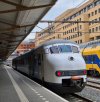
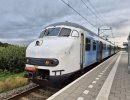
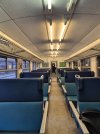
To confirm following the query earlier in this thread; 'Plan V' unit 904 (built 1973) was in traffic today.
The normal diagram is (Mon - Fri only);
0655 Amersfoot Centraal - Barneveld Zuid
0724 Barneveld Zuid - Amersfoot Centraal
0755 Amersfoot Centraal - Barneveld Zuid
0824 Barneveld Zuid - Amersfoot Centraal
A search on Google suggests approximately a 2 year hire-in, which commenced in Spring 2025, to cover while the normal fleet is refurbished.
The normal diagram is (Mon - Fri only);
0655 Amersfoot Centraal - Barneveld Zuid
0724 Barneveld Zuid - Amersfoot Centraal
0755 Amersfoot Centraal - Barneveld Zuid
0824 Barneveld Zuid - Amersfoot Centraal
A search on Google suggests approximately a 2 year hire-in, which commenced in Spring 2025, to cover while the normal fleet is refurbished.
Attachments

Austriantrain
Established Member
- Joined
- 13 Aug 2018
- Messages
- 1,814
Some recent media about the retirement of ÖBB's class 4020 EMUs
As expected, they still occasionally run in service.
Happy to report Tatra trams alive and kicking in Tallinn and Riga.
In Tallinn the KT4s(I can’t keel up with all the various suffixes) make up approximately half the allocations of lines 1 and 2. The other lines seem exclusively low floor.

T3s and T6s are plentiful In Riga. There are still some lines with no low floor allocation at all.


In Tallinn the KT4s(I can’t keel up with all the various suffixes) make up approximately half the allocations of lines 1 and 2. The other lines seem exclusively low floor.
T3s and T6s are plentiful In Riga. There are still some lines with no low floor allocation at all.

SHD
Member
- Joined
- 18 Jul 2012
- Messages
- 572
The farewell to MP73 trains of the Paris métro (on Line 6) will occur today.
T3s and T6s are plentiful In Riga. There are still some lines with no low floor allocation at all.
View attachment 207345
View attachment 207346
Quite something seeing them running with trolley poles, too.

I managed a short trip on a 4020 last Friday on their last day and got this photo at Wein Meidling
 Farewell by Matt Spencer, on Flickr
Farewell by Matt Spencer, on Flickr
LokPartner in Germany have announced on their Facebook page that the RE44 route between Bottrop and Moers via Duisburg is going back to temporary loco hauled stock from Monday 13th July, with Class 110 and 111 hauling n-Wagen (presumably those recently used on the 218 RE10 operation until May) and accessible double-deck coaches.

BRX
Established Member
- Joined
- 20 Oct 2008
- Messages
- 4,560
Do you know if this’ll still be the case in September? And what’s currently the best place for me to get up-to-date info on the various loco-hauled n-Wagen services in Germany?LokPartner in Germany have announced on their Facebook page that the RE44 route between Bottrop and Moers via Duisburg is going back to temporary loco hauled stock from Monday 13th July, with Class 110 and 111 hauling n-Wagen (presumably those recently used on the 218 RE10 operation until May) and accessible double-deck coaches.
I don't know if the RE44 replacement will run in September, I know the arrangement lasts until 9 August but this can be extended for a longer period if RheinRuhrBahn still haven't got their act together.Do you know if this’ll still be the case in September? And what’s currently the best place for me to get up-to-date info on the various loco-hauled n-Wagen services in Germany?
As for the latest information, the German rail forum Drehscheibe-Online would have the latest info on such services, though is a bit hard to search through for my liking. Taking note of this slightly-outdated thread (https://www.drehscheibe-online.de/foren/read.php?006,11407576) I can list out four routes that are n-Wagen hauled in 2026, all of which by private companies running "temporary" replacement diagrams or on longer-term contracts, with links to timetables.
- RE44 as mentioned; (RE44 Timetable link)
- RB37 between Krefeld and Neuss, which is a longer-term contract using one push-pull set on weekdays only until Dec 2027; (RB37 Timetable link)
- RE90 between Nuremburg and Stuttgart via Crailsheim, running 4-5 times daily and has been doing so since Dec 2022 to cover stock/crew shortages so unsure if it will continue beyond Dec 2026; (RE90 Timetable link)
- Summer weekend "Freizeitexpress" services on the RE3 and RE4 routes out of Stuttgart, which run to Singen, Lindau or Konstanz (Freizeitexpress Timetable link)
BRX
Established Member
- Joined
- 20 Oct 2008
- Messages
- 4,560
Thank you - this is very helpful.I don't know if the RE44 replacement will run in September, I know the arrangement lasts until 9 August but this can be extended for a longer period if RheinRuhrBahn still haven't got their act together.
As for the latest information, the German rail forum Drehscheibe-Online would have the latest info on such services, though is a bit hard to search through for my liking. Taking note of this slightly-outdated thread (https://www.drehscheibe-online.de/foren/read.php?006,11407576) I can list out four routes that are n-Wagen hauled in 2026, all of which by private companies running "temporary" replacement diagrams or on longer-term contracts, with links to timetables.
- RE44 as mentioned; (RE44 Timetable link)
- RB37 between Krefeld and Neuss, which is a longer-term contract using one push-pull set on weekdays only until Dec 2027; (RB37 Timetable link)
- RE90 between Nuremburg and Stuttgart via Crailsheim, running 4-5 times daily and has been doing so since Dec 2022 to cover stock/crew shortages so unsure if it will continue beyond Dec 2026; (RE90 Timetable link)
- Summer weekend "Freizeitexpress" services on the RE3 and RE4 routes out of Stuttgart, which run to Singen, Lindau or Konstanz (Freizeitexpress Timetable link)
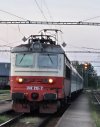
The class 242 locos in Czech are still clinging on; despite their last day on passenger work supposedly being the end of June, there's only been four days this month where one hasn't worked (though usually only one, on a given day).
242213 was in traffic today, photo attached.
242213 was in traffic today, photo attached.
Attachments

Springs Branch
Established Member
The first of Melbourne's new generation G-class trams has just entered public service. Tram 7006 did the honours on Route 59 on 30 July.
https://www.alstom.com/press-releas...ation-tram-delivered-alstom-passenger-service
This means the beginning of the end for the fleet of high-floor rigid Z3 and A-class cars in Melbourne. (at least for the Z3s based at Essendon depot)

Image shows new Yarra Trams G-class no. 7006 at Flinders & Elizabeth St on first day of revenue service for this class.
Source: Wikimedia by Philip Mallis on Flickr under CC BY-SA 4.0

Image shows a 1981-vintage Yarra Trams Z3-class tram at the West Maribyrnong terminus of Route 57. Soon to be replaced by the new G-class tram.
Source: Wikimedia by Tomoyn under CC BY-SA 4.0.
https://www.alstom.com/press-releas...ation-tram-delivered-alstom-passenger-service
Alstom said:30 July 2026 - Alstom, global leader in smart and sustainable mobility, has delivered the first of 100 Next Generation G Class Trams (NGT) into passenger service in Melbourne, Australia. This marks the start of delivery for a €700 million contract awarded to Alstom in 2022. Alstom will maintain the fleet from a purpose-built facility in Maidstone, Melbourne.
This means the beginning of the end for the fleet of high-floor rigid Z3 and A-class cars in Melbourne. (at least for the Z3s based at Essendon depot)
Image shows new Yarra Trams G-class no. 7006 at Flinders & Elizabeth St on first day of revenue service for this class.
Source: Wikimedia by Philip Mallis on Flickr under CC BY-SA 4.0
Image shows a 1981-vintage Yarra Trams Z3-class tram at the West Maribyrnong terminus of Route 57. Soon to be replaced by the new G-class tram.
Source: Wikimedia by Tomoyn under CC BY-SA 4.0.
Last edited:
The RE44 replacement will continue into September however loco haulage still ends on that date as TRI will instead use their Class 425 EMUs. Meanwhile in Hanover the S-Bahn S5 line will return to loco haulage from 5 August until 27 September due to vehicle shortages. Drehscheibe-Online gen says this will be a Class 193 Vectron with double-deck coaches and a 145 with n-Wagen coaches running the two diagrams.I don't know if the RE44 replacement will run in September, I know the arrangement lasts until 9 August but this can be extended for a longer period if RheinRuhrBahn still haven't got their act together.
https://www.sbahn-hannover.de/de/neuigkeiten/tri-zuege-verstaerken-ab-august-den-betrieb-auf-der-s5 (translated to English)
TRI trains will increase operations on the S5 from 5 August
The Hanover S-Bahn is temporarily relying on another replacement concept to further stabilise its vehicle fleet.
In the period from 5 August to 27 September 2026 inclusive, an adapted operating concept will be used on the S5 S-Bahn line. To stabilize traffic, trains from TRI Train Rental GmbH will be used during this period.
TRI takes over individual train services that run Monday to Sunday on the S5 (Bad Pyrmont – Hameln – Hanover Airport).
In order to provide our passengers with the best possible support, our customer service representatives (KB) will be increasingly deployed, especially at the airport. They are available to travellers as contact persons and support them with boarding and disembarking.
Ground-level boarding cannot be guaranteed for passengers with limited mobility. However, entry and exit is guaranteed with the help of a lift lift. The train compartments are marked accordingly.
We ask passengers with limited mobility to register their need for assistance in advance via the Deutsche Bahn mobility service.
We ask our passengers to inform themselves before starting their journey in the information media they are familiar with (DB Navigator, FahrPlaner, Üstra app).
In other news, more temporary haulage commences in August as route RB77 between Herford and Hildesheim will have diesel Class 218 locomotives between 3-20 August. No timetables yet uploaded as resources are scrambling to get things in order.
Video from the Taitset Channel of the first day in service (includes some footage of the older trams that are being replaced):The first of Melbourne's new generation G-class trams has just entered public service. Tram 7006 did the honours on Route 59 on 30 July.
Taitset explores the development and public introduction of Melbourne's new G-Class trams, focusing on their design features and operational testing at Maidstone Depot. This insight includes a look at the transition from mockups to the final vehicles now entering service to modernize fleet accessibility across various routes.

Pakenhamtrain
Established Member
Adding to this the first X'trapolis 2.0 train entered service on the 3rd of May. Currently doing extra runs on Sunday mornings to Cragieburn, Upfield and Frankston.The Comeng fleet in Melbourne is now very much on borrowed time. An extra 25 X'trapolis 2.0 trains were ordered in the past week and it's expected that will finish the last of them off.
There's 45.5 six car trains still in service for the time being. 23 EDI refurbished units and 22.5 Alstom refurbished units.
BRX
Established Member
- Joined
- 20 Oct 2008
- Messages
- 4,560
What's the general situation in Italy at the moment? Are all the loco hauled local trains gettimg replaced with units...or has that already happened and it's too late to enjoy those now?

D6130
Established Member
The long-term plan is for all passenger services to go over to multiple units, with the exception of certain international services such as RailJet and NightJet.What's the general situation in Italy at the moment? Are all the loco hauled local trains gettimg replaced with units...or has that already happened and it's too late to enjoy those now?
The last loco-hauled internal services are likely to be the long distance overnights, for which production of the new sleeper/couchette/seating units has yet to begin.
The peak hour Firenze-Pontassieve-Borgo San Lorenzo loco-hauled push-pull services may continue for a couple more years. Work to enlarge the tunnels and bridges between Pontassieve and Borgo to enable passage of the new Hitachi HTR Hybrid units has only just commenced this Summer. The biggest problem in maintaining the current workings will be keeping enough D445s serviceable to cover the three remaining diagrams. At least two have already spontaneously-combusted so far this year....and the current record-breaking temperatures are not helping.
There are also still a few diesel loco-hauled peak workings on the Ventimiglia-Cuneo-Torino route and on Sardinia, between Cagliari and Decimomannu. How long these will continue is uncertain. There will doubtless be complications gaining certification for the new units over the French section of the Torino-Ventimiglia line.
BRX
Established Member
- Joined
- 20 Oct 2008
- Messages
- 4,560
The long-term plan is for all passenger services to go over to multiple units, with the exception of certain international services such as RailJet and NightJet.
The last loco-hauled internal services are likely to be the long distance overnights, for which production of the new sleeper/couchette/seating units has yet to begin.
The peak hour Firenze-Pontassieve-Borgo San Lorenzo loco-hauled push-pull services may continue for a couple more years. Work to enlarge the tunnels and bridges between Pontassieve and Borgo to enable passage of the new Hitachi HTR Hybrid units has only just commenced this Summer. The biggest problem in maintaining the current workings will be keeping enough D445s serviceable to cover the three remaining diagrams. At least two have already spontaneously-combusted so far this year....and the current record-breaking temperatures are not helping.
There are also still a few diesel loco-hauled peak workings on the Ventimiglia-Cuneo-Torino route and on Sardinia, between Cagliari and Decimomannu. How long these will continue is uncertain. There will doubtless be complications gaining certification for the new units over the French section of the Torino-Ventimiglia line.
Thanks. The services you mention above, are these the only surviving loco-hauled ones at the moment, or are there others? I'm interested in anything vaguely in the Milan area that would be operating in September.
D6130
Established Member
As far as I'm aware, those are the only diesel-hauled/propelled services remaining....apart from occasional heritage services - particularly on the spectacularly-scenic Sulmona-Carpinone line (The so-called "Trassiberiana Italiana").Thanks. The services you mention above, are these the only surviving loco-hauled ones at the moment, or are there others? I'm interested in anything vaguely in the Milan area that would be operating in September.
There are still lots of electric loco-worked InterCity, Regionale and Regionale Veloce services around the country, but they are also rapidly being replaced by units. Probably your best bets this year will be Firenze-Roma, Firenze-Foligno, Roma-Ancona, Roma-Sulmona-Pescara, Roma-Pisa-Genova-Ventimiglia, Ventimiglia-Genova-Milano and Milano-Bergamo....plus a cluster of routes in the Verona/Venezia/Trieste areas.
BRX
Established Member
- Joined
- 20 Oct 2008
- Messages
- 4,560
Thank you.As far as I'm aware, those are the only diesel-hauled/propelled services remaining....apart from occasional heritage services - particularly on the spectacularly-scenic Sulmona-Carpinone line (The so-called "Trassiberiana Italiana").
There are still lots of electric loco-worked InterCity, Regionale and Regionale Veloce services around the country, but they are also rapidly being replaced by units. Probably your best bets this year will be Firenze-Roma, Firenze-Foligno, Roma-Ancona, Roma-Sulmona-Pescara, Roma-Pisa-Genova-Ventimiglia, Ventimiglia-Genova-Milano and Milano-Bergamo....plus a cluster of routes in the Verona/Venezia/Trieste areas.
Electric hauled is still of interest to me if combined with drop windows. I assume I'm more likely to find that on Regionale than Intercity.
I will have a look at the Transiberiana Italiana - haven't heard of that before.
D6130
Established Member
I'm afraid that all the remaining Regionale stock has been refurbished and fitted with air-conditioning.....although some of the windows in the MDVC and MDVE stock can be opened by the the capo treno in the eventi of an air-con failureElectric hauled is still of interest to me if combined with drop windows. I assume I'm more likely to find that on Regionale than Intercity.
ricohallo
Member
This is the first time I'm hearing about diesel loco-hauled services other than Firenze - Borgo. Do you have any more information about diesel loco-hauled trains between Ventimiglia-Cuneo-Torino and on Sardinia? Are these also D445 locos? Would be quite interesting to be travelling through France in a D445-hauled train!There are also still a few diesel loco-hauled peak workings on the Ventimiglia-Cuneo-Torino route and on Sardinia, between Cagliari and Decimomannu. How long these will continue is uncertain. There will doubtless be complications gaining certification for the new units over the French section of the Torino-Ventimiglia line.
If this is true, I need to plan another trip to Italy soon

The GTL8 is still running in The Hague on the 1, 6 and 12. Interestingly these routes are exclusively equipped with high-floor stock so these corridors do not have accessible options at all. This in unlike say Tallinn and Riga where high floor is mixed in with low floor vehicles on all or nearly all routes.

DanielB
Established Member
The first new Stadler Tina is however already being tested in The Hague, so the GTL won't have many years to go.
I believe the reason why there is no mixed use of low- and high-floor trams has to do with required changes to the tracks. At various places in The Hague you'll find signs indicating that certain types of trams are not allowed to take certain routes. Sometimes the reason is obvious: a GTL with doors on one side is not very useful on a route with island platforms (for example along the RandstadRail routes). But there are also curves which had to be adjusted for the newer trams to prevent them from collisions with objects or other trams (as the tracks are to close to eachother for example)
I believe the reason why there is no mixed use of low- and high-floor trams has to do with required changes to the tracks. At various places in The Hague you'll find signs indicating that certain types of trams are not allowed to take certain routes. Sometimes the reason is obvious: a GTL with doors on one side is not very useful on a route with island platforms (for example along the RandstadRail routes). But there are also curves which had to be adjusted for the newer trams to prevent them from collisions with objects or other trams (as the tracks are to close to eachother for example)
BRX
Established Member
- Joined
- 20 Oct 2008
- Messages
- 4,560
I'm afraid that all the remaining Regionale stock has been refurbished and fitted with air-conditioning.....although some of the windows in the MDVC and MDVE stock can be opened by the the capo treno in the eventi of an air-con failure
That's a shame - is Italy fairly much a desert now as far as non-AC trains are concerned? It looks like I'm also too late to catch these guys except perhaps in the far south-east.
I have a memory of travelling on a Regionale train with open windows and curtains flapping in the evening sun ... which I could have sworn was something like 2019, but have just scared myself going through old photos to find out when it was and I think it was 2008!

The first new Stadler Tina is however already being tested in The Hague, so the GTL won't have many years to go.
I believe the reason why there is no mixed use of low- and high-floor trams has to do with required changes to the tracks. At various places in The Hague you'll find signs indicating that certain types of trams are not allowed to take certain routes. Sometimes the reason is obvious: a GTL with doors on one side is not very useful on a route with island platforms (for example along the RandstadRail routes). But there are also curves which had to be adjusted for the newer trams to prevent them from collisions with objects or other trams (as the tracks are to close to eachother for example)
Thanks for the insight. I hadn’t realised there have been so many infrastructure modifications need to accommodate new trams.
Much of the trackwork in the vicinity of Den Haag HS is being replaced. Is this rolling stock related work or just routine renewal?
I saw a Tina being tested. I had gathered the GTL8s wouldn’t be long for this world hence this trip.
DanielB
Established Member
That's rolling stock related. The Tina is 30 centimeters wider and 8 meters longer than a GTL, hence the distance between tracks needed to be adjusted along routes formerly only operated by GTL.Thanks for the insight. I hadn’t realised there have been so many infrastructure modifications need to accommodate new trams.
Much of the trackwork in the vicinity of Den Haag HS is being replaced. Is this rolling stock related work or just routine renewal?
The Tina has a similar width compared to the RegioCitadis and Avenio trams already in use in The Hague, so I'd expect most rolling stock related banned routes will disappear. When the GTL has been fully replaced all trams in The Hague are bidirectional as well, so island platforms won't be problem for any of the trams anymore.
An interesting fact about the Tina which I learned whilst looking up technical details for above post is also that it's able to run on batteries along tracks without OHLE, which will be used on the extension towards Delft University when this opens.