Leo Express has won the tender Ex36 by the Czech Ministry of Transport for the line Prague – Pilsen – Regensburg – Munich
Prague, March 24, 2026
Leo Express trains will be operated on the line Prague, Pilsen, Holýšov, Domažlice, Furth im Wald, Schwandorf, Regensburg, Landshut, Freising and Munich from 13 December 2026. The operator plans to offer international tickets starting from EUR 9.
“The Prague – Pilsen – Regensburg – Munich connection deserves to be resuscitated after years of customer dissatisfaction, and we are honoured to assist the Czech Ministry of Transport in this important international project. We will introduce popular Leo Express services to this route and at the same time offer through connections via Prague towards Warsaw, Krakow, Przemyśl, Prešov or Bratislava. Our services will also include modern and efficient catering services in a fully air-conditioned 200km/h train with Wi-Fi, electric sockets, racks for bicycles and wheelchair and pram places,” says Peter Köhler, CEO of Leo Express.
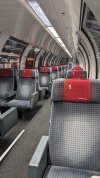
On the 439-kilometre-long Prague – Munich route, Leo Express will dispatch a total of 8 connections a day in a two-hour frequency from December 2026. Leo Express offered the lowest price of CZK 427 million for 5 years without infrastructure access charges. Modernized Intercity coaches, made available through its strategic partnership with Renfe, with a maximum speed of 200 km per hour, air conditioning, Wi-Fi and an audiovisual system, which will be pulled by a multi-system locomotive, will be deployed on the route.
In addition to the Leo Express tariff, the SJT/One ticket ministerial tariff will also apply on the line. Leo Express will strive to maintain ticket sales for these connections also through the ČD network. It will also be possible to use the integrated tariffs of the Pilsen Region on the trains, as well as InterRail, Eurail and CIV international tickets.
Snacks and a selection of hot and cold drinks, including beer, will be available. There will also be places on the train for people with reduced mobility and the transport of bicycles.
The connection, which continues to Munich after crossing the border, is operated in cooperation with a German carrier that is contracted with the state of Bavaria.