Thanks for the responses.
I'm presuming that a redevelopment will inevitably mean less space for station facilities and retail. Although the fact that Network Rail hasn't just sold the whole site, along with their brief statement at the top, implies they see some part of the site remaining as a station, as opposed to purely residential entrances/lobbies/amenity etc. I'd feared they might conclude the newer building and wide railside bridge could suffice.
Is this sort of project (Network Rail working with partners on high density mixed use development) standard for Network Rail, or unusual?
No proposals have yet been made for any redevelopment of Brunel Arcade (the 1989 station building) and the adjacent Apex Plaza office block.
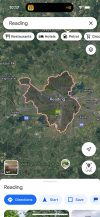
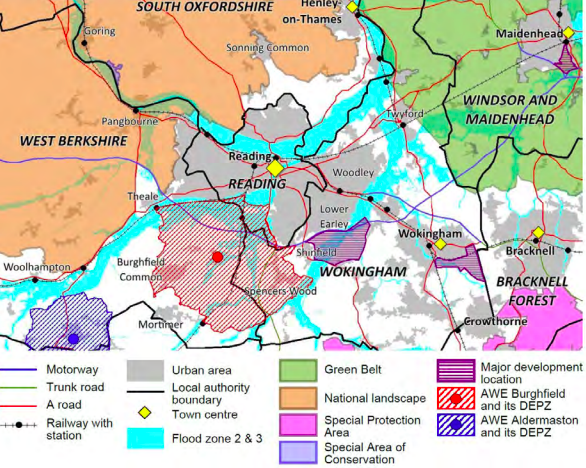
At the moment Reading Borough Council is carrying out an exercise to bring its Local Plan up to date and is working out what can be done to meet the, sometimes mutually incompatible, legal requirements. For example it is expected to build some 800 new dwellings annually as well as, at the same time, meet requirements for a 10% increase in biodiversity, provide green corridors for wildlife, protect the existing built environment and heritage assets, while not building on flood plains and still increasing the number of 3 and more bedroom houses, increasing the number of affordable homes and so on and so forth. All this in a borough which already accommodates some 175,000 people in about 40 sq km with a population density of over 4,300 people per hectare.
As part of this work the Council is identifying areas which could be redeveloped. The Brunel Arcade and the Apex Plaza lie within the so-called ‘Station/River Major Opportunity Area’ labelled as ‘Policy CR11’ in the plan. This is a large area centred around the station reaching to the Thames in the north and Friar Street in the south which the Council reckons could be developed for mixed use including 2,200 to 3,400 dwellings and 136,000 to 190,000 sq m of commercial floorspace.
In order to involve potential developers and landowners in the process and to ensure it hadn’t overlooked any potential sites, a couple of years ago the Council put out a ‘Call for sites’ in which the Council asks for sites to be nominated by landowners for potential inclusion in the Local Plan.
Network Rail responded and offered Brunel Arcade and Apex Plaza (now called CR11d in the Council’s documents). Although development proposals for some areas within the CR11 boundaries have been presented to the Council there are currently no proposals or planning applications for CR11d.
In any event there is no reason for Network Rail to sell the site for redevelopment, it can be one of the parties involved in any proposals as is the case with the controversial proposals for Liverpool Street station.
As no planning application has yet been submitted it is impossible to answer your questions. I would however point out that the use of the ticket office has dropped considerably with the introduction of contactless payment for journeys towards London and, indeed, many of the ticket machines have been removed so it would be possible to reduce the area allocated to ticket sales. However the gateline leading to platforms 4 to 7 would still be needed.
I just hope this doesn't involve pouring yet more public money into Reading station. It really is the poster-boy for the way southern England sucks up taxpayers money at the expense of the rest on the UK.
Yet more chipped shoulders. I note that it is now not just London which always gets what it wants but that the area has been expanded to all of southern England.
The rebuild of Reading station a dozen years ago, adding more through platforms and the removal of many of the flat crossing movements, removed Reading from the list of places where significant delays were created. This has had benefits across much of the Western as well as further afield on cross-country and other routes including the container trains running between Southampton and the rest of the country.