• Our new ticketing site is now live! Using either this or the original site (both powered by TrainSplit) helps support the running of the forum with every ticket purchase! Find out more and ask any questions/give us feedback in this thread!

Broken Sleeper

Status
Not open for further replies.

ainsworth74

Forum Staff
Staff Member
Global Moderator
Joined
16 Nov 2009
Messages
31,080
Location
Redcar
Hi,

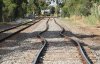
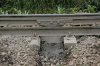
I was waiting at Longbeck station for a train to Middlesbrough (then on to Whitby, glorious day and the scenery was beautiful!) and I noticed that one sleeper was broken in half and another a few sleepers along had cracking in evidence close to the conection with the rail. My questions are these, what could cause damage like that and is this something to be concerned about (ie worth reporting to someone)?

Pictures:

Broken Sleeper
Broken Sleeper
Cracked Sleeper

Thanks!
 
Sponsor Post - registered members do not see these adverts; click here to register, or click here to log in
R

RailUK Forums

142094

Established Member
Joined
7 Nov 2009
Messages
8,789
Location
Newcastle
Doesn't look too good that, although I'm not a PW man so someone will be along to tell if it's bad enough to report. When I heard Longbeck I thought about the Saltburn pacers, thinking they couldn't do that much damage. Now I've remembered the Boulby trains, which of course are far heavier.
 

DaveNewcastle

Established Member
Joined
21 Dec 2007
Messages
7,387
Location
Newcastle (unless I'm out)
. . . what could cause damage like that . . .
Several possibilities, we'd need to know more about the location and the history to be sure, tho' my guess will be the first of these 3 suggestions:-

Thermal stresses (between freezing and heatwave, the expansion and contraction of lengths of welded rail puts enormous stresses on its fixings, and MUST be expressed in movement),

Impact (there may have been a local incident which impacted and fractured the concrete - we don't know);

Movement in the formation under the track. With re-active maintenance, wet formations will permit vertical (and lateral) movements, these can allow movement downwards (or sideways) which, with the passage of traffic, would cause extreme stresses with any freight's weight being directed onto every poorly supported sleeper. That stress is capable of fracturing a sleeper.

(There will be other posible explanations.)
 

ainsworth74

Forum Staff
Staff Member
Global Moderator
Joined
16 Nov 2009
Messages
31,080
Location
Redcar
Of your three possiblities, the first, thermal stress is the one that occured to me. We have had some hot days followed by very cold days around here over the last week or so, so that could be it. In regards to the third one, could the movement be that localised? It's literally the broken sleeper in the middle of two sleepers that (from the platform at least) both look fine. As for the second as you say, we don't know.

As for the location, its the Tees Vally line and the track in question is the track to Middlesbrough. It has roughly two 142's per hour and loaded freights from Boulby Mine intermitently.

Do you think its worth reporting to anyone? And for that matter if it is, who? I only ask because if there was a derailment or something like that and it was caused by this damage I would feel somewhat stupid if I hadn't done anything about it when I had the chance!
 

DaveNewcastle

Established Member
Joined
21 Dec 2007
Messages
7,387
Location
Newcastle (unless I'm out)
Do you think its worth reporting to anyone?
. . .
I would feel somewhat stupid if I hadn't done anything about it . . .

Oh please, don't loose any sleep about this worrying - there are similar problems all over the network.

Someone else will adive further, I'm sure, but don't become personally anxious!

My guess is, you could report this to NR and nothing would be done about it for 6 months or more - if a rail had fractured, that would be defferent. You should look at the state of some of the older wooden sleepers on unfirm moorland - its amazing how much deviation sleepers can deal with before the rail becomes hazardous. Don't worry!
But its good that you've been vigilant and spotted it (and you've let railforums.co.uk know about it - what else matters? ! ! )
 

ainsworth74

Forum Staff
Staff Member
Global Moderator
Joined
16 Nov 2009
Messages
31,080
Location
Redcar
Oh please, don't loose any sleep about this worrying

Haha I'm most certainly not! I was simply playing it safe, and as you say railforums knows so if it is important the information will get to where it needs to be, I'm sure.
 

Old Timer

Established Member
Joined
24 Aug 2009
Messages
3,702
Location
On a plane somewhere at 35,000
The sleeper looks as if it has broken its back possibly through through mishandling earlier in its life.

The situation looks bad but the other sleepers are fine. It could sty in this condition for along while unless there is evidence of it moving.

Thermal stresses - The sleepers can easily withstand the thermal stresses created both in the UK as well as those in say North America where the band between mean cold and hot is much wider. In colder climtaes such as the Soviet Union, we would use wooden sleepers because concretes tend to shatter in use over time.

I suspect the movement to be seen may be caused by differing stressing temperatures between the two rails. Trog can comment better as he has a miantenance knowledge that I do not.

Longitudinal Movement / Expansion - Provided that the ballast is in good condition and there is no attrition, the ballast between the sleepers acts as an anchor to resist along-track movements of the sleepers and the rail. Thermal expansion is thus restricted to the extremities of the rail where there is freedom to move, for example at breathers (expansion switches). Clipped down rail under stress will not move but the expansive forces generated can be considerable when a rail has a low stress free temperature. If these are released over a short distance the rail will buckle sideways if not contained.

Lateral Movement - The expansive forces generated within the rails in hot weather express themselves in one of three ways, either along-track, vertically or laterally. Vertically the track is held down by the weight of the sleepers, hence why there is no need for breathers.

Lateral movement is contained by the shoulder ballast, which should be heaped on either side of the track. It is this "ballast shoulder" that overcomes any lateral forces. In the event of a loss of shoulder ballast, the track will buckle very quickly once it reaches the right expansive force.

Here is a photograph of a track buckle, where the shoulder has been removed.
 

Attachments

  • Track Buckle.jpg
    Track Buckle.jpg
    84.9 KB · Views: 60

dk1

Veteran Member
Joined
2 Oct 2009
Messages
19,834
Location
East Anglia
A speed restriction on the East Suffolk line a few years back was due to damaged/rotten sleepers. A local P-Way inspector riding with me told me that it if more than 5 in any consecutive 10 wooden sleepers where in very poor condition then that would result in a TSR & it would then jump the queue for spot sleepering.
 

ainsworth74

Forum Staff
Staff Member
Global Moderator
Joined
16 Nov 2009
Messages
31,080
Location
Redcar
The situation looks bad but the other sleepers are fine. It could sty in this condition for along while unless there is evidence of it moving.

That's what I thought, with the rest of the sleepers looking ok I didn't think it would be an issue. Thanks OT, as always a very interesting post!
 

Trog

Established Member
Joined
30 Oct 2009
Messages
1,546
Location
In Retirement.
Not an urgent job to replace one broken sleeper, particually as those each side look sound and the sleeper is still supporting the rails vertically.

I suspect the displacement at the break may be due to vibration, working ballast stones into the crack as if they were wedges. I have read of two viaducts built beside each other where ballast working down into the join between them, actually started to push the lighter viaduct over.

The sleepers are the original type of F27 sleeper, so the track probably dates from the early to mid 1970's. The ballast looks OK, but the pads, clips and nylons look to be past their best which will not help the sleepers. However track of that age should still be fine in all but the heavest used lines. Unless the sleepers have been subjected to undue stress in the past. Due to poor ballast conditions, corregated rails, accident etc.

Not sure what would have caused that break, as it is more usual for sleepers to break up near the clip housings. As Old Timer says probably an impact or mistreatment at sometime in the sleepers past. That type of sleeper are generally worse in terms of concrete quality than both the really old and more modern sleepers.
 

Ploughman

Established Member
Joined
15 Jan 2010
Messages
3,099
Location
Near where the 3 ridings meet
Not necessarily 1970 relay.
Possibility of cascade of material from ECML for example.
Damage may therefore not have been done on site but even with the break the steel reinforcing should still be intact (for the moment until rust does its bit)
 

boing_uk

Member
Joined
18 May 2009
Messages
619
Location
Blackburn
In regards to the third one, could the movement be that localised?

There are some wet beds just to the west of Blackburn station which I noticed this evening as my train was routed through the goods loop due to a points failure. One of those affects a single sleeper.

The larger of the two gives quite a noticable shift in the ride when passing over it.
 

Old Timer

Established Member
Joined
24 Aug 2009
Messages
3,702
Location
On a plane somewhere at 35,000
There are some wet beds just to the west of Blackburn station which I noticed this evening as my train was routed through the goods loop due to a points failure. One of those affects a single sleeper.

The larger of the two gives quite a noticable shift in the ride when passing over it.
The rough ride you are experiencing will almost certainly be a twist defect. This is a difference in level across the top of the rails.

Think of it in terms of a shopping trolley with one of the wheels slightly off the ground. Translate to the rail environment except that instead of the trolley frame bent, the railhead is dipped slightly.

What will have happened is that water has gotten into the ballast and pooled, and the movement of trains over the sleeper has caused the ballast and the concrete to abrade.

The result is that the formation fails under the sleeper leaving it unsupported, so that as each wheeel passes over, the rail and sleeper dip into the void gap.

This exacerbates the situation incrementally over time.

You will feel it either as a full width dip, or a twist defect.


Here is the result of a twist defect. The vehicles are in the position where they landed.

The train was 330 wagons long, 5th wagon bounced on the twist and the rest of the train ran in.
 

Attachments

  • Picture 106.jpg
    Picture 106.jpg
    173.6 KB · Views: 42
Last edited:

Trog

Established Member
Joined
30 Oct 2009
Messages
1,546
Location
In Retirement.
The result is that the formation fails under the sleeper leaving it unsupported, so that as each wheeel passes over, the rail and sleeper dip into the void gap.

It is also possible to get wet spots where the problem does not affect the formation, but is confined to the ballast layer. I have relayed track before now where the concrete sleepers were sitting in little pink baths of water, but the lower part of the ballast let alone the formation was still in good condition.

Wetbeds can form in two directions. They can start from the bottom when the formation is soft and wet, and clay slurry works its way up into the ballast. This blocks the drainage holding water in the track and so softening the formation further. This causes more clay to pump up which then holds even more water. The top will then go off and the extra pounding as trains drop into the dip formed, then further increases the pumping action on the formation, bringing up even more clay. This will eventually erupt on to the surface in a classic formation failure. Usually first showing along the sides of the sleepers under the rails.

Or the formation can be firm but you have a voiding sleeper perhaps in dirty ballast. This grinds both ballast and sleeper into powder, which then sets like concrete. This then holds water which pumps under the trains and also acts as a lubricant encourageing more movement. So generating more water holding powder, which allows the whole process to expand. This will work downwards and can eventually cause formation failure if the subgrade material is of a clayish type material.

Both types of wetbed also tend to spread along the line in the direction of traffic. As the silty water from the first wetbed is pulled by passing trains slip streams to contaminate ballast further along the track. This contaminated ballast is also subjected to extra loading, as wheel sets that have dropped into the dip of the first wetbed bounce back. Off loading the suspension springs as they come out of the dip, before thumping back down onto the track. This can happen several times and you can some times see a series of evenly spaced wetbeds, leading away from the original problem. In a cyclic defect spaced according to the suspension reaction time and speed of the main traffic.

Wetbeds are truely cancer for railway track, and unless they are promptly treated will spread, increasing in both severity and number.

The usual way to tell the difference between the two types is to look at the colour of the material in the wet bed, if it is the colour of ground up ballast and of a chalky consistancy it is just a wetbed and reballasting will get rid of it. Although a drain may also be required to make sure it stays away. However if the wetbed is the same colour as the underlying ground and contains clay like material you have a formation failure. In which case you are looking at a deep dig with both sand, and a drain to cure the problem.

This is just a first stab at deciding what is going on, and before commiting to a course of action for a cure. You would also want to check trial holes, ground penetrating radar, recording train data, the history of the site both in data and the local PW staffs memory etc etc until you are sure you understand what is going on.

 
Last edited:

Old Timer

Established Member
Joined
24 Aug 2009
Messages
3,702
Location
On a plane somewhere at 35,000
And some people will try to tell you that Permanent Way engineering is simple !

An example of an isolated formation failure
 

Attachments

  • Almenhia 038.jpg
    Almenhia 038.jpg
    229.9 KB · Views: 43
Last edited:

ainsworth74

Forum Staff
Staff Member
Global Moderator
Joined
16 Nov 2009
Messages
31,080
Location
Redcar
And some people will try to tell you that Permanent Way engineering is simple !

Those people probably don't have the benefit of knowing people like yourself and Trog! Again thank you both for an illuminating insight into the complexities of Perminant Way, it really isn't just a bunch of rocks with concrete and steel on top :lol:
 

Old Timer

Established Member
Joined
24 Aug 2009
Messages
3,702
Location
On a plane somewhere at 35,000
I think it is fair to say that Permanent Way engineering is probably THE most interesting subject in Railways, and something that you continually learn about.

As for me I know little in comparison to Trog who has enormous experience in the subject.

I have been lucky in having had some good Engineers who have given me the benefit of their years of experience.
 

Trog

Established Member
Joined
30 Oct 2009
Messages
1,546
Location
In Retirement.
As for me I know little in comparison to Trog who has enormous experience in the subject.
Compared to some of my bosses when I was a youngster, I know very little, and am depressed by the depths of my ignorance on vast areas of the subject.
 

boing_uk

Member
Joined
18 May 2009
Messages
619
Location
Blackburn
I think it is fair to say that Permanent Way engineering is probably THE most interesting subject in Railways, and something that you continually learn about.

That is something I would completely agree with. Coming from a highways engineering background there are some similarities in failure modes for highways as there are in PW.

I can very much understand the relationship that one "failure" in one location can manifest itself further down the line in various forms. While I could never profess to knowing anything about PW, I can get my head around why things happen and what the consequences may be.

On the train home tonight, I kept an eye out for the twist that you mention and it is very much in the vacinity of the wet beds I mentioned previously. But then again, there are so many lateral and vertical displacements in the track along that line...

Its not a profession I would like to get in to now because a) im too old and b) I dont like the sound of NR, but its certainly a subject I would be very interested to learn about simply for my own satisfaction of knowing.
 
Status
Not open for further replies.

Top