
• Our new ticketing site is now live! Using either this or the original site (both powered by TrainSplit) helps support the running of the forum with every ticket purchase! Find out more and ask any questions/give us feedback in this thread!

Britain's Energy Future

Status
Not open for further replies.

21C101

Established Member
Joined
19 Jul 2014
Messages
2,559
But I imagine not sunken ones dredged up from the seabed?
But anyway, it seems that Boris wants every home to be powered by offshore wind, backed up by nuclear (both big and small (Rolls Royce size), permission is believed to be close for Sizewell).
BBC News - Ban on new petrol and diesel cars in UK from 2030 under PM's green plan
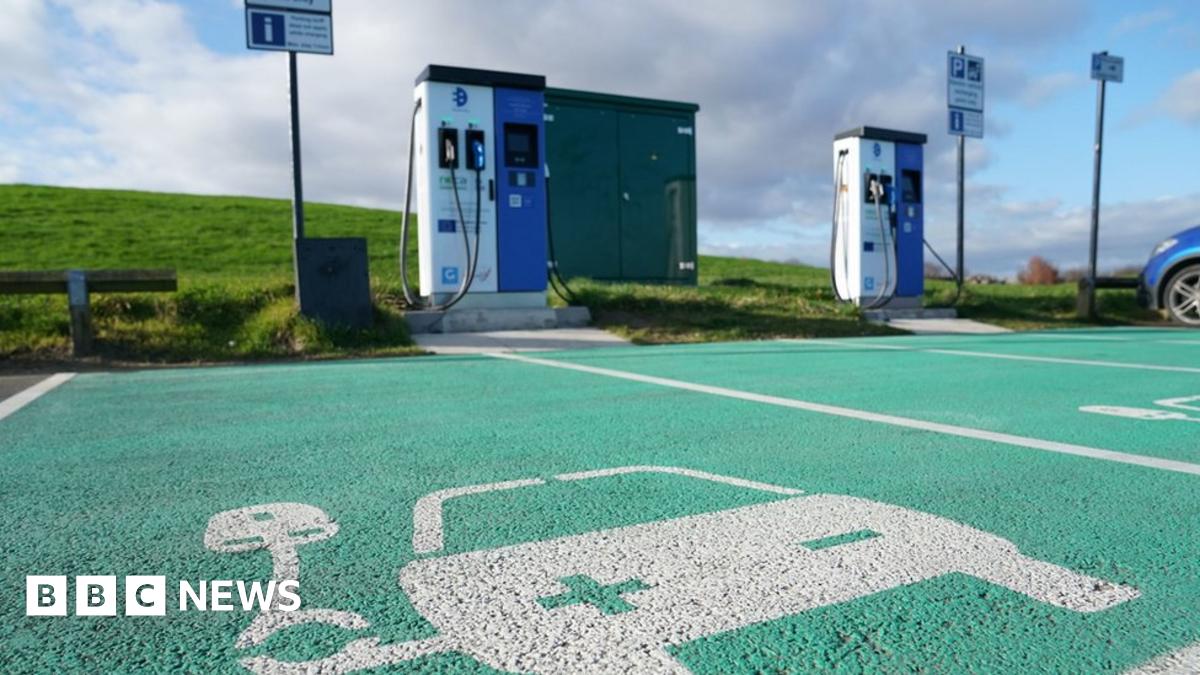
This is part of the new "green deal" which includes banning the sale of petrol and diesel only vehicles form 2030 (I thought that was the target anyway?) and installing lots of heat pumps.
I wonder how much the bringing in of this date from 2040 to 2030 has to do with updated assessment by the goverrnment of what they think Saudi's actual rather than claimed oil reserves are and forecasts of the ever increasing amount they need for domestic consumption?

== Doublepost prevention - post automatically merged: ==

Disagree with this statement. Pumping money into renewables has an immediate carbon reduction benefit. Solar and offshore wind has now got to the point that subsidy is no longer necessarily needed.
Energy storage is largely being funded using normal market mechanisms rather than subsidy. So if you want to hook up your new solar plant to the grid the DNO will insist on having curtailment rights. That kills your investment proposition, so you build in some energy storage to overcome the issue. That also lets your solar plant feed into the grid at periods of high demand when the sun isn't shining. Win win.

If we'd subsidised the building of a lot of practically and economically useless (at the time) storage, we'd still have to subsidise the beginnings of the renewable generation industry.
They wouldn't have been useless without renewables any more than Dinorwic is.

== Doublepost prevention - post automatically merged: ==

So long as by baseload you mean the reasonable worst case scenario overnight load on a still winter night! Don't get me wrong, nuclear is definitely preferable to fossil fuel power stations, but they're not without their flaws. Renewables should be doing the heavy lifting with nuclear there as the "backstop" in lieu of any realistic large scale power storage solution
Not just that. You need huge base load power stations to charge the grid after an outage otherwise if we had a repeat of the great storm of 1987 which downed the national grid you would not be able to restore power to it afterwards.

There is also the need to match load to demand and have "stable" power stations to keep frequency correct.
 
Last edited by a moderator:
Sponsor Post - registered members do not see these adverts; click here to register, or click here to log in
R

RailUK Forums

trebor79

Established Member
Joined
8 Mar 2018
Messages
4,896
They wouldn't have been useless without renewables any more than Dinorwic is.
Dinorwic isn't really about energy storage per se - that's more of a frequency stabilisation and short term demand smoothing solution. Dinorwic can ramp up from zero to full capacity (in or out) in a matter of seconds, which allows time for the generation side to ramp up or down to match demand.
For example if a large generating station trips off, all of a sudden you're 1GW short or demand. What happens then is that some of the kinetic energy in rotating turbines and generators starts getting converted to electrical energy, so all the rotors start to slow down, so grid frequency reduces. That means the fixed speed motors driving pumps and fans at the power stations themselves also slow down. If the frequency drops far enough power electronics will trip (a bit like happened on the class 700's) which will cause various systems to go offline, and your big drives will slow to the point that they can't pump enough water into the boiler or enough air into the furnace. Then you have another plant trips off, and lose another GW of capacity which exacerbates it and you can end up with a sort of cascade of outages.
Dinorwig helps solve that. You lose 1GW somewhere, you can bring Dinorwig online pretty much instantly so you recover the demand:supply balance quickly and avoid the chance of a cascade of problems. You use the time that the limited capacity of Dinorwig provides to ramp up output at the other generators, bring something else online etc.
It's also for short term fluctuations in demand - eg 15m people putting the kettle on during the ad break in Coronation Street - where it wouldn't be efficient or possible to perfectly match the demand profile with big steam powered generating plants.

In summary then, Dinorwig is about providing a buffer and some decoupling of supply and demand.

== Doublepost prevention - post automatically merged: ==

Not just that. You need huge base load power stations to charge the grid after an outage otherwise if we had a repeat of the great storm of 1987 which downed the national grid you would not be able to restore power to it afterwards.

There is also the need to match load to demand and have "stable" power stations to keep frequency correct.
Black start capacity is something which generators who have the ability can have a contract for - they are very lucrative.

Also you are starting to see large flywheels being constructed to provide frequency response. The grid will not need large fossil fuelled plants going forward.
 

21C101

Established Member
Joined
19 Jul 2014
Messages
2,559
Dinorwic isn't really about energy storage per se - that's more of a frequency stabilisation and short term demand smoothing solution. Dinorwic can ramp up from zero to full capacity (in or out) in a matter of seconds, which allows time for the generation side to ramp up or down to match demand.
For example if a large generating station trips off, all of a sudden you're 1GW short or demand. What happens then is that some of the kinetic energy in rotating turbines and generators starts getting converted to electrical energy, so all the rotors start to slow down, so grid frequency reduces. That means the fixed speed motors driving pumps and fans at the power stations themselves also slow down. If the frequency drops far enough power electronics will trip (a bit like happened on the class 700's) which will cause various systems to go offline, and your big drives will slow to the point that they can't pump enough water into the boiler or enough air into the furnace. Then you have another plant trips off, and lose another GW of capacity which exacerbates it and you can end up with a sort of cascade of outages.
Dinorwig helps solve that. You lose 1GW somewhere, you can bring Dinorwig online pretty much instantly so you recover the demand:supply balance quickly and avoid the chance of a cascade of problems. You use the time that the limited capacity of Dinorwig provides to ramp up output at the other generators, bring something else online etc.
It's also for short term fluctuations in demand - eg 15m people putting the kettle on during the ad break in Coronation Street - where it wouldn't be efficient or possible to perfectly match the demand profile with big steam powered generating plants.

In summary then, Dinorwig is about providing a buffer and some decoupling of supply and demand.

== Doublepost prevention - post automatically merged: ==


Black start capacity is something which generators who have the ability can have a contract for - they are very lucrative.

Also you are starting to see large flywheels being constructed to provide frequency response. The grid will not need large fossil fuelled plants going forward.
Wasn't there originally supposed to be a second Dinorwig on Exmoor that got "proteted" away?

Intersesting to read about the Flywheels. I imagine the Thameslink fiasco has given more impetus to that.

There is also the issue of having to double generation capacity to stand still if we are going to shift to electric vehicles en masse.

To my mind the main effect of storage technology like compressed air will be to reduce the need for gas backup stations to cover when there is little wind, which is hideously inefficient as you have to duplicate the wind renewables in particular with gas power stations that are only used as backups (which gives rise to the wouldn't it be more economic to just have the gas stations....)

Hence my original suggestion about developing the storage technology before building the turbines.
 

Bald Rick

Veteran Member
Joined
28 Sep 2010
Messages
35,698
Wasn't there originally supposed to be a second Dinorwig on Exmoor that got "proteted" away?

There’s a couple planned in Scotland, with the Coire Glas project near Fort William most advanced and likely to happen fairly soon. Thats 1.5GW and 30GWh, which is similar power but three times the capacity of Dinorwig.

There’s also a proposal from what can only be described as pumped-storage crayonistas (a rather niche splinter group of the crayonista profession) for an enormous pumped storage project at Strathdearn on Speyside. That would have a capacity of 6,800 GWh, which is enough to power the whole country in winter for nearly 2 weeks (3 weeks in Summer) assuming Nuclear and biomass provide their proposed output as a base load. It’s not going to happen of course, but interesting all the same.

which gives rise to the wouldn't it be more economic to just have the gas stations....)

Not necessarily - as the price of gas comes into the equation. One power station operator has closed a couple of gas stations in the past few months as being uneconomic. In any event, it’s not all about economics, but socio-economics.
 

trebor79

Established Member
Joined
8 Mar 2018
Messages
4,896
Not necessarily - as the price of gas comes into the equation. One power station operator has closed a couple of gas stations in the past few months as being uneconomic. In any event, it’s not all about economics, but socio-economics.
Indeed, open cycle gas turbine is no more efficient than a good coal fired plant and cannot be operated economically for base load power. CCGT (gas turbine + heat recovery boiler and steam turbine) isn't really practical for instantaneous demand response. There are a few open cycle peaking plants (and I know of at least one which has been converted from CCGT to open cycle) but even these are increasingly difficult to make stack up economically.
A combination of liquid air storage, batteries (I dislike lithium ion in this context - VRFB is much more suitable), pumped storage, flywheels and interconnectors will solve the issues associated with a high proportion of renewables feeding into the grid. Smart meters also offer the possibility of varying the consumer price as a means of modulating demand. So for example, plug your car in to charge but only when "the price is less than x", run the washing machine at night etc. There are periods of time overnight when it's windy that the wholesale electricity price turns negative. Imagine being paid to charge your car! This also stimulates investment in storage capacity that isn't part of some wider renewable scheme - build a battery or whatever, get paid to charge it up and sell the power back later at times of high demand. Kaching.
 

21C101

Established Member
Joined
19 Jul 2014
Messages
2,559
Not necessarily - as the price of gas comes into the equation. One power station operator has closed a couple of gas stations in the past few months as being uneconomic. In any event, it’s not all about economics, but socio-economics.
Cynically I suspect energy security comes higher up the pecking order than socio-economic.

Wind dosent have to be imported from unstable countries run by gangsters so anything that reduces dependency on said gangsters is wise.

I doubt that it is entirely coincidental that HM Governments interest in renewables started at much the same time as the North Sea oil and gas field production tailed off and UK coal became uncompetitive with imported coal prices.

== Doublepost prevention - post automatically merged: ==

Indeed, open cycle gas turbine is no more efficient than a good coal fired plant and cannot be operated economically for base load power. CCGT (gas turbine + heat recovery boiler and steam turbine) isn't really practical for instantaneous demand response. There are a few open cycle peaking plants (and I know of at least one which has been converted from CCGT to open cycle) but even these are increasingly difficult to make stack up economically.
A combination of liquid air storage, batteries (I dislike lithium ion in this context - VRFB is much more suitable), pumped storage, flywheels and interconnectors will solve the issues associated with a high proportion of renewables feeding into the grid. Smart meters also offer the possibility of varying the consumer price as a means of modulating demand. So for example, plug your car in to charge but only when "the price is less than x", run the washing machine at night etc. There are periods of time overnight when it's windy that the wholesale electricity price turns negative. Imagine being paid to charge your car! This also stimulates investment in storage capacity that isn't part of some wider renewable scheme - build a battery or whatever, get paid to charge it up and sell the power back later at times of high demand. Kaching.
Ironically some of the first commercial power stations in the UK used generators to charge a bank of batteries in the power station and supplied d.c. power to consumers from said batteries.

When it went over to 25Hz a.c., piped directly without batteries, there was a lot of moaning about flickering bulbs (very noticable at 25Hz) and interruptions during switching that the batteries had stopped being propagated to clients in d.c. days.
 
Last edited by a moderator:

Bald Rick

Veteran Member
Joined
28 Sep 2010
Messages
35,698
Smart meters also offer the possibility of varying the consumer price as a means of modulating demand. So for example, plug your car in to charge but only when "the price is less than x", run the washing machine at night etc. There are periods of time overnight when it's windy that the wholesale electricity price turns negative. Imagine being paid to charge your car! This also stimulates investment in storage capacity that isn't part of some wider renewable scheme - build a battery or whatever, get paid to charge it up and sell the power back later at times of high demand. Kaching.

There have been several occasions this year where wholesale electricity prices went negative. People on the ‘Agile’ tariff with Octopus were indeed paid to use electricity!

I think, though, that with increasing numbers of electric cars, smart metering, and all the new interconnectors coming on line in the next year or so*, negative prices will become a thing of the past within the next year or two. There will, however still be big swings in the wholesale price intra-day, which makes storage very attractive, even on a small scale. It is the price gap that justifies storage, not whether prices go negative or not.

For example, earlier this month the wholesale price went to well over £400/MWh for a couple of hours one afternoon / early evening. Anyone who had stored, say, a Tesla’s worth of juice the previous night at £20/MWh, and was happy to sell it, would have been sat on a profit of £40. Do that once a month or so and the storage pays for itself pretty quickly.

*
IFA2, France, 1GW, commissioning now
NorthSea link, Norway, 1.4GW, next year
Elec Link, France, 1GW, late next year / early 2022

And a couple more after that.
 

xotGD

Established Member
Joined
4 Feb 2017
Messages
7,838
Pumping money into renewables has an immediate carbon reduction benefit.
To be pedantic, not quite. You have the embedded carbon of the steel, concrete, etc used in the construction of the plant to take into consideration.
 

21C101

Established Member
Joined
19 Jul 2014
Messages
2,559
To be pedantic, not quite. You have the embedded carbon of the steel, concrete, etc used in the construction of the plant to take into consideration.
And in the case of batteries, turbines and solar panels the energy involved in their construction and disposal for things that don't have a pdrticularly long life and in the case of turbine blades are not easily recycled.

The cabling/civils infrastructure ought to last far longer though.
 
Status
Not open for further replies.

Top