• Our new ticketing site is now live! Using either this or the original site (both powered by TrainSplit) helps support the running of the forum with every ticket purchase! Find out more and ask any questions/give us feedback in this thread!

Britain's Energy Future

Status
Not open for further replies.

ABB125

Established Member
Joined
23 Jul 2016
Messages
4,334
Location
University of Birmingham
Inspired by this article from the BBC, I thought it would be interesting to see what forum members think is the future for Britain's energy (well, electricity!) supply.
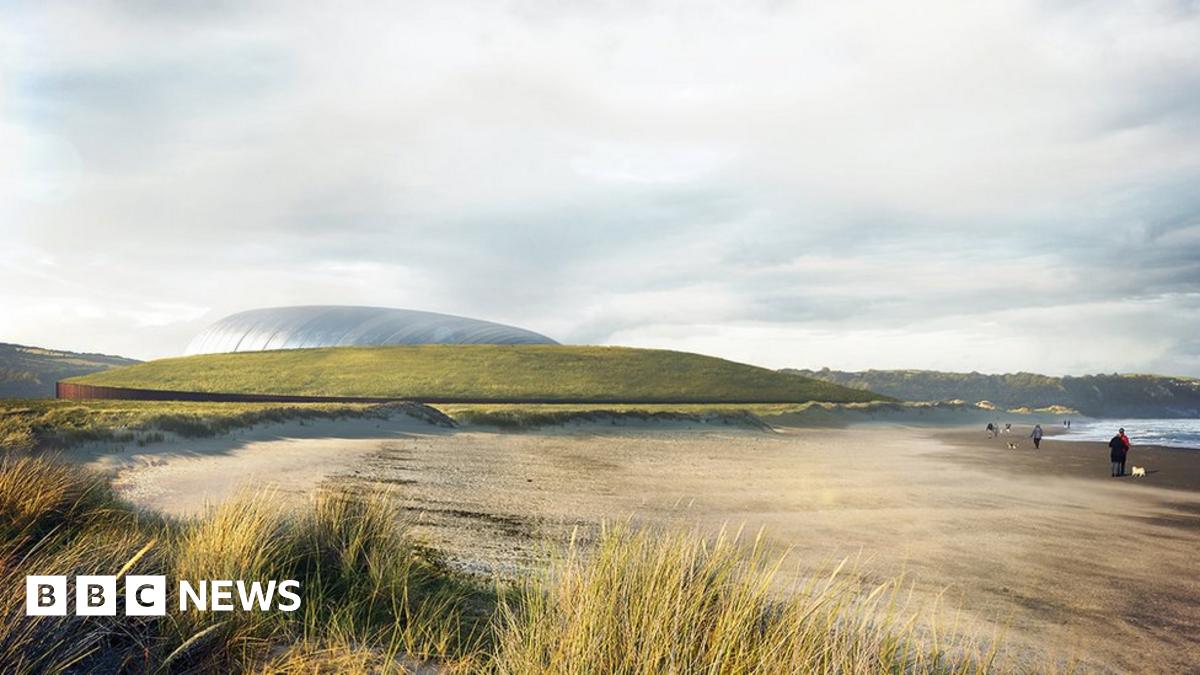

Small nuclear plant


A consortium led by Rolls Royce has announced plans to build up to 16 mini-nuclear plants in the UK.
It says the project will create 6,000 new jobs in the Midlands and the North of England over the next five years.
The Prime Minister is understood to be poised to announce at least £200m for the project as part of a long-delayed green plan for economic recovery.
Rolls argues that as well as producing low-carbon electricity, the concept could become a new export industry.
The company's UK "small modular reactor" (SMR) group includes the National Nuclear Laboratory and the building company Laing O'Rourke.
Last year, it received £18m to begin the design effort for the SMR concept.

The government says new nuclear is essential if the UK is to meet its target of reaching net zero emissions by 2050 - where any carbon released is balanced out by an equivalent amount absorbed from the atmosphere.
But there is a nuclear-sized hole opening up in the energy network.
Six of the UK's seven nuclear reactor sites are due to go offline by 2030 and the remaining one, Sizewell B, is due to be decommissioned in 2035.
Together they account for around 20% of the country's electricity.

What is a modular nuclear plant?​

Rolls Royce and its partners argue that instead of building huge nuclear mega-projects in muddy fields we should construct a series of smaller nuclear plants from "modules" made in factories.
The aim is to re-engineer nuclear power as a very high-tech Lego set.
The components would be broken down into a series of hundreds of these modules which would be made in a central factory and shipped by road to the site for assembly.
The objective is to tackle the biggest problem nuclear power faces: the exorbitant cost.
The reason it is so expensive is that the projects are huge and complex and have to meet very high safety standards.
And, because so few new nuclear power stations are built, there are very few opportunities to learn from mistakes.
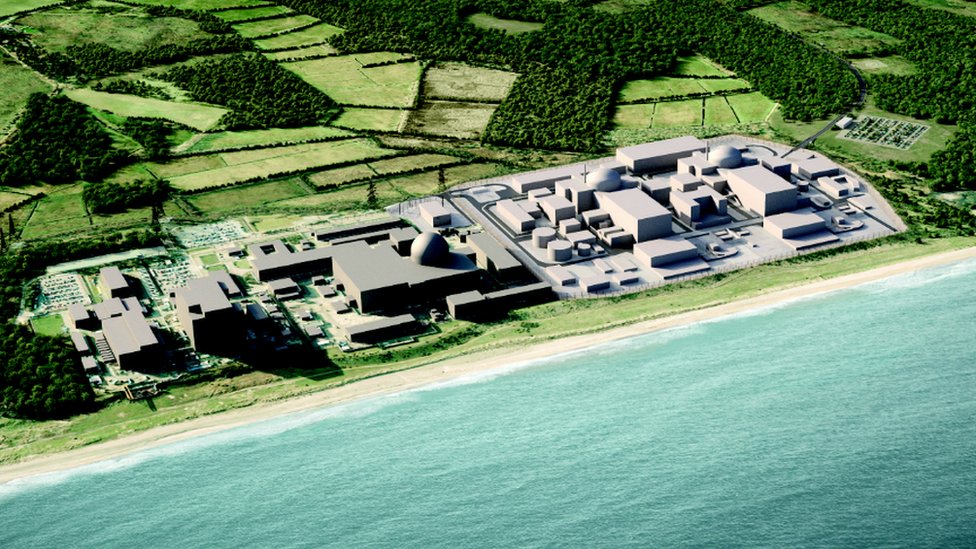
Sizewell A, B and C model


So, Rolls Royce and its partners are saying: let's make them smaller and make lots of them so that we get really good at it.
The concept would dramatically reduce the amount of construction that would be associated with a nuclear project, claimed Tom Samson, the chief executive of the UK Small Modular Reactor consortium (UK SMR).
"If we move all that activity into a controlled factory environment that drives down cost by simplification and standardisation," he explained.
Each plant would produce 440 megawatts of electricity - roughly enough to power Sheffield - and the hope is that, once the first few have been made, they will cost around £2bn each.
The consortium says the first of these modular plants could be up and running in 10 years, after that it will be able to build and install two a year.
By comparison, the much larger nuclear plant being built at Hinkley Point in Somerset is expect to cost some £22bn but will produce more than 3 gigawatts of electricity - over six times as much.
In addition to the six nuclear plants going offline by 2030, there's another challenge. You have to factor in a massive increase in electricity demand over the coming decades.
That's because if we're going to reach our net zero target, we need to stop using fossil fuels for transport and home heating.
The government has said this could lead to a three-fold increase in electricity use.
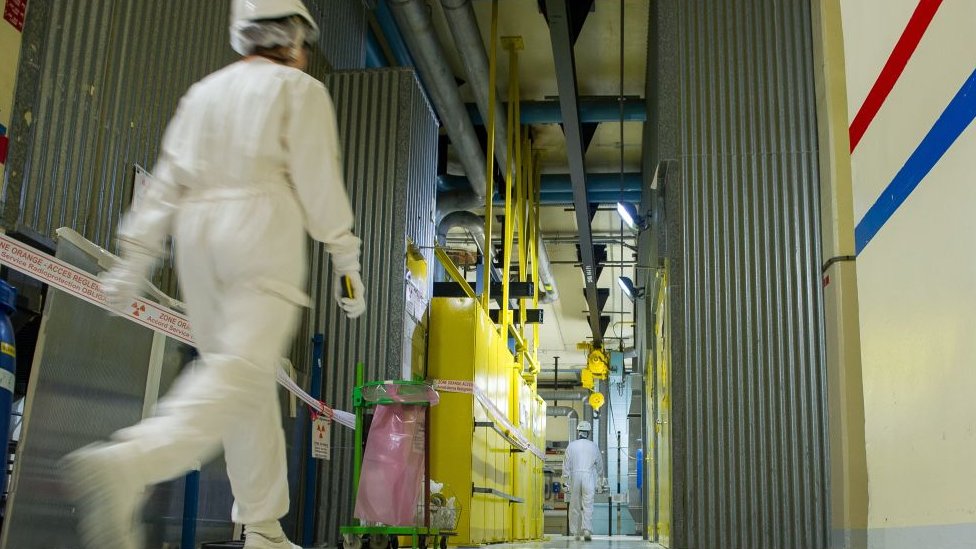
Nuclear power plant (file image)


The renewable challenge​

UK SMR isn't the only player which has spotted that there could be a gap in the market for smaller reactors. There are dozens of different companies around the world working on small reactor projects.
That has got the critics of nuclear power worried. Greenpeace and other environmental groups say small nuclear power stations pose similar risks of radioactive releases and weapons proliferation as big ones.
Greenpeace UK's chief scientist, Doug Parr, said that if the government wanted to take a punt on some new technology to tackle climate change it would be better off investing in hydrogen or geothermal power.
And there are other reasons to question the SMR concept, says Prof MV Ramana of the University of British Columbia in Canada. He is a physicist and an expert on nuclear energy policy who has studied small modular reactors.
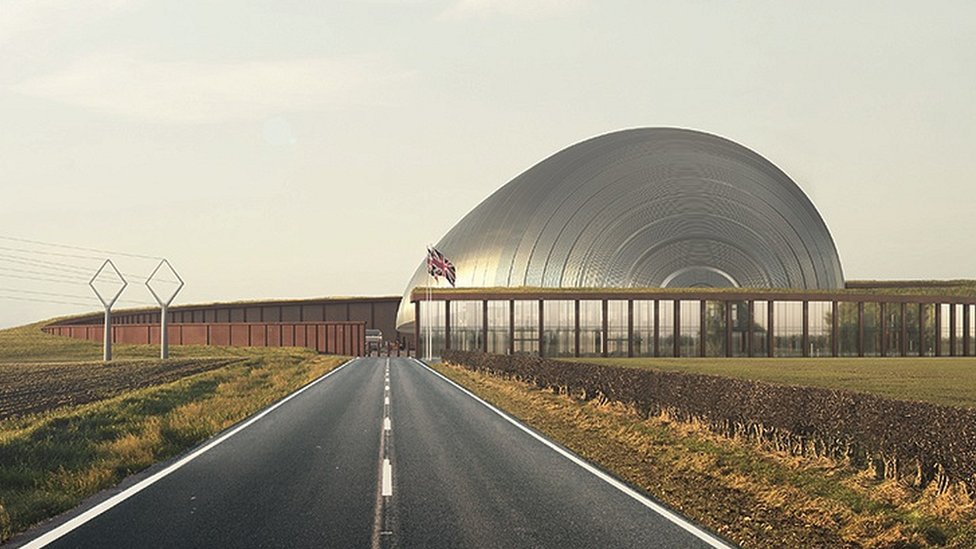
Small modular nuclear station


He said UK SMR's 10-year time-scale for its first plant may prove optimistic. The one constant in the history of the nuclear industry to date is that big new concepts never come in on time and budget, he said.
He is sceptical that the factory concept can deliver significant cost savings given the complexity and scale of even a small nuclear plant. Smaller plants will have to meet the same rigorous safety standards as big ones, he points out.
He said that where the concept has been tried elsewhere - in the US and China, for example - there have been long delays and costs have ended up being comparable to those of large nuclear power stations.
Finally, he questioned whether there will be a market for these plants by the 2030s, when UK SMR says the first will be ready.
"Ten years from now, the competition will be renewables which are going to be far cheaper with much better storage technology than we have today," said Prof Ramana.

Export opportunities​

But Boris Johnson's powerful adviser, Dominic Cummings, is known to be taken with the modular nuclear idea.
One of the reasons the government has been fighting so hard to free itself from the EU's state aid rules is so it can get its shoulder behind technologies it thinks will give the UK economy and its workers a real boost.
Modular nuclear has the potential to do just that.
If Rolls Royce and its partners can show that the factory concept really does deliver high quality nuclear plants on time and on budget then there is potentially a huge world market for the technology.
The price per unit of electricity may be higher than with wind or solar, said the clean energy consultant Michael Liebreich, but nuclear delivers power pretty much 24/7 and therefore can command a premium.
UK SMR is pitching the concept as a UK solution to the global challenge of tackling climate change and says there will be a vast export market as the world starts to switch to low carbon energy.
Boris Johnson is rumoured to be planning to take a big punt on nuclear power.
His government has always said new nuclear is going to be a key part of Britain's future energy system.
As well as the potential investment in SMRs, the BBC has already reported that the government is expected to give the long-discussed new large nuclear plant at Sizewell in Suffolk the go-ahead.
Mr Johnson is expected to say these investments are essential if the UK is going to meet its promise to decarbonise the economy by 2050 as part of the worldwide effort to tackle climate change.
And, while there may be good reasons to question whether the SMR concept will deliver on its promise of low-cost nuclear power, there is no question it holds out exactly the kind of optimistic vision for the UK's industrial future the government is desperate for.
Personally I'm a fan of this concept, as it (should) plug the gap between unreliable renewables and dwindling fossil fuel stations.
 
Sponsor Post - registered members do not see these adverts; click here to register, or click here to log in
R

RailUK Forums

GRALISTAIR

Established Member
Joined
11 Apr 2012
Messages
10,482
Location
Preston Lancs
Inspired by this article from the BBC, I thought it would be interesting to see what forum members think is the future for Britain's energy (well, electricity!) supply.


Personally I'm a fan of this concept, as it (should) plug the gap between unreliable renewables and dwindling fossil fuel stations.
I am also a fan. Nuclear is just so power dense and extremely low carbon if any. If we could get the UK Powergen up to the entire baseload on nuclear and everything else fills in that would be good. Plus if everyone is going to have electric cars some increase is necessary anyway.
 

Domh245

Established Member
Joined
6 Apr 2013
Messages
8,426
Location
nowhere
If we could get the UK Powergen up to the entire baseload on nuclear and everything else fills in that would be good. Plus if everyone is going to have electric cars some increase is necessary anyway.

So long as by baseload you mean the reasonable worst case scenario overnight load on a still winter night! Don't get me wrong, nuclear is definitely preferable to fossil fuel power stations, but they're not without their flaws. Renewables should be doing the heavy lifting with nuclear there as the "backstop" in lieu of any realistic large scale power storage solution
 

GRALISTAIR

Established Member
Joined
11 Apr 2012
Messages
10,482
Location
Preston Lancs
So long as by baseload you mean the reasonable worst case scenario overnight load on a still winter night! Don't get me wrong, nuclear is definitely preferable to fossil fuel power stations, but they're not without their flaws. Renewables should be doing the heavy lifting with nuclear there as the "backstop" in lieu of any realistic large scale power storage solution
In one word- YES
 

nlogax

Established Member
Joined
29 May 2011
Messages
6,012
Location
Mostly Glasgow-ish. Mostly.
In lieu of viable mass energy storage or affordable household batteries we'll need to do something to add some robustness to a supply focused on renewables and provide some balance for peak demand periods. I'm not against this as long as it's relatively inexpensive and doesn't come with the handling and cleanup nightmares associated with traditional nuclear plants. Thing is, it's very easy to make nice sketches of shiny clean buildings but concept sketches and reality rarely exist in the same universe.
 

Iskra

Established Member
Joined
11 Jun 2014
Messages
10,683
Location
West Riding
I'm all for this. We've been heading towards a domestic energy crisis for years, so this could help resolve it. Relying on other countries for energy supplies is something of a security risk too. The modular design is very sensible. It will also help protect British jobs at Rolls Royce and I'm guessing it's a civilian version of what they put in Submarine's so it helps keep skills, jobs and keep a constant production line going for this type of thing.
 

ABB125

Established Member
Joined
23 Jul 2016
Messages
4,334
Location
University of Birmingham
I'm all for this. We've been heading towards a domestic energy crisis for years, so this could help resolve it. Relying on other countries for energy supplies is something of a security risk too. The modular design is very sensible. It will also help protect British jobs at Rolls Royce and I'm guessing it's a civilian version of what they put in Submarine's so it helps keep skills, jobs and keep a constant production line going for this type of thing.
I agree.
Hopefully, because this design appears to be industry-led, there won't be any government interference, so it may well actually work, be on time and not cost too much!
 

GRALISTAIR

Established Member
Joined
11 Apr 2012
Messages
10,482
Location
Preston Lancs
In lieu of viable mass energy storage or affordable household batteries we'll need to do something to add some robustness to a supply focused on renewables and provide some balance for peak demand periods. I'm not against this as long as it's relatively inexpensive and doesn't come with the handling and cleanup nightmares associated with traditional nuclear plants. Thing is, it's very easy to make nice sketches of shiny clean buildings but concept sketches and reality rarely exist in the same universe.
Quite !!
 

ABB125

Established Member
Joined
23 Jul 2016
Messages
4,334
Location
University of Birmingham
Nuclear plus some wind and solar.
I would broadly agree, but I think there should be some water involved as well. I don't know enough about the subject to say what would be best, but the Swansea lagoon thing sounded like a good idea (has it been cancelled now?). I'd also like to see a Severn barrage (which could also incorporate a new rail crossing?), mainly because it would be fairly local to me so be easy to go and visit!
 

DarloRich

Veteran Member
Joined
12 Oct 2010
Messages
32,900
Location
Fenny Stratford
I would broadly agree, but I think there should be some water involved as well. I don't know enough about the subject to say what would be best, but the Swansea lagoon thing sounded like a good idea (has it been cancelled now?). I'd also like to see a Severn barrage (which could also incorporate a new rail crossing?), mainly because it would be fairly local to me so be easy to go and visit!

Private Eye have long criticised this idea.
 

158756

Established Member
Joined
12 Aug 2014
Messages
1,628
So long as by baseload you mean the reasonable worst case scenario overnight load on a still winter night! Don't get me wrong, nuclear is definitely preferable to fossil fuel power stations, but they're not without their flaws. Renewables should be doing the heavy lifting with nuclear there as the "backstop" in lieu of any realistic large scale power storage solution

Nuclear doesn't work in that scenario. I know there are some plants which can ramp up and down, but generally to make the huge costs worthwhile a nuclear plant needs to run 24/7 365 days a year excluding maintenance. It makes no sense to be turning them off because it's windy or to have reserve nuclear capacity for peak demand or when it's not windy. That's why we use so much gas. When the wind decides not to blow in the evening in future we'll probably still use lots of gas.

I think nuclear might actually fit better if more storage is developed, which should reduce the need to adapt production according to the wind and the massive difference between day and nighttime demand in the UK.

I don't know if this idea from RR is the future though. The only certainty is that it'll be far more expensive than planned.
 

radamfi

Established Member
Joined
29 Oct 2009
Messages
9,267
Most of Europe's requirements could be made by using hydroelectric potential in Norway, geothermal in Iceland and solar from the Mediterranean, either within the Spain mainland or on artificial islands in the sea.

An undersea cable between Norway and the east coast of England is already under construction and there is great interest in a cable between Iceland and Scotland.
 

Bald Rick

Veteran Member
Joined
28 Sep 2010
Messages
35,687
Nuclear, wind, storage, solar., biomass. Plus a significant expansion in micro-generation / energy production in homes and businesses (wind, solar, geothermal, air source heat pumps).

Little scope for much more significant hydro or pumped storage in this country, beyond the Coire Glas proposal near Fort William (which was granted consent a couple of weeks ago).
 

trebor79

Established Member
Joined
8 Mar 2018
Messages
4,893
I would broadly agree, but I think there should be some water involved as well. I don't know enough about the subject to say what would be best, but the Swansea lagoon thing sounded like a good idea (has it been cancelled now?). I'd also like to see a Severn barrage (which could also incorporate a new rail crossing?), mainly because it would be fairly local to me so be easy to go and visit!

Private Eye have long criticised this idea.
Rightly so. The Severn barrage would be an ecological disaster, and wanted a ludicrously high power price to make the project viable. It also appears to be promoted by a chap who has a vested interest in making the project happen, because he just so happens to own the mothballed quarry which is to provide the stone...
Solar and wind power is orders of magnitude cheaper, and nuclear sits between the them and the barrage, so why anybody thinks a barrage is a good idea other than to make a big fat paycheck is beyond me.
 

Bald Rick

Veteran Member
Joined
28 Sep 2010
Messages
35,687
Rightly so. The Severn barrage would be an ecological disaster, and wanted a ludicrously high power price to make the project viable. It also appears to be promoted by a chap who has a vested interest in making the project happen, because he just so happens to own the mothballed quarry which is to provide the stone...
Solar and wind power is orders of magnitude cheaper, and nuclear sits between the them and the barrage, so why anybody thinks a barrage is a good idea other than to make a big fat paycheck is beyond me.

Very well said.

== Doublepost prevention - post automatically merged: ==

*** EDIT ***

Bumping this as I forgot to include imports in the mix ... and there’s news on that subject.

Yesterday marked the start of commissioning of the IFA2 Interconnector with France. In a couple of weeks there will be another 1GW of French power on tap, along with the capability to export excess wind power when we have it and the continentals don’t. Next year sees the 1.4 GW NSL link to Norway come on line also, and another 1GW through the Channel Tunnel, which collectively means we will have over 8GW of connectors to help balance the load.

This will be useful, as for the last few nights it has been sufficiently windy to cause the wholesale electricity price to go negative.
 
Last edited:

Jozhua

Established Member
Joined
6 Jan 2019
Messages
1,891
Nuclear very much Chaotic Good.

I was watching a video on the renewables vs nuclear debate and the answer comes back as both.

Due to unreliability, a grid with over around 80% renewables tends to become exponentially more expensive, the higher proportion of capacity is provided by renewables alone. This is due to needing to add many more generation points and storage facilities.

But nuclear has its own challenges, from cost to construction time.

The clear best solution is nuclear AND renewables, a zero carbon grid isn't feesable to achieve without it. Renewables are quick and (relatively) cheap if energy storage isn't too much of a concern. Nuclear is slow and expensive to implement, but delivers a significant amount of very reliable power.

I had an idea of placing small nuclear plants on boats to deal with the nimby issue, it's a bit silly, but then russia ended up doing it. I think SMRs have lots of potential, especially if each site doesn't have to be decommissioned as the fuel changing/reactor constrution and disassembly takes place at one facility.

The waste is a comparatively small issue. Geologically stable sites which will store nuclear waste for a long time are possible, I believe Finland has one. The only issue really is politics. To me, dealing with a burning planet or a couple football fields of nuclear waste is an obvious choice.
 

Bald Rick

Veteran Member
Joined
28 Sep 2010
Messages
35,687
There's a thought: plug some redundant nuclear submarines into the grid!

Ha! A typical submarine reactor produces a little over 1% of the power of Hinckley Point C, so you’d need a lot of them...
 

ABB125

Established Member
Joined
23 Jul 2016
Messages
4,334
Location
University of Birmingham
Actually Russian subs have been plugged into the local power grids when they are in port.
But I imagine not sunken ones dredged up from the seabed?
But anyway, it seems that Boris wants every home to be powered by offshore wind, backed up by nuclear (both big and small (Rolls Royce size), permission is believed to be close for Sizewell).
BBC News - Ban on new petrol and diesel cars in UK from 2030 under PM's green plan
Offshore wind: Produce enough offshore wind to power every home in the UK, quadrupling how much it produces to 40 gigawatts by 2030, and supporting up to 60,000 jobs.
Hydrogen: Have five gigawatts of "low carbon" hydrogen production capacity by 2030 - for industry, transport, power and homes - and develop the first town heated by the gas by the end of the decade.
Nuclear: Pushing nuclear power as a clean energy source and including provision for a large nuclear plant, as well as for advanced small nuclear reactors, which could support 10,000 jobs.
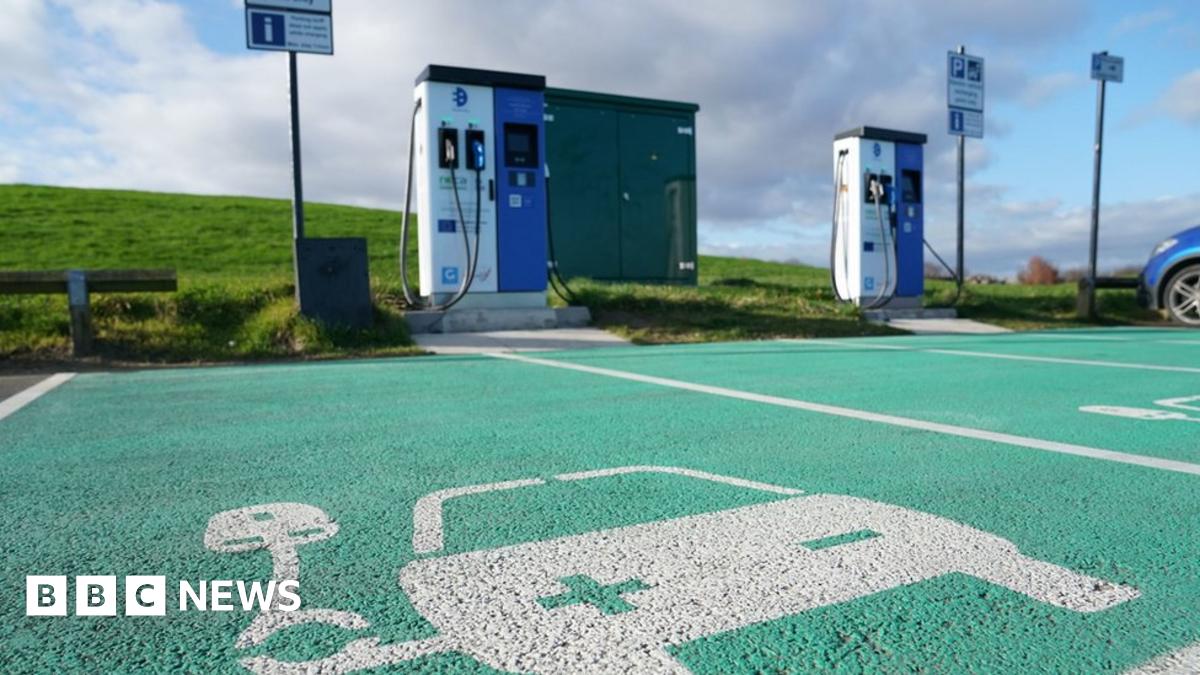
Electric vehicles: Phasing out sales of new petrol and diesel cars and vans by 2030 to accelerate the transition to electric vehicles and investing in grants to help buy cars and charge point infrastructure.
Public transport, cycling and walking: Making cycling and walking more attractive ways to travel and investing in zero-emission public transport for the future.
Jet zero and greener maritime: Supporting research projects for zero-emission planes and ships.
Homes and public buildings: Making homes, schools and hospitals greener, warmer and more energy efficient, including a target to install 600,000 heat pumps every year by 2028.
Carbon capture: Developing world-leading technology to capture and store harmful emissions away from the atmosphere, with a target to remove 10 million tonnes of carbon dioxide by 2030 - equivalent to all emissions of the industrial Humber.
Nature: Protecting and restoring the natural environment, with plans to include planting 30,000 hectares of trees a year.
Innovation and finance: Developing cutting-edge technologies and making the City of London the global centre of green finance.
This is part of the new "green deal" which includes banning the sale of petrol and diesel only vehicles form 2030 (I thought that was the target anyway?) and installing lots of heat pumps.
 

Jozhua

Established Member
Joined
6 Jan 2019
Messages
1,891
But I imagine not sunken ones dredged up from the seabed?
But anyway, it seems that Boris wants every home to be powered by offshore wind, backed up by nuclear (both big and small (Rolls Royce size), permission is believed to be close for Sizewell).
BBC News - Ban on new petrol and diesel cars in UK from 2030 under PM's green plan

This is part of the new "green deal" which includes banning the sale of petrol and diesel only vehicles form 2030 (I thought that was the target anyway?) and installing lots of heat pumps.
Heat pumps are good, they use something like 5x less electricity than the resistive heaters a lot of buildings currently have. And, they can be reversed in summer if needed to function as A/C, something that will help considerably as our summers get more consistently warmer. Plus, it will help for those who are stuck in houses with ridiculous amounts of insulation and tiny windows.

Electric cars are okay...they need a lot of precious metals and weigh quite a lot, plus come with the same safety and congestion concerns as regular cars. BUT, they offer a good solution for those trips where public transport is inconvenient/infeasible.

Battery powered buses are pretty good, but I think throwing up some trolley lines on busy bus corridors is a good idea. Then you can reduce the size of the batteries, increase the time between charges, reduce weight and decrease the amount of wasted energy.

Overall, I'd say the government's plans are fairly solid, but the devil is in the details. Often the promises made never materialise, as they aren't willing to fork the money out, or can't project manage properly. Take railway electrification for example...
 

Bald Rick

Veteran Member
Joined
28 Sep 2010
Messages
35,687
Battery powered buses are pretty good, but I think throwing up some trolley lines on busy bus corridors is a good idea. Then you can reduce the size of the batteries, increase the time between charges, reduce weight and decrease the amount of wasted energy.

You don’t need a trolley line for that, indeed that’s a pretty poor solution. Look up bus opportunity charging, as deployed in various cities across the world.
 

seaviewer

Member
Joined
3 Aug 2018
Messages
65
I must declare an interest - I have been working in renewables for 40+ years. As an engineer, the Swansea Lagoon makes a lot of sense, but sadly it is too expensive. So is nuclear and small modular reactors might or might not emerge as an option (I am not hopeful).
Denmark is leading the way and seems set to demonstrate how a renewables-intensive and nuclear-free electricity system.
might work
As for the railways, we need to electrify our system more and cancelling the Great Western and Midlands schemes was short-sighted and absolutely daft. (don't forget the huge expense involved in lowering the track in box tunnel)
But electrification is expensive and can't be justified on lightly-used lines. Hydrogen fuel cell trains are emerging as a viable option, and perhaps battery trains for short journeys. And don't forget flywheels – as on the Stourbridge Town branch.
 

21C101

Established Member
Joined
19 Jul 2014
Messages
2,559
I must declare an interest - I have been working in renewables for 40+ years. As an engineer, the Swansea Lagoon makes a lot of sense, but sadly it is too expensive. So is nuclear and small modular reactors might or might not emerge as an option (I am not hopeful).
Denmark is leading the way and seems set to demonstrate how a renewables-intensive and nuclear-free electricity system.
might work
As for the railways, we need to electrify our system more and cancelling the Great Western and Midlands schemes was short-sighted and absolutely daft. (don't forget the huge expense involved in lowering the track in box tunnel)
But electrification is expensive and can't be justified on lightly-used lines. Hydrogen fuel cell trains are emerging as a viable option, and perhaps battery trains for short journeys. And don't forget flywheels – as on the Stourbridge Town branch.
While the Swansea bay turbines would wear out and need replacement in a decade or two, most of the cost was surely the Civil works which if done properly would last a century or more. I suspect the problem was that the investment critera didn't cope well with a return on that timescale.

The Rolls Royce reactors are largely speaking proven ship and submarine reactors I thought?

Worth also watching Indias work on Thorium reactors which eliminates most of the safety issues.


I think the biggest failing in the switch to intermittent generators (renewables) was to pile subsidies into them rather than mass electrical storage research first.

We still have not solved the intermittency achilies heel of the windmill which led to coal mining and steam engines in the first place.

There are promising developments in compressed (cryo) air storage (in crude terms, wind turbine powers compressor to compress air. When no wind, compressed air powers another (conventional) turbine to generate electricity), but we are yeara behind where we could be if such technology had been the primary focus.

I always saw the cancellation of midland and GW electrification as acceptance of the reality that there would not be the trained resources to it in the forseeable future.

GW bits remaining are short stretches that can be done later as infill. Midland seems to be happening by stealth with Glendon to Market Harborough now being done. If HS2 East never gets further than Trent Junction then HS2 will pay for electrification north of there and you are just left with Market Hbr to Trent to infill.
 
Last edited by a moderator:

trebor79

Established Member
Joined
8 Mar 2018
Messages
4,893
I think the biggest failing in the switch to intermittent generators (renewables) was to pile subsidies into them rather than mass electrical storage research first.
Disagree with this statement. Pumping money into renewables has an immediate carbon reduction benefit. Solar and offshore wind has now got to the point that subsidy is no longer necessarily needed.
Energy storage is largely being funded using normal market mechanisms rather than subsidy. So if you want to hook up your new solar plant to the grid the DNO will insist on having curtailment rights. That kills your investment proposition, so you build in some energy storage to overcome the issue. That also lets your solar plant feed into the grid at periods of high demand when the sun isn't shining. Win win.

If we'd subsidised the building of a lot of practically and economically useless (at the time) storage, we'd still have to subsidise the beginnings of the renewable generation industry.
 
Status
Not open for further replies.

Top