
-
Our new ticketing site is now live! Using either this or the original site (both powered by TrainSplit) helps support the running of the forum with every ticket purchase! Find out more and ask any questions/give us feedback in this thread!
You are using an out of date browser. It may not display this or other websites correctly.
You should upgrade or use an alternative browser.
You should upgrade or use an alternative browser.
Brass Plate Identification ?
- Thread starter vendepac
- Start date
- Status
- Not open for further replies.
Sponsor Post - registered members do not see these adverts; click here to register, or click here to log in
R
RailUK Forums
Ploughman
Established Member
Possibly a Steam loco boiler pressure plate.
No idea what off but there are people who know what boiler number was on what loco.
Maybe better trying on a more heritage based website like National Preservation.
https://www.national-preservation.com/
If thinking of selling it do not clean it up, would probably fetch more as is.
No idea what off but there are people who know what boiler number was on what loco.
Maybe better trying on a more heritage based website like National Preservation.
https://www.national-preservation.com/
If thinking of selling it do not clean it up, would probably fetch more as is.
Last edited:
lincolnshire
Member
- Joined
- 12 Jun 2011
- Messages
- 884
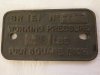
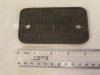
Hi... First post from me. I've recently acquired this BR (E) Plate and hoped someone can identify it's origin. It's size is about 4" x 2" and I haven't a clue!!
It might also be off an air reciever tank or any pressureised vessel.
Ploughman
Established Member
225 psi is a common steam loco pressure.
Mvann
Member
If it's a boiler plate, it looks like it could be off an O4 boiler.
Thanks for the input. An internet search brought up the attached page. Does anyone think my plate might refer to the Modification of 15/11/1947?? I know it's pre BR but I'm grasping at straws a little at the moment
http://www.brdatabase.info/locoqry.php?action=locodata&id=601504453&type=S&loco=6561
http://www.brdatabase.info/locoqry.php?action=locodata&id=601504453&type=S&loco=6561
Mvann
Member
Modification was to the loco, not the boiler. That date was when that loco was fitted with that boiler.

krus_aragon
Established Member
Thanks for the input. An internet search brought up the attached page. Does anyone think my plate might refer to the Modification of 15/11/1947?? I know it's pre BR but I'm grasping at straws a little at the moment
http://www.brdatabase.info/locoqry.php?action=locodata&id=601504453&type=S&loco=6561
Following a link from that page gets me here: http://www.brdatabase.info/components.php?comp=boiler&id=6079
This appears to be the history of boiler #3425. In the BR era, it is listed as fitted to O4 loco 63737 in April 1950. Following further links, this loco carried the boiler until 1952.
Ploughman
Established Member
A rough change interval of 2 years seems a bit strange.
Is that normal considering the current limit on tubes not boilers is approx 10 years?
Is that normal considering the current limit on tubes not boilers is approx 10 years?
Clarence Yard
Established Member
- Joined
- 18 Dec 2014
- Messages
- 3,266
A rough change interval of 2 years seems a bit strange.
Is that normal considering the current limit on tubes not boilers is approx 10 years?
Boilers were often lifted when the loco was overhauled, even if only a retube was required. The duty cycle of locos in those days mean't that tubes didn't last anywhere near ten years. Overhauls of steam engines were carried out at very frequent intervals too. 2 to 2.5 years would be about normal for a LNER heavy freight engine.
But there is something wrong with that plate being associated with an 04 - a diagram 15 boiler worked at 180 lb psi.
krus_aragon
Established Member
A rough change interval of 2 years seems a bit strange.
Is that normal considering the current limit on tubes not boilers is approx 10 years?
The same site states that 63737 had a fresh boiler fitted every 2-3 years from 1931 through 1958. Back in the day, when steam locos were around in large numbers, railways kept extra boilers about. When an engine came in for a service, it would have its boiler removed and replaced with a freshly inspected one, to get the engine back in service quicker. The boiler would then be inspected independently, and later fitted to another engine.
--- old post above --- --- new post below ---
Boilers were often lifted when the loco was overhauled, even if only a retube was required. The duty cycle of locos in those days mean't that tubes didn't last anywhere near ten years. Overhauls of steam engines were carried out at very frequent intervals too. 2 to 2.5 years would be about normal for a LNER heavy freight engine.
You got there before me...
But there is something wrong with that plate being associated with an 04 - a diagram 15 boiler worked at 180 lb psi.
I've just noticed the number on the brass plate could read 3425 or 3423.
Edit: I've found a Diagram 49A boiler #3423 fitted to two class B16s from 1943 to 1950, here. Would that be a 225psi boiler design? LNER/Eastern region is out of my expertise.
Last edited:
Mvann
Member
Perhaps vendepac could confirm the number
Ploughman
Established Member
Could the disparity between pressures be covered by its rated max pressure and the normal working pressure in a similar fashion to the difference between Safe Working Load and test load for lifting gear?
Mvann
Member
It maybe that the boilers could be used for 225 but never were.
- Status
- Not open for further replies.