The existing service is likely to have long enough gaps for a slower one to fit between, and a through service to Preston would be more attractive for passengers to/from St Annes and vicinity. Otherwise, if going somewhere like Manchester, they'd have to change twice in a short time.
A tram train Blackpool North station - tramway to Squires Gate - converted rail line to Kirkham and Wesham would provide a single change to both Manchester and Leeds/York from multiple stations on the proposed route.
Don't forget that Kirkham and Wesham has 2tph to Manchester Airport and 1tph to York in the current timetable. It's only Liverpool that requires an extra change and that isn't a destination with a lot of patronage from anywhere in the Fylde really.
Not to mention that Kirkham and Wesham is a much easier place to change at than Preston.
I'd hope the 62 mph speed of existing UK tram trains vs the 100mph highest linespeed wouldn't make too much difference in end to end journey times, due to the need for the 100mph trains to get up to speed etc.
It's 17 miles 42 chains from Blackpool North to Preston, which currently takes around 23 mins on the fastest services.
Blackpool South to Preston is 19 miles 73 chains, the fastest rail services take around 36 mins. This is with a 75 mph capable unit.
With the higher line speed for the 7.6 miles Kirkham and Wesham to Preston, you'd be slowing from 75mph to 62 mph.
Even with faster acceleration up to 62mph, you'd still lose a few seconds and take up valuable paths on the mainline.
Realistically even if the trams were extended I don't see them getting beyond Kirkham
Exactly.
As for the timetable, it would depend on whether the tram trains were going to provide stopping or faster services- I think 6 tph isn't too intensive, so 10tph might also be possible!
Where are you going to fit the existing Blackpool North to Manchester Airport and York services? Cancel them and make everyone change at Preston?!
All figment of the imagination though. No one will be spending that amount of money there, not least because almost all the users of the #11 bus are travelling for free.
I wouldn't write if off, there's a lot of big employers in the area who could do with better public transport access and the new Lancashire Combined County Authority (LCCA) will hold some significant transport funding powers (as part of the devolution settlement I believe).
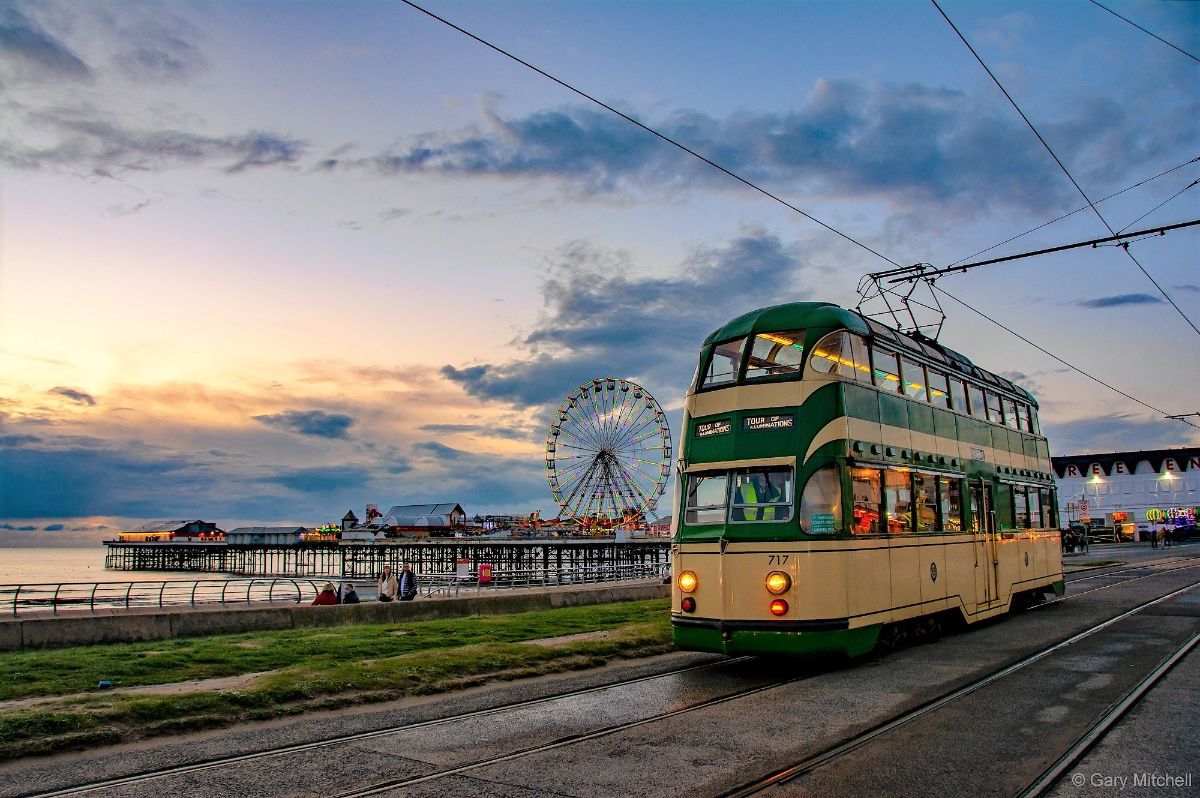
As for today, if the Fleetwood lime isn't to be heavy rail; I've always liked the idea of tram/tram-trains from Poulton to Fleetwood via Broadwater (ie joining the current tram line near the cricket club) and looking at the plans, seems there's no need to connect to the rail network at Poulton or use the current station.
Yes, if you weren't bothered about a Network Rail connection, you could terminate the tram line at the Poulton end a hundred metres or so west of the junction and provide a ramp-based bridge connecting it to the western side of Breck Road overbridge in Poulton (opposite the entrance to Poulton station).
Who will be the body that will finance these aspirational new services?
Potentially the LCCA could fund it - read about their work here.
https://lancashire-cca.gov.uk/
Blackpool's transport investment case will come when its economic role starts to evolves into one of a Manchester / Liverpool commuter town and its resident demographic starts to resemble that of Brighton's.
I doubt that it will ever be a Manchester/Liverpool commuter town tbh. It might attract commuters for the increasing number of large businesses looking to relocate to the Preston area, as
@Xenophon PCDGS has suggested.
With Blackpool Council set to be disbanded and the future of Blackpool Transport Ltd a bit unclear as a result, I wonder if there's an element of tidying up loose ends here with the potential for tendering its operations (bus and tram) if the new larger unitary prefers?
I think it will continue to be municipally owned, but perhaps ownership will be transferred to the new unitary with the former Wyre and Fylde district parts contributing financially to the transfer.