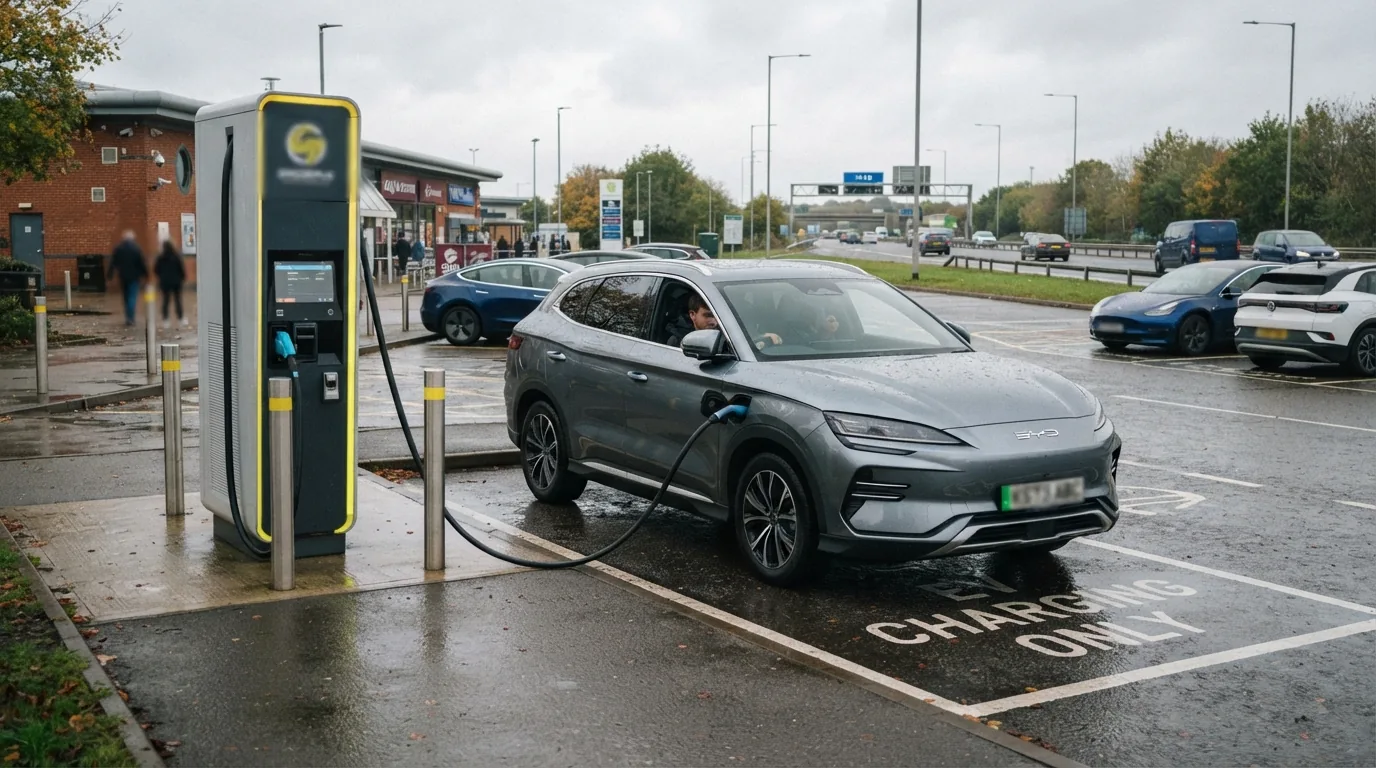
The speed of charging is more important for those who always use public charging but almost irrelevant to those who mostly charge at home.
As someone who charged entirely away from home for a week and doing significant milage (90 minute journey each way) unless you can't do something else and charge at 50w then even a shortish supermarket visit of 10 minutes at 50w can add 20 miles of usable range (Google suggests 25 to 30 miles) and so doesn't really add much time to your week. Especially if you would already need to allow 5 minutes every few weeks to top up with fuel.
As more people go electric companies are likely to start to look to add charging at work (like parking spaces) is likely to be something they consider more and more.
Even 5 hours using a granny charger at work would add 30 usable miles (again 35 to 45 miles) and so would likely be enough to charge more than many people travel for getting to and from work, maybe even enough to allow you not to charge over a weekend (may also mean Mondays and Fridays were slightly more attractive to people to head into the office).
Whist yes, 100w, 200w and faster would give you more charge in the same time window would be useful, for someone doing 7,280 miles a year that's 140 miles a week, so that's like 24 hours with a granny charger (or 2 or 3 nights of charging or 4 or 5 days at work), 70 minutes at 50w, 35 minutes at 100w and 18 minutes at 200w.
Clearly the first two could be a bit annoying, but once you get to over 100w and being able to pair it with your weekly shop or some other activity you're not needing much if any other charging time.
Even 50w isn't impossible depending on what you do, if you go to the cinema once a fortnight, that's probably enough charge to add a few 10 minute charges on top of that to keep you going between visits.