Our new ticketing site is now live! Using either this or the original site (both powered by TrainSplit) helps support the running of the forum with every ticket purchase! Find out more and ask any questions/give us feedback in this thread!
We have had a recent discussion about new tramways following old on the same streets, but just how much of "traditional" tram tracks is still around and visible.
Start with a couple :-
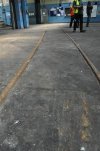
- London, northern exit from Kingsway subway, including conduit slot.
- Salford, Hessel Street, down the west side of old Weaste depot.
- Manchester, Heaton Park, used as a heritage line, but the initial length may be even the original rails.
Road surfacing may have removed it, but around three or four years ago in Liverpool there was still some tram rails crossing the roads around the Gladstone dock area, though I presume these were for "docklands" tramways rather than passenger carrying
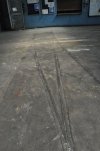
@Taunton I used to walk past Streatham Hill (Brixton) bus garage and its entrance had erstwhile tram-rails. This link shows it also has them inside the bus garage.
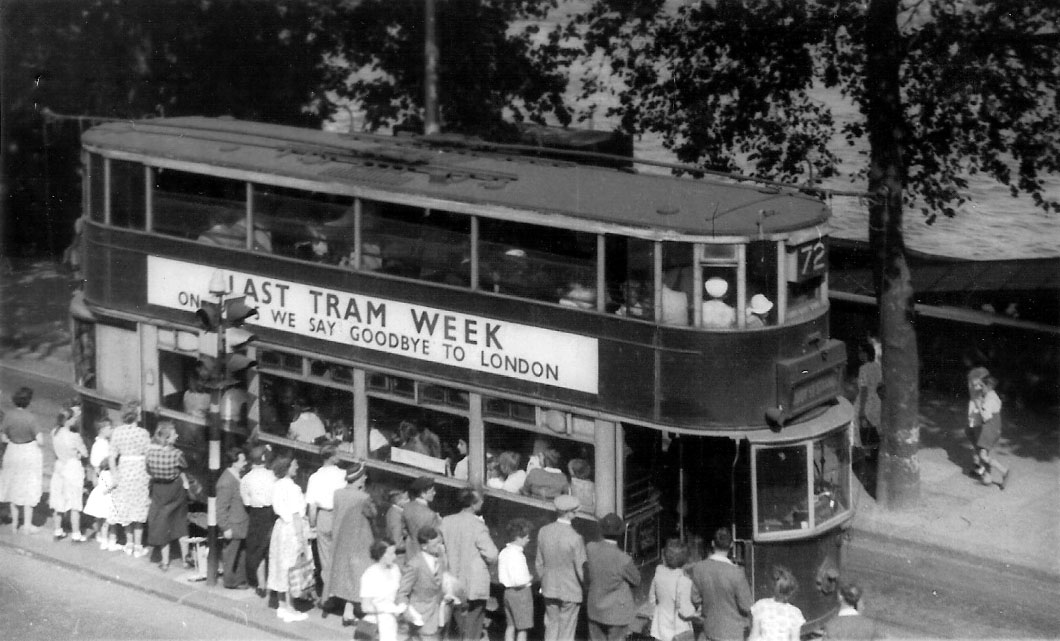
On this week in 1952, inner London’s last trams ran, with the very last journey taking place in the early hours of 6 July, when the final service ran from Woolwich to New Cross depot, passing…
charltonchampion.co.uk
One of the commenters says:
I researched the site for RB Greenwich in 2016 and can confirm these are the embedded tracks of a traverser that was installed to move the trams from the site entrance (off Woolwich Road) onto storage lines. The disposals took place between 2nd October 1950 and 29th January 1953 so were quite a local spectacle, one tram a week being stripped of its fittings and burnt.
Quite a lot I suspect! In many places it was cheaper just to tar over the tracks when the trams were abandoned, rather than laboriously dig them out. A century or so, and several layers of tarmac later, they will still be there, and periodically a full road reconstruction will reveal them again, to the delight of the local press.
I seem to recall reading that, in one or more Northern towns, the hidden tram tracks actually help prevent the roads from collapsing or subsiding into old mine workings.
Also many tram depots were converted into bus depots, some of which still remain with some track intact. @Sun Chariot mentioned Streatham Hill; another London one I can think of is Fulwell, which had them and may still have. The old depot site at Tonbridge Road, Maidstone still has them. Sure there must be others but I can't think of any more offhand.
This was pretty much all that was left of Torquay's tram system until a curve on the Strand by the harbour was unearthed during redevelopment in 2024. The rails there have now also been retained as a feature.
www.flickr.com
The harbour:
== Doublepost prevention - post automatically merged: ==
In many places it was cheaper just to tar over the tracks when the trams were abandoned, rather than laboriously dig them out. A century or so, and several layers of tarmac later, they will still be there, and periodically a full road reconstruction will reveal them again, to the delight of the local press.
A bit of the track of the Burton and Ashby survives in the forecourt of the closed Ashby station. There are also track embedded in the cobbles between the approach to Temple Meads and the original Brunel building, which I think is tram rail but it may be for wagons.
There are also track embedded in the cobbles between the approach to Temple Meads and the original Brunel building, which I think is tram rail but it may be for wagons.
It was indeed tram track; Bristol tram 8, a short route to The Centre, used it as a terminus spur.
Another is a very short piece of the old Edinburgh cable system, with centre cable slot, at the east end of Princes Street, which was a terminus of one of the cable lines. A road engineer, not understanding it was kept as a period piece, has recently painted roadmarking lines across it
I live on a road which had double tram tracks used until the mid 1950s. Although nothing of the tracks is visible, there are suspicious cracks in the road surface which align almost perfectly with the position of the erstwhile rails. (I have photos of the trams trundling down the road).
I wonder if they are still there - slumbering, perchance to awaken and be used once again in a more enlightened era of public transport...
What I find fascinating about these surviving sections is how much history can be hidden in something as ordinary as a piece of track. It takes a bit of observation and logical thinking to distinguish genuinely original infrastructure from later restoration or reused rail. Heaton Park is a particularly good example—the original Manchester Corporation tram track was uncovered and incorporated into the heritage line.
I enjoy this kind of “look closely and work it out” thinking in other areas too, which is why I find https://einsteiniqtest.com/ an interesting way to challenge reasoning and observation skills.
I live on a road which had double tram tracks used until the mid 1950s. Although nothing of the tracks is visible, there are suspicious cracks in the road surface which align almost perfectly with the position of the erstwhile rails. (I have photos of the trams trundling down the road).
I wonder if they are still there - slumbering, perchance to awaken and be used once again in a more enlightened era of public transport...
Quite likely. Some towns ripped up the tracks and rebuilt the substrata of the road, others just covered them with tarmac. The Tramways & Light Railways Act 1896 placed the responsibility for maintenance of the road surface around the tracks and for 18 inches either side on the tramway operator, not the relevant highways authority, which included dealing with this at abandonment, by which time of which almost all were run by the same local authority that did the roads, so they commonly took the cheap option then. Actually the steel rails form a useful reinforcement, with the road surface around them gently subsiding with traffic weight.
Some councils still divided the responsibility - I believe Glasgow maintained the separate arrangements for the tram system, which led to tram snowploughs and tram salt trailers for dealing with winter conditions (inevitably using old trams to do so) - and had substantial Permanent Way yards, which are essentially the civil engineer's department of the system.
The rails would be useless for current operations, corroded, wrong level, etc, and a considerable cost to rip out and replace. I think Manchester has encountered this multiple times as their system develops.
== Doublepost prevention - post automatically merged: ==
What I find fascinating about these surviving sections is how much history can be hidden in something as ordinary as a piece of track. It takes a bit of observation and logical thinking to distinguish genuinely original infrastructure from later restoration or reused rail. Heaton Park is a particularly good example—the original Manchester Corporation tram track was uncovered and incorporated into the heritage line.
When Greater Manchester did substantial road works in the 1970s on Eccles Road, before the current tramway, I think for the M602 Motorway, they unearthed the former substantial junction with Cross Lane, which had the only full tramway "Grand Union" junction ever in the UK, that is double tracks crossing at right angles, with double track connecting curves for all four quadrants. It had been under the tarmac since abandonment. The rails were all removed and given to the Crich tramway museum, who unfortunately do not seem to have relayed them. I remember them being all laid in a pile there from a youthful visit. It was a shame that the agreement didn't extend to the motorway contractor laying them.
...the only full tramway "Grand Union" junction ever in the UK, that is double tracks crossing at right angles, with double track connecting curves for all four quadrants. It had been under the tarmac since abandonment. The rails were all removed and given to the Crich tramway museum, who unfortunately do not seem to have relayed them. I remember them being all laid in a pile there from a youthful visit. It was a shame that the agreement didn't extend to the motorway contractor laying them.
It is difficult to see where they might install it, given the area (width) of flat land needed for the side-arms to go to and Crich's quite constrained site...
Road surfacing may have removed it, but around three or four years ago in Liverpool there was still some tram rails crossing the roads around the Gladstone dock area, though I presume these were for "docklands" tramways rather than passenger carrying
These were crossings from the local goods yards or links to the national rail network to the extensive dock railway system. There was still a signal gantry just inside the dock wall near Waterloo dock until about 10 years ago.
However, when Liverpool's tram network shut down in 1957, the tracks in roadways were merely tarmacked over in general, though a few were removed: 'In case they should be needed in the future'. This policy has been forgotten and tracks are now ripped out whenever resurfacing is done.
These were crossings from the local goods yards or links to the national rail network to the extensive dock railway system. There was still a signal gantry just inside the dock wall near Waterloo dock until about 10 years ago.
However, when Liverpool's tram network shut down in 1957, the tracks in roadways were merely tarmacked over in general, though a few were removed: 'In case they should be needed in the future'. This policy has been forgotten and tracks are now ripped out whenever resurfacing is done.
There's a small amount visible in Nottingham at the entrance into the Nottingham City Transport bus depot (formerly the Nottingham Corporation tram depot) on Upper Parliament Street opposite the National Ice Centre/Motorpoint Arena.
Still Standing! Highgate Horse Tram Depot entrance, London
Posted on Wednesday 12 May 2021 by Gareth Prior
In this edition of “Still Standing” we find some old tram track in London which used to be the entrance to the Highgate Horse Tram Depot.
The story has a picture showing the dug up old tram tracks curving round outside the station entrance at the junction of Station Street and Carrington Street.
They were still there in the mid-1980s when I first came to London, and in the absence of shops at Canary Wharf, we used to go via the ferry to Woolwich market on Saturdays, and I always used to deliberately stand on the tracks
We are aware of an issue with emails from the Forum to Microsoft-based email accounts (hotmail/outlook/live.com email addresses). This is being looked into currently, thanks for your patience meanwhile.