But surely this can only be in the margins, or else an unsuccessful bidder could cry 'foul'.In the provinces the councils often show some flexibility and are willing and able to negotiate price increases outside normal timescales when these changes occur,

-
Our new ticketing site is now live! Using either this or the original site (both powered by TrainSplit) helps support the running of the forum with every ticket purchase! Find out more and ask any questions/give us feedback in this thread!
You are using an out of date browser. It may not display this or other websites correctly.
You should upgrade or use an alternative browser.
You should upgrade or use an alternative browser.
West Yorkshire bus franchising
- Thread starter tomoufc
- Start date
Sponsor Post - registered members do not see these adverts; click here to register, or click here to log in
R
RailUK Forums

TheGrandWazoo
Veteran Member
You're absolutely right.It would often appear that the issue is that the procurement people who write the underlying contractual terms don't understand transport so tie cost increases to standard inflation terms (CPI or RPI) rather than bus industry costs (which often jump in sudden acts well above standard inflation, such as fuel costs) whilst the transport teams who write the service specs aren't able to adjust the standard T&Cs (you also often see it in some of the questions you are asked on the forms where there are several questions that make no sense, or are entirely irrelevant, to a bus operator and so are difficult to answer but is necessary and logical for another activity a council may buy in).
They will apply measures like CPI or CPIx (CPI without mortgage costs as a factor) which businesses can take a reasoned view on unless you have some sort of Covid era shock. It's relatively appropriate for staff and utility costs, but not for fuel which is much more volatile. The other issue is those legislative changes that impact the cost base - I mentioned about the increase in National Insurance Contributions as something that operators had no visibility of and, if you don't have the ability to review pricing, it too eats into margin.
You might think that. Procurement people like to do two things... screw the price down AND make sure that it is relatively fixed, especially in public sector. That's because we've seen procurements in the past that have spiralled upwards in terms of cost so they try to avoid bad tabloid headlines.But surely this can only be in the margins, or else an unsuccessful bidder could cry 'foul'.
And if you think that operators can just throw in the contract after 3 years of a 5 year term... Well, I can't say I've seen the contracts for Manchester or West Yorkshire but there may well be an early termination penalty that says if you do so, you're not only liable for the costs of running a new procurement exercise but also the variance between the new costs and your original tender.
Faced with that sort of challenge, operators tend to "price in risk" so you take a view of how things might change. Of course, the second challenge is that it's a competitive tendering process so you don't want to build in too much contingency and make your bid uncompetitive.
I've not seen contracts like that. Those in London were typically 5 +2 year contracts, so presumably there is no penalty for terminating at 5 years. And what happens if the contracted is terminated after 3 years because the contractor has gone bust - there would be no money to pay such penalties.And if you think that operators can just throw in the contract after 3 years of a 5 year term... Well, I can't say I've seen the contracts for Manchester or West Yorkshire but there may well be an early termination penalty that says if you do so, you're not only liable for the costs of running a new procurement exercise but also the variance between the new costs and your original tender.
If there are penalties for early termination for contractors, are there penalties on the commissioner for terminating contracts early as well? For example, if the route is cut back, hours of operation reduced etc?
But I suspect we are beginning to drift off topic.......
Dwarfer1979
Member
Who is going to cry 'foul'? We are talking several years into the contract of a tendered bus service and all operators want to benefit from council flexibility so you would have to be a grade 'A' idiot to kick up a fuss over an operator getting the same treatment you are asking for and these sort of negotiations and matters are less publicly known.But surely this can only be in the margins, or else an unsuccessful bidder could cry 'foul'.
It will be harder for this to happen under franchising as everything is more rigid and contractual so if the operator doesn't get their pricing right and the authority don't get their price review (inflationary increases) right then that is where the friction will kick in.
They aren't common in the bus industry with normal tendering, though I do know one of the Combined Authorities had a contractual term requiring an operator to pay the difference between their price and the replacement operator for the term of the original, contract if they handed it back and a shire county who had a term that meant if you handed back a contract early you were removed from the tender list. Whilst never explicitly stated by either party it is suspected that a punitive contract guarantee against the owning group was why Stagecoach pulled out of Dumfries & Galloway given what they said.I've not seen contracts like that. Those in London were typically 5 +2 year contracts, so presumably there is no penalty for terminating at 5 years. And what happens if the contracted is terminated after 3 years because the contractor has gone bust - there would be no money to pay such penalties.
If there are penalties for early termination for contractors, are there penalties on the commissioner for terminating contracts early as well? For example, if the route is cut back, hours of operation reduced etc?
But I suspect we are beginning to drift off topic.......
They are more common with larger outsourcing contracts, which bus 'franchising' comes under and all the rail franchises had such guarantees (and the guarantees/penalties are with the owning group not the operating subsidiary so a big group making their subsidiary go bust won't get them out of it) to stop businesses trying to wriggle out of a poorly performing contract.
As my dad, who used to work in IT procurement as a consultant, says "the profit is in the variance". Depending on how well written was the original contract the variation may well be where contracts are rescued, either marking up enhancements above actual cost or not passing on all savings of reductions, but it does depend on how well written the contracts were (and UK government at all levels does appear to be particularly bad at writing these sort of things in general). Even with normal bus contracts there are notice periods that have to be adhered to (often related to registration notice periods for instance) and a council would be as tied to them as the operator is - as with many of these things in the deregulated market with normal route tenders there may be flexibility from both sides (we'll forgo some of the notice on ending now because you were flexible earlier) assuming the relationship is good but that is less available in the more formal and contractual franchise system.

Tetchytyke
Veteran Member
It's not that they "don't understand transport" so much as the simple fact that any cost escalator has to be clearly defined for it to withstand any sort of legal scrutiny. CPI and RPI are both clearly defined and independently set and verified and so they are the logical choice for any sort of contractual cost escalation. I don't see how you can define it any other way.It would often appear that the issue is that the procurement people who write the underlying contractual terms don't understand transport so tie cost increases to standard inflation terms (CPI or RPI) rather than bus industry costs
Fuel is probably the biggest cost variable but the prices now fluctuate so rapidly that how can you ever hope to price that fairly into a cost escalator? The price can change by a couple of pence per litre even from one day to the next, depending on what mood the orange ape in Washington is in on any given day. Some companies can hedge their costs and some cannot. Even with hedging, sometimes the prices go up and you got a good deal and sometimes the prices go down and you got a bad deal. So do you give a windfall to a company who hedged well/bought on a good day or do you penalise a company who hedged badly/bought on a bad day? Take an average and you may as well have just used CPI or RPI. Use what the operator actually paid and there's no incentive for them to buy sensibly.
== Doublepost prevention - post automatically merged: ==
Sullivan's Buses is the perfect example of how there's no easy solution. An SME and on contracts that reflected their SME status, when they went bust they owed TfL almost £400k and owed the taxman £1.3m. And that won't include the cost to TfL of having to retender their routes at short notice.I've not seen contracts like that. Those in London were typically 5 +2 year contracts, so presumably there is no penalty for terminating at 5 years. And what happens if the contracted is terminated after 3 years because the contractor has gone bust - there would be no money to pay such penalties.
Last edited:
TheGrandWazoo
Veteran Member
Fuel escalators are employed in the road transport (freight) sector extensively.Fuel is probably the biggest cost variable but the prices now fluctuate so rapidly that how can you ever hope to price that fairly into a cost escalator? The price can change by a couple of pence per litre even from one day to the next, depending on what mood the orange ape in Washington is in on any given day. Some companies can hedge their costs and some cannot. Even with hedging, sometimes the prices go up and you got a good deal and sometimes the prices go down and you got a bad deal. So do you give a windfall to a company who hedged well/bought on a good day or do you penalise a company who hedged badly/bought on a bad day? Take an average and you may as well have just used CPI or RPI. Use what the operator actually paid and there's no incentive for them to buy sensibly.
- Agree what the percentage of overall cost that fuel represents
- Have a base notional fuel price (xxx pence per litre) against which your overall cost base is created
- Have an independent fuel price source (e.g. RHA)
- Have a scale that then uses that independent pump price to create either a surcharge or rebate against that overall cost on a monthly basis
So yes, @Dwarfer1979 is right. They don't understand transport.
Fuel escalators are employed in the road transport (freight) sector extensively.
This is not uncommon in the freight sector. It's not perfect but in the round, it works and it's better than having nothing.
- Agree what the percentage of overall cost that fuel represents
- Have a base notional fuel price (xxx pence per litre) against which your overall cost base is created
- Have an independent fuel price source (e.g. RHA)
- Have a scale that then uses that independent pump price to create either a surcharge or rebate against that overall cost on a monthly basis
So yes, @Dwarfer1979 is right. They don't understand transport.
Would the increasing move to EVs remove the fuel price volubility? I assume electricity prices do not change so frequently.

D6130
Established Member
I spotted one of the brand new Mercedes Access Buses - immaculate in the two-tone green Weaver Network livery - heading Westwards empty through Hebden Bridge on the A646 yesterday afternoon. Couldn't catch the registration number, but the fleet number was 59. I wonder whether it was heading for the TLC depot at Eastwood or the First Halifax depot at Millwood (Todmorden)?
Leedsbusman
Member
Do First run access bus?I spotted one of the brand new Mercedes Access Buses - immaculate in the two-tone green Weaver Network livery - heading Westwards empty through Hebden Bridge on the A646 yesterday afternoon. Couldn't catch the registration number, but the fleet number was 59. I wonder whether it was heading for the TLC depot at Eastwood or the First Halifax depot at Millwood (Todmorden)?
mattb7tl
Member
TLC. I believe they are the only operator, could be wrong.Do First run access bus?
Following the demise of CT Plus, TLC do operate access bus county wideTLC. I believe they are the only operator, could be wrong.
D6130
Established Member
Yes....since my previous post, I've spoken with a TLC driver in Hebden Bridge and you are correct. They told me that 40 new access Buses had been ordered and all of those delivered so far have gone to Bradford. The Eastwood (Hebden Bridge/Todmorden local services) - based drivers have been complaining that they have been getting all the old, knackered cast-off Optare Solos from Bradford as the new access buses have been delivered. Perhaps no. 59 was en route to Eastwood to redress the balance?TLC. I believe they are the only operator, could be wrong.

Steve440
Member
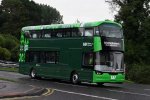
The fact it’s just a hard vertical cut between the dark green and light green just looks really bad in my opinion. Was it designed by politicians and civil servants rather than anyone who has designed a bus livery before?
The dark colour looks too dark and they’ve gone too far the other way with the patterns and shapes. From the lower panels that everyone will have said would have been a maintenance nightmare to so high up you might as well not bother at all.
The dark colour looks too dark and they’ve gone too far the other way with the patterns and shapes. From the lower panels that everyone will have said would have been a maintenance nightmare to so high up you might as well not bother at all.
TheGrandWazoo
Veteran Member
I can’t disagree with a word.The fact it’s just a hard vertical cut between the dark green and light green just looks really bad in my opinion. Was it designed by politicians and civil servants rather than anyone who has designed a bus livery before?
The dark colour looks too dark and they’ve gone too far the other way with the patterns and shapes. From the lower panels that everyone will have said would have been a maintenance nightmare to so high up you might as well not bother at all.
I can’t believe a professional designer has come up with that. It looks awful.
The comparison between that and Merseyside’s Metro livery is stark. One has been done by an experienced person who knows how to apply to the body shape and dimensions, and one doesn’t.

NorthernSpirit
Established Member
- Joined
- 21 Jun 2013
- Messages
- 2,279
I honestly don’t understand the obsession with saving SMEs. Their demise is inevitable with franchising. Any mechanism to keep them going will just add to public subsidy.
I operate a SME (non transport), whilst not subject to to franchising, its quite hard to keep going. I work with another SME who is again non transport and they are having to change their product because of lack of sales. Despite being seperate businesses, we share the same premises to keep costs down.Excellent attitude. Screw local businesses, let’s allow big corporations to do what they want with our money.
This is no different to smaller independent bus operators who may have been operating since 1929 by some bloke in a flat cap stood next to his bus and is now operated by the fourth or even fifth generation.

YorkRailFan
Established Member
Completely agree, that separation is really unfortunate in my opinion. It doesn't really look integrated like the transport system its meant to represent!The fact it’s just a hard vertical cut between the dark green and light green just looks really bad in my opinion.
The cut off between the light and dark green follows the body of the bus to be fair, it looks better on some buses than it does others. The original bus they showed off on Millennium Square made it look better as the bus had a better shape to it, this particular model doesn't work so well.The fact it’s just a hard vertical cut between the dark green and light green just looks really bad in my opinion. Was it designed by politicians and civil servants rather than anyone who has designed a bus livery before?
The dark colour looks too dark and they’ve gone too far the other way with the patterns and shapes. From the lower panels that everyone will have said would have been a maintenance nightmare to so high up you might as well not bother at all.
Good for you. I still don’t think it’s possible for franchising to protect SMEs without extra costs (unless they employ their staff on worse terms and conditions). But this has been debated at length here, and I don’t think anyone’s given conclusive evidence either way. My personal preference would be for municipal or state ownership.I operate a SME (non transport), whilst not subject to to franchising, its quite hard to keep going. I work with another SME who is again non transport and they are having to change their product because of lack of sales. Despite being seperate businesses, we share the same premises to keep costs down.
This is no different to smaller independent bus operators who may have been operating since 1929 by some bloke in a flat cap stood next to his bus and is now operated by the fourth or even fifth generation.
TheGrandWazoo
Veteran Member
Really? I think we may have to disagree on that one. The first one was really impractical and fair enough, they went and changed it but the abrupt cut off between front and side still makes it look akin to an advertising but when they keep the front in the operator livery for customer recognition purposes i.e. it has no relation to what's on the back and sides.The cut off between the light and dark green follows the body of the bus to be fair, it looks better on some buses than it does others. The original bus they showed off on Millennium Square made it look better as the bus had a better shape to it, this particular model doesn't work so well.
This has been debated, and explained, at length. There is conclusive evidence that SMEs can work in many, many different industries.Good for you. I still don’t think it’s possible for franchising to protect SMEs without extra costs (unless they employ their staff on worse terms and conditions). But this has been debated at length here, and I don’t think anyone’s given conclusive evidence either way. My personal preference would be for municipal or state ownership.
It's like saying "I don't know, Isaac, about this gravity thing. There's no conclusive evidence to my mind" when it's been explained many times.
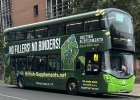
Looks like they took the design ideas for the livery from this with the Leeds Green front & the British Supplements advertNew Electroliner on test near Ballymena
Attachments
TheGrandWazoo
Veteran Member
Well, I hadn't thought of that but now you mention it...Looks like they took the design ideas for the livery from this with the Leeds Green front & the British Supplements advert

Great analogy. Although I didn’t say SMEs never ‘work’. But you know that. Think I’ll stop engaging with you from this point on, because you come across as wanting to score points rather than debate honestly. Good luck.Really? I think we may have to disagree on that one. The first one was really impractical and fair enough, they went and changed it but the abrupt cut off between front and side still makes it look akin to an advertising but when they keep the front in the operator livery for customer recognition purposes i.e. it has no relation to what's on the back and sides.
This has been debated, and explained, at length. There is conclusive evidence that SMEs can work in many, many different industries.
It's like saying "I don't know, Isaac, about this gravity thing. There's no conclusive evidence to my mind" when it's been explained many times.
TheGrandWazoo
Veteran Member
I've no need to score points. It just seems odd that when several people have taken the time to debate it honestly, you decline to accept their real life experiences in preference to your entrenched beliefs.Great analogy. Although I didn’t say SMEs never ‘work’. But you know that. Think I’ll stop engaging with you from this point on, because you come across as wanting to score points rather than debate honestly. Good luck.
Good luck wherever your life takes you too.
Steve440
Member

Bus franchising in West Yorkshire takes major step forward as first contracts signed
Combined Authority will set routes, fares and service standards for all franchised services as part of its Weaver Network.
The first contracts of the new era of bus franchising have been officially signed by regional transport chiefs and bus operators.
First West Yorkshire has been chosen to run services running in Huddersfield and parts of Leeds, while Transdev Blazefield has been chosen to run services in Dewsbury. Further, smaller contracts and school service contracts are also progressing and announcements are expected in the coming weeks.
This follows a robust and competitive process over the last 10 months.
The first Weaver Network services are due to launch in Spring 2027, with franchising introduced in phases across West Yorkshire through to the end of 2028.
Currently, more than 80 percent of the bus network is run by private operators who decide routes, frequencies and timetables, with the Combined Authority subsidising extra services and cheaper fares.
Under bus franchising, West Yorkshire Combined Authority will own the majority of buses and depots for the larger contracts, while setting routes, fares and service standards for all franchised services. Operators will be contracted to run services on its behalf.
This means greater accountability, with decisions about buses made locally and services that are designed for the people, not for profit.
“I promised to bring buses back under public control and today is a landmark moment for bus franchising. Signing the first contracts for services is the next step to improving public transport across the region.Mayor of West Yorkshire Tracy Brabin said:
“For the first time, operators will run buses on behalf of the people of West Yorkshire, to standards set by us.
“Bus franchising takes us closer to our bold vision of a region-wide integrated Weaver Network and a better-connected, more reliable and affordable transport system for West Yorkshire.”
“We’re delighted to have been chosen to operate services as part of the Weaver Network.Graham Sutherland, Chief Executive, FirstGroup, said:
"This is a milestone for public transport in West Yorkshire, and we're excited to help shape the next chapter of bus travel across the region.
“Drawing on our experience in the London contract and Manchester franchise market, we look forward to working in partnership with the Combined Authority to deliver a network of high-quality bus services that support local people, help communities thrive and make bus travel an attractive choice for more people.”
"We are delighted to have been awarded and signed the Weaver Network contract for bus services in the Dewsbury area by the West Yorkshire Combined Authority.Transdev Blazefield Managing Director Henri Rohard said:
“Transdev has served local communities across West Yorkshire since 2006 and has a strong reputation for delivering high-quality and reliable transportation services.
“We look forward to welcoming our new colleagues and customers in Dewsbury on board as West Yorkshire begins this exciting new chapter in its public services.”
The contracts signed this week are to run bus services registered to the Bramley, Dewsbury and Huddersfield strategic bus depots, and will not necessarily include every service running in that area.
Intention to award notifications are expected to be sent to operators for smaller contracts and school service contracts for round one of bus franchising in the coming weeks.
Round one services will run from Spring 2027, with services in round two (set to be introduced in early 2028) mainly covering parts of Leeds and Wakefield; while round three (Autumn 2028) will include services covering the rest of West Yorkshire, including Bradford, Calderdale and parts of Wakefield.
TheGrandWazoo
Veteran Member
How dare they - I demand to know soonerFirst West Yorkshire has been chosen to run services running in Huddersfield and parts of Leeds, while Transdev Blazefield has been chosen to run services in Dewsbury. Further, smaller contracts and school service contracts are also progressing and announcements are expected in the coming weeks.

Apologies for what might appear a dumb question; is Bramley in this award? I'd just seen mention of Huddersfield and DewsburyThe contracts signed this week are to run bus services registered to the Bramley, Dewsbury and Huddersfield strategic bus depots, and will not necessarily include every service running in that area.
From the First press releaseHow dare they - I demand to know sooner
Apologies for what might appear a dumb question; is Bramley in this award? I'd just seen mention of Huddersfield and Dewsbury
The contracts signed this week are for First Bus to run bus services registered to the Bramley and Huddersfield strategic bus depots, and will not necessarily include every service running in that area.
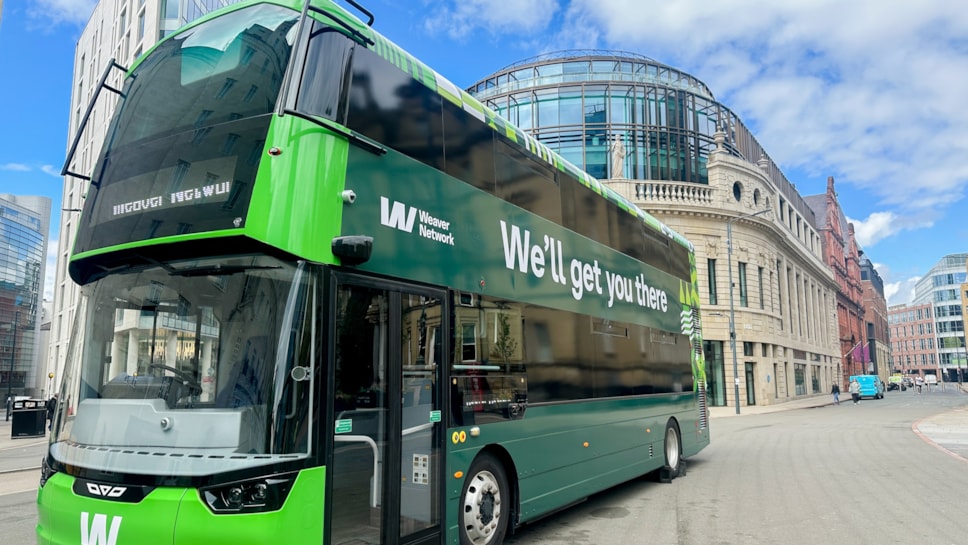
First Bus chosen to operate services on West Yorkshire's Weaver Network | FirstGroup News
The first contracts of the new era of bus franchising in West Yorkshire have been officially signed by regional transport chiefs and bus operators.
 news.firstgroupplc.com
Last edited:
TheGrandWazoo
Veteran Member
That was the same wording as in the WYCA release. I know it won't include every bus service in Huddersfield but the mention of Bramley caught my eye, hence the question.From the First press release
stevieinselby
Established Member
Two contracts have been awarded, Leeds (West) has gone to Firstgroup, with the Bramley depot, and Heavy Woollen has gone to Transdev, with the Dewsbury depot (and possibly Huddersfield as well?).Apologies for what might appear a dumb question; is Bramley in this award? I'd just seen mention of Huddersfield and Dewsbury
TheGrandWazoo
Veteran Member
The press release says...Two contracts have been awarded, Leeds (West) has gone to Firstgroup, with the Bramley depot, and Heavy Woollen has gone to Transdev, with the Dewsbury depot (and possibly Huddersfield as well?).
First West Yorkshire has been chosen to run services running in Huddersfield and parts of Leeds, while Transdev Blazefield has been chosen to run services in Dewsbury.
So that means First have Bramley and Huddersfield strategic depots, whilst Dewsbury is Transdev? However, there are smaller packages for Go Ahead to pick up...as an example
