• Our new ticketing site is now live! Using either this or the original site (both powered by TrainSplit) helps support the running of the forum with every ticket purchase! Find out more and ask any questions/give us feedback in this thread!

UK switching to electric vehicles discussion

Bald Rick

Veteran Member
Joined
28 Sep 2010
Messages
35,581
I'm sure it's possible to walk into an office and rent a car, but I would suggest 99.999% of rentals are pre-planned and completed over the internet.

You‘d be surprised. The last car I rented was a spur of the moment walk up job. (And I am by no means a techno-phobe). I said to the rental rep that I must be a rarity, ie a walk up. He said that it was actually quite common in that location, around a third of his business. I suspect given the location this was a little high compared to average, but it is certainly more than 1 in 100,000!
 
Sponsor Post - registered members do not see these adverts; click here to register, or click here to log in
R

RailUK Forums

ninja-lewis

Member
Joined
27 Oct 2012
Messages
97
To a certain extent, it's been resolved on some sites - it depends on layout of course. Cable length has increased on the newest V4 Tesla cabinets, up to about 3m so should reach nearly any car's port now. The V4 cabinets are the ones without 'holes' through the middle of them, and are sometimes placed in the middle of the parking bay as seen below. (I've got to admit I avoid the "Other EV" sites as they are often full of taxis blocking the site, presumably waiting for a fare to appear on their app.)
https://supercharge.info/map shows the generation and number of Tesla superchargers on site. Its shows sites that are under construction, planned or being voted upon.
 

The Ham

Veteran Member
Joined
6 Jul 2012
Messages
12,021
Interesting figure on one of the EVangelist you Tube Channels over 80% of EV Purchases are company cars including salary sacrifice schemes.
he concluded that the reason Gridserve can get away with charging 92p/Kwh on the M6 is that nearly all users are using company charge cards and accordingly dont care about the price.

The thing is when one is don't a long trip only part of the milage is from an away from home charger.

For example, we want to do a 240 mile trip we can do 140 miles at 4p per KwH and 100 miles at 92p per KwH, the cost would be about £24, or about 10p a mile.

If the (away from home) charge is 30p per KwH the total cost is about £9 or about 4p a mile.

However, that's a small amount of the total annual milage (maybe 10%) for the rest of the time it's about 1p a mile.

As such, people will make a judgement as to what value they put on their time.and whether it's worth paying the extra (up to £15) depending on how much longer (distance and time) going for a cheaper rate is.
 
Last edited:

E27007

Member
Joined
25 May 2018
Messages
1,032
An ID3 would be a good choice for someone getting into EVs.

If I remember, the first ones had some software issues, presumably that's all been sorted by now? Real world experience is always better than YouTube...
The saga of software issues is well known, a colleague owns an iD4, many amendments to code by "over-the-air" transmission, even then an annual service expanded to a lengthy two days, main reason a major install of revised code.
 

Mawkie

Established Member
Joined
17 Feb 2016
Messages
1,242
The saga of software issues is well known, a colleague owns an iD4, many amendments to code by "over-the-air" transmission, even then an annual service expanded to a lengthy two days, main reason a major install of revised code.
The CARIAD disaster for VW is deserving of its own thread!

One of the biggest concerns people have about electric cars is around the batteries, but they are well understood and have a defined decline curve, that could mean my car will have 40 miles less range than new after a decade.

The biggest issue in my mind is the software. Few of us understand how integral software is to new cars - not just the infotainment screen, but every single system - from boot release, to headlights, to battery management, etc. EVs can't even engage a gear without the software agreeing to it!

Being one of the first mainstream manufacturers of EVs, Tesla have been around since 2008 with the Roadster, and 2017 with the Model 3 (admittedly the Roadster was a bit niche).

Firstly, although Teslas get regular over the air updates, the older cars do not have the technical ability to process some of the new features being added in the updates due to the limitations of the processor.

Secondly, even with tech support, is it like trying to run an old computer, or phone, where the software gets bloated and slows everything down eventually? I don't want to run adaptive cruise control or collision avoidance software on old, slow tech.

Lastly, Tesla are a software company that make cars, so (rightly or wrongly) I have more confidence in their ongoing support. They suspended support for those early Roadsters, and unusually, made all the software Open Source.

How many other manufacturers are going to continue to support their vehicles for 20/30/50 years? Will there be a secondary market that steps in to support older EVs technologically? Or is the technology the end game for manufacturers and their desire for built-in-obsolescence?

(I acknowledge that most cars are bought through a lease and those people won't care for 3 years, but every car has another life after those lease periods end.)

Edit for typo.
 
Last edited:

E27007

Member
Joined
25 May 2018
Messages
1,032
The CARIAD disaster for VW is deserving of its own thread!

One of the biggest concerns people have about electric cars is around the batteries, but they are well understood and have a defined decline curve, that could mean my car will have 40 miles less range than new after a decade.
I do hope your VW Id is one of the cars where the batteries degrade in a nice polite manner.
VW are aware of premature failure of battery modules of iD series cars manufactured 2021 to 2023.
 

Attachments

  • VW Batterygate (uzico v1).pdf
    193.2 KB · Views: 19

Mawkie

Established Member
Joined
17 Feb 2016
Messages
1,242
I do hope your VW Id is one of the cars where the batteries degrade in a nice polite manner.
VW are aware of premature failure of battery modules of iD series cars manufactured 2021 to 2023.
I suppose if we're comparing defects....

Top 20 worst engines ever made.
Volkswagen has been manufacturing durable, economical, and quiet 1.4-liter and 1.6-liter petrol engines for a very long time. Owners of many of these engines could also install LPG equipment to lower maintenance and fuel costs. Simply brilliant.

However, in the early 2000s, the company decided to offer customers more advanced and efficient engines that could power different types of vehicles.

The new engines developed a similar amount of power compared to older engines, while, theoretically, consuming about 0.5 l/100 km less fuel. However, the fuel efficiency wasn’t as great as expected and the new generation engines were not friendly with the gas equipment.

The biggest issues, however were carbon deposits in the intake system and valves, faulty and expensive sensors, and timing chains. As a result, these engines had exceptionally terrible durability from the start of production. Considering these engines were fitted to budget cars, four-figure high repair bills are simply unacceptable.
Seems like VW has previous form... Not to mention Dieselgate or the terrible and ongoing wet belt drama.
 

E27007

Member
Joined
25 May 2018
Messages
1,032
Interesting figure on one of the EVangelist you Tube Channels over 80% of EV Purchases are company cars including salary sacrifice schemes.
he concluded that the reason Gridserve can get away with charging 92p/Kwh on the M6 is that nearly all users are using company charge cards and accordingly dont care about the price.
An employee provided with a company car available for private use, the company car is assessed for taxation by HMRC as an employee's pay and income, a benefit in kind, , a "BIK".
The BIK is a % of the retail list price of the car.
For an IC car, base BIK is 31% of the manufacturer's list price.
For a ZEV, base BIK is 4%, rising to 9% of the manufacturer's list price
Employees at my place of work, mainly managers, invariably justify a decision to drive ZEV and not IC on the "BIK", they pay a lot less income tax when opting for a ZEV company car.
 

Noddy

Established Member
Joined
11 Oct 2014
Messages
1,630
Location
UK
An employee provided with a company car available for private use, the company car is assessed for taxation by HMRC as an employee's pay and income, a benefit in kind, , a "BIK".
The BIK is a % of the retail list price of the car.
For an IC car, base BIK is 31% of the manufacturer's list price.
For a ZEV, base BIK is 4%, rising to 9% of the manufacturer's list price
Employees at my place of work, mainly managers, invariably justify a decision to drive ZEV and not IC on the "BIK", they pay a lot less income tax when opting for a ZEV company car.

Base BIK for petrol is not 31%. It’s graded based on the CO2 emissions of the vehicle. Anything over 155g/km is 37% but it’s banded downwards in increments of 5g/km, for example anything in the 105 to 109g/km bracket is 27% and anything in the 51 to 54g/km is 17%. PHEVs are 4% (same as an EV) to 16% depending on their electric range.
 

E27007

Member
Joined
25 May 2018
Messages
1,032
Yes,you are correct about BIK, I was mislead, a discussion at work, someone opting for a ZEV over an IC, his IC car was a benefit in kind of 31%
 

PeterC

Established Member
Joined
29 Sep 2014
Messages
4,765
Does anybody (not on a fuel card) buy petrol at a motorway services? Even joining at the channel tunnel and heading for Scotland the motorways will run out before the little yellow light comes on in most cars.
About a quarter tank once or twice a decade.
 

Peter Sarf

Established Member
Joined
12 Oct 2010
Messages
9,570
Location
Croydon
Does anybody (not on a fuel card) buy petrol at a motorway services? Even joining at the channel tunnel and heading for Scotland the motorways will run out before the little yellow light comes on in most cars.
Never. Not even any relative or acquaintance in my recollection/presence.
 

The Ham

Veteran Member
Joined
6 Jul 2012
Messages
12,021
If someone wants a good value vehicle for a local run about, which is only them and maybe one other person EV vans are fairly cheap at the moment:


Link to a

2021 Renault Kangoo Maxi​

ZE LL21 33kWh Business Panel Van 4dr Electric Auto L3 H1 (i) (60 ps) with 39,000 miles on the clock and a range of 139 miles for £5,500

That's still got 3 years or 61,000 miles of battery warranty.

As I've said before, the effective price of that (at 9p a mile in fuel savings) would be around £2,000 less for someone doing 8,000 miles a year for 3 years, so £3,500.

That's nearly Banganomics prices yet still covered by the battery warranty.

If it keeps going until it's 11 years old and the effective price would be £1,500 - and unless someone is careless and crashes it, that's unlikely to be much of a concern.

Running a van isn't suitable for everyone, but given the prices of EV vans, not necessarily a bad move if their lifestyle suits it.

Especially if they go camping or enjoy cycling (no need to get roof bars or a towbar to carry a lot of kit). Probably not quite big enough for a conversation to a camper van, but there's others for not a lot more which could work better for that.

 

bspahh

Established Member
Joined
5 Jan 2017
Messages
2,414
If someone wants a good value vehicle for a local run about, which is only them and maybe one other person EV vans are fairly cheap at the moment:


Link to a

2021 Renault Kangoo Maxi​

ZE LL21 33kWh Business Panel Van 4dr Electric Auto L3 H1 (i) (60 ps) with 39,000 miles on the clock and a range of 139 miles for £5,500

That's still got 3 years or 61,000 miles of battery warranty.

As I've said before, the effective price of that (at 9p a mile in fuel savings) would be around £2,000 less for someone doing 8,000 miles a year for 3 years, so £3,500.

That's nearly Banganomics prices yet still covered by the battery warranty.

If it keeps going until it's 11 years old and the effective price would be £1,500 - and unless someone is careless and crashes it, that's unlikely to be much of a concern.

Running a van isn't suitable for everyone, but given the prices of EV vans, not necessarily a bad move if their lifestyle suits it.

Especially if they go camping or enjoy cycling (no need to get roof bars or a towbar to carry a lot of kit). Probably not quite big enough for a conversation to a camper van, but there's others for not a lot more which could work better for that.
I think the issue with that Kangoo is that it doesn't support fast charging.
https://ev-database.org/car/1101/Renault-Kangoo-Maxi-ZE-33 is for an equivalent model with passenger seats and it says it only charges at 7.4kW. Its fine if you have charging at home, and don't need a long range. Its not something you would want to use for a long trip, as it would take 5-6 hours to recharge.

This is a video from earlier this week about buying a 2024 Kangoo van for £8k +VAT from an auction at Shoreham. That model will charge faster (~50kW if I remember correctly).


The delivery driver dropped the car off with 0% charge and a flat 12V battery, which meant that even after charging for a bit, it wouldn't reverse and there was no power steering, but with a new 12V battery, it got sorted out in the end.
 

The Ham

Veteran Member
Joined
6 Jul 2012
Messages
12,021
I think the issue with that Kangoo is that it doesn't support fast charging.
https://ev-database.org/car/1101/Renault-Kangoo-Maxi-ZE-33 is for an equivalent model with passenger seats and it says it only charges at 7.4kW. Its fine if you have charging at home, and don't need a long range. Its not something you would want to use for a long trip, as it would take 5-6 hours to recharge.

This is a video from earlier this week about buying a 2024 Kangoo van for £8k +VAT from an auction at Shoreham. That model will charge faster (~50kW if I remember correctly).


The delivery driver dropped the car off with 0% charge and a flat 12V battery, which meant that even after charging for a bit, it wouldn't reverse and there was no power steering, but with a new 12V battery, it got sorted out in the end.

Indeed, I did suggest that it was most likely useful as a local run about.

Yes you wouldn't want to drive a long way, but 75 miles wound be good enough for a lot of driving.

The average driver only does around 8 trips of more than 50 miles in a year and only a couple of more than 100 miles.

Yes 5 hours to charge to full would be an issue, although if you're taking a bike to go for a bike ride it's unlikely to be more than a 75 mile round trip and 2 hours (and you wouldn't be driving that far for less than that) and it'll get you to around 110 miles of range (or Waterloo to Brighton and back).

Yes, you're not going to be able to drive from Plymouth to Inverness on one go, but do something like, drive for 90 minutes have breakfast, drive another 45 minutes spend a day somewhere, drive 90 minutes have dinner, drive 45 minutes stay overnight and there's a good chance you've covered around 200 miles.

Yes it's not fast, but you'll have done far more than most would have done on their first day of holiday who got there faster.
 

Peter Sarf

Established Member
Joined
12 Oct 2010
Messages
9,570
Location
Croydon
If someone wants a good value vehicle for a local run about, which is only them and maybe one other person EV vans are fairly cheap at the moment:


Link to a

2021 Renault Kangoo Maxi​

ZE LL21 33kWh Business Panel Van 4dr Electric Auto L3 H1 (i) (60 ps) with 39,000 miles on the clock and a range of 139 miles for £5,500

That's still got 3 years or 61,000 miles of battery warranty.

As I've said before, the effective price of that (at 9p a mile in fuel savings) would be around £2,000 less for someone doing 8,000 miles a year for 3 years, so £3,500.

That's nearly Banganomics prices yet still covered by the battery warranty.

If it keeps going until it's 11 years old and the effective price would be £1,500 - and unless someone is careless and crashes it, that's unlikely to be much of a concern.

Running a van isn't suitable for everyone, but given the prices of EV vans, not necessarily a bad move if their lifestyle suits it.

Especially if they go camping or enjoy cycling (no need to get roof bars or a towbar to carry a lot of kit). Probably not quite big enough for a conversation to a camper van, but there's others for not a lot more which could work better for that.

Oooh camper van. Not really tall enough to convert but a transit height would work better. Either way I would still have (removable) roof bars. That is a lot of trips where the van is sat still for many days so the actual journey is less of a significance. Might need a petrol generator at hand to provide hotel power. A kitchen is often achieved by having a portable cooker under an awning attached to the side of the camper van and that is what I would do.

I have heard that converting a van to a camper-van is not cheap. But maybe for a diy-er who does not want perfection it could be economical. Putting windows in flat panels is not difficult. Extra seats might be easy as some vans based on cars have the mounting holes on the floor already. Extra doors - big job forget it but this has a sliding doors on both sides.

It actually might be good for a trades man/person in London who does not do many miles and currently has a non-ULEZ-compliant van. But then why is the current owner selling it ? - I can only guess a leas company.

I just noticed in the picture a camper van lurking in the background !.
 

marshlinker

Member
Joined
18 May 2026
Messages
143
Location
Romney Marsh
Oooh camper van. Not really tall enough to convert but a transit height would work better. Either way I would still have (removable) roof bars. That is a lot of trips where the van is sat still for many days so the actual journey is less of a significance. Might need a petrol generator at hand to provide hotel power. A kitchen is often achieved by having a portable cooker under an awning attached to the side of the camper van and that is what I would do.

I have heard that converting a van to a camper-van is not cheap. But maybe for a diy-er who does not want perfection it could be economical. Putting windows in flat panels is not difficult. Extra seats might be easy as some vans based on cars have the mounting holes on the floor already. Extra doors - big job forget it but this has a sliding doors on both sides.

It actually might be good for a trades man/person in London who does not do many miles and currently has a non-ULEZ-compliant van. But then why is the current owner selling it ? - I can only guess a leas company.

I just noticed in the picture a camper van lurking in the background !.
The cheap price is a clue, there's not much demand for them.
Euro 6 Diesels came in by 2016, I'd suggest by far the majority of tradesmen are driving vehicles less than 10 years old.
 

Snow1964

Established Member
Joined
7 Oct 2019
Messages
11,015
Location
West Wiltshire
Latest new car sales for July have been published by SMMT

Battery Electric 43,106 (27.5%)
Plug in hybrid electric 23,359 (14.9%)
hybrid electric HEV 20,711 (13.2%)
Petrol 62,799 (40.1%)
Diesel 6596 (4.2%)
Total new cars July 156,571

So percentage of Battery EVs is down a bit on last month, but still selling at a rate of about 10k per week. But there are no Tesla in top 10 (I think they get massive shipments to Southampton docks, but not every month)

Interestingly, small EVs are starting to top the chart of EV sales

Renault 5 : 1805 cars
Kia Ev3 : 1691 cars
Jaecoo E5 : 1291 cars
Skoda Enyaq 1255 cars
Vauxhall Frontera 1248 cars
Mini Countryman 1231 cars
Skoda Elroq 1165 cars
Volkswagen ID3 1147 cars


Bald Rick

Veteran Member
Joined
28 Sep 2010
Messages
35,581
So percentage of Battery EVs is down a bit on last month, but still selling at a rate of about 10k per week.

July / August are always quiet months in the new car market. I suspect September will be a big one. New reg, plus some new models out (Cupra Reval for example).
 
Joined
9 Jul 2011
Messages
824
Latest new car sales for July have been published by SMMT

Battery Electric 43,106 (27.5%)
Plug in hybrid electric 23,359 (14.9%)
hybrid electric HEV 20,711 (13.2%)
Petrol 62,799 (40.1%)
Diesel 6596 (4.2%)
Total new cars July 156,571

So, Petrol and Diesel (including Mild-Hybrids) accounted for only 44.3% of new registrations in July and 47.5% for the year-to-date (2026).

With approximately half of the Petrol and Diesel registrations being Mild-Hybrids, that would mean only one in 4 new cars in the UK are traditional, non-electrified ICE powered.


m
 

thejuggler

Established Member
Joined
8 Jan 2016
Messages
1,639
Small number of pure ICE registrations is due to there now being only about 20-25 ICE only new car models available in the UK.
 

styles

Established Member
Joined
7 Dec 2014
Messages
4,615
Location
Gwynedd
You mean diesel? ICE petrol is the highest of the lot.
Which doesn't surprise me really. Diesels are out of the window because low emissions zones mean the writing is on the wall for them. New diesels won't be affected yet but a lot of people can see the emissions standards will just get stricter over time. Not to mention the cost of fuel. A lot of people don't have the home charging infrastructure for EVs and there's around a quarter of people who, when surveyed, state they will never own an EV, because... reasons.
 

Snow1964

Established Member
Joined
7 Oct 2019
Messages
11,015
Location
West Wiltshire
Which doesn't surprise me really. Diesels are out of the window because low emissions zones mean the writing is on the wall for them. New diesels won't be affected yet but a lot of people can see the emissions standards will just get stricter over time. Not to mention the cost of fuel.
Diesels have become rare because of Euro 6d emissions, and soon Euro 7. Basically they need so much supplementary equipment to meet the standard that it is not worth building the engines except in larger sizes.

As diesel fuel is close to heating oil (from a crude oil cut) it is going to be expensive each winter, especially whilst gas price is high due to wars.

A lot of people don't have the home charging infrastructure for EVs and there's around a quarter of people who, when surveyed, state they will never own an EV, because... reasons.
Never is probably over use from those who cannot see where they will be in decades time. Norway had plenty of incentives in early days of EVs (incentives mainly now withdrawn) and now 95% of new cars are EVs, no reason to think UK won't follow same pattern, even if it is 5 years later than Norway.

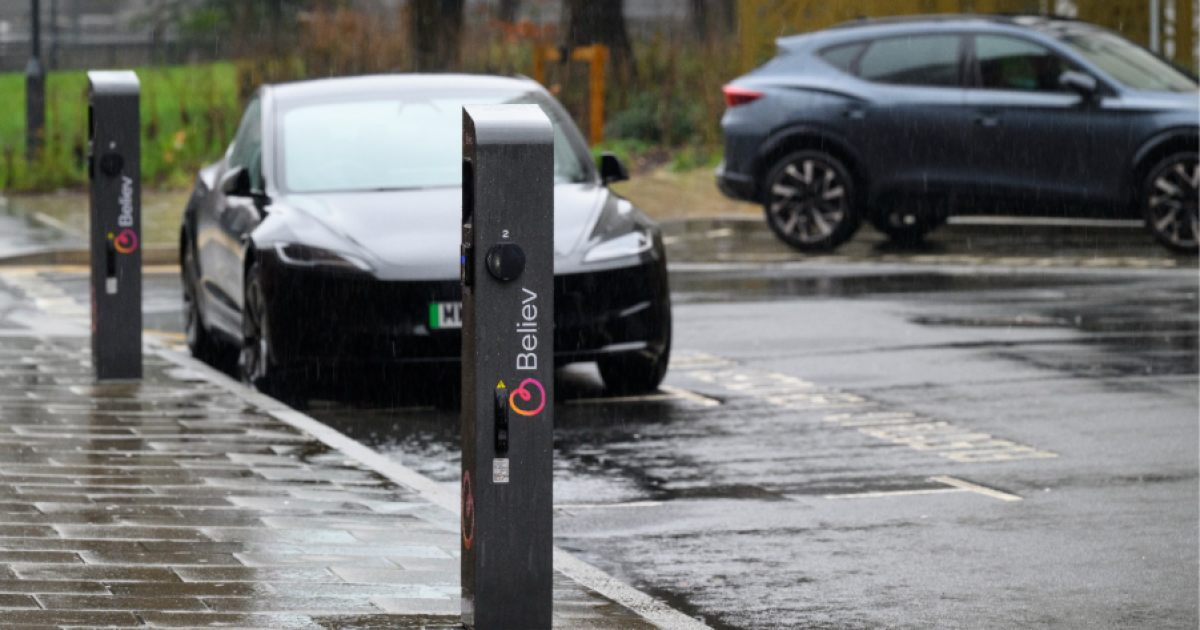
As for those without home charging, it seems lots of slow overnight public chargers are being rolled out. Hampshire had announcement recently, latest is Devon and Torbay with over 1300 slow chargers
Devon County Council and Torbay Council have partnered with EV charge point operator (CPO) Believ to deliver more than 1,300 fully funded EV chargers across the region. The rollout is designed to serve residents without access to a driveway or the means to privately charge their vehicle.
The project was developed through the Local Electric Vehicle Infrastructure (LEVI) scheme but will be fully funded by Believ. Virgin Media O2, Believ’s sister company and delivery partner, will help facilitate the rollout at scale and pace.
The charge points will be Standard chargers designed for long-stay and overnight charging. They will be installed in a wide range of locations, including rural and underserved areas making EV charging infrastructure more accessible for all residents and visitors.
All charge points will feature contactless payment to ensure ease and convenience and will be PAS1899:2022 compliant, where possible, to support the building of an inclusive EV charging infrastructure. Believ chargers can be found using the Zapmap app, where live status and availability information is shared 24 hours a day. Payment can also be made directly in the app or with the Zapmap charging card.
The project, which is set to commence at the end of September, supports the Council’s aims to encourage low-emission travel, boost air quality, and cut carbon emissions ahead of the 2030 ban on new petrol and diesel vehicle sales.
 

JamesT

Established Member
Joined
25 Feb 2015
Messages
4,824
Did you know that Norway actually banned sales of new ICE cars which is why Norway has a very high percentage of EVs?

https://www.greencarstocks.com/norway-moves-closer-to-the-elimination-of-ice-vehicles/
That's exactly the opposite of what that article says.
Deputy Transport Minister Cecilie Knibe Kroglund has emphasized that the country’s results derive from sustained purchase incentives for battery-powered automobiles rather than outright prohibitions on traditional engines.
 
Joined
9 Jul 2011
Messages
824
For the first 6 months of 2026...

BEV now represent 97.6% of all new car registrations in Norway.
Hybrids = 0.7%
Plug-in Hybrids = 0.7%
Petrol = 0.2%
Diesel = 0.9%


OK I stand corrected. Same article states that Tesla sales is still holding up well in Norway.

Tesla sales in Norway have recently slumped, as in a couple of other European markets, but are doing very well in other countries.
They took a big hit across Europe in 2025, but have bounced right back and have seen a 57.2% increase in sales in the first 5 months of this year, compared with last year.
Up 107.9% in May alone (over May 2025).
Still below their 2024% peak though, due to much wider competition, particularly from Chinese car brands.


.
 

Top