• Our new ticketing site is now live! Using either this or the original site (both powered by TrainSplit) helps support the running of the forum with every ticket purchase! Find out more and ask any questions/give us feedback in this thread!

UK switching to electric vehicles discussion

Peter Sarf

Established Member
Joined
12 Oct 2010
Messages
9,573
Location
Croydon
Despite the terrible design of early Leaf batteries, many have held up pretty well because they've only ever been slow charged (by today's standards). As such there are some real bargains to be had.

I realise some will say the risk is too high, but there are people (even here) that say they're buying old bangers as a cheap runaround - so what's the difference? You can monitor the battery state of health easier than other mechanical parts on an ICE car so the risk is actually far lower.
+
Agreed. A Leaf would be a perfectly competent urban runaround.

The one bit of the bangernomics market they'd not really work for is the young person's first car, as range is usually low enough (given that it wasn't high to start with) that it wouldn't be feasible for them to do a road trip with their mates in one. But for a second family car that is only used for doing the shopping and dropping the kids off at school (and maybe a typical short urban commute, say 10 miles each way) they are pretty much perfect, and cheap too.
This interests me as I imagine there is a better chance of getting information on the batteries life and treatment than in ICE.

Home charging would clinch it for a low charging rate.
One problem with an old car with a limited range and slow charging is that you really can use it only for short trips. It's not really a car you can occasionally do a long trip in and charge at public chargers because of the low speed (and for a Leaf, you'd probably need to buy an adapter as many new sites won't offer the connector you need anymore). I mean, you could still do it if you weren't constrained by a time limit to get somewhere but I doubt many would.

And if a new driver was living at home with mum and dad, and there was another car or two in the household, the Leaf needs more regular access to the charger and so you'd need a driveway and possibly to shuffle cars around.

But for those who can say 'I only need a cheap car to go to the shops or train station' and have no other car, and a driveway, they seem ideal. And there are many alternatives to the Leaf, some of which have bigger batteries and faster charging anyway.
Yes, this makes me think. I can see any family with more than one EV car and space for only one while home charging having to manage who charges when. Swapping cars on the driveway in the middle of the night won't be ideal.


I would suggest that lamp post chargers (or suchlike) do not need to be fast as no one is going to pop out in the middle of the night to remove their car from a charging lamp post and someone else needs to be desperate enough to get up and check if a lamp post has become free.

For that reason I think it is better to have lots of slow chargers in residential areas rather than pay the extra costs of installation for fewer fast chargers. Depends, of course, on the relative installation costs ?.

Chargers at supermarkets, service stations and other en-route places do need to be fast.
 
Sponsor Post - registered members do not see these adverts; click here to register, or click here to log in
R

RailUK Forums

jon0844

Veteran Member
Joined
1 Feb 2009
Messages
30,837
Location
UK
I would suggest that lamp post chargers (or suchlike) do not need to be fast as no one is going to pop out in the middle of the night to remove their car from a charging lamp post and someone else needs to be desperate enough to get up and check if a lamp post has become free.

For that reason I think it is better to have lots of slow chargers in residential areas rather than pay the extra costs of installation for fewer fast chargers. Depends, of course, on the relative installation costs ?.

Chargers at supermarkets, service stations and other en-route places do need to be fast.
Correct, charging at home can be slow. Charging when you're going shopping can be mixed. Only going to Tesco? Well, maybe 30-40 minutes max, so probably want the fast charger. Going to a retail park where you might also stop to eat, or a shopping mall where you might go to the cinema, bowl, play mini golf etc after? Slow is fine.

Booking into a hotel for the night? Slow.

Going to work and parking at the station? Slow.

And so on.
 

The Ham

Veteran Member
Joined
6 Jul 2012
Messages
12,021
Yes, this makes me think. I can see any family with more than one EV car and space for only one while home charging having to manage who charges when. Swapping cars on the driveway in the middle of the night won't be ideal.

If a family has 2 cars and each adult does 50 miles a day (spoiler, that's quite a lot for most people) and they drive that too get to work 5 days a week, even with a car with 120 miles of usable range, they would only need to charge every other night.

Even if they had to do a 10kWh boost once a month at 30p/kWh vs 7p/kWh the extra they'd pay would be around £33 for the year.

Although, as 50 miles a working day is above average, those drivers would be doing 10,000 miles a year just due their weekday commuting, when the average driver does 8,000 miles a year.
 

Peter Sarf

Established Member
Joined
12 Oct 2010
Messages
9,573
Location
Croydon
If a family has 2 cars and each adult does 50 miles a day (spoiler, that's quite a lot for most people) and they drive that too get to work 5 days a week, even with a car with 120 miles of usable range, they would only need to charge every other night.

Even if they had to do a 10kWh boost once a month at 30p/kWh vs 7p/kWh the extra they'd pay would be around £33 for the year.

Although, as 50 miles a working day is above average, those drivers would be doing 10,000 miles a year just due their weekday commuting, when the average driver does 8,000 miles a year.
I suppose there is always weekend charging anyway. Or take the car with the least range out on the weekend/evening shopping trip.
 

bspahh

Established Member
Joined
5 Jan 2017
Messages
2,414
https://www.itv.com/news/london/202...-to-keep-cool-in-stationary-cars-with-air-con says:
Drivers seeking to cool down by sitting in stationary cars with the air conditioning on are being warned they could be fined under emissions laws.

The RAC said remaining in a vehicle with its engine idling causes air pollution.

The standard fine is £40 if caught by a police officer or £80 from a civil enforcement officer.

Both are halved if paid quickly.

But some local authorities use their powers to impose larger fines.

Islington Council said its enforcement officers issue £110 fines to people who refuse to switch off an idling engine after being asked.

I assume this only applies to petrol and diesel-engined cars, and not hybrid and electric cars. I can start the air conditioning in my EV3 remotely :)

https://highwaycode.org.uk/rule-123/ says:
The Driver and the Environment. You MUST NOT leave a parked vehicle unattended with the engine running or leave a vehicle engine running unnecessarily while that vehicle is stationary on a public road. Generally, if the vehicle is stationary and is likely to remain so for more than a couple of minutes, you should apply the parking brake and switch off the engine to reduce emissions and noise pollution. However it is permissible to leave the engine running if the vehicle is stationary in traffic or for diagnosing faults.
 

Snow1964

Established Member
Joined
7 Oct 2019
Messages
11,015
Location
West Wiltshire
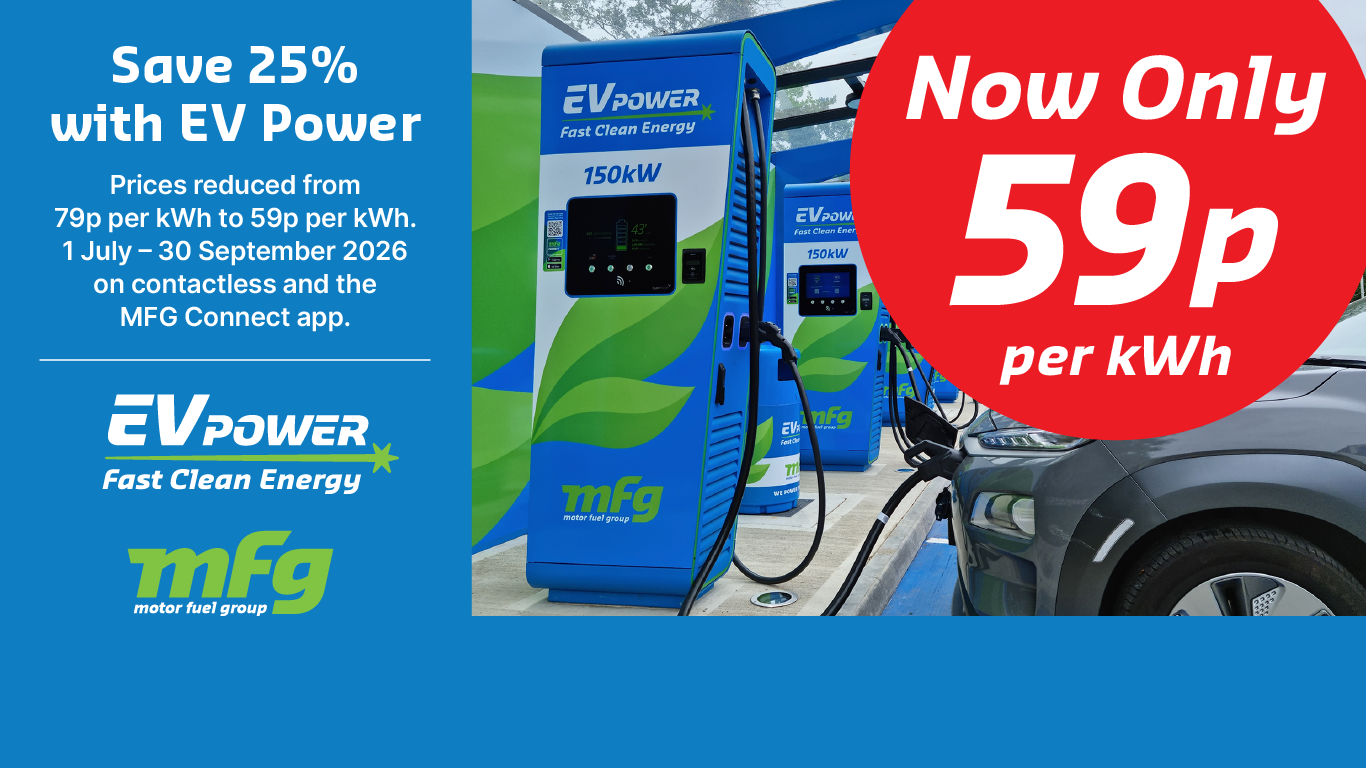
MFG one of the largest ultra rapid charger companies has cut the price from 79p to 59p from 1 July - 30 September

Although it is a 3 month special offer, it might lead to others cutting their charging unit price. Might encourage more EVs (obviously not going to discourage it) as 25% EV price cut, is bigger percentage than fossil fuel price will drift back if Strait of Hormuz stays open

MFG, the UK’s largest independent forecourt operator, today announces a 25% summer price drop on ultra-rapid electric vehicle (EV) charging across its entire MFG EV Power network.

From 1 July through 30 September 2026, drivers can charge at any MFG EV Power site nationwide for just 59p per kWh, down from 79p. That’s a saving of 20p per kWh, putting up to £6 back in drivers’ pockets on a typical charge, making MFG one of the cheapest providers of ultra-rapid charging in the UK.

With hundreds of ultra-rapid chargers at forecourts across the UK, MFG is putting consumers first and making summer holiday journeys more affordable and sustainable for EV drivers.

MFG’s Nationwide Network
MFG EV Power stands at the forefront of the UK’s electric vehicle charging revolution, operating a fully nationwide network with over 2000 bays across nearly 600 locations. Our charging bays deliver power at 150kW, 300kW and up to 400kW, enabling drivers to add up to 100 miles of range in just 10 minutes.

== Doublepost prevention - post automatically merged: ==

Latest new car sales data from SMMT

June 2026
BEV battery electric 63,950 (30.0%)
PHEV plug in hybrid 26,702 (12.5%)
HEV hybrid electric 29,874 (14.0%)
Petrol 84,581 (39.7%)
Diesel 8099 (3.8%)

So pure electric now 3 in 10 new cars,
with over 2100 per day added (annual rate of 760k)

 
Last edited:

dcbwhaley

On Moderation
Joined
4 Aug 2018
Messages
828
MFG one of the largest ultra rapid charger companies has cut the price from 79p to 59p from 1 July - 30 September

Although it is a 3 month special offer, it might lead to others cutting their charging unit price. Might encourage more EVs (obviously not going to discourage it) as 25% EV price cut, is bigger percentage than fossil fuel price will drift back if Strait of Hormuz stays open


== Doublepost prevention - post automatically merged: ==

Latest new car sales data from SMMT

June 2026
BEV battery electric 63,950 (30.0%)
PHEV plug in hybrid 26,702 (12.5%)
HEV hybrid electric 29,874 (14.0%)
Petrol 84,581 (39.7%)
Diesel 8099 (3.8%)

So pure electric now 3 in 10 new cars,
with over 2100 per day added (annual rate of 760k)

HEV hybrid are not electric vehicles.. They are fuelled by fosilll fuel only. Calling them self charging hybrids is disingenuous advertising
You wouldn't call a class 47 loco a self charging electric loco
 

jon0844

Veteran Member
Joined
1 Feb 2009
Messages
30,837
Location
UK
There are many discount sessions now available to Electroverse users - as much as 30% at different times of the day. They mostly align with the many negative priced sessions available to all almost every day.

Energy is cheap right now. Octopus is even asking people to charge their EVs up in the day to make use of the excess power available on the grid thanks to wind and solar.

Not seen any such deals on petrol or gas yet...
 

SWT_USER

Member
Joined
29 Aug 2010
Messages
1,176
Location
Ashford Middx
There are many discount sessions now available to Electroverse users - as much as 30% at different times of the day. They mostly align with the many negative priced sessions available to all almost every day.

Energy is cheap right now. Octopus is even asking people to charge their EVs up in the day to make use of the excess power available on the grid thanks to wind and solar.

Not seen any such deals on petrol or gas yet...
Yes - this is great. Plugging the car in at home and getting cheap electricity during the day so I can run the air conditioners and the washing machine at home for 3.9p/kwh.

I've noe come to the end of my 3 year salary sacrifice on my ID3. The organisation no longer offers the scheme so we have decided to buy the car. We didn't even consider switching back to ICE.
 

Mawkie

Established Member
Joined
17 Feb 2016
Messages
1,242
An ID3 would be a good choice for someone getting into EVs.

If I remember, the first ones had some software issues, presumably that's all been sorted by now? Real world experience is always better than YouTube...
 

Harpers Tate

Established Member
Joined
10 May 2013
Messages
2,034
If buying new, also consider Kia EV4. It's pretty similar in size/shape; the design is something of a Marmite thing with very unconventional headlights. It's a shade cheaper new rrp and from a quick scan if the VW specs, very slightly better equipped (unless I missed something). I just got my EV4 - a top spec 26 plate unused pre-reg for almost £10k off list. And it comes with a 7 year "everything" warranty alongside the required 8 years on the battery.
 

SWT_USER

Member
Joined
29 Aug 2010
Messages
1,176
Location
Ashford Middx
An ID3 would be a good choice for someone getting into EVs.

If I remember, the first ones had some software issues, presumably that's all been sorted by now? Real world experience is always better than YouTube...
IIRC the early versions had software issues which required a dealership visit to fix to enable OTA updates. I have a 2023 Family Pro and have never had any issues with the software, but had an issue with a faulty battery module which was replaced under warranty (I think I posted about it on this thread).

If buying new, also consider Kia EV4. It's pretty similar in size/shape; the design is something of a Marmite thing with very unconventional headlights. It's a shade cheaper new rrp and from a quick scan if the VW specs, very slightly better equipped (unless I missed something). I just got my EV4 - a top spec 26 plate unused pre-reg for almost £10k off list. And it comes with a 7 year "everything" warranty alongside the required 8 years on the battery.
At the time I ordered it there was much less choice on the market for that size of car an we absolutely didn't want to join the SUV brigade.

The decision to keep this one was made easier because we have the option to buy it for less than an equivalent one second hand on the open market (£13,900 for a 23 plate Family Pro with 27.5k miles). I imagine there will be a huge amount more choice when it's time to get our next car!
 

Mawkie

Established Member
Joined
17 Feb 2016
Messages
1,242
Huge EV pay-per-mile tax details revealed: GPS tracking and price increases confirmed according to Auto Express.

Following a industry consultation lasting several months, the Government says the proposed eVED road-tax system will feature an opt-in telematics feature when it is launched in April 2028. This will enable those with cars featuring 4G and 5G telematics technology – most cars sold post-2018 – to transmit mileage data wirelessly from their vehicle to Government databases.
Difficult to argue against the principle of pay per mile pricing for EVs, I just wonder if the timing is correct?
 

jon0844

Veteran Member
Joined
1 Feb 2009
Messages
30,837
Location
UK
There are quite a few cars that only had 2G and 3G support even up to a few years back, and with the 3G switch off and 2G offering incredibly slow data (as well as also being switched off in the future) have they considered the implications of this?
 

thejuggler

Established Member
Joined
8 Jan 2016
Messages
1,640
Huge EV pay-per-mile tax details revealed: GPS tracking and price increases confirmed according to Auto Express.


Difficult to argue against the principle of pay per mile pricing for EVs, I just wonder if the timing is correct?
I was in a meeting a few weeks go with people with far more transport and vehicle knowledge than myself and those post 2018 vehicles already have the ability to record all journey data and some do so.

The current issue is there is no legal framework for the data to be released. That will be resolved before 2028.
 

Snow1964

Established Member
Joined
7 Oct 2019
Messages
11,015
Location
West Wiltshire
There are quite a few cars that only had 2G and 3G support even up to a few years back, and with the 3G switch off and 2G offering incredibly slow data (as well as also being switched off in the future) have they considered the implications of this?
For older vehicles, there was some suggestion of making a mandatory recording of mileage at MOT tests or servicing. Then the owner would just get a bill for however miles since last time. But never been any detail so what actually happens in practice is yet to be determined
 

jon0844

Veteran Member
Joined
1 Feb 2009
Messages
30,837
Location
UK
For older vehicles, there was some suggestion of making a mandatory recording of mileage at MOT tests or servicing. Then the owner would just get a bill for however miles since last time. But never been any detail so what actually happens in practice is yet to be determined

It's all a mess really. As I said from the outset, the only way to make it work properly and fairly would be some sort of embedded hardware in every car.

Now if the onboard software can be upgraded, so be it. However, the software in my car is not slow but certainly not super fast (I assume it is likely using a mid-range embedded MediaTek chip like most vehicles) and I don't want it slowing to a crawl because it has extra tasks added. First world problems, mind!

For those cars that can't be upgraded, they'll need some hardware added. Easy to say all cars made from today must comply, but harder for older cars - and if you get around things by just asking people to volunteer mileage, it gets even more awkward.

Plus, how do we address the issue of driving on private land? Not really a thing for most people, but for commercial vehicles working on industrial estates, farms and the like. Will they just be charged per mile on everything? Can they declare the off-road mileage for a deduction (can't see that being abused)?

For me, the easiest solution is to increase the annual cost of owning an EV. Come up with a criteria, either WLTP, battery motor power output, battery size, weight of car, original sales price or whatever - and then charge a nice, simple, annual fee for every registered owner.
 

Kite159

Veteran Member
Joined
27 Jan 2014
Messages
22,709
Location
West of Andover
Plus, how do we address the issue of driving on private land? Not really a thing for most people, but for commercial vehicles working on industrial estates, farms and the like. Will they just be charged per mile on everything? Can they declare the off-road mileage for a deduction (can't see that being abused)?
Or even driving abroad if someone decides to take their car with them on a driving holiday in France etc?
 

Mawkie

Established Member
Joined
17 Feb 2016
Messages
1,242
There are quite a few cars that only had 2G and 3G support even up to a few years back, and with the 3G switch off and 2G offering incredibly slow data (as well as also being switched off in the future) have they considered the implications of this?
I guess they will fall back on an annual recording at the MOT and bill accordingly.
I was in a meeting a few weeks go with people with far more transport and vehicle knowledge than myself and those post 2018 vehicles already have the ability to record all journey data and some do so.
Not just record, but process. I know my own car is sending data to the Elon Mothership because I can see the data being sent from my car's IP address on my home router. Sometimes over 1gb each drive, so that is more than just driving telematics - it's probably camera feeds (8 cameras) as well as all my inputs to help the self driving software develop for UK roads.
But never been any detail so what actually happens in practice is yet to be determined
It would be fairly simple process to allow the MOT test to register a mileage, but I just know this will be given to a huge private company to process, who will take a huge proportion of the tax in fees, play fast and loose with our data, and eventually go bust waiting for whichever government of the day to take over.
For me, the easiest solution is to increase the annual cost of owning an EV. Come up with a criteria, either WLTP, battery motor power output, battery size, weight of car, original sales price or whatever - and then charge a nice, simple, annual fee for every registered owner.
If the government is minded to go to a pay per mile model, then this is the opportunity to go the whole hog and get rid of VED completely and move to a completely pay per mile system. That way, the people that drive the most pay the most. I've just renewed my EV 'car tax' - it was £200. That's £200 of incentive for me to drive to the shops as my sunk costs are already paid out. If I was being charged for example 6p per mile (and no annual fee) I think that would dramatically reduce private car use for such frivolous uses.
 

thejuggler

Established Member
Joined
8 Jan 2016
Messages
1,640
Or even driving abroad if someone decides to take their car with them on a driving holiday in France etc?
The intention is a payment is made for the mileage covered, regardless of where the vehicle is driven. As there is no VED discount for anyone taking a vehicle abroad for short periods this is the correct approach.
 

Snow1964

Established Member
Joined
7 Oct 2019
Messages
11,015
Location
West Wiltshire
Per ZapMap who have done half year review

Now 121,171 public chargers in UK at 46,731 locations

There are 94,595 fuel pumps
(number of sites not stated by Zapmap, elsewhere says about 8340 sites)

EV chargers standard (to 8Kw) and standard plus (8-49kw) is 92,284
Rapid (50-149kw) 14,891
Ultra-Rapid (150kw upwards) 13,996

1034 Hubs (8 or more rapid or ultra rapid sites, excluding Tesla exclusive)
that's increase of 193 Hubs on year ago (or 108 added Jan-Jun)

Hubs are important for longer journeys as they allow recharges onroute


jon0844

Veteran Member
Joined
1 Feb 2009
Messages
30,837
Location
UK
The intention is a payment is made for the mileage covered, regardless of where the vehicle is driven. As there is no VED discount for anyone taking a vehicle abroad for short periods this is the correct approach.

I think people can accept that as fair when they're paying a fixed price, but when it's per mile I can see people getting rather upset about such a thing. Driving abroad isn't even something I thought of (despite doing it, albeit rarely) and I wonder if they've considered it.

I also get that the idea is to discourage usage, but even that has issues in that someone who is more cost conscious or on a lower income but needs a car for whatever reason may find the per mile charge a bigger issue than someone with a heavy EV that does about 2 miles per kWh and has enough money not to care - and therefore not be persuaded to use public transport.

I'm a firm believer that if you make public transport, or cycling infrastructure, as good as possible (the carrot) then people will naturally steer towards it without having to be hit in the wallet (the stick). But that costs money, whereas a per mile charge makes money (which may or may not be invested in other transport schemes).
 

Peter Sarf

Established Member
Joined
12 Oct 2010
Messages
9,573
Location
Croydon
It's all a mess really. As I said from the outset, the only way to make it work properly and fairly would be some sort of embedded hardware in every car.

Now if the onboard software can be upgraded, so be it. However, the software in my car is not slow but certainly not super fast (I assume it is likely using a mid-range embedded MediaTek chip like most vehicles) and I don't want it slowing to a crawl because it has extra tasks added. First world problems, mind!

For those cars that can't be upgraded, they'll need some hardware added. Easy to say all cars made from today must comply, but harder for older cars - and if you get around things by just asking people to volunteer mileage, it gets even more awkward.

Plus, how do we address the issue of driving on private land? Not really a thing for most people, but for commercial vehicles working on industrial estates, farms and the like. Will they just be charged per mile on everything? Can they declare the off-road mileage for a deduction (can't see that being abused)?

For me, the easiest solution is to increase the annual cost of owning an EV. Come up with a criteria, either WLTP, battery motor power output, battery size, weight of car, original sales price or whatever - and then charge a nice, simple, annual fee for every registered owner.
I would say that for cars that cannot transmit the information then rely on the mileage at MOT. This could apply not just to older EVs but to ICEs. The incentive on the government is to not phase out older networks so quickly. I the phasing out of older networks is left for longer then there will be a dwindling number of cars that cannot report. Lets face it this will be on a small number of cars unless the government keep changing the networks to early.

I can see that being a problem for ICE cars for the time being. But in the long term it will not be unmanageable IF the government ca refrain from moving the goalposts.

For driving abroad and for private land these vehicles could still be recorded and an allowance made. Not for cases where most of the driving is on publicroads but for fleets (lorries that go abroad or tractors that seldom leave the farm). For farm vehicles, currently using red diesel (less fuel tax), in a pay per mile future it might be easier to catch farm vehicles that spend a lot of time away from the farm - so an improvement there.
I guess they will fall back on an annual recording at the MOT and bill accordingly.
As above.
...................

If the government is minded to go to a pay per mile model, then this is the opportunity to go the whole hog and get rid of VED completely and move to a completely pay per mile system. That way, the people that drive the most pay the most. I've just renewed my EV 'car tax' - it was £200. That's £200 of incentive for me to drive to the shops as my sunk costs are already paid out. If I was being charged for example 6p per mile (and no annual fee) I think that would dramatically reduce private car use for such frivolous uses.
I agree with this. We should be paying on usage not on potential to use. As an ICE driver who uses the car so little already I fel this would be fair.
I think people can accept that as fair when they're paying a fixed price, but when it's per mile I can see people getting rather upset about such a thing. Driving abroad isn't even something I thought of (despite doing it, albeit rarely) and I wonder if they've considered it.

I also get that the idea is to discourage usage, but even that has issues in that someone who is more cost conscious or on a lower income but needs a car for whatever reason may find the per mile charge a bigger issue than someone with a heavy EV that does about 2 miles per kWh and has enough money not to care - and therefore not be persuaded to use public transport.

I'm a firm believer that if you make public transport, or cycling infrastructure, as good as possible (the carrot) then people will naturally steer towards it without having to be hit in the wallet (the stick). But that costs money, whereas a per mile charge makes money (which may or may not be invested in other transport schemes).
I think the mileage charge should vary. So for larger vehicles that wealthier people tend to use it could be a mileage charge that is disproportionately higher. For someone on a low wage they are likely to operate an economical car so some very economical cars might have a disproportionately lower mileage charge.

For disabled people the mileage rate might be even smaller (or nil). For people on a PIP or low income it could be low - depends how you judge who is actually using the car. Perhaps for the really hard up then some free public transport - I seem to recall the Oyster in London is half fare for people on benefits.

It is always going to be the case that people on lower income are going to rely on public transport more. It is therefore a matter of seeing how wealthier people can be incentivised. That is wealthier as in middle (class) not the very top rich who will just have to pay a fortune and don't care.
 

jon0844

Veteran Member
Joined
1 Feb 2009
Messages
30,837
Location
UK
I think the mileage charge should vary. So for larger vehicles that wealthier people tend to use it could be a mileage charge that is disproportionately higher. For someone on a low wage they are likely to operate an economical car so some very economical cars might have a disproportionately lower mileage charge.

For disabled people the mileage rate might be even smaller (or nil). For people on a PIP or low income it could be low - depends how you judge who is actually using the car. Perhaps for the really hard up then some free public transport - I seem to recall the Oyster in London is half fare for people on benefits.

It is always going to be the case that people on lower income are going to rely on public transport more. It is therefore a matter of seeing how wealthier people can be incentivised. That is wealthier as in middle (class) not the very top rich who will just have to pay a fortune and don't care.

If the car is recording the mileage, there's nothing to stop it keeping track of the time too (which I am sure it will, including GPS co-ordinates and possibly other metrics like speed etc) and then you could offer a discount for the first nn miles since starting the car, and then after a set period for the next journey. Then someone using a car for work and only driving a few miles may pay less. That would of course benefit those doing school runs, going to the shops and other journeys. But the tech would be there to charge people in a more smart fashion.

It should also be noted that in the USA, metrics are recorded and shared with insurance companies who can see your style of driving and if cars are going to start recording data for mileage today, they could send that other data tomorrow which might upset those who fear the authorities now know you were speeding because they're able to see exactly where you've driven, parked and more.
 

Peter Sarf

Established Member
Joined
12 Oct 2010
Messages
9,573
Location
Croydon
If the car is recording the mileage, there's nothing to stop it keeping track of the time too (which I am sure it will, including GPS co-ordinates and possibly other metrics like speed etc) and then you could offer a discount for the first nn miles since starting the car, and then after a set period for the next journey. Then someone using a car for work and only driving a few miles may pay less. That would of course benefit those doing school runs, going to the shops and other journeys. But the tech would be there to charge people in a more smart fashion.

It should also be noted that in the USA, metrics are recorded and shared with insurance companies who can see your style of driving and if cars are going to start recording data for mileage today, they could send that other data tomorrow which might upset those who fear the authorities now know you were speeding because they're able to see exactly where you've driven, parked and more.
Actually might be appropriate to charge a premium for the very short journeys where walking would be entirely feasible. In the case of ICE cars the short journeys are the most polluting BUT of course very few, if any, ICE cars record any such detail like mileages, locations and times.
 

Mawkie

Established Member
Joined
17 Feb 2016
Messages
1,242
Actually might be appropriate to charge a premium for the very short journeys where walking would be entirely feasible. In the case of ICE cars the short journeys are the most polluting BUT of course very few, if any, ICE cars record any such detail like mileages, locations and times.
I realise I'm probably an outlier here, but I'm hopeful government will implement time-of-use charges in the future - peak time costs more, weekends could be dramatically reduced.

My neighbour drives their child to school every morning and returns within 5 or 6 minutes - in a petrol SUV of course. This needs to be de-normalised actually. In reality, motoring is far too cheap compared to the alternatives. As @jon0844 says, improve the alternatives and the carrot works better than the stick. (But sticks are sometimes needed.)
 

HighlandStorm

Member
Joined
27 Sep 2024
Messages
147
Location
Inverness
If electronically recording and reporting mileage, then both the where & when should be factored into the per mile charge.

There’s also not a need to fully report it in real time and there’s also various routes to doing this without sending all location / time data points to a central database.
 

jon0844

Veteran Member
Joined
1 Feb 2009
Messages
30,837
Location
UK
Perhaps key workers could register their home and/or work and have cheaper charges for that - but not for anything else.

The problem is that you want to encourage people not to use a car, but also not penalise those who have no choice. Oh, and let's be honest, they actually want revenue as much as they want people to not drive!
 

andrewgs

Member
Joined
27 Feb 2018
Messages
23
I realise I'm probably an outlier here, but I'm hopeful government will implement time-of-use charges in the future - peak time costs more, weekends could be dramatically reduced.

It depends how it's sold. If it's revenue neutral there's a lot of people who don't drive at peak times and would end up much better off.

And you'd have the benefits of reduced congestion during peak hours!

If you could add location too you could really use pricing to reduce congestion. That's a much harder sell as it would be tracking, but we've congestion, ulez and parking cameras everywhere so it's not a massive step up.

For time of use, I wonder if you could have options like we have for electricity. A single all day price of say 7p/mi, or an off peak of 2p/mi and peak of 10p/mi
 

Top