Peter Sarf
Established Member
+Despite the terrible design of early Leaf batteries, many have held up pretty well because they've only ever been slow charged (by today's standards). As such there are some real bargains to be had.
I realise some will say the risk is too high, but there are people (even here) that say they're buying old bangers as a cheap runaround - so what's the difference? You can monitor the battery state of health easier than other mechanical parts on an ICE car so the risk is actually far lower.
This interests me as I imagine there is a better chance of getting information on the batteries life and treatment than in ICE.Agreed. A Leaf would be a perfectly competent urban runaround.
The one bit of the bangernomics market they'd not really work for is the young person's first car, as range is usually low enough (given that it wasn't high to start with) that it wouldn't be feasible for them to do a road trip with their mates in one. But for a second family car that is only used for doing the shopping and dropping the kids off at school (and maybe a typical short urban commute, say 10 miles each way) they are pretty much perfect, and cheap too.
Home charging would clinch it for a low charging rate.
Yes, this makes me think. I can see any family with more than one EV car and space for only one while home charging having to manage who charges when. Swapping cars on the driveway in the middle of the night won't be ideal.One problem with an old car with a limited range and slow charging is that you really can use it only for short trips. It's not really a car you can occasionally do a long trip in and charge at public chargers because of the low speed (and for a Leaf, you'd probably need to buy an adapter as many new sites won't offer the connector you need anymore). I mean, you could still do it if you weren't constrained by a time limit to get somewhere but I doubt many would.
And if a new driver was living at home with mum and dad, and there was another car or two in the household, the Leaf needs more regular access to the charger and so you'd need a driveway and possibly to shuffle cars around.
But for those who can say 'I only need a cheap car to go to the shops or train station' and have no other car, and a driveway, they seem ideal. And there are many alternatives to the Leaf, some of which have bigger batteries and faster charging anyway.
I would suggest that lamp post chargers (or suchlike) do not need to be fast as no one is going to pop out in the middle of the night to remove their car from a charging lamp post and someone else needs to be desperate enough to get up and check if a lamp post has become free.
For that reason I think it is better to have lots of slow chargers in residential areas rather than pay the extra costs of installation for fewer fast chargers. Depends, of course, on the relative installation costs ?.
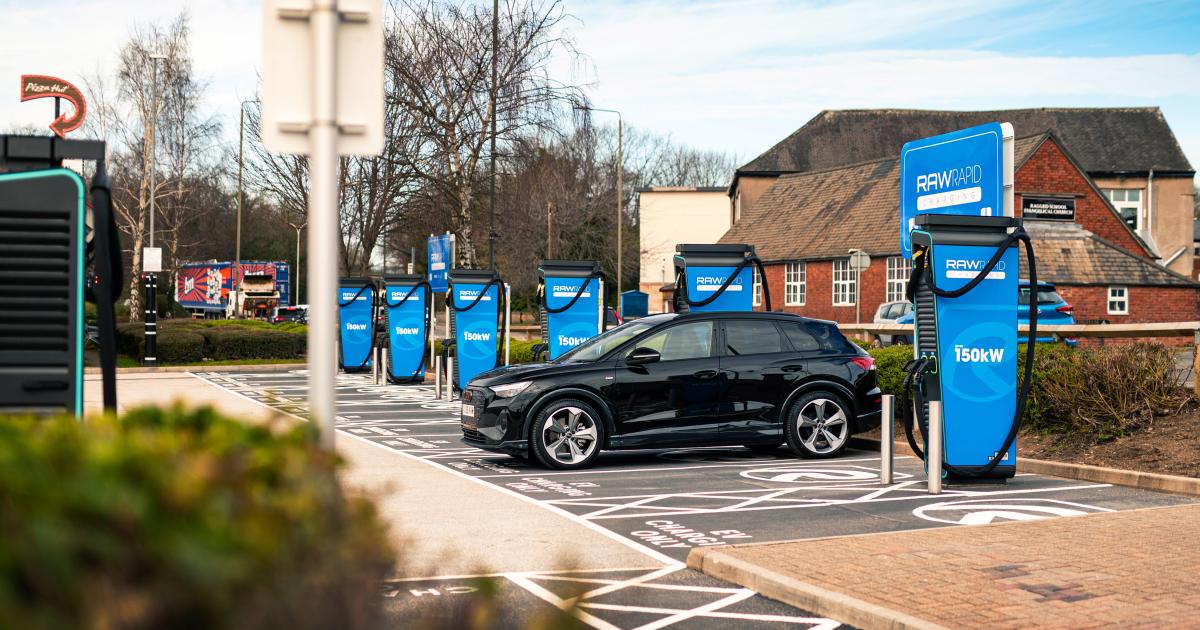
Chargers at supermarkets, service stations and other en-route places do need to be fast.