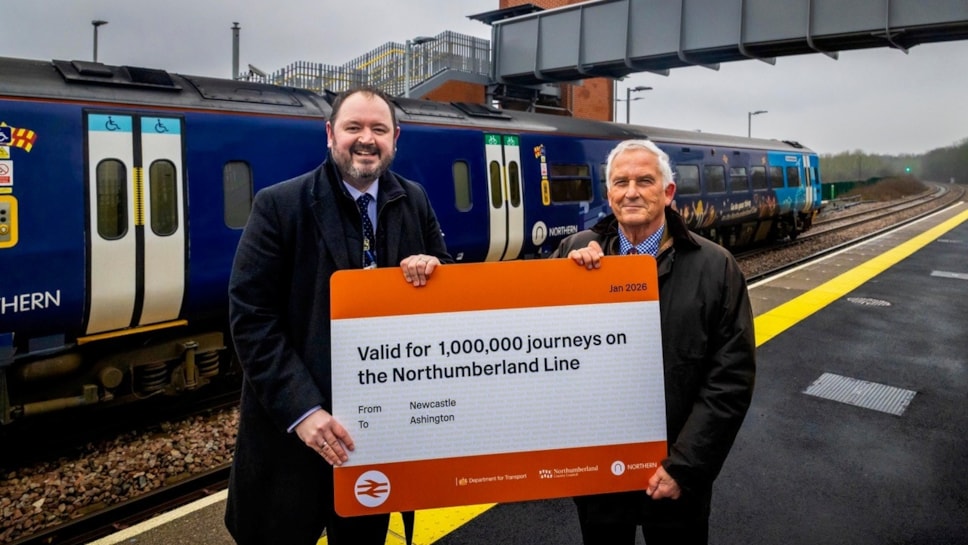
This is indicative of why the line is nothing worth shouting about. It is clear the estimates of expected demand were way off, so it is clear that whoever is building railways in the UK does not actually understand the travel needs of places like that region, and probably just used assumptions from elsewhere, or massively outdated models full stop.
That they do not truly understand the north-south divide, the need to level up this country, and thus the true, highest potential of a line like this in the modern age. What it could be doing in just 5 years, had the potential been factored in from the start. And which is now locked out due to choices made in the design. Literally locked out in some cases, with all that ugly fencing and the 20th Century views of shared space.
What if the line had been designed and built as a true intensively worked but net zero system? What if the option of tram trains or seamless integration with the Metro, rather than interchange, had been used? What if the stock had space for more than two bikes, or actually allowed ebikes/scooters?
What if the stations were genuinely inviting pieces of functional architecture and multi use community spaces? What if you could get a warm meal there, perhaps a vegan sausage roll, rather than having to leave the station? These things all being factors in why people might choose the train over a car.
What if you could use this line in a storm or artic blast, without requiring a trip to North Face beforehand? Bearing in mind the Newcastle terminus is under cover and has many onward connections entirely protected from the elements. Since a train, being a train, is comfortably ridden in normal clothes, even in harsh weather. Or it can be. Whether this stock is up to the task, is debatable.
And the other stations were all designed to allow a passenger to be dropped off at the door. Sadly by cars or taxis, but in time, if they rip out some of kerbs, replace some of the signage, redraw some of the line painting, that could at least be some form of community owned last mile public transport.
Or just a bus, a proper bus, which currently seem to be excluded from the footprints that I've seen, stopping at the customary arms length distance that has become normalised.
What might the ceiling have been then?
The vision, the ambitiom, the commitment was not there. That's why they ended up with something that looks, feels and sounds like it was built on the cheap, providing the bare minimum, what's already been done elsewhere (and found wanting). Merely yet another bit of railway that looks and feels as outdated as the rest of it.
The difference between the level of innovation for something like the lizzy line, with its self driving three signal type stock, is clear. Yes this could all be rectified in time. But we all know it won't be.
So there will be a level crossing in the middle of Ashington for the next 50, possibly a 100 years. Ironically it will cease to be a drag on the local economy only when the local economy ceases to be car dependant. Something the planners of this line have not really ensured is any more achieveable than it was before.
Those car parks lock in car dependency, and make car ownership something to aspire to. So one day there's always the option of those car owners choosing to skip the train portion of their journey, should it be more convenient. Perhaps because a major road improvement in the region, cuts the journey time. The local Mayor, a Labour Mayor, wants those improvements.
These are all oddly disconnected/muddled design choices, since literally every journey this line offers, was already possible using a bus. Buses that are going electric in the very same year this line eventually opened. Because that's how fast the modern world is changing. So it would have been worth shouting about if the railway was already able to be that dynamic and forward facing.
This is all why it feels like someone massively over-estimated how many of the passengers using this line, would also be using a car. At the moment anyway. That's why the line, counterintuively, with it's belching diesel stock, might not be the choice of travel for a true, hardcore environmentally conscious traveller, who has a dim view (for good reason) of even personal electric car transport. Perhaps negative sterotypes that such people do not even exist in that region, were at work?
The least said about someone not anticipating there would be unexploded bombs or unknown mine workings in this area, so that these compounded truly unpredictable costs (although how unforseeble such things were in the post-Covid Trump world, is debatable), the better.
Put simply, in local political terms, to a left behind Reform voter, or a jumped ship to the Greens voter, does this line feel like the step change this country, this specific region, wants, demands, or was it just more of the same? Even to a Labour voter, was this a wow moment?
Was it perhaps priced in that whatever else was happening in the country, Newcastle and surrounds, are forever safe Labour territory? Due ironically to changing demographics and more eco-friendly attitudes. So doing something, but the bare minimum, would suffice to quell the sort of anti-Labour rebellions now being seen in Sunderland and whatever the local equivalent of Brighton is.
Which is not to say don't do it. But the premise of the thread is, should we then shout about it once it's done?