• Our new ticketing site is now live! Using either this or the original site (both powered by TrainSplit) helps support the running of the forum with every ticket purchase! Find out more and ask any questions/give us feedback in this thread!

Should trains have yellow rear ends to reduce collisions?

Railrich

On Moderation
Joined
20 Jun 2026
Messages
1
Location
Birmingham
Could yellow ends on the stopped train have made the driver of the second train brake sooner? Those high-intensity LED lights seem to have a relatively narrow beam, and wouldn't be so visible on a curve.

 
Sponsor Post - registered members do not see these adverts; click here to register, or click here to log in
R

RailUK Forums

357

Established Member
Joined
12 Nov 2018
Messages
2,282
Could yellow ends on the stopped train have made the driver of the second train brake sooner? Those high-intensity LED lights seem to have a relatively narrow beam, and wouldn't be so visible on a curve.
The driver would have been looking at the red tail lights on the train in front.
 

Razorblades

Member
Joined
17 Dec 2021
Messages
450
Location
Copshaw Holm, Scottish Borders
Could yellow ends on the stopped train have made the driver of the second train brake sooner? Those high-intensity LED lights seem to have a relatively narrow beam, and wouldn't be so visible on a curve.

This is a very interesting, not merely hypothetical, question. I don't know if such a scenario was considered when the standards covering front end visibility from the track/ lineside were amended, and this concerns rear-end visibility, so I would rate this question as extremely relevant.

Perhaps a topic for a separate thread.


EDIT to add - looking at red tail lights in sunlight against a purple train's nose may be very different to having a yellow end staring you in the face in bright sunlight.
 

NY SAARSS

On Moderation
Joined
22 Nov 2025
Messages
11
Location
Uranus
Just wanting to ask a simple question. but heres my reason for asking. When standing on the platform at Beeston station in Nottinghamshire the track is fairly straight and level and you can see for a very good distance. I find it far easier to see the 158 170 222 units approaching in the distance than the 810 units. i always put it down to the former units having the traditional yellow ends. So my question is. Does any one think that units with out the yellow ends are distracting and are maybe not so easy to see/recognise at a distance. particularly on a mid summers afternoon with a potentially sunny day.
 

800001

Established Member
Joined
24 Oct 2015
Messages
7,307
Just wanting to ask a simple question. but heres my reason for asking. When standing on the platform at Beeston station in Nottinghamshire the track is fairly straight and level and you can see for a very good distance. I find it far easier to see the 158 170 222 units approaching in the distance than the 810 units. i always put it down to the former units having the traditional yellow ends. So my question is. Does any one think that units with out the yellow ends are distracting and are maybe not so easy to see/recognise at a distance. particularly on a mid summers afternoon with a potentially sunny day.
Can you not see the 3 extremely bright white lights of the 810 and other units without yellow fronts?

On straights sections of track they are extremely visible.
 

Andy Pacer

Established Member
Joined
11 Jul 2017
Messages
3,486
Location
Leicestershire
I gather the fact that non yellow ends are now "acceptable" is down to the very high intensity lights nowadays.
 

Deepgreen

Established Member
Joined
12 Jun 2013
Messages
7,458
Location
Gomshall, Surrey
While the thread ls live again, something which occurred to me is that the 810 had no yellow warning panel/cab end. I have no axe to grind about their use, but I did wonder if the maroon train was not as visible to the 360's driver. Of course, apart from the red signal, rear red lights should have been lit on the 810, but the side-on sun lighting might have had an impact there too. Speculation, perhaps, but also possibly a factor to be considered even if very briefly.
 

irish_rail

On Moderation
Joined
30 Oct 2013
Messages
4,506
Location
Plymouth
Surely if there is even the slightest hint that maybe, just maybe train drivers and track workers find yellow ends easier to identify in certain lighting conditions, then isn't it just easier to go back to yellow ends as mandatory again?

Would the railway really be a worse place if it lost its black and grey front ends?

Any step, no matter how small that may improve safety should be taken in my view, especially if the "opportunity cost" is negligible.
 
Last edited by a moderator:

Uncle Buck

Member
Joined
30 Jun 2020
Messages
336
Location
Glasgow
I gather the fact that non yellow ends are now "acceptable" is down to the very high intensity lights nowadays.
Lights can lose power
Surely if there is even the slightest hint that maybe, just maybe train drivers and track workers find yellow ends easier to identify in certain lighting conditions, then isn't it just easier to go back to yellow ends as mandatory again? Would the railway really be a worse place if it lost its black and grey front ends? Any step, no matter how small that may improve safety should be taken in my view, especially if the "opportunity cost" is negligible.
Exactly! What is the problem with retaining this tried and tested method of ensuring rail safety?
 

Zomboid

Established Member
Joined
2 Apr 2025
Messages
2,210
Location
Oxford
Since not all trains have a cab at both ends, it would be impractical.

Had the stationary train been a freight train, or a traditional loco hauled train (admittedly there aren't many of those, but they do still exist) then the rear would not have been yellow.

The argument about yellow paint warning track workers is a separate discussion.
 

Bletchleyite

Veteran Member
Joined
20 Oct 2014
Messages
112,941
Location
"Marston Vale mafia"
Since not all trains have a cab at both ends, it would be impractical.

Had the stationary train been a freight train, or a traditional loco hauled train (admittedly there aren't many of those, but they do still exist) then the rear would not have been yellow.

The argument about yellow paint warning track workers is a separate discussion.
Thailand paint hauled coach ends yellow so there is yellow at the rear too. This is maybe not such a bad idea. Just because it wasn't the case before doesn't make it a bad idea.

I do think non yellow ends look better, but if something as similar as that can mitigate against collisions it seems silly not to do it. It'd only really affect the Caledonian Sleeper, the Night Riviera and charters though, as no other regular service trains are LHCS without a trailing cab.
 

Royston Vasey

Established Member
Joined
14 May 2008
Messages
2,992
Location
Cambridge
I have to agree. High intensity front lights are one thing, but the rear LEDs are much dimmer.

Safety is a belt and braces thing. There never seemed a compelling reason to actively remove yellow ends to me, though I can understand why properly specced white front lights can do a better job for front end visibility, particularly for on-track workers. Freight train tail lights do at least flash.

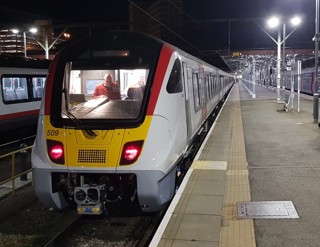
I thought this for a while about the Aventra family of trains, not all of which have yellow ends, where only a little linear array of red LEDs with some very directional reflectors in the lens assembly, that seem to confer a very narrow cone of light. I have always been taken aback by how from some angles there's very little light visible at all (and I mean in person, not the strobe effect that affects photos).

At night:
newspic16-720509-southend-greater-anglia_w320.jpg

Image: Rail Magazine

But by day:
greater-anglia-train-at-london-stratford-station-england-united-kingdom-uk-2KB4KJM.jpg

Image: Alamy

Hitachi AT300 trains have more of an array of red LEDs, circular in the case of Class 800-807 and a sort of angular puddle of red LEDs in the case of 810s.

53143074634_7ec8dcc92a_b.jpg

Image credit: user Andy's Trains on Flickr https://www.flickr.com/photos/67444577@N02/53143074634/in/album-72177720311033089

I understand they must be visible to a following driver from up to 400m, but I wonder what angle this is measured at, and at what angle the red light ceases to be as visible in different light conditions, particularly with strong sunlight hitting the plastic housing.

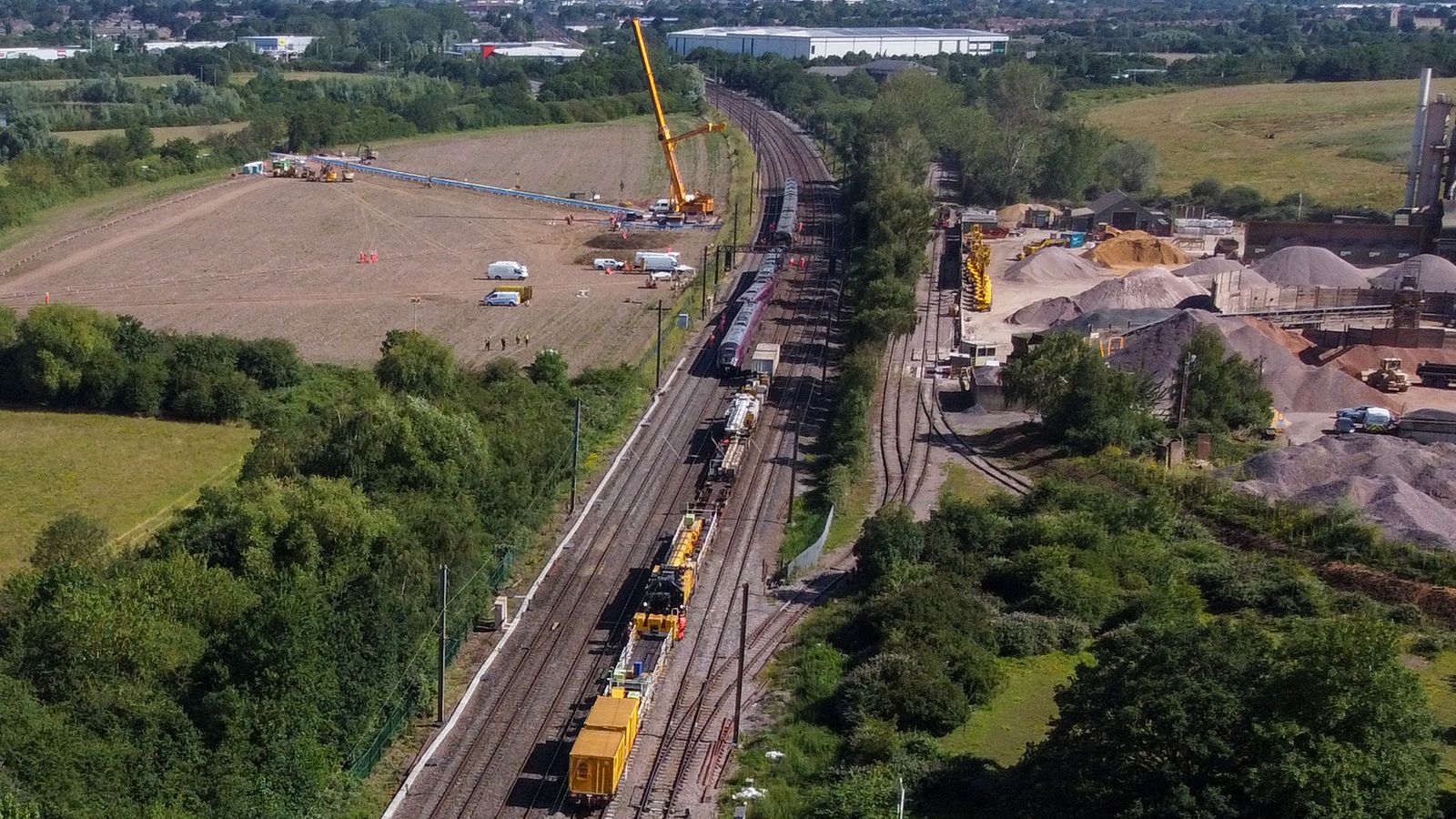
None of this helps when approaching a train concealed around a corner, of course. The immediate area is clear of vegetation but there's a heavy bank of trees on the inside of that curve

skynews-bedford-elstow-nottingham_7280097.jpg

Image: Sky News
 

swt_passenger

Veteran Member
Joined
7 Apr 2010
Messages
34,227
I gather the fact that non yellow ends are now "acceptable" is down to the very high intensity lights nowadays.
‘Full’ yellow ends were not required either. The requirement was only for a 1m^2 panel. Anything over that was the livery designers choice.
 

Sorcerer

Established Member
Joined
20 May 2022
Messages
2,043
Location
Liverpool
I’d be surprised if the RAIB determine the lack of yellow fronts to be a major contributing factor to the accident at Bedford, especially given it took place in broad daylight whereas yellow front ends were originally meant to deal with dark nights for trackside workers.

So based on that alone, I don’t see a reason to mandate it all over again.
 

Snow1964

Established Member
Joined
7 Oct 2019
Messages
11,015
Location
West Wiltshire
Yes yellow ends are easier to see.

But not sure who thought painting the ends in a grey that is very close to colour of sky or fog, so blends into background in the distance would be sensible
 

Bletchleyite

Veteran Member
Joined
20 Oct 2014
Messages
112,941
Location
"Marston Vale mafia"
Red rears were never designed for high visibility - indeed freights can just have a small flashing battery lamp. They are just to let the signaller know the train has passed them complete.

If they were for visibility you'd need a bit of a rethink.
 

The exile

Established Member
Joined
31 Mar 2010
Messages
9,307
Location
Somerset
Thailand paint hauled coach ends yellow so there is yellow at the rear too. This is maybe not such a bad idea. Just because it wasn't the case before doesn't make it a bad idea.

I do think non yellow ends look better, but if something as similar as that can mitigate against collisions it seems silly not to do it. It'd only really affect the Caledonian Sleeper, the Night Riviera and charters though, as no other regular service trains are LHCS without a trailing cab.
While there may not be any passengers in a train of empty freight liner flats, there’s still going to be a problem if something hits it. There’s a danger inherent in starting to expect something that can’t be present overall.
 

AlterEgo

Verified Rep - Wingin' It! Paul Lucas
Joined
30 Dec 2008
Messages
29,181
Location
LBK
I’d be surprised if the RAIB determine the lack of yellow fronts to be a major contributing factor to the accident at Bedford, especially given it took place in broad daylight whereas yellow front ends were originally meant to deal with dark nights for trackside workers. So based on that alone I don’t see a reason to mandate it all over again.
Yellow ends likely wouldn't have helped. If you play a cab ride video from the area it seems clear that the brakes were applied (given the speed and timings) as soon as the 810 could have been seen, yellow ends or not. It was around a corner and would have been visible for maybe 10 or 12 seconds if travelling at 79mph.

This notwithstanding, it has not been yet confirmed that the brake application was demanded by the driver.

The video is here and 1h01m onwards is the relevant portion of the trip from Bedford onwards. This train in the video is doing 125mph so drop the playback to about 0.65x speed to get a feel for 79mph.
 

Bletchleyite

Veteran Member
Joined
20 Oct 2014
Messages
112,941
Location
"Marston Vale mafia"
While there may not be any passengers in a train of empty freight liner flats, there’s still going to be a problem if something hits it. There’s a danger inherent in starting to expect something that can’t be present overall.

If you combine that there's less of a problem if you hit it with the fact that there are substantially more passenger services than freights it wouldn't surprise me if the overall safety impact is positive. A proper risk assessment would have to be completed.
 

frankmoh

On Moderation
Joined
7 May 2025
Messages
817
Location
London
I think that from a purely aesthetic standpoint we should return to yellow fronts. It makes the trains look more British.

From a safety standpoint, some modern liveries are far too dark in my opinion and so there should be yellow (or some other high contrast colour like red or orange) so it's far easier to see a train. LNWR's 730s spring to mind as being very dark trains.
 

whoosh

Established Member
Joined
3 Sep 2008
Messages
1,884
Surely if there is even the slightest hint that maybe, just maybe train drivers and track workers find yellow ends easier to identify in certain lighting conditions, then isn't it just easier to go back to yellow ends as mandatory again? Would the railway really be a worse place if it lost its black and grey front ends? Any step, no matter how small that may improve safety should be taken in my view, especially if the "opportunity cost" is negligible.
Agreed. This is a good discussion.

Personally I have seen many trains in my career overtake me, and due to sunlight and the narrower beam of LEDs, struggle to see the tail lights at a distance.

A yellow end is useful, and I think upto now, it's dropping from requirements has only been looked at from the leading end of the train and new high intensity headlights. I don't think visibility from the rear has been considered - it has never been required at the rear, it just so happens that most trains are multiple units these days.
 

Royston Vasey

Established Member
Joined
14 May 2008
Messages
2,992
Location
Cambridge
Red rears were never designed for high visibility - indeed freights can just have a small flashing battery lamp. They are just to let the signaller know the train has passed them complete.

If they were for visibility you'd need a bit of a rethink.
Not primarily for high visibility, but not just for signallers to confirm the train is complete.

There are visibility standards that specifically refer to visibility from distance of the tail light for following drivers as well as maximum levels due to driver dazzle.

I cannot access the pdf as I do not have a RSSB login but perhaps someone can quote and summarise the requirements of GMRT2131 and RIS-2718-RST?

It probably wouldn't have stopped or substantially mitigated this particular accident (it might have done if the 810 had stopped a few hundred metres further south on straighter track) but the question for RAIB is what can we learn, what can be done better, what might have played a part, what might stop a similar incident.

Maybe it is time for a rethink. Yellow ends, why not, cheap and with no downsides. And better standards for intensity, directionality and diffusion of rear lights, surely will be considered after this.
 

Zomboid

Established Member
Joined
2 Apr 2025
Messages
2,210
Location
Oxford
Maybe it is time for a rethink. Yellow ends, why not, cheap and with no downsides. And better standards for intensity, directionality and diffusion of rear lights, surely will be considered after this.
I don't know whether the colour that the 810 was painted so be identified as a factor in this, but in general I don't see any harm in the yellow ends requirement. Or at least high visibility ends (TfL's orange and the red that they have/ had on the tube are probably equally adequate).
 

Sorcerer

Established Member
Joined
20 May 2022
Messages
2,043
Location
Liverpool
It will be hard to prove the yellow ends requirement made railways safer because it's decades of yellow fronts versus a few years of non-yellow fronts, and the stock using the later have significantly brighter headlights so there's no common baseline for visibility. Also there aren't many if any other countries that have used them on such a mass scale for safety reasons.

There's many other factors behind railway safety beyond just painting the cab ends a certain bright colour, especially when the original visibility concern was a dark night, not a bright clear late afternoon. I'd like a proper evidence-based report on this personally.
 

irish_rail

On Moderation
Joined
30 Oct 2013
Messages
4,506
Location
Plymouth
It will be hard to prove the yellow ends requirement made railways safer because it's decades of yellow fronts versus a few years of non-yellow fronts, and the stock using the later have significantly brighter headlights so there's no common baseline for visibility. Also there aren't many if any other countries that have used them on such a mass scale for safety reasons.

There's many other factors behind railway safety beyond just painting the cab ends a certain bright colour, especially when the original visibility concern was a dark night, not a bright clear late afternoon. I'd like a proper evidence-based report on this personally.
But my point is painting all ends yellow would be a minimal cost over the next few years. Surely a smallish outlay is worth making if there is even a small chance that yellow ends are safer than camouflage (sorry black/ grey) ones.
 

irish_rail

On Moderation
Joined
30 Oct 2013
Messages
4,506
Location
Plymouth
Agreed.
This is a good discussion.

Personally I have seen many trains in my career overtake me, and due to sunlight and the narrower beam of LEDs, struggle to see the tail lights at a distance.
A yellow end is useful, and I think upto now, it's dropping from requirements has only been looked at from the leading end of the train and new high intensity headlights. I don't think visability from the rear has been considered - it has never been required at the rear, it just so happens that most trains are multiple units these days.
Perhaps it needs us drivers to take this to Aslef and get it put forward as a policy going forward.
 

AndrewE

Established Member
Joined
9 Nov 2015
Messages
7,300
Isn't it almost always the case that trains rely on signals for protection: If you can see something ahead of you it's almost certainly too late to stop?
 

whoosh

Established Member
Joined
3 Sep 2008
Messages
1,884
Isn't it almost always the case that trains rely on signals for protection: If you can see something ahead of you it's almost certainly too late to stop?
Yes. You are right.

But people make mistakes sometimes. Anything that can mitigate against mistakes (or their potential consequences), should attract consideration at least.
 

45Fox

Member
Joined
17 May 2022
Messages
140
Location
Leicester
Agreed that this is an interesting discussion.

I watched an 810 depart from platform 1 at Leicester yesterday, from the car park, and it was apparent that the rear end and tail lamps weren't as visually arresting as the yellow front ends of locos stabled further away at Leicester TMD, I pointed this out to a colleague.

Fair points raised about tail lamps on freight and loco hauled stock.

The question of visual protection of the rear ends of trains is one which has been raised many times before, the investigating officers of various railway accidents raised it repeatedly, it features prominently in the reports into the accidents at Coppenhall Junction (1962) and Wigan North Western (1984), as well as others.
 

Top