(My bold)
Have you seen this stated or confirmed anywhere as a fact? Or is it just what you think/believe will happen? I have no inside knowledge either way, I’m just surprised at how certain you seem.
It's just what I believe, but I can't see them staying as 2xx - it just wouldn't make any sense, so wouldn't happen.
Personally, I can’t foresee a situation where TfW literally have to (as in they no choice at all) change the fleet class. Who would enforce this? And on what basis? Would the DfT or ORR really be that invested?
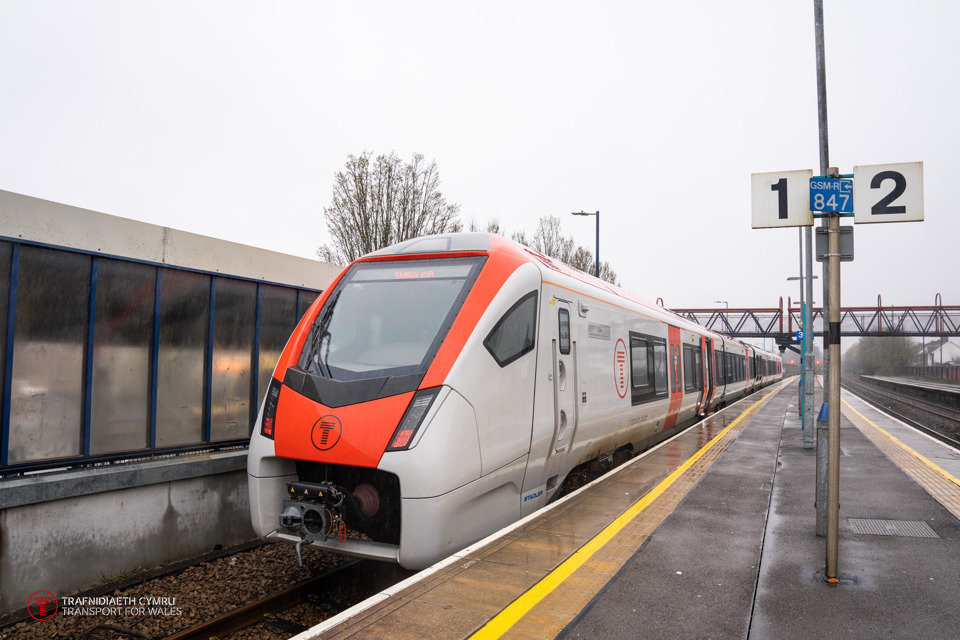
I can. Each number range has a meaning, and for what will be "non-high-speed bi-mode units" (7xx) to be 2xx would just be nonsense.
Especially since in this case 2xx is meant to be Diesel-Electric and well they’ll still have both Diesel and Electric power, just not in the originally intended order

2xx was originally (and in the more immediately following examples still is) diesel-electric multiple units (DEMUs). In other words, diesel multiple units with electric transmission, where the diesel engines drive alternators/generators that supply power for the electric traction motors, but the unit doesn't have an electric pickup (pantograph) so can't actually run from the overhead electricity supply. The 220s, 221s, 222s and (as-originally-built) 231s fit this exact description. The 205s, 207s and London Northwestern 230s also fitted this exact description.
They may want to change the fleet number, say to make sure it’s very clear which have pans and which don’t during the conversion periods
I really do believe that this is what will happen (based on the way the system works), and then they'd stay 7xx (rather than revert back to 2xx).
or they could decide to go with a different subclass to show this. The latter would presumably be cheaper as it wouldn’t mean needing to change documentation etc.
I really do think that this is highly unlikely, as it would go against the rules of Total Operations Processing System (TOPS) and Train Running Under System TOPS (TRUST).
There are things like the 319 to 769 conversions, but whether the fact that it wasn’t the entire fleet being converted made that more necessary, or whether it was more PR for the project, who knows.
The 319-to-769 conversions from AC electric to bi-mode were reclassified from 319 to 769 because their traction change necessitated a change from 3xx to 7xx class number. When Transport for Wales removed the pantographs from their 769s, they left the
preparation for the unit to run on overhead AC electric power (just pop them back on), so they remained classified as "diesel-capable electric" bi-mode units, even though they removed the pantographs and only used the diesel mode.
Interestingly, we have the D Trains. All Class 230/0s but could be DEMUs, DBEMUs or BEMUs as I understand it.
The Transport for Wales 230s, whether running in diesel or battery mode, are self-powered units with electric traction motors but don't have a pantograph so can't actually run from the overhead supply. The Great Western Railway 230, though it doesn't have diesel engines and only has batteries, is still a self-powered unit with electric traction motors, but that doesn't have a pantograph so can't actually run from the overhead supply. 2xx obviously
does allow
these, so 2xx nowadays is for self-powered units with traction motors that can't connect to railways' electrification (on the move), whether they have batteries (BEMU) or diesel engines (DEMU), or both (DBEMU).
If Project Thor had gone ahead and added pantograph cars to voyagers we’d have had a precedent there I guess
As they would've become higher-speed bi-mode units, it would've been the first use of an 8xx class number, predating the Hitachi AT300 Class 800 designation by 3-4 years. Just that as it didn't happen, 8xx didn't end up first being used until 2014 for Class 800 (Hitachi AT300), even though the 6xx, 7xx and 8xx numbering ranges already existed in 2010 I believe.
So a long explanation, but I hope it helps with understanding why the bi-mode-converted 231s will be reclassified with a 7xx class number


 www.saferhighways.co.uk


