• Our new ticketing site is now live! Using either this or the original site (both powered by TrainSplit) helps support the running of the forum with every ticket purchase! Find out more and ask any questions/give us feedback in this thread!

Air conditioning on London Buses

Silent

Member
Joined
31 Mar 2016
Messages
727
Location
London
Do new buses have air conditioning or is it only limited to certain buses? I know the Irizar bus has air conditioning. I did read a post that buses made after 2024 have air con but I hardly use buses so don't know. I do know E400 BYD cities I use to use had fans but definitely not air conditioning. Bus models like the electroliner seem like a continuation of B5LH's and streetdecks so it makes me doubt new models would have proper air condition though I suppose air conditioning is a spec that can be added. I have never been on the BD11's. With the bonded windows and seemingly smaller window openings I would assume it has aircon though.

I just came across this reddit post that made me think of this.

 
Sponsor Post - registered members do not see these adverts; click here to register, or click here to log in
R

RailUK Forums

Dwarfer1979

Member
Joined
24 Feb 2025
Messages
437
Location
Leicester
Historically many operators, particularly those in urban operations, have considered aircon less cost effective due to the frequent stops & door opening cycles though that calculation is changing both due to the greater incidences of very high temperatures and the wider deployment of electric buses (aircon units can also heat vehicles in winter and are less power hungry in that role than other forms of heating).

In terms of single-deckers aircon has been an option for years from all manufacturers even if not widely taken up by operators due to the cost/benefit analysis though it has been specified by operators on high profile routes or high end sectors.

On double-deckers the issue has always been weight, aircon does have a weight issue sufficient to cause max weight constraints (2-axle vehicles have a max laden weight of 18t, single or double, so whilst a single has plenty of headroom a double is much tighter - longer 11m+ 2-axles often have almost no standing allowance due to this) so it has not proven practical to fit full aircon to standard capacity 2-axle models (some higher spec 2-axle buses did have aircon fitted as they were specced with lower seating capacity which allows for the additional weight of the unit), though it is more common on 3-axle models, with less weighty but less effective air-cooling being adopted (most notably in London). I'm not sure any of the suppliers have been able to develop a lighter weight aircon unit able to be fitted to double-deckers within UK weight limits but if they have they haven't really made a lot of noise about it.

London has not historically required aircon on its buses for the passenger cabin, though as I said above air cooling was specified on double-deckers (I'm not sure I've seen signs of such being fitted to single-deckers so it may only be the top deck of double-deckers that have it), but it used to be fairly common in London for the drivers cab to have a small aircon units installed that help the drivers who spend much longer periods in the vehicle (& with London style assault screens largely sealing the cab it is largely self-contained & less ventilated) so I am surprised in the link attached that is was the driver experiencing the issue (you can certainly see the small aircon boxes above the cab on diesel single-deckers but it is less clear on electrics with all the bodywork concelaing the batteries also having the effect of concealing any other equipment up there).
 

johncrossley

Established Member
Joined
30 Mar 2021
Messages
4,373
Location
London
On double-deckers the issue has always been weight, aircon does have a weight issue sufficient to cause max weight constraints (2-axle vehicles have a max laden weight of 18t, single or double, so whilst a single has plenty of headroom a double is much tighter - longer 11m+ 2-axles often have almost no standing allowance due to this) so it has not proven practical to fit full aircon to standard capacity 2-axle models (some higher spec 2-axle buses did have aircon fitted as they were specced with lower seating capacity which allows for the additional weight of the unit)

First's Yutong double deckers have air conditioning. They are running in the Bristol and Basildon areas (at least).
 

81A

Member
Joined
22 May 2026
Messages
259
Location
UK
Wasn't there a controversy surrounding Aircon on new route masters a few years back? I think the Aircon was ineffective which lead to opening windows being retrofitted?
 

Railguy1

Member
Joined
6 Apr 2016
Messages
240
Wasn't there a controversy surrounding Aircon on new route masters a few years back? I think the Aircon was ineffective which lead to opening windows being retrofitted?

That was my understanding too.
 

johncrossley

Established Member
Joined
30 Mar 2021
Messages
4,373
Location
London
Wasn't there a controversy surrounding Aircon on new route masters a few years back? I think the Aircon was ineffective which lead to opening windows being retrofitted?

That wasn't proper air-conditioning, just air cooling.
 

JD2168

Established Member
Joined
11 Jul 2022
Messages
1,707
Location
Sheffield
The Stagecoach Yorkshire Yutong E12’s have air conditioning as can be seen on the branding. First Glasgow did have a batch of B9TL’s which had air conditioning fitted upstairs but it then failed which meant that opening windows were fitted the same with a number of B7RLE’s they had at Bristol & Essex
 

Attachments

  • IMG_8814.jpeg
    IMG_8814.jpeg
    132.4 KB · Views: 101

Andyh82

Established Member
Joined
19 May 2014
Messages
4,545
The BYDs supposedly have air con although ones I saw this week when I was in London were still running with hopper windows open

The BYD/AD Enviro 200 EVs single decks have visible air conditioning units

I did notice a lot of drivers wearing white t-shirts rather than their usual uniform, so the cab air con mustn’t have coped with the high temps this week
 

Silent

Member
Joined
31 Mar 2016
Messages
727
Location
London
Wasn't there a controversy surrounding Aircon on new route masters a few years back? I think the Aircon was ineffective which lead to opening windows being retrofitted?
However when I went on holiday as a teen to New Jersey I remember the buses having effective air con. But I suppose the bus layout was different and it was a single deck.
 

johncrossley

Established Member
Joined
30 Mar 2021
Messages
4,373
Location
London
However when I went on holiday as a teen to New Jersey I remember the buses having effective air con. But I suppose the bus layout was different and it was a single deck.

Obviously summers are very hot there so air-conditioning is essential. However, most new buses in much if not most of Europe have had air-conditioning for some years now, including places not known for hot summers. The UK is an exception.
 

Silent

Member
Joined
31 Mar 2016
Messages
727
Location
London
Obviously summers are very hot there so air-conditioning is essential. However, most new buses in much if not most of Europe have had air-conditioning for some years now, including places not known for hot summers. The UK is an exception.
Yeah, but hearing of ac failing on uk buses doesn't seem acceptable if they seem reliable on buses in other countries but I suppose if there are restrictions to the buses weight and stuff it's understandable. Maybe the task of installing an efficient ac system should be taken seriously like it has been seemingly with the 24ts.
 

johncrossley

Established Member
Joined
30 Mar 2021
Messages
4,373
Location
London
but I suppose if there are restrictions to the buses weight and stuff it's understandable.

You could argue that, but you could also say it is simply because buses in the UK are less well funded than in other countries, therefore compromises have to be made. One of those compromises is not having air-conditioning. Weight was considered an issue for double-deckers but some other countries use 3 axles for double deckers which removes the weight issue. But that of course costs more.
 

Busman84

Member
Joined
9 Sep 2019
Messages
172
Location
East Kilbride
The Geminis that Glasgow had with air con all worked fine (occasionally you would have units blowing hot air which got dealt with). Along with the E500s they had somebody maintain these. Cab air con was also in these buses. However they started moving these Geminis to other depots where the air con was no longer maintained. Answer was to fit open windows on the upper saloon.

The Enviro 500 buses all got moved to Aberdeen and within a year the answer was to disconnect these air con units rather than maintain them. So opening windows fitted here.

Going ahead with EVs it would be good to see more buses with air con. After all in a car AC does not eat up the range unlike heaters do and in winter range drops a fair bit compared to spring and summer months. Wonder if same would apply on buses.
 

Dwarfer1979

Member
Joined
24 Feb 2025
Messages
437
Location
Leicester
Going ahead with EVs it would be good to see more buses with air con. After all in a car AC does not eat up the range unlike heaters do and in winter range drops a fair bit compared to spring and summer months. Wonder if same would apply on buses.
Yes it does, as I said in my earlier post the aircon system is less power hungry for heating than more conventional heating (there are notices in our depot instructing drivers of the electric buses not to press the heating button but to adjust the setting on the aircon in the cold) which is why it is standard spec on Yutong singles (& as John Crossley pointed out on their deckers as well).
Wasn't there a controversy surrounding Aircon on new route masters a few years back? I think the Aircon was ineffective which lead to opening windows being retrofitted?
As others have said it was simpler air-cooling which was fitted to many buses in London but all ones with opening windows, not full air conditioning so not as effective at actually cooling the bus alone. As a passenger it can be difficult to tell the difference between the two based on what is installed inside the bus & as I said even some vehicles without it for the passenger still had small units for the drivers cab.
First's Yutong double deckers have air conditioning. They are running in the Bristol and Basildon areas (at least).
Though interestingly when you look at the vehicle specs the double-decker aircon units are 30% less powerful than that fitted to the single-decker so there is still a compromise in getting effective aircon on a 2-axle decker. They do, however, explicitly describe it as aircon so it does appear someone has managed to get a system suitable for a traditional 2-axle decker so this should hopefully begin a wider trend.
Obviously summers are very hot there so air-conditioning is essential. However, most new buses in much if not most of Europe have had air-conditioning for some years now, including places not known for hot summers. The UK is an exception.
Continental areas tend to average higher summer temperatures (& lower winter ones so averages can be a little unclear) than maritime areas (that the UK as an island is) as the latter are cooled by the sea & winds coming in across water so even areas not associated with hot summers actually hit higher temperatures traditionally, it is really only Scandinavia that probably is similar but if, like Yutong, you rate the aircon as something more like climate control it has use in very cold climates in helping to heat the buses quicker and more effectively in very low temperatures so areas that routinely hit sub-zero temperatures for extended periods of time probably also benefit from it. For the UK, traditionally not getting particularly hot nor particularly cold, it has been been less relevant but with both happening more often (& it seems pretty much every year recently) I hope more manufacturers follow Yutongs lead and more operators treat aircon as an essential solution to improving the customer experience.
 

johncrossley

Established Member
Joined
30 Mar 2021
Messages
4,373
Location
London
Though interestingly when you look at the vehicle specs the double-decker aircon units are 30% less powerful than that fitted to the single-decker so there is still a compromise in getting effective aircon on a 2-axle decker. They do, however, explicitly describe it as aircon so it does appear someone has managed to get a system suitable for a traditional 2-axle decker so this should hopefully begin a wider trend.

I travelled on the X1 Bristol to Weston-super-Mare last summer during a heatwave and the air-conditioning was very effective.
Continental areas tend to average higher summer temperatures (& lower winter ones so averages can be a little unclear) than maritime areas (that the UK as an island is) as the latter are cooled by the sea & winds coming in across water so even areas not associated with hot summers actually hit higher temperatures traditionally, it is really only Scandinavia that probably is similar but if, like Yutong, you rate the aircon as something more like climate control it has use in very cold climates in helping to heat the buses quicker and more effectively in very low temperatures so areas that routinely hit sub-zero temperatures for extended periods of time probably also benefit from it. For the UK, traditionally not getting particularly hot nor particularly cold, it has been been less relevant but with both happening more often (& it seems pretty much every year recently) I hope more manufacturers follow Yutongs lead and more operators treat aircon as an essential solution to improving the customer experience.

The Netherlands and Belgium buy air-conditioning and have similar weather to London.
 

BuhSnarf

Member
Joined
22 May 2010
Messages
713
Location
Leicester
Went on a couple of buses when in London at the weekend (when it was incredibly hot):

First took a 314 which uses MCV Volvo BZL single decks and this was gloriously cool inside.
Then took a 286 which is operated by Streetdeck DFs... ooof, this was SO hot.
Lastly, the SL4 which has a BYD BD11 double decks and this was also gloriously cool inside.
 

mmh

Established Member
Joined
13 Aug 2016
Messages
4,244
As others have said it was simpler air-cooling which was fitted to many buses in London but all ones with opening windows
No, the New Bus for London / "New Route aster" originally didn't have opening windows, and they were horrendous.
 

Dwarfer1979

Member
Joined
24 Feb 2025
Messages
437
Location
Leicester
No, the New Bus for London / "New Route aster" originally didn't have opening windows, and they were horrendous.
I was slightly badly worded but the point was that the NBfL was only fitted with an air cooling system just like many other buses in London and except for the NBfL all those other applications were still fitted with opening windows as the cooling ability was less than full air con. It was probably a degree of optimism from a designer who hadn't designed for transport vehicles regularly that explains that decision.
 

Glasgowbusguy

On Moderation
Joined
21 Feb 2019
Messages
544
The issue with small scale air con is that there isn't a huge skill set in the UK to maintain it that base is growing but the need for air con is going to explode over the next decade or so but the skills base to install or maintain then is not growing at the same rate. Large scale installations are maintained by the refrigeration and HVAC companies.
 

RJ

Established Member
Joined
25 Jun 2005
Messages
8,811
Location
Back office
Historically many operators, particularly those in urban operations, have considered aircon less cost effective due to the frequent stops & door opening cycles

How much truth is there in this though? Singapore and Hong Kong have entire fleets of air conditioned buses and it does work well even in stop-start conditions. The Citaros I've been on in Singapore are ice cold inside, but the humidity takes a bit of getting used to as in stark contrast to outdoors, I found the air to feel a bit dry in some of them.

I think it's more likely that it's entirely to do with the additional costs and maintenance involved, plus the negative impact on fuel consumption. I've purchased around 15 Mercedes Citaros, all but two of which were specced with saloon air conditioning equipment. Whether they had been maintained is a different question. In all cases with the provincial spec Citaros, where the compressor was still present, it was out of commission with belts removed, seized or missing coils or plugs wedged into the coils to stop them spinning. I've also had a few ex London Citaros and Citaro-Gs. These only had a small compressor from new to power the cab unit. Most of these had seized compressors. Only one had a working and connected compressor, but had no gas supply.

It wouldn't take much work to get the saloon air con working on any of these vehicles. I note the aircon does tend to be maintained on airport buses.

I also bought a double deck Volvo from Hong Kong with a Nippondenso aircon system. It was withdrawn when it was by KMB due to an aircon fault, but I got it over here and called in an aircon specialist to fix it. Half a day of work and £750 later and it has been working a treat ever since. It's a heavy bus though, around 16t ULW and the MPG is far worse than even the bendy buses which I didn't think could be beaten in that respect.

The issue with small scale air con is that there isn't a huge skill set in the UK to maintain it that base is growing but the need for air con is going to explode over the next decade or so but the skills base to install or maintain then is not growing at the same rate. Large scale installations are maintained by the refrigeration and HVAC companies.

Sounds like a business opportunity for people prepared to mobilise with those skills! There are quite a lot of coaches out there with air conditioning. Some operators perform some of the maintenance tasks themselves, then there are mobile contractors who assist.

 
Last edited:

Dwarfer1979

Member
Joined
24 Feb 2025
Messages
437
Location
Leicester
How much truth is there in this though? Singapore and Hong Kong have entire fleets of air conditioned buses and it does work well even in stop-start conditions. The Citaros I've been on in Singapore are ice cold inside, but the humidity takes a bit of getting used to as in stark contrast to outdoors, I found the air to feel a bit dry in some of them.
Cost effective not actually effective - if you are constantly working hard to drop the temperature by only a couple of degrees the impact on passenger comfort compared to the cost of the equipment is less viable and also the temperature will equalise quicker because the change is much smaller. In comparison if you are dropping the temperature by 10 or 15 degrees then it has a significant impact to the onboard experience so the comparative temperature difference is telling in that calculation and very different between tropical locations like Singapore/HK and the UK means it is clearly needed there were it was less so here. With the more frequent occurrences of these higher temperatures in the UK it is much easier to make a business case to now but it does require UK managers to change their thinking which does take time to be an standard thought when buses are specified but with many suppliers now making aircon standard (as it is such in their home market) it may take less time.
I think it's more likely that it's entirely to do with the additional costs and maintenance involved, plus the negative impact on fuel consumption. I've purchased around 15 Mercedes Citaros, all but two of which were specced with saloon air conditioning equipment. Whether they had been maintained is a different question. In all cases with the provincial spec Citaros, where the compressor was still present, it was out of commission with belts removed, seized or missing coils or plugs wedged into the coils to stop them spinning. I've also had a few ex London Citaros and Citaro-Gs. These only had a small compressor from new to power the cab unit. Most of these had seized compressors. Only one had a working and connected compressor, but had no gas supply.
I have a suspicion that Mercedes may have fitted aircon effectively as standard since it seems to have been so in continental europe at the time and it is a fairly standard integral model (whilst UK manufacturers standard spec would omit as the UK didn't traditionally need it) but there is also the factor that whilst the model may have been designed as an urban model in Europe many of the UK customers were deploying them on more interurban cycles (except those buying artics), and tended to be operators aiming for a up market image which aircon exemplified even if not valued as such, so the proportion of time spent with doors closed is higher than purely urban cycles (this is a bit of a sweeping statement and there will always be the exception to prove the rule but a higher proportion of the buyers I can think of for the rigids sit one side and not the other).
It wouldn't take much work to get the saloon air con working on any of these vehicles. I note the aircon does tend to be maintained on airport buses.

I also bought a double deck Volvo from Hong Kong with a Nippondenso aircon system. It was withdrawn when it was by KMB due to an aircon fault, but I got it over here and called in an aircon specialist to fix it. Half a day of work and £750 later and it has been working a treat ever since. It's a heavy bus though, around 16t ULW and the MPG is far worse than even the bendy buses which I didn't think could be beaten in that respect.
This comes back to that cost-effectiveness matter, when I entered the industry 20 years ago I just don't remember summers getting that hot every year for this to be an issue so whilst one of my early employers did buy some aircon fitted buses (Citaros as it happens) it was never massively played up after the initial service relaunch and not significantly referenced as an important feature. In recent years these sort of temperatures seem to be happening every year (and more than once each year even if not as frequent or long lasting as other places) and this is starting to actually be a referenced issue for customer comfort and so the cost vs impact calculation is moving. This is no different to housing or other infrastructure issues where UK building standards are built around moderate temperatures without the extremes (such as not fitting aircon to new build houses) and as a society we are slow in reacting to the changes we are seeing as we still deep down see these very high temperatures as "unusual" even though they seem to happen every year now.
Sounds like a business opportunity for people prepared to mobilise with those skills! There are quite a lot of coaches out there with air conditioning. Some operators perform some of the maintenance tasks themselves, then there are mobile contractors who assist.
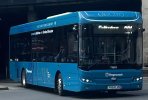
As you say there are already companies to assist with the maintenance of vehicle aircon as all coaches are fitted with aircon and have been for many years. It does require bus operators to change procedures around maintenance to arrange regular care for the aircon equipment (either through a contract with 3rd parties or training up their own staff) and once it becomes needed (such as on electric models where it is fitted as much for the energy efficient winter heating as summer cooling) that becomes something people will sort but in the past it quickly became an unimportant feature and relying on the opening windows (as most were delivered with opening windows as well, though often initially locked, so they probably were never truly committed to the long term usage of aircon) which you would hope would no longer be the case.

Essentially the summary of this thread is that it used to be (10-15 years ago) less necessary from a regular temperature issue and not practical for double deckers due to weight issues but it is now becoming more necessary and many of the practical absolute issues seem to have been solved and with electric buses it is becoming standard for many suppliers but some have not done so.
 

ChrisPJ

Member
Joined
26 Aug 2015
Messages
349
Maintaining aircon isn’t rocket science it is basic equipment and need not be massively costly, yes it does incur a bit more fuel consumption.

The industry should be thinking about its customers though, how many people swear off public transport after an unpleasant journey on a hot summer day. Lovely to get on a nice cool bus after a few hours at the beach.

Even basic cars have AC as standard so it’s about time that UK buses did the same.
 

BuhSnarf

Member
Joined
22 May 2010
Messages
713
Location
Leicester
Maintaining aircon isn’t rocket science it is basic equipment and need not be massively costly, yes it does incur a bit more fuel consumption.

The industry should be thinking about its customers though, how many people swear off public transport after an unpleasant journey on a hot summer day. Lovely to get on a nice cool bus after a few hours at the beach.

Even basic cars have AC as standard so it’s about time that UK buses did the same.
Absolutely, I know several people who will actually choose to take a train when the weather is hot because the trains have AC. It's a surprise that buses haven't yet capitalised on this.
 

kijeta

Member
Joined
18 Jun 2022
Messages
109
Location
North London
Technically related to this thread, as it's in London, I took a 702 during the peak of the heatwave and was so pleasantly surprised by how cool it was inside - so much so that I decided to stay on it longer than I had originally planned to.
 

dgl

Established Member
Joined
5 Oct 2014
Messages
3,039
Our ex. Greenline Gemini deckers in Wessex land have air conditioning, though since coming down to Weymouth it's not used. I wonder if that is related to them being freezing in the winter?
 

MicroLithium

Member
Joined
30 Jul 2024
Messages
99
Location
UK
Never mind air conditioning, I was on an Arriva North East bus this afternoon, outside temperature over 25 degrees, sun beating down, and the heating was on full blast. Presumably like my first car, the buses are so knackered the engine would overheat if they turned off the heating
 

Thames99

Member
Joined
11 Sep 2023
Messages
324
Location
Reading
The solar gain on a bus, is such that on sunny days buses can be deeply unpleasant even if the outside temperature is not very high. Aircon is not only needed in the current spell with temperatures in the high twenties or over 30 degrees.

I think lack of air-conditioning puts off many potential passengers if they have the alternative of using their own car.
 

johncrossley

Established Member
Joined
30 Mar 2021
Messages
4,373
Location
London
The solar gain on a bus, is such that on sunny days buses can be deeply unpleasant even if the outside temperature is not very high. Aircon is not only needed in the current spell with temperatures in the high twenties or over 30 degrees.

Exactly. Aircon is standard on buses in nearly all northern/western European countries with a similarly mild climate.
 

Top