• Our new ticketing site is now live! Using either this or the original site (both powered by TrainSplit) helps support the running of the forum with every ticket purchase! Find out more and ask any questions/give us feedback in this thread!

South Yorkshire bus franchising gets go ahead

AdamWW

Established Member
Joined
6 Nov 2012
Messages
6,022
I Franchising authorities can sometimes be slow to adapt or react to changes to travel patterns, whereas private operators can be a bit more agile, and they can sometimes be unimaginative about trying new things – it's hard to imagine a franchising authority speccing buses like Transdev have on the 36, for example.

But then at the other extreme, changing timetables and routes every few months chasing improved profitability isn't necessarily all that helpful to passengers, though I suppose it's bit less of an issue nowadays with easy up to date information on phones etc.

But even so I think there's quite a lot to be said for stability.

I'd also suggest that - while not directly related to buses - British Rail showed that even a large state operator can be imaginative.

Remember that most passengers aren't bothered by having a network. They want a bus that will actually turn up when it's supposed to and doesn't get stuck in traffic.

Perhaps I'm just unusual but I found it very helpful when visiting Manchester recently that I could just look up what the bus fares were and that was it because it's all a single network.

I didn't have to look up which bus companies I'd need, what day tickets each company offered and whether there was an interavailable ticket and if so what the cheapest option was.

And even for those in the know, there can still be a significant penalty for having to use more than one bus company for a journey. I don't know if South Yorkshire currently has a good interavailable ticket.

And perhaps a planned network gives better connectivity - including to other modes of transport - than one formed by multiple operators each doing what's best for them.
 
Sponsor Post - registered members do not see these adverts; click here to register, or click here to log in
R

RailUK Forums

mangad

Member
Joined
20 Jun 2014
Messages
731
Location
Stockport
Remember that London has to spend over £1bn on supporting its bus network, is trimming it back with every revision (and passenger numbers are falling so that they are back to 2014 levels). And of course, it can only spend that money because it's robbing the tube.

Remember that London has to pay for it's road network unlike anywhere else in the UK and remember that the tube basically subsidises buses as it has done for decades. And now tube passengers subsidise car users.

London isn't representative of other places in the UK for various reasons
Remember that Greater Manchester also proposed a Clean Air Zone (and scrapped it) and a Congestion Zone (which went to referendum and was voted down) and has limited bus priority.
People won't vote to pay taxes SHOCK!
Remember that most passengers aren't bothered by having a network. They want a bus that will actually turn up when it's supposed to and doesn't get stuck in traffic.

And they want the fares to not cost the earth.

== Doublepost prevention - post automatically merged: ==

So far it seems it’s one size fits all, every bus looking the same, London style.

the reality is most people don't care what their bus looks like. What they care about is whether it turns up on time and how much is costs.

Fancy liveries for specific routes are very good at saying "oooh, look at this service, it's great" but the flip side is it says "other services are crap". Passengers want every service to be great. London tried route branding and didn't bother. Why, I don't know. But I suspect it did nothing in terms of getting passengers on board given London has a strong passenger brand anyway.

In terms of Manchester, there is still no sign of network revisions, so it’s still the same network that the private companies paired back, and it’s too early to say what happens if the money runs out
Wrong. Tranche one of the Bee Network had loads of frequency improvements, many building on pre COVID level set Tranche didn't partly helped by the day fact that they took over Stagecoach services that were generally better anyway.
 
Last edited:

AdamWW

Established Member
Joined
6 Nov 2012
Messages
6,022
Fancy liveries for specific routes are very good at saying "oooh, look at this service, it's great" but the flip side is it says "other services are crap". Passengers want every service to be great. London tried route branding and didn't bother. Why, I don't know. But I suspect it did nothing in terms of getting passengers on board given London has a strong passenger brand anyway.

Reading Buses have an awful lot of route branding.

So far as I know (which isn't much) the company is seen in the industry as being at the more successful end of the scale.

Maybe it can help?
 

stevieinselby

Established Member
Joined
6 Jan 2013
Messages
1,724
Location
Selby
Isn't this basically just another way of saying that the private operators will cut anything that threatens their profit margin, even if it would result in harm to the communities they serve?
Not at all, I was actually thinking the opposite, that sometimes private operators are quicker to try something innovative, to trial new routes or combinations or formulations – look at the palaver that TfL have to go through with public consultations before making any changes to the network, whereas a private operator (especially a smaller one) can just do it with only the statutory notice period.
 

Andyh82

Established Member
Joined
19 May 2014
Messages
4,608
.
Wrong. Tranche one of the Bee Network had loads of frequency improvements, many building on pre COVID level set Tranche didn't partly helped by the day fact that they took over Stagecoach services that were generally better anyway.
I’m not talking frequencies, I’m talking routes, such as how the 184 into Oldham diverts off into an Oldham suburb, to cover for different services that were previously withdrawn

Except for I think 2 or 3 services in the Wigan area, that were given top level publicity, but in reality are just 1 bus PVR routes in between school contracts, I don’t think any previously withdrawn services have been reintroduced and it’s still the network that existed before Bee Network

== Doublepost prevention - post automatically merged: ==

Perhaps I'm just unusual but I found it very helpful when visiting Manchester recently that I could just look up what the bus fares were and that was it because it's all a single network.

I didn't have to look up which bus companies I'd need, what day tickets each company offered and whether there was an interavailable ticket and if so what the cheapest option was.
Yes it does, “SY Bus 1 Day” it’s £7, other versions also valid on trams are available.

All the PTE areas have similar, although Andy Burnham in Manchester played them down in the last couple of years so they could be relaunched when the franchising started, suggesting every different bus needed a different ticket which added up to a fortune, when you were always able to get a ‘System One’ day ticket. I imagine the South Yorkshire mayor probably does the same.
 
Last edited:

paulmch

Member
Joined
20 Dec 2018
Messages
221
Not at all, I was actually thinking the opposite, that sometimes private operators are quicker to try something innovative, to trial new routes or combinations or formulations – look at the palaver that TfL have to go through with public consultations before making any changes to the network, whereas a private operator (especially a smaller one) can just do it with only the statutory notice period.
That may well be true in a few spots of the UK, but in many more places it's just death by a thousand cuts.
 

ALEMASTER

Member
Joined
18 Aug 2011
Messages
488
But then at the other extreme, changing timetables and routes every few months chasing improved profitability isn't necessarily all that helpful to passengers, though I suppose it's bit less of an issue nowadays with easy up to date information on phones etc.

But even so I think there's quite a lot to be said for stability.

I'd also suggest that - while not directly related to buses - British Rail showed that even a large state operator can be imaginative.


Perhaps I'm just unusual but I found it very helpful when visiting Manchester recently that I could just look up what the bus fares were and that was it because it's all a single network.

I didn't have to look up which bus companies I'd need, what day tickets each company offered and whether there was an interavailable ticket and if so what the cheapest option was.

And even for those in the know, there can still be a significant penalty for having to use more than one bus company for a journey. I don't know if South Yorkshire currently has a good interavailable ticket.

And perhaps a planned network gives better connectivity - including to other modes of transport - than one formed by multiple operators each doing what's best for them.
South Yorkshire has the TravelMaster range of tickets that include all operators with bus only, bus+tram and bus+tram+train options - see sytravelmaster.com.

Most operators do offer their own tickets which are often cheaper and are often necessary for Cross border journeys into Derbyshire, West Yorkshire or Nottinghamshire.
 

TheGrandWazoo

Veteran Member
Joined
18 Feb 2013
Messages
23,023
Location
Somerset with international travel (e.g. across th
Remember that London has to pay for it's road network unlike anywhere else in the UK and remember that the tube basically subsidises buses as it has done for decades. And now tube passengers subsidise car users.

London isn't representative of other places in the UK for various reasons
Erm... you think the £60m that the tube makes is being used for car drivers, and not the £2.2bn that they get from retained business rates?

People won't vote to pay taxes SHOCK!
No they don't like it but here's the rub. In Sheffield, the operators were obliged to upgrade their fleets or face the emission charge in the CAZ. Yes, they got grants but typically, that was a) about 80% of the cost of the work and b) doesn't reflect the higher fuel consumption costs. Those costs were passed on by the operators in either fares or service cuts.

So bus passengers were taxed (of a fashion) but car users weren't. What does that tell you about the politics, and how buses might be prioritised?
And they want the fares to not cost the earth.
Indeed, but in every passenger survey, passengers repeatedly say that reliability/dependability is THE most important consideration. Fares are not the key sensitivity that some might think.
Wrong. Tranche one of the Bee Network had loads of frequency improvements, many building on pre COVID level set Tranche didn't partly helped by the day fact that they took over Stagecoach services that were generally better anyway.
As @Andyh82 says, the Bee Network is largely as it was. There are frequency improvements but those are largely focussed on evenings and Sundays. Aside from a couple of off peak workings around Wigan and Bolton, the network is basically much the same as it was.

Except that on some key routes, they have put more buses on... but that's the combat increasing congestion and make the service more reliable. More cost but not necessarily much more revenue.
That may well be true in a few spots of the UK, but in many more places it's just death by a thousand cuts.
Phew... glad that London has been spared round after round of service cuts and headway reductions
 

Deerfold

Veteran Member
Joined
26 Nov 2009
Messages
13,774
Location
Yorkshire
Phew... glad that London has been spared round after round of service cuts and headway reductions
London has had that for the last decade, but that followed 15 years where the number of buses running in London went up by more than 30%.

Many areas of the country have had this since the 80s.

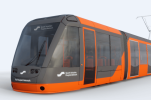
I'm a huge fan of the livery, perhaps not so much of the name... The livery seems to suggest EasyJet; even more so on 11709 with the white text. Perhaps 'South Yorkshire Easy Network' would've worked :D
Easy Group is very litigious.


The band formerly known as Easy Life have changed their name to Hard Life, after a threat of legal action by the brand owners of airline EasyJet.

Last year, the indie band said EasyGroup was suing them because their name was too similar.

"We felt angry and powerless," frontman Murray Matravers told BBC News. "But if our name affects them that much, I'll walk away from it - because it's not worth it."

EasyGroup has said it would have been "unfair" to let the band use the Easy brand name without royalty payments.
 
Last edited:

TheGrandWazoo

Veteran Member
Joined
18 Feb 2013
Messages
23,023
Location
Somerset with international travel (e.g. across th
London has had that for the last decade, but that followed 15 years where the number of buses running in London went up by more than 30%.

Many areas of the country have had this since the 80s.
London did record increases in patronage but only in tandem with substantial investment. Once the financial stresses began to be experienced, patronage decline and cuts came along. The point is that you need the money to do it and reducing the operators' margin from 12% to 6% isn't going to pay for much.
 

ALEMASTER

Member
Joined
18 Aug 2011
Messages
488
London did record increases in patronage but only in tandem with substantial investment. Once the financial stresses began to be experienced, patronage decline and cuts came along. The point is that you need the money to do it and reducing the operators' margin from 12% to 6% isn't going to pay for much.
I'd also read London saw patronage fall when Boris Johnson as mayor removed a lot of bus priority making journeys slower and less reliable.
 

TheGrandWazoo

Veteran Member
Joined
18 Feb 2013
Messages
23,023
Location
Somerset with international travel (e.g. across th
I'd also read London saw patronage fall when Boris Johnson as mayor removed a lot of bus priority making journeys slower and less reliable.
That was also a factor - you remove bus priority and/or dedicate more road space to cycles so buses are in more congestion and road speeds slow. That makes it less attractive so that's a financial impact. Moreover, it means you either have more resources to do the same headway, or you reduce frequencies to maintain the same resource level but with fewer passengers.

Manchester has already had to increase resources on certain routes to maintain frequencies; traffic congestion does not discriminate between a privately operated and a publicly franchised service.
 

Steve440

Member
Joined
21 Jul 2023
Messages
168
Location
Huddersfield
That was also a factor - you remove bus priority and/or dedicate more road space to cycles so buses are in more congestion and road speeds slow. That makes it less attractive so that's a financial impact. Moreover, it means you either have more resources to do the same headway, or you reduce frequencies to maintain the same resource level but with fewer passengers.

Manchester has already had to increase resources on certain routes to maintain frequencies; traffic congestion does not discriminate between a privately operated and a publicly franchised service.
In theory, because it is the authority rather than a private company that takes the financial hit due to congestion, then they will be more likely to attempt to do something about it. I emphasize 'in theory'.
 

TheGrandWazoo

Veteran Member
Joined
18 Feb 2013
Messages
23,023
Location
Somerset with international travel (e.g. across th
In theory, because it is the authority rather than a private company that takes the financial hit due to congestion, then they will be more likely to attempt to do something about it. I emphasize 'in theory'.
Yeah.... you'd like to think that but as we've seen in London (and Manchester to a much lesser degree), it doesn't always pan out that way. Politics come into play.

In a partnership world or a non-franchised environment, some operators do try to influence local authorities as it is in their interest. With franchising, the operators don't have any skin in that particular game. They are just a contractor providing a service so if congestion gets worse, it's not their problem.
 

Teapot42

Member
Joined
12 Jan 2022
Messages
1,140
Am I the only one who's not that impressed by the livery? To me it feels a bit like the new Stagecoach one, bland and with questions how well it will actually work in practice. The confusion over whether the livery will be that on 11709 or on the artwork released doesn't help.

From what I've seen at least, franchising can only be positive for the people.
I'll reserve judgement until we find out what is happening with cross-border fares! While any jeopardy there is more likely to be to those who live outside the SYMCA area (and therefore easier to dismiss as collateral damage) there are some not insignificant outflows - plenty seem to travel from Sheffield to Chesterfield for work for instance.
As ever, I'm curious about the depot winners.
I'm a little confused what's happening with depots. The large ones obviously are being bought by the authority and franchised, but I thought I'd heard Halfway wasn't? As Wellglade operate Flixbus services out of there it would be a tricky decision by the council to buy it and in effect force them out of that contract. (Or at least complicate things by meaning they need to find another operating base)

Are there any others staying in private hands?

I also thought I'd read that some services weren't necessarily being franchised in to a depot-based package, so for example things like the 218 might be open to High Peak to bid for from Baslow if Wellglade did lose Halfway.
 

mattb7tl

Member
Joined
1 Jan 2022
Messages
267
Location
Huddersfield
You have basically got two ways to improve bus services and both cost serious money.

One is partnerships. Currently branded as Enhanced Partnership Plus, which is just a rebrand of Enhanced Partnerships, which were a rebrand of Quality Bus Partnerships, which themselves were rebranded from voluntary partnerships. They been tried repeatedly, cost a lot of public money, and did not deliver lasting results.

just one more partnership bro. i promise just one more partnership. please just one more partnership. it will fix everything. just need one more partnership. it will work this time.

The other option is franchising. It is not a silver bullet, but it is a proven system with multiple examples of long term stability and growth. Partnerships, on the other hand, tend to spike and then collapse. We have seen the cycle before with previous partnerships, rapid improvement, followed by harsh decline within a decade.

History shows that franchising is the way forward and the large transition costs will be worth it in the long run.
 

sytransport

Member
Joined
15 Dec 2023
Messages
79
Location
Sheffield
You have basically got two ways to improve bus services and both cost serious money.

One is partnerships. Currently branded as Enhanced Partnership Plus, which is just a rebrand of Enhanced Partnerships, which were a rebrand of Quality Bus Partnerships, which themselves were rebranded from voluntary partnerships. They been tried repeatedly, cost a lot of public money, and did not deliver lasting results.

just one more partnership bro. i promise just one more partnership. please just one more partnership. it will fix everything. just need one more partnership. it will work this time.

The other option is franchising. It is not a silver bullet, but it is a proven system with multiple examples of long term stability and growth. Partnerships, on the other hand, tend to spike and then collapse. We have seen the cycle before with previous partnerships, rapid improvement, followed by harsh decline within a decade.

History shows that franchising is the way forward and the large transition costs will be worth it in the long run.
Both have their pros and cons but fundamentally all you’re doing with franchising is paying the private companies to run what they already run. The issue with enhanced partnerships is there’s never been enough power for LAs to enforce certain rules.

South Yorkshire is an excellent example of how not to do an enhanced partnership. Screw up the network and blame the operators.
 

aron2smith

Member
Joined
20 Jan 2025
Messages
699
Location
London
The point is that it is a central government dowry to get things set up. Then you have to manage on your own or hope that you get some more cash from central government.

Remember that London has to spend over £1bn on supporting its bus network, is trimming it back with every revision (and passenger numbers are falling so that they are back to 2014 levels). And of course, it can only spend that money because it's robbing the tube.
This is why the expectation should be for HM Treasury to relinquish some of its powers to the regions/ combined authorities, so they can raise and keep their own taxes, borrow, subsidise etc. I get the impression from some whenever they mention taxpayers, is that taxpayers should not fund anything. But we all need a well functioning country with decent services for everyone to prosper and be productive. Transport is a key part of that.

Also every time you say TFL is losing a billion on its buses, I say it's covering 70% of its costs despite the slow speeds and comprehensive nature of the services plus of course all the concessions that exist in London but no where else. It raises more money than is given credit. It will be interesting to see how the franchised networks across the north perform after say 5 years of operation.

It and all transport authorities need to diversify how they fund their transport. Fares alone never provide stable enough funding.
Remember that most passengers aren't bothered by having a network. They want a bus that will actually turn up when it's supposed to and doesn't get stuck in traffic.
I don't really buy that. Make it awkward and inconvenient in both fares and the timetable to change buses, trains or anything else, provide awful transfer areas and people will only want direct services. Obviously, this isn't the best use of resources if going for a comprehensive and integrated transport system with decent coverage. Not sure if you've heard of the 'mini-Switzerland' proposal which aims to build an integrated and well connecting network in the Peak District?

== Doublepost prevention - post automatically merged: ==

History shows that franchising is the way forward and the large transition costs will be worth it in the long run.
Unsurprising given councils and mayors can't genuinely improve what they don't control or own, especially in the long term. If it were me, I would just cut out the middleman and municipally run the buses instead.
 
Last edited:

mattb7tl

Member
Joined
1 Jan 2022
Messages
267
Location
Huddersfield
Both have their pros and cons but fundamentally all you’re doing with franchising is paying the private companies to run what they already run. The issue with enhanced partnerships is there’s never been enough power for LAs to enforce certain rules.

South Yorkshire is an excellent example of how not to do an enhanced partnership. Screw up the network and blame the operators.
Even assuming the regions partnerships have been poor, assuming partnerships were genuinely capable of delivering, we would have at least one long term success story by now after the many different flavours of partnership. Almost every major authority has tried them in one form or several forms over decades.

Franchising reintroduces controlled competition, the thing deregulation was supposed to deliver but largely did so temporarily. Operators compete for contracts rather than the road, and it has lower barrier for entry, which changes incentives completely, especially since the alternative is walking away with nothing. It is this pressure which drives costs down to what their shareholders will bear, with the surplus captured by the authority instead of operators.

Even the most average franchising systems essentially cap operator returns through competitive tendering with any surplus flowing back to the authority for reinvestment. It also has a compounding effect as the more attractive you make the network, through bus priority, reliability improvements, and reputation, the more bidders you attract. Increased competition drives contract prices down, while higher ridership boosts fare revenue. That combination can end up snowballing to the point where you create a feedback loop.
 

Andyh82

Established Member
Joined
19 May 2014
Messages
4,608
You have basically got two ways to improve bus services and both cost serious money.

One is partnerships. Currently branded as Enhanced Partnership Plus, which is just a rebrand of Enhanced Partnerships, which were a rebrand of Quality Bus Partnerships, which themselves were rebranded from voluntary partnerships. They been tried repeatedly, cost a lot of public money, and did not deliver lasting results.

just one more partnership bro. i promise just one more partnership. please just one more partnership. it will fix everything. just need one more partnership. it will work this time.

The other option is franchising. It is not a silver bullet, but it is a proven system with multiple examples of long term stability and growth. Partnerships, on the other hand, tend to spike and then collapse. We have seen the cycle before with previous partnerships, rapid improvement, followed by harsh decline within a decade.

History shows that franchising is the way forward and the large transition costs will be worth it in the long run.
Despite public opinion that there are constant changes, there is quite a lot of long term stability even with the commercial networks. I’m not too familiar with South Yorkshire, but I know in West Yorkshire you can trace quite a lot of services all the way back to 1986, some trace back much further

As I’ve said before, what happens when public budgets are stretched. Like we are seeing now in London where the only way to improve services in outer London is to cut services in inner London. Just like how various councils cut budgets for tendered services, I can see them cutting budgets for franchised networks at some stage in the future.

Whereas now they’d blame the private operators, now they’d just blame central government/the previous government as appropriate
 

mattb7tl

Member
Joined
1 Jan 2022
Messages
267
Location
Huddersfield
Despite public opinion that there are constant changes, there is quite a lot of long term stability even with the commercial networks. I’m not too familiar with South Yorkshire, but I know in West Yorkshire you can trace quite a lot of services all the way back to 1986.

As I’ve said before, what happens when public budgets are stretched. Like we are seeing now in London where the only way to improve services in outer London is to cut services in inner London. Just like how various councils cut budgets for tendered services, I can see them cutting budgets for franchised networks at some stage in the future.

Whereas now they’d blame the private operators, now they’d just blame central government/the previous government as appropriate
Public funding constraints hit both systems in largely the same way assuming the money is not there the network has to be adjusted to fit the budget. This is true whether it is deregulated or franchised. In both systems, cuts fall on supported services or journeys. Services that are commercial, or, under franchising, generating a surplus are unlikely to be reduced.

The key benefit of franchising is the control over that resilient commercial network. You can extract more value from it through competitive tendering. For example, a route with high levels of bus priority is more attractive to operators, more bidders are confident they can run it reliably and with lower risk of fines. This increases competition and reduces the price of a tender. It makes bus priority more effective under franchising than deregulation. The result is a greater surplus for the authority, which can then be reinvested into service provision, further priority, or other improvements.

It also enables cross subsidy to damage control supported services or journeys during budget difficulties. However,the same routes which are stable now will be stable under franchising but with the benefits mentioned above.
 

stevieinselby

Established Member
Joined
6 Jan 2013
Messages
1,724
Location
Selby
Both have their pros and cons but fundamentally all you’re doing with franchising is paying the private companies to run what they already run.
That isn't the case. With franchising, you enforce cross-subsidisation between profitable routes and loss-making routes.
 

TheGrandWazoo

Veteran Member
Joined
18 Feb 2013
Messages
23,023
Location
Somerset with international travel (e.g. across th
One is partnerships. Currently branded as Enhanced Partnership Plus, which is just a rebrand of Enhanced Partnerships, which were a rebrand of Quality Bus Partnerships, which themselves were rebranded from voluntary partnerships. They been tried repeatedly, cost a lot of public money, and did not deliver lasting results.

just one more partnership bro. i promise just one more partnership. please just one more partnership. it will fix everything. just need one more partnership. it will work this time.
Even assuming the regions partnerships have been poor, assuming partnerships were genuinely capable of delivering, we would have at least one long term success story by now after the many different flavours of partnership. Almost every major authority has tried them in one form or several forms over decades.

Have you not heard of Brighton, or Portsmouth, or Leicester?

Not all partnerships are the same shape, nor are they executed in the same way so to say no partnership ever works or can ever work is simply not true.

There are two in Yorkshire that didn't work. The one in West Yorkshire was in Leeds and was so poorly constructed by the PTA... the same people who will be responsible for the Weavers Network... that it didn't bake in the commitments from the operators far enough. The South Yorkshire one wasn't really a partnership agreement at all. It was more a means of brokering agreements between operators and whilst there were some bits of window dressing with some crap branding, the execution of it was appalling from top to bottom.

Meanwhile, in Portsmouth, they are now experiencing bus patronage growth outstripping the national picture and are now above pre-Covid levels. That partnership began with the Zip scheme in 2008.

So does a badly constructed partnership work... Of course not. It is interesting that it's these non-metropolitan conurbations that do seem to be able to construct a working partnership where infrastructure IS effectively tied into commitments on investment and marketing.

I don't really buy that. Make it awkward and inconvenient in both fares and the timetable to change buses, trains or anything else, provide awful transfer areas and people will only want direct services. Obviously, this isn't the best use of resources if going for a comprehensive and integrated transport system with decent coverage. Not sure if you've heard of the 'mini-Switzerland' proposal which aims to build an integrated and well connecting network in the Peak District?
Sorry that you don't buy that but it is the reality. As I said, most passengers are literally getting the same bus every day, into school, work or town and they then return home; they aren't making multi-leg journeys. Yes, in certain tourist hotspots, like Lake District or Isle of Wight, it is different. And rather interestingly, you mention the Lake District which in regulated days had a much poorer service than it does now with those evil commercially minded people.

Corridor19822026
Workington to Keswick60 mins (no evening, 2 journeys Sun)30 mins (60 eve/Sun)
Keswick to Penrith120 mins (1 evening, 4 journeys Sun)30 mins (60 eve/Sun
Keswick to Carlisle4 journeys (M-F only to Wigton only)6-7 journeys (all days)
Keswick to Borrowdale70 mins (6 journeys Sun)30/40 mins (all days)
Keswick to ButtermereDid not exist60 mins (all days)

It is one of the best examples of the deregulated industry actually growing the market and network but it is an outlier in so many ways.

This is why the expectation should be for HM Treasury to relinquish some of its powers to the regions/ combined authorities, so they can raise and keep their own taxes, borrow, subsidise etc. I get the impression from some whenever they mention taxpayers, is that taxpayers should not fund anything. But we all need a well functioning country with decent services for everyone to prosper and be productive. Transport is a key part of that.

Also every time you say TFL is losing a billion on its buses, I say it's covering 70% of its costs despite the slow speeds and comprehensive nature of the services plus of course all the concessions that exist in London but no where else. It raises more money than is given credit. It will be interesting to see how the franchised networks across the north perform after say 5 years of operation.
I'm not wishing to doxx anyone but do you pay tax? It's really easy to say that there should be more taxation but people seldom think it should be them; always the fat cats or faceless corporations. Don't get me wrong - I think Amazon should pay their dues, and I take a perverse joy in seeing Isobel Oakeshott scurrying from Shaheds but we also need to be realistic and not blinding by ideological wishes. It was interesting when George Osborne, that well known anti-capitalist and social engineer, first volunteered this legislation. Call me a cynic but did he really have some Damascene conversion in relation to bus services? Especially as he was the architect of austerity and had been instrumental in reducing central government grants to local authorities. Or was it that they had decided that it was another way in reducing central government funding and, as we're seeing in London, they are now struggling to actually fund buses.

Every time I say that London is spending a £1bn on supporting its bus services, it's because it is a demonstrable fact. As are the falling passenger numbers, which are now contrary to the rest of the country. Having a shortfall of 30% of your costs is not exactly something to be giving credit for.

And remember that the Thatcher government increased central control on revenue raising via the Rates Act as local spending was getting out of hand.
As I’ve said before, what happens when public budgets are stretched. Like we are seeing now in London where the only way to improve services in outer London is to cut services in inner London. Just like how various councils cut budgets for tendered services, I can see them cutting budgets for franchised networks at some stage in the future.
Hence my comment to Aron about George Osborne.
Whereas now they’d blame the private operators, now they’d just blame central government/the previous government as appropriate
And this was the CamBorne playbook. Withdraw central funding and then say to the LAs... we will give you the local and democratic freedom to decide where the cuts will fall, safe in the knowledge that it would be the LAs taking the flak.

Blaming bus operators (don't get me wrong - some wanted blaming) was an easy target at times with those evil bus barons. Now the mayors are getting control... it'll be interesting to see how that goes.
The key benefit of franchising is the control over that resilient commercial network. You can extract more value from it through competitive tendering. For example, a route with high levels of bus priority is more attractive to operators, more bidders are confident they can run it reliably and with lower risk of fines. This increases competition and reduces the price of a tender. It makes bus priority more effective under franchising than deregulation. The result is a greater surplus for the authority, which can then be reinvested into service provision, further priority, or other improvements.
A beautiful sentiment but it's not true.

Operators will simply cost up the resources as they have been told to and put a margin on within which they will have a small element for non-compliance. They won't go, route by route, looking at potential hold ups and the propensity to pay fines.

Also, the idea that there will be some massive race to the bottom on margin... Again, it's a procurement person's erotic fantasy to a large extent. The reality is that all the operators will have minimum hurdle rates to hit for their investors - a pension fund or PE group isn't going to invest its money into a bus group for a 3% return if they can get 4% sat in the bank or 6% in a very boring manufacturer of consumer goods. So there's a floor and the operators will be relatively close on margin. We see that in London - they're all around 6-7%.

Compare that with what they're making currently in these areas (which is nearer 12%) and that delta (or surplus) isn't actually that large. For instance, and getting back to SY, First South Yorkshire made £5.9m profit which should be a fair benchmark (no one offs to confuse things) and so a profit of 9.6%. Therefore, you might have less than £3m from getting rid of First and getting Go Ahead as a contractor.

For me, the real test of franchising is whether the Authority now has enough of a vested interest to actually improve day to day services and improve things on a like for like basis. If the 8 or 36 in Manchester has 5% more passengers on the daytime journeys than it had, because they've been able to improve bus priority and penalise bad parking, that's a success. If it's 5% more but because they're spending a fortune on doubling evening services, that's less so. Bee Network claimed a 14% increase in patronage in the first 18 months across the first two tranches. However, contrast that against an overall increase in bus patronage overall of 4% across England (excl London) and that Greater Manchester's post Covid recovery had been slower than average.

Franchising is here to stay and expanding. I have my doubts but it will be interesting to see how it all pans out. However, it is dependant on local authorities grasping the nettle of increasing congestion and consistent financing and those are important irrespective of the usual statements on network benefits and unified branding that some enthusiasts always espouse.

 

domcoop7

Member
Joined
15 Mar 2021
Messages
273
Location
Wigan
The result is a greater surplus for the authority, which can then be reinvested into service provision, further priority, or other improvements.

It also enables cross subsidy to damage control supported services or journeys during budget difficulties. However,the same routes which are stable now will be stable under franchising but with the benefits mentioned above.
And yet every franchising system in operation (Greater Manchester) or proposed (all the others) have no plans whatsoever to increase services by way of reinvesting funds and indeed they are all predicated entirely on receiving hundreds of millions of pounds of subsidy from central Government and an increase in Council Tax (in my case Greater Manchester's share of the bill just went up by 12%).

That's just to keep even with what we have today by the way. Notably under deregulation, the likes of First can (and did) lose money big time if they get things wrong. Under the Peoples' Soviet Socialist Network, the private multinational bus companies who will win the franchises are guaranteed profit - win, lose or draw.
 

Leedsbusman

Member
Joined
9 May 2021
Messages
699
Location
Layton
And yet every franchising system in operation (Greater Manchester) or proposed (all the others) have no plans whatsoever to increase services by way of reinvesting funds and indeed they are all predicated entirely on receiving hundreds of millions of pounds of subsidy from central Government and an increase in Council Tax (in my case Greater Manchester's share of the bill just went up by 12%).

That's just to keep even with what we have today by the way. Notably under deregulation, the likes of First can (and did) lose money big time if they get things wrong. Under the Peoples' Soviet Socialist Network, the private multinational bus companies who will win the franchises are guaranteed profit - win, lose or draw.
It’s rather odd that so long into GM’s franchise scheme the 81 and 112-118 still compete. Likewise 38 with 36/37 and 41 with 43 and even the Magicbus services remain!
 

mattb7tl

Member
Joined
1 Jan 2022
Messages
267
Location
Huddersfield
Have you not heard of Brighton, or Portsmouth, or Leicester?

Not all partnerships are the same shape, nor are they executed in the same way so to say no partnership ever works or can ever work is simply not true.

There are two in Yorkshire that didn't work. The one in West Yorkshire was in Leeds and was so poorly constructed by the PTA... the same people who will be responsible for the Weavers Network... that it didn't bake in the commitments from the operators far enough. The South Yorkshire one wasn't really a partnership agreement at all. It was more a means of brokering agreements between operators and whilst there were some bits of window dressing with some crap branding, the execution of it was appalling from top to bottom.

Meanwhile, in Portsmouth, they are now experiencing bus patronage growth outstripping the national picture and are now above pre-Covid levels. That partnership began with the Zip scheme in 2008.

So does a badly constructed partnership work... Of course not. It is interesting that it's these non-metropolitan conurbations that do seem to be able to construct a working partnership where infrastructure IS effectively tied into commitments on investment and marketing.
Brighton's success is largely attributable to Go-Ahead, not the partnership. Not all areas can win the bus company lottery and inherit an operator with that kind of motivation. Replicating Brighton requires replicating Go-Ahead, and that is not a transferable model under deregulation.

Leicester's network remains deeply subpar. It has done nothing that has not been attempted before and is already following a pattern we have seen repeatedly, rapid early improvements generating goodwill and headlines, followed by stagnation and collapse within a decade. The partnership structure has not changed the underlying commercial incentives, so why would the outcome be any different this time? Green buses, frequency, bus priority, sounds very familiar to the Leedscity!

Portsmouth. Yes, patronage is growing, but look at what they are actually delivering. Portsmouth is one of the densest urban areas in England outside London, and the frequency levels provided are still the bare minimum operators can sustain their market position on. That is not a success story. That is rent seeking. Frequency as a function of market power, not market demand. The demand and the density are there to justify far more, and the operators know it, they simply have no competitive pressure to act on it.

West Yorkshire partnerships were not poorly constructed by the authority. In practice, the bus companies told the authority exactly what commitments to build or fund, at considerable public expense, and the results did not hold. That is not a failure of the authorities ambition, it is a failure of the operators credibility.

The fundamental issue is this bus companies did not build our networks, they bought them. They have no meaningful track record of growing patronage, developing markets, or constructing genuinely competitive services from the ground up. Yet somehow they continue to be treated as the experts in the room when they are obviously not.

However, contrast that against an overall increase in bus patronage overall of 4% across England (excl London) and that Greater Manchester's post Covid recovery had been slower than average.
On the metropolitan comparison this is a point that keeps getting glossed over and it matters enormously. Professionals separate metropolitan and non metropolitan regions in analysis for good reason. The density, trip patterns, commercial viability, and baseline recovery trajectories are categorically different environments. Applying Manchester benchmarks to a non metropolitan context and drawing conclusions about what franchising or partnership can or cannot deliver here is is comparing instruments that are not measuring the same thing. Manchester is the fastest growing metropolitan county for reference.
 

EMU303

Member
Joined
24 Aug 2016
Messages
299
Are there any definite figures yet for any of the English/Welsh franchises? Passenger volume changes, set up costs, annual running costs, service level improvements etc, or is it too soon? Is there going to be a standard set of metrics to allow comparisons or is that too simplistic?

I live in the Glasgow area and the Scottish government seems deliberately slow in moving to franchising, perhaps waiting to see what happens in England and Wales before proceeding or not.

My impression is that if congestion is not aggressively challenged then franchising will make little difference. Operators will be guaranteed their margin regardless of passenger numbers and local authorities will pick up the bill, at a time when all departments are claiming underfunding, and thanks to the idiot across the ocean things may get a lot worse.

Personally, I’d rather the Scottish government continue with a wait and see policy, especially if the likes of Strathclyde Passenger Transport were involved in franchising. The fact that it has taken them until this month to introduce contactless payment for a 6.5 underground “system” of 15 stations speaks to their glacial pace in implementing improvements which other cities have long since completed.
 

TheGrandWazoo

Veteran Member
Joined
18 Feb 2013
Messages
23,023
Location
Somerset with international travel (e.g. across th
Brighton's success is largely attributable to Go-Ahead, not the partnership. Not all areas can win the bus company lottery and inherit an operator with that kind of motivation. Replicating Brighton requires replicating Go-Ahead, and that is not a transferable model under deregulation.

Leicester's network remains deeply subpar. It has done nothing that has not been attempted before and is already following a pattern we have seen repeatedly, rapid early improvements generating goodwill and headlines, followed by stagnation and collapse within a decade. The partnership structure has not changed the underlying commercial incentives, so why would the outcome be any different this time? Green buses, frequency, bus priority, sounds very familiar to the Leedscity!

Portsmouth. Yes, patronage is growing, but look at what they are actually delivering. Portsmouth is one of the densest urban areas in England outside London, and the frequency levels provided are still the bare minimum operators can sustain their market position on. That is not a success story. That is rent seeking. Frequency as a function of market power, not market demand. The demand and the density are there to justify far more, and the operators know it, they simply have no competitive pressure to act on it.

West Yorkshire partnerships were not poorly constructed by the authority. In practice, the bus companies told the authority exactly what commitments to build or fund, at considerable public expense, and the results did not hold. That is not a failure of the authorities ambition, it is a failure of the operators credibility.

The fundamental issue is this bus companies did not build our networks, they bought them. They have no meaningful track record of growing patronage, developing markets, or constructing genuinely competitive services from the ground up. Yet somehow they continue to be treated as the experts in the room when they are obviously not.
In Brighton, the partnership certainly helped in having a progressive bus company...and a progressive local authority who were prepared to make some decisions. It helped that the local authority (and the local politics generally) are more progressive, greener and left leaning. That's what makes a good partnership.

As for Leicester.... sub-par? On who's measure? And of course, there is a lot of "stuff" at the start... You're criticising rapid improvements and initiatives - that is what is needed because investment in electrification and infrastructure has to come at the start. Yes, it gets rather boring as time goes on because you're embedding behavioural changes.

I have seen what they are actually delivering in Portsmouth. In fact, you might consider it amazing that despite the parlous level of frequencies that you seem to think exist, people have moved back on the bus faster than virtually anywhere in the country. Load factors are, of course, a key consideration. If there's a load factor of 65% and it increases to 70%, then why would the frequency increase. However, if it moves to 75%...then the commercial dynamics change and you might.

West Yorkshire - so the bus companies asked for everything, got everything they wanted from the local authorities, and you think that there were no issues on the LA side. I mean, if the operators request X and the authority acquiesces, and then the "results don't hold" (whatever that means) then you have to ask what assurances were in place from the authority to ensure that the results did hold? Or what would happen if they didn't hold? Is that not an indication that the partnership wasn't well constructed?

So did bus companies build our networks? Of course they bought them but networks and the design of them are only ever the product of demand. Bus services don't exist in a vacuum and nor should they be pickled in aspic. That was part of the issue in the 1950s and 1960s when they didn't react to societal changes. By the time we reached the 1970s and 1980s, bus patronage was collapsing - that is absolute historic fact. There was a total shock with deregulation but that stabilised and we saw a levelling out until 2010. You might argue that it was because we reached rock bottom but as we saw, austerity proved that wasn't the case. And, as I say, you can't look at bus patronage in isolation and just blame Arriva (tempting as that is). I was back in the North East late last year and in the flesh pot of Bishop Auckland - bus services are a shadow of what they were when OK and United (and others) operated depots there, and yes, there is culpability from Arriva. However, I looked at the Blade Runner-esque Newgate Street... the closed pubs, the closed shops, the desolation of a town whose heart has been ripped out from deindustrialisation and then the creation of a huge out of town development with plentiful shopping and perhaps it explains some of what has happened.

I actually think that Go Ahead and Stagecoach have broadly been reasonably good in developing their businesses (though it isn't uniform). Covid did turn some things on its head (and I have concerns about Stagecoach and it's path) but if you look at their provincial operations... some were basket cases when they bought them, and had been in freefall for years.

On the metropolitan comparison this is a point that keeps getting glossed over and it matters enormously. Professionals separate metropolitan and non metropolitan regions in analysis for good reason. The density, trip patterns, commercial viability, and baseline recovery trajectories are categorically different environments. Applying Manchester benchmarks to a non metropolitan context and drawing conclusions about what franchising or partnership can or cannot deliver here is is comparing instruments that are not measuring the same thing. Manchester is the fastest growing metropolitan county for reference.
I am always keen to ensure that comparisons are accurate otherwise the high patronage growth was, I think, somewhere odd like Rutland.
However, even within an area, there are huge disparities. After all, Manchester (the city) is growing like topsy, and the financial health reflects that. Then you have Bolton, Bury and Rochdale - outwardly very similar and yet they are very different and nothing like Manchester. Manchester - happy, vibrant and affluent with busy nightlife and strong retail and employment (and with a strong western bias in terms of growth and affluence) compared with Rochdale - darkness, vape shops and nail bars.

I'm not certain anyone is comparing Manchester with Wiltshire so not sure where these inappropriate benchmarks are coming from.
 

Top