• Our new ticketing site is now live! Using either this or the original site (both powered by TrainSplit) helps support the running of the forum with every ticket purchase! Find out more and ask any questions/give us feedback in this thread!

TfW class 398 Stadler Citylink tram trains

stadler

Established Member
Joined
5 Jun 2023
Messages
3,304
Location
Horsley
This was not the case during the door test runs, the gaurd will not be closing their local door as per XC, and the driver will be responsible for closing them all. The guard must ensure they are within the train after giving the 1-2 signal to the driver. It is totally up to the driver to observe the monitor and carry out the remainder of the disptach process. The 231/756 need a software modifcation as currently they need to return to depot to have door modes changed via a USB. It has been mentioned a switch will probably be retrofitted.

Also the DRI agreement currently does not cover drivers opening doors on the VOG metro, so Aslef have asked for more cash for the April pay deal to have this amended :lol:
Ah thank you for the information. In that case would it not just be simpler to use full guard control operation with the guard both opening and closing the doors and despatching just like on the 150s and 197s and 231s and all other TFW stock. That seems like a far simpler option than this new six bell method and doing all this retrofitting and making new agreements with the unions. I suppose having the driver open the doors will save a bit of dwell time but the question is whether it is worth all this hassle.

I am also sure this new six bell guard method is bound to occasionally result in guards being left behind at stations if they step off quickly for some reason after giving the bell code! There is no way for the driver to confirm that the guard is on the train after the doors close!

Is it planned for the 231s to eventually switch to this new method too? The documents only mention 398s and 756s but i would be surprised if the similar 231s will not also get this method?
 
Sponsor Post - registered members do not see these adverts; click here to register, or click here to log in
R

RailUK Forums

Falcon1200

Established Member
Joined
14 Jun 2021
Messages
6,593
Location
Neilston, East Renfrewshire
So despite Class 398 being glorified trams, every service will have a Guard on board? And are there any other such vehicles in use, anywhere, which require 2 members of operational staff?
 

stadler

Established Member
Joined
5 Jun 2023
Messages
3,304
Location
Horsley
So despite Class 398 being glorified trams, every service will have a Guard on board? And are there any other such vehicles in use, anywhere, which require 2 members of operational staff?
Yes a guard will be required on every service. Sheffield has a conductor onboard all of their very similar Class 399 tram trains and their Siemens Duewag trams. Although in that case it is mainly for revenue collection rather than being a safety critical guard role and they have no involvement in anything other than selling tickets. TFW are probably unique in being the only operator of tram train vehicles in the world which require a full safety critical guard onboard and can not run without one.
 

VR494

Member
Joined
22 Jan 2026
Messages
237
Location
United Kingdom
Ah thank you for the information. In that case would it not just be simpler to use full guard control operation with the guard both opening and closing the doors and despatching just like on the 150s and 197s and 231s and all other TFW stock. That seems like a far simpler option than this new six bell method and doing all this retrofitting and making new agreements with the unions. I suppose having the driver open the doors will save a bit of dwell time but the question is whether it is worth all this hassle.

I am also sure this new six bell guard method is bound to occasionally result in guards being left behind at stations if they step off quickly for some reason after giving the bell code! There is no way for the driver to confirm that the guard is on the train after the doors close!

Is it planned for the 231s to eventually switch to this new method too? The documents only mention 398s and 756s but i would be surprised if the similar 231s will not also get this method?
The system design is similar and based around to the operation on the merseyrail 777, although tfw will use a buzzer to signal to the driver.

All tests have shown the times to be much quicker if the driver was to release and the gaurd close. However, the powers above are still focused on this mehtod of work. :|
Yes a guard will be required on every service. Sheffield has a conductor onboard all of their very similar Class 399 tram trains and their Siemens Duewag trams. Although in that case it is mainly for revenue collection rather than being a safety critical guard role and they have no involvement in anything other than selling tickets. TFW are probably unique in being the only operator of tram train vehicles in the world which require a full safety critical guard onboard and can not run without one.
James Price has stated all future tram extentions to the network will operate on DOO, however when under heavy rail conditions a guard will be provided. That's not to say in years to come when drivers are trained in dual competence they will not try and introduce this method of work further on the TAM lines to increase capacity.

TFW rail is also due to enter a new 10 year contract on 1 February 2026 away from the operator of last resort, a new unifrom for fronline staff is on the roll out and a careers website launching soon!
 

6opher

Member
Joined
4 Jul 2016
Messages
48
This is something many current train drivers may become upset about, and opens up the doors about whether they will retain ETDL compliance going forward with the CVL TAM lines planned to be a separate entity form the rest of the network.

Why would a driver be worried about retaining a ETDL? Still going to need one to drive on the current heavy rail lines. Edit: Actually, it’s a UK one that’s needed isn’t it so the below still applies.

The 398s have heavy rail bogies to allow them on those lines hence why they are hybrid units and not trams so I doubt anyone in the actual know is upset or concerned about anything.
 
Last edited:

VR494

Member
Joined
22 Jan 2026
Messages
237
Location
United Kingdom
Why would a driver be worried about retaining a ETDL? Still going to need one to drive on the current heavy rail lines.
The 398s have heavy rail bogies to allow them on those lines hence why they are hybrid units and not trams so I doubt anyone in the actual know is upset or concerned about anything.
It’s become apparent these things could potentially be operated without a driver needing a train driver’s license at all, even to go onto the TAM.

As per the Sheffield method and class 399, if a driver was not sign anything other than a 398 or drive a route that had certain elements of heavy rail not required to be learnt, such as absolute block signalling etc, then they can sit an enhanced course with an in house qualification to operate just over a piece of infrastructure.

let’s say Taffs well and Treherbert for instance were to become metro depots with a focus purely on 398 running, and not have any booked work over heavy network rail tracks or sign 756, they could end up loosing train driver status with the ORR.

There is far more to these 398’s than just a vanity project for the bay, and James Price has even stated he is intent on bringing down the cost per mile on the valleys.

Tfw has also recently opened a depot at Barry and the focus internally at the moment is route specific rostering taking the vast majority of TAM work out of Cardiff, Rhymney and Barry diagrams.
 
Joined
28 Oct 2017
Messages
253
All tests have shown the times to be much quicker if the driver was to release and the guard close. However, the powers above are still focused on this mehtod of work.
Is there evidence that Driver open is actually quicker in practice? It doesn't seem that way on Merseyrail, with very long waits between train coming to a stand and the doors being released.
 

vicbury

Member
Joined
17 Mar 2012
Messages
1,052
Location
Lydney
Is there evidence that Driver open is actually quicker in practice? It doesn't seem that way on Merseyrail, with very long waits between train coming to a stand and the doors being released.
I believe GWR's Turbos are driver open. They are noticeably quicker to release the doors at stations like Severn Tunnel Junction than TfW or CrossCountry. Far quicker than GWR's 158s too.
 

VR494

Member
Joined
22 Jan 2026
Messages
237
Location
United Kingdom
Is there evidence that Driver open is actually quicker in practice? It doesn't seem that way on Merseyrail, with very long waits between train coming to a stand and the doors being released.
On the proving runs we tried both methods and the proposed one was much slower than the guard dispatch in the usual way. I believe the Mersey rail method involves the TM using a card on a reader or a fob or tell the driver to close the doors? In my honest opinion the method proposed on the 398’s just won’t work, at few stations we couldn’t even see the train on the monitor properly. The degraded working method currently being proposed would see the guard taking back over the doors, so why RMT haven’t responded and put in a counter initiative I don’t know.

GWR do indeed have a driver release method of work on turbos and IET. The turbos do not have cameras or ASDO in operation at current, however some did receive monitors in the cabs. The IET fleet use a software based version of the ASDO and its operating off a database. Some GWR PMH trains stable on Canton over the weekend, and our drivers can only take in 158’s for them as we don’t sign turbo.

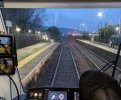
For those interested, below is what the current view looks like from the 398 cab on the network, as you can see it’s rather low compared to most stock and very exposed. I’m not sure how strong the body is, but I’d not want to come across a large tree to be honest!
 

Attachments

  • IMG_0002.jpeg
    IMG_0002.jpeg
    523.8 KB · Views: 186

tfw756rider

On Moderation
Joined
30 Nov 2024
Messages
1,995
Location
Wales (sometimes in England), thanks for replying!
This six bell method that TFW are proposing is very odd. The guard buzzes the driver to close the doors but does not fully despatch or give a right away buzzer. It is a very weird method half way between the ten bell despatch and the Southern OBS method. Why not just do full ten bell despatch and have the guard also give the right away and check the PTI and signals etc.

Traditional ten bell despatch (as currently used on the XC/220/221 and CH/165/168/172 and SN/377 trains (and also on GWR/165/166 and C2C/357 previously) would be a better option.
No Chiltern 172s since the end of April 2021.
 

Starmill

Veteran Member
Joined
18 May 2012
Messages
27,327
Location
Bolton
Is there evidence that Driver open is actually quicker in practice? It doesn't seem that way on Merseyrail, with very long waits between train coming to a stand and the doors being released.
It's dependent on the other standards, not who's doing it. For example guard release on SWR is capable of being much quicker than driver release is on say GTR. But GTR drivers releasing the doors is vastly quicker than Northern because the guard there is required to check the front and rear of the train from the platform (not the train) which often takes up to ten seconds for long trains.
 

AdamWW

Established Member
Joined
6 Nov 2012
Messages
6,006
It's dependent on the other standards, not who's doing it. For example guard release on SWR is capable of being much quicker than driver release is on say GTR. But GTR drivers releasing the doors is vastly quicker than Northern because the guard there is required to check the front and rear of the train from the platform (not the train) which often takes up to ten seconds for long trains.

Given that on TfW the guard has to check from the platform both when opening and closing, this requires time for the local door ramp to extend and the door to open, then on departure for the local door alarm to sound, the door to shut and the ramp to retract in addition to all of that separately for the passenger doors.

So driver operation ought to have the potential to reduce dwell time considerably.

(As would all the ramps being extended when the local door ramp extends, or maybe just at passenger doors where someone has already pressed the button. But the 231/756s don't work like that).
 

Starmill

Veteran Member
Joined
18 May 2012
Messages
27,327
Location
Bolton
So driver operation ought to have the potential to reduce dwell time considerably.
If done in a similar way to SWR, yes. If not it could actually make it worse. The flipside to that is 701s don't generally serve stations that aren't fitted with beacons. This avoids the need to mess around routinely overriding the SDO which adds extra time. The standard is wildly inconsistent though, even in similar operations. TPE just won't stop somewhere with a 185 for example if it doesn't have beacons, even though a three car 185 isn't over length, and doesn't have the driver release the doors. They used to call at Widnes occasionally, or commonly in disruption or short term. But now they'll just refuse. The platform hasn't got shorter or become more risky just because everywhere else in their stopping pattern has been fitted with beacons, but that's the way they apply it.
 
Last edited:

VR494

Member
Joined
22 Jan 2026
Messages
237
Location
United Kingdom
The proposed method on the 398's would see all the doors armed by the driver, this after passing over an ASDO (RFID) tag or beacon in the four foot. On the panel there are two buttons each side, one is yellow and the other white. One of these buttons when pressed will open all the doors and release, the other will just arm the doors. The steps only extend when the doors are in the open position. If the train stops short, the doors to the platfrom length will still release.

For depature the guard keys in and after checking the starting signal is clear and correct time, will signal 1-2. the driver then checks the starting signal and signals 1-2 back. When the driver presses the close button all the doors including the guards door will close. The driver then checks the PTI on the monitor and starting signal again before taking 50% power and then into 100% above 10 mph. Unlike the flirt units the 398's do not have a speed setting control, so the driver will have to manually control the train's speed.

In train mode the max speed is 62mph, and 45mph in tram mode. In tram mode brake lights illumiate to the rear and there are indicators controlled by a switch on the desk.

The flirt units were modified and have guard controls wired into the system. Unless the driver's desk is keyed in and configuration confirmed on TCMS the guard's buzzer is not auidable to the driver. Multiple panels can be keyed in and used at once too! They require a laptop to be pluged in to change the mode from guard to driver operation, something that will need to be changed if the propsed system is to come in. Yes, the 756 will be operated the same way going forward.

There are guards controls in the cabs of the flirts, however rear cab dispatch is prohibited at tfw.

I have a feeling in the near future the guard's role will become more of a primary revenue and customer service one, and a focus will be on ticket scans to prevent refunds etc. Gone are the days at tfw where the guards could put their feet up in the rear cab between stops, unless your on a 150, 158 or 197 of course :D
 

Bletchleyite

Veteran Member
Joined
20 Oct 2014
Messages
113,741
Location
"Marston Vale mafia"
Is there evidence that Driver open is actually quicker in practice? It doesn't seem that way on Merseyrail, with very long waits between train coming to a stand and the doors being released.

Merseyrail is very much atypical. In part this is because they are required to look in the cameras to check all doors are platformed before releasing, if I recall, with a "pause to check" being trained in.

On Chiltern and GTR (and Metrolink) the doors get released pretty much the second the wheels stop turning.

I don't know, however, if there are more incorrect releases on any given TOC with the different procedures. Nor which TfW are likely to choose.
 

Starmill

Veteran Member
Joined
18 May 2012
Messages
27,327
Location
Bolton
Merseyrail is very much atypical. In part this is because they are required to look in the cameras to check all doors are platformed before releasing, if I recall, with a "pause to check" being trained in.
In a way that's not that unusual, a pause to check internally as part of the standard is quite common. It's just that Northern, Merseyrail etc have decided to implement checking the length of the train as part of that process of releasing the doors. Most operators sensibly don't do that, because they assume that the driver's route knowledge will enable them to stop the train correctly every time. If the driver overshoots or stops short that's usually going to be reportable as a loss of control of the train, a fault with the power or braking, or an external issue such as exceptionally poor rail adhesion, needs to be investigated as potentially much more serious than just a door not on the platform opening. Avanti for example have long run a mixed fleet where the driver releases the doors and it's just assumed that as long as the driver stopped correctly it's safe to release the doors without checking that the doors are platformed first.
 

Mordac

Established Member
Joined
5 Mar 2016
Messages
2,386
Location
Birmingham
In a way that's not that unusual, a pause to check internally as part of the standard is quite common. It's just that Northern, Merseyrail etc have decided to implement checking the length of the train as part of that process of releasing the doors. Most operators sensibly don't do that, because they assume that the driver's route knowledge will enable them to stop the train correctly every time. If the driver overshoots or stops short that's usually going to be reportable as a loss of control of the train, a fault with the power or braking, or an external issue such as exceptionally poor rail adhesion, needs to be investigated as potentially much more serious than just a door not on the platform opening. Avanti for example have long run a mixed fleet where the driver releases the doors and it's just assumed that as long as the driver stopped correctly it's safe to release the doors without checking that the doors are platformed first.
This wastes so much time in the Cross-City line as the guard has to get out to make sure the platform is still there.
 

CarrotPie

On Moderation
Joined
18 Mar 2021
Messages
1,128
Location
‎
Sheffield has a conductor onboard all of their very similar Class 399 tram trains and their Siemens Duewag trams. Although in that case it is mainly for revenue collection rather than being a safety critical guard role and they have no involvement in anything other than selling tickets.
Yes, and they do (sometimes) run without them. Not having to faff with the doors also makes them significantly more helpful and effective in terms of fare collection - definitely better than a ticket machine!

Is there evidence that Driver open is actually quicker in practice? It doesn't seem that way on Merseyrail, with very long waits between train coming to a stand and the doors being released.
If drivers are allowed to check they're stopped at the mark as they come to a halt and then immediately release the doors, there needn't be more than a second or two's delay between the train stopping and the doors opening. The driver's just driven the length of the platform, so they know it's still there.

(As would all the ramps being extended when the local door ramp extends, or maybe just at passenger doors where someone has already pressed the button. But the 231/756s don't work like that).
Do 231s/756s (398s, even) have that lovely feature common on FLIRTs where you can press the button before the train stops and the doors will fly open as soon as they're released?

There are guards controls in the cabs of the flirts, however rear cab dispatch is prohibited at tfw.
Why?
 
Last edited:

TransportHub

Member
Joined
20 May 2015
Messages
178
Location
London
The GA Flirt operation seems in my opinion to be the best method of working. Drivers do all the doors and dispatch off the cameras, but importantly the guard (or whatever their title is) retains safety critical and dispatch competency. So when the cameras fail they can step right in. On routes like TAM where stops are frequent and ramps are not needed this means in normal working the guard can carry on with ticket sales/checks without having to head back to the doors every few minutes.

Everyone wins:
Dwell times are short
Second safety critical person retained
Passengers get the guards full attention without door distractions


This is all assuming I've remembered the GA method correctly!
 

AdamWW

Established Member
Joined
6 Nov 2012
Messages
6,006
Do 231s/756s (398s, even) have that lovely feature common on FLIRTs where you can press the button before the train stops and the doors will fly open as soon as they're released?

The 231s/756s don't appear to. And it would be nice if they did and the ramps could therefore be extended while the guard is making sure that nobody has nicked the platform since the last train came through.
 

Cardiff123

Established Member
Joined
10 Mar 2013
Messages
1,658
Location
South Wales
Why on earth do guards still need to get off the train first to check it's on the platform, when there are stop markers for drivers on every platform?
I'm assuming it's a way of working that has never changed since BR days and the RMT are insisting it's something that never changes?
 

CarrotPie

On Moderation
Joined
18 Mar 2021
Messages
1,128
Location
‎
Why on earth do guards still need to get off the train first to check it's on the platform, when there are stop markers for drivers on every platform?
I'm assuming it's a way of working that has never changed since BR days and the RMT are insisting it's something that never changes?
I was just wondering the same thing - how often does someone run off with a platform in between trains? :D

But seriously, if a driver has stopped at the right marker (which they should be able to tell pretty easly!), then there's no way all the doors aren't on the platform (barring SDO), surely?
 

800001

Established Member
Joined
24 Oct 2015
Messages
7,385
I was just wondering the same thing - how often does someone run off with a platform in between trains? :D

But seriously, if a driver has stopped at the right marker (which they should be able to tell pretty easly!), then there's no way all the doors aren't on the platform (barring SDO), surely?
Unless they stop at the wrong marker with the wrong formation.......eg a Hull trains 10 car formation stopped where a 5 car set should stop at Retford a few years ago, result, a couple of carriages off the platform.
 

CarrotPie

On Moderation
Joined
18 Mar 2021
Messages
1,128
Location
‎
Unless they stop at the wrong marker with the wrong formation.......eg a Hull trains 10 car formation stopped where a 5 car set should stop at Retford a few years ago, result, a couple of carriages off the platform.
That's why I said "stopped at the right marker". ;)

Southeastern have a big flip-pad thingy on their drivers' desks that a driver flips to show their train's length, so it's a simple matter of comparing the massive number on the driving desk to the massive number just outside your window. If you can do it as you stop, then the doors can be released as soon as the wheels stop turning.

Many German trains have an aural callout telling you to select a side for door release when you decelerate through 30(?) km/h, and then the doors automatically unlock as soon as the train stops, with the driver able to focus on getting an accurate stop in the meantime. For some reason, though, I doubt that'll be coming to the UK any time soon...
 

VR494

Member
Joined
22 Jan 2026
Messages
237
Location
United Kingdom
The GA Flirt operation seems in my opinion to be the best method of working. Drivers do all the doors and dispatch off the cameras, but importantly the guard (or whatever their title is) retains safety critical and dispatch competency. So when the cameras fail they can step right in. On routes like TAM where stops are frequent and ramps are not needed this means in normal working the guard can carry on with ticket sales/checks without having to head back to the doors every few minutes.

Everyone wins:
Dwell times are short
Second safety critical person retained
Passengers get the guards full attention without door distractions


This is all assuming I've remembered the GA method correctly!
Ramps are provided now in a few locations and will still be required at some TAM stations, even with the level boarding some platforms are not suitable without more money being spent.

GA has always run DOO on some routes, platforms and equipment were already there in most cases. The TAM has it's own issues, and is not really suitable for DOO. Colleagues on CVL do not want the doors, the DRI3 vote was put out to everyone and mainline out voted yes for the money knowing it would not affect them. It's a real mess to be fair!

Yes, and they do (sometimes) run without them. Not having to faff with the doors also makes them significantly more helpful and effective in terms of fare collection - definitely better than a ticket machine!


If drivers are allowed to check they're stopped at the mark as they come to a halt and then immediately release the doors, there needn't be more than a second or two's delay between the train stopping and the doors opening. The driver's just driven the length of the platform, so they know it's still there.


Do 231s/756s (398s, even) have that lovely feature common on FLIRTs where you can press the button before the train stops and the doors will fly open as soon as they're released?


Why?
Following numerous operational incidents where guards have been mistaken for giving the ready to start signal and the train has moved, leaving them behind on the platform in one instance. The cab doors are not interlocked.

== Doublepost prevention - post automatically merged: ==

Why on earth do guards still need to get off the train first to check it's on the platform, when there are stop markers for drivers on every platform?
I'm assuming it's a way of working that has never changed since BR days and the RMT are insisting it's something that never changes?
It's a rule book requirement to check the train is platformed before commissioning the doors. Some guards managers want both feet on the platfrom before the buttons are pressed :D
 
Last edited:

Carlisle

Established Member
Joined
26 Aug 2012
Messages
4,515
GA has always run DOO on some routes, platforms and equipment were already there in most cases. The TAM has it's own issues, and is not really suitable for DOO.
The only major additional equipment on GA going DOO will have been CSR radio (now GSMR), adequate station lighting, platform mirrors/monitors (now bodyside/platform cameras feeding in cab monitors)or CD/RA indicators at a few locations.
Are modern tram trains operating anywhere in the developed world with guards fully controlling the opening & closing of doors ? Ive not heard of any.
 
Last edited:

VR494

Member
Joined
22 Jan 2026
Messages
237
Location
United Kingdom
The only major additional equipment on GA going DOO will have been CSR radio (now GSMR), adequate station lighting, platform mirrors/monitors (now bodyside/platform cameras feeding in cab monitors)or CD/RA indicators at a few locations.
Are modern tram trains operating anywhere in the developed world with guards fully controlling the opening & closing of doors ? Ive not heard of any.
With the current levels of antisocial behaviour on the CVL, I’d personally not want to see a DOO service on these 398’s.

The lack of onboard toilets will cause enough problems, especially on event weekends. It’s been done to the death I know. But it cannot be compared to the London Underground, or a bus. In London, nearly every station has excellent facilities, you have bars and restaurants here, there and everywhere. A bus can also stop and offload its urgently needing passengers to a nearby bush.

It’s bad enough in a class 150 during the evening having various intoxicated individuals entering the vestibule and trying the cab door thinking it’s the toilet, only to urinate there and have it run into the cab under the door.

The current design would see services leaving Cardiff Queen street and your next toilet will be Tonypandy on a Treherbert service, or Abercynon for Merthyr/Aberdare. Pontypridd toilets are on the down platform and who’s going to walk over there! Throw in a fight onboard or delays, there’s going to be more than kebab and chips with curry sauce on the floors. The flirts toilets fill up so quickly they mays we’ll have a revolving door on them.

Taking away the guards, that’s something I’d not want to imagine to be fair on the valleys, and hopefully it never happens.

The only positive about the 398’s failure to compete test runs at the moment is we get to keep these excellent 756’s a little longer. Enjoy them while they last, you’ll miss them dearly when they’re gone.
 

CarrotPie

On Moderation
Joined
18 Mar 2021
Messages
1,128
Location
‎
With the current levels of antisocial behaviour on the CVL, I’d personally not want to see a DOO service on these 398’s.

Taking away the guards, that’s something I’d not want to imagine to be fair on the valleys, and hopefully it never happens.
Nobody has suggested that DOO would be a good idea for the valleys. I think what many think might be quicker is DCO (Driver Controlled Operation), where you have a guard - sorry, Train Manager - on board for revenue collection etc, but the doors are controlled entirely by the driver.
It's a rule book requirement to check the train is platformed before commissioning the doors.
And again, that doesn't need a guard to do it, nor does it need said guard to put any amount of feet on the platform in the process.

Some guards managers want both feet on the platfrom before the buttons are pressed :D
Let me guess, guards put one foot down but that wasn't enough to stop people nicking the platform under said foot? :lol: What utter twaddle...
 

WirralLine

Member
Joined
4 Jun 2024
Messages
527
Location
Wirral
And again, that doesn't need a guard to do it, nor does it need said guard to put any amount of feet on the platform in the process.


Let me guess, guards put one foot down but that wasn't enough to stop people nicking the platform under said foot? :lol: What utter twaddle...
At TfW there is no requirement for the guard to step down onto the platform unless route specific locations required it - eg Earlestown where you cant physically see the whole train without stepping out.

I have had to buzz 6 to draw forward a couple of times due to being stopped short - usually a rare 4 car formation stopping at the more commonly used 2/3 car stop boards, admittedly its quite obvious from the rear cab if there isnt a platform there! A couple of years ago I was working a 230 from the middle coach and stepped out at Buckley, realised the driver had stopped at the 197 board rather than 230 board, and the rear door was off the platform. If I hadn't checked properly and just released the doors resulting in a fall or worse, then it would probably be a worse outcome than an invite upstairs for a chat.

We were told during training its not just a case of checking the train is fully accommodated, but also looking for any reason why the doors shouldnt be opened. I remember during training I didn't check properly/was a little too quick to release and the instructor said "what about the man with the axe?" I responded with "what man" - "well if you checked the PTI properly you'd have seen him!"

99% of the time the drivers stop in the right place so a guard checking the train is accommodated is just a failsafe, but it does happen occasionally, drivers are human afterall and easily slip into autopilot. The same reason Merseyrail had such a spell of wrong side releases on 777s. Driver muscle memory releasing left hand side doors at every stop then going into autopilot and releasing left at a right hand platform. Hence the lengthy pause now before 777 doors are released, policy dictates drivers pause for 3 seconds or so before releasing.

It may all seem a faff or archaic, but if it prevents injury and/or death, its worth a few seconds to check.
 

Top