Before the National, ECW used a lot of vinyl on the later versions of the Bristol LH and VRT bus bodies, and I presume the RE as wellI wonder if the Leyland National was responsible for that trend? It seemed to me that you were most likely to find vinyl seats in them as compared to other buses.
Was that a case of Leyland giving the market what it wanted at the time, or Leyland dictating to the market what it would supply?

-
Our new ticketing site is now live! Using either this or the original site (both powered by TrainSplit) helps support the running of the forum with every ticket purchase! Find out more and ask any questions/give us feedback in this thread!
You are using an out of date browser. It may not display this or other websites correctly.
You should upgrade or use an alternative browser.
You should upgrade or use an alternative browser.
Quirky or quaint practices on buses in the past
- Thread starter Springs Branch
- Start date
- Status
- Not open for further replies.
Sponsor Post - registered members do not see these adverts; click here to register, or click here to log in
R
RailUK Forums

whoosh
Established Member
- Joined
- 3 Sep 2008
- Messages
- 1,902
I've heard similar at Crosville, they were having a new livery post deregulation, apparently someone said what type of Green should the livery be, another person said, what Brunswick wants, (as Brunswick was one of the senior managers at the time) & they went with Brunswick Green, i'm not sure if that story is true.
I once read it a book, I can't remember which tramway in Britain it was, a similar tale. The painter asked what colour he should paint the trams, and was told, "See Green," that being the General Manager's name, and he painted them sea green.
Both are plausible, but maybe at least one is just a joke!
Tom Gallacher
Member
Could have been worse. When Glasgow Corporation introduced one man operation in the late 60's they had a problem with the upper deck seats getting damaged, presumably due to the lack of a conductor on board. They're answer was to fit plastic seats on the upper deck. Cue complaints from passengers of sliding off the seats whenever the bus went round a corner. They soon replaced them with conventional seats.When some companies fitted buses with vinyl seats rather than fabric, & some had a mix of vinyl & fabric, vinyl seats weren't that great, guess they were a cheap alternative to fabric seats, they were freezing in winter & roasting hot in summer, similar issue to e - leather seats nowadays.

PG
Established Member
Edinburgh used leatherette on its buses up until 1978 then red vinyl from then on until the last batch of Olympians in 1997. Basic, but it did the job.
Thanks both of you, seems like it was perhaps a case of what the market wanted at the time.Before the National, ECW used a lot of vinyl on the later versions of the Bristol LH and VRT bus bodies, and I presume the RE as well
ISTR circa mid 90's the remaining Strathclyde Atlantean's with the large panoramic upper deck windows having the rear two rows upstairs being either plastic or un-upholstered seats.Could have been worse. When Glasgow Corporation introduced one man operation in the late 60's they had a problem with the upper deck seats getting damaged, presumably due to the lack of a conductor on board. They're answer was to fit plastic seats on the upper deck. Cue complaints from passengers of sliding off the seats whenever the bus went round a corner. They soon replaced them with conventional seats.

Leyland Bus
Established Member
The Metrobuses were the same, black fibreglass towards the back. Was forever painting them once bodymen had filled a litany of gouges....Thanks both of you, seems like it was perhaps a case of what the market wanted at the time.
ISTR circa mid 90's the remaining Strathclyde Atlantean's with the large panoramic upper deck windows having the rear two rows upstairs being either plastic or un-upholstered seats.

John Luxton
Established Member
A few Crosville buses also appeared in dark (brunswick) green and orange.I've heard similar at Crosville, they were having a new livery post deregulation, apparently someone said what type of Green should the livery be, another person said, what Brunswick wants, (as Brunswick was one of the senior managers at the time) & they went with Brunswick Green, i'm not sure if that story is true.
Green & Marigold was one livery Crosville used & was awful, used mostly for Runcorn Busway buses, another was Cream/Green/Red similar to South Wales Transport, i quite liked that livery made the buses look brighter, Brunswick Green & Cream was the main livery post deregulation

Whisky Papa
Member
- Joined
- 8 Aug 2019
- Messages
- 744
Similar in Manchester from the same era unfortunately, where hard seats often featured in the back few rows of the upper decks of the 'Mancunian' one person operated buses. I always thought they were made of fibre-glass, perhaps mistakenly, but they remained until the buses were withdrawn in the early 1980s.Could have been worse. When Glasgow Corporation introduced one man operation in the late 60's they had a problem with the upper deck seats getting damaged, presumably due to the lack of a conductor on board. They're answer was to fit plastic seats on the upper deck. Cue complaints from passengers of sliding off the seats whenever the bus went round a corner. They soon replaced them with conventional seats.

Flange Squeal
Established Member
- Joined
- 17 Jul 2012
- Messages
- 1,864
Stagecoach withdrew their 9 from the end of August last year. It still runs to the same times as their last iteration, but on Tuesdays only (was also Thursdays until New Year) and now operated by Cresta Coaches as 209.I remember the 203/204 Alton town service, later the 23/24, later the 9, now seemingly gone altogether, was one such example in NBC days. Only saw it once in the NBC era but recall that standing out.
Last edited:
mike57
Established Member
Used this route regularly until I left London in 1980. I used to think they were rarer than hens teeth, for a London bus route quite a sparse service. The village I moved to had two buses per week and I then realised the 189 wasn't that bad.route 189
Tom Gallacher
Member
Now I think about it they did retain the last couple of rows. Thinking was probably that only the neds ever sat there so no harm done.Thanks both of you, seems like it was perhaps a case of what the market wanted at the time.
ISTR circa mid 90's the remaining Strathclyde Atlantean's with the large panoramic upper deck windows having the rear two rows upstairs being either plastic or un-upholstered seats.
Statto
Established Member
Back in the day, with a operator, mostly municipal who only operated within the Town/City boundary, but you had places just the other side of the boundary that was served by another operator, like in Preston, Preston Bus operated in the Town/City boundary, but there is a couple of places just outside Preston like Penwortham & Longton but were served by Ribble buses, as they are in a different council area, South Ribble.
Likewise in Tyne & Wear, the PTE mostly operated services in the Newcastle, South Shields & Sunderland council areas (although the TWPTE had a couple of routes to Ponteland which is just over the county boundary in Northumberland), it was United & Northern that operated most of the other services.
Likewise in Tyne & Wear, the PTE mostly operated services in the Newcastle, South Shields & Sunderland council areas (although the TWPTE had a couple of routes to Ponteland which is just over the county boundary in Northumberland), it was United & Northern that operated most of the other services.

TheGrandWazoo
Veteran Member
Unless you had Joint Services agreements where the municipality and the country operator agreed to share revenues as services were extended over the boundary (often as post war development required) so there were agreements in Brighton, Portsmouth and Plymouth among others.Back in the day, with a operator, mostly municipal who only operated within the Town/City boundary, but you had places just the other side of the boundary that was served by another operator, like in Preston, Preston Bus operated in the Town/City boundary, but there is a couple of places just outside Preston like Penwortham & Longton but were served by Ribble buses, as they are in a different council area, South Ribble.
Likewise in Tyne & Wear, the PTE mostly operated services in the Newcastle, South Shields & Sunderland council areas (although the TWPTE had a couple of routes to Ponteland which is just over the county boundary in Northumberland), it was United & Northern that operated most of the other services.
Other instances were where PTEs purchased independents who weren’t tied to geographic boundaries so hence SYPTE ended up working into Goole IIRC
edwin_m
Veteran Member
Or several operators shared the route, each contributing some of the buses and (I presume) keeping the fares they took on board their own vehicles. I'm too young to remember this, but route 13/14 (ancestor of the 184) between Manchester and Saddleworth was apparently shared by three operators, and this even persisted into the PTE era with the service being resourced from the former Manchester and Oldham garages:Unless you had Joint Services agreements where the municipality and the country operator agreed to share revenues as services were extended over the boundary (often as post war development required) so there were agreements in Brighton, Portsmouth and Plymouth among others.
Other instances were where PTEs purchased independents who weren’t tied to geographic boundaries so hence SYPTE ended up working into Goole IIRC
Manchester's operation transferred from Queens Road to Rochdale Road garage in May 1956. Under SELNEC ownership, Rochdale Road garage closed in August 1970 and operation was transferred to Hyde Road. This move did lead to some strange unscheduled variations, with Manchester buses exploring parts of Saddleworth they never had before as the new crews grappled with the alien territory!
North Western was split up at the end of 1971 and the services in the PTE area transferred to SELNEC Cheshire. However, that division was merged with the Southern Division in 1973. This led to the closure of Oldham’s former North Western depot that year and a transfer of those workings to the erstwhile Corporation garage. Later that same year the service was renumbered as the 183.
Journeys on the 13 from Manchester had been worked by Manchester and Oldham, North Western working out as 14s and then returning from Uppermill as a 13. By 1976 the frequency on the 180/183/184 services had reduced from every 15 minutes to every 20 minutes by withdrawal of a journey on the 180 and retiming the 183 and 184. As a consquence the Manchester bus on the 183/184 left Manchester as a 184 and returned as a 183. This continued until January 1980 when the Hyde Road workings were also transferred to Oldham and Manchester garage involvement ceased.

13 & 183 - Manchester to Uppermill and Greenfield via Scouthead
The 13 and 183 service has a particularly complicated and interesting history. Oldham Corporation were given MoT approval to extend their Chapel Road to Greenacres service to Scouthead (Star Inn) in February 1927 and at the same time they sought consent to extend the service along Platting Road...
davidbeilby.zenfolio.com
The service has its origins in an Oldham to Greenfield service which Oldham Corporation started on 12th August 1927 and gave the route letter J. This service was jointly operated with North Western who gave it the number 69.

10, 180 and X80 - Manchester to Greenfield
This service has been the lynchpin of Saddleworth's bus routes as it has remained largely unchanged over 75 years. Until changes in 2012 to improve timekeeping even the times of departure from Greenfield were similar to what they were back in 1929! The service has its origins in an Oldham to...
davidbeilby.zenfolio.com
Last edited:
JKP
Member
Exeter had a joint services agreement with Devon General which saw its buses run regularly as far as Crediton and Exmouth also towards Dartmoor. It is said that in order to balance the mileage in the agreement, on occasion an Exeter CT bus could be found on the Weymouth route. 47 I think?Unless you had Joint Services agreements where the municipality and the country operator agreed to share revenues as services were extended over the boundary (often as post war development required) so there were agreements in Brighton, Portsmouth and Plymouth among others.
Other instances were where PTEs purchased independents who weren’t tied to geographic boundaries so hence SYPTE ended up working into Goole IIRC
Tyne & Wear PTE did run into Gateshead at one time but this stopped when the Metro was extended across the Tyne in 1981.Back in the day, with a operator, mostly municipal who only operated within the Town/City boundary, but you had places just the other side of the boundary that was served by another operator, like in Preston, Preston Bus operated in the Town/City boundary, but there is a couple of places just outside Preston like Penwortham & Longton but were served by Ribble buses, as they are in a different council area, South Ribble.
Likewise in Tyne & Wear, the PTE mostly operated services in the Newcastle, South Shields & Sunderland council areas (although the TWPTE had a couple of routes to Ponteland which is just over the county boundary in Northumberland), it was United & Northern that operated most of the other services.
Further north, in Edinburgh there was one service which was jointly run between LRT (Lothian) and Eastern Scottish until deregulation. This was the 61, St Andrew Square bus station to Balerno, which started in 1978 when it ran from St Andrew Square bus station to Currie via Haymarket, Gorgie and Sighthill before being extended to Balerno in 1984. LRT provided one bus, with Eastern Scottish providing two buses.
If memory is correct the 61 was introduced as a sop to residents in Currie - and, later, Balerno - after being transferred from Midlothian into the Edinburgh council area in 1975, and who were paying city rates but not getting city buses in return; this was seen as the solution.
Last edited:
TheGrandWazoo
Veteran Member
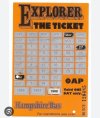
Another Tyne & Wear oddity was pre-dereg, you could buy an Explorer ticket for use on United and Northern services (much as today with Arriva and GNE) but it wasn’t allowed for use on services wholly within T&W
Yes, I remember that oddity - obviously to protect the Day Rover ticket, but still daft nonetheless as you needed two tickets if you wanted to travel on the buses of all operators.Another Tyne & Wear oddity was pre-dereg, you could buy an Explorer ticket for use on United and Northern services (much as today with Arriva and GNE) but it wasn’t allowed for use on services wholly within T&W
Busways did something similar post-dereg when TWOC arrived on the scene. It introduced the Faresaver and, as a result, zonal Traveltickets were no longer valid on its buses though the countywide ones were.
Last edited:
TheGrandWazoo
Veteran Member
It was bizarre that I could get a United explorer and use it anywhere in the country except on a United bus wholly in Tyne & Wear.Yes, I remember that oddity - obviously to protect the Day Rover ticket, but still daft nonetheless as you needed two tickets if you wanted to travel on the buses of all operators.
Oh, and you couldn’t buy them on the bus. Had to be in advance - got mine from the post office - and scratched off the date.
(Similar to photo from eBay seller)
Attachments
Dai Corner
Established Member
- Joined
- 20 Jul 2015
- Messages
- 6,998
Talking of unusual ticket formats Badgerline had the Badger Ten, valid for ten single trips.
The driver printed the ticket and placed it on a card backing strip held in place by a clear adhesive plastic strip. Each time it was used a hole was punched in the edge.
The driver printed the ticket and placed it on a card backing strip held in place by a clear adhesive plastic strip. Each time it was used a hole was punched in the edge.
Similar in concept to the Clippercard introduced in Greater Manchester in 1979. Basically a carnet ticket. Greater Manchester's was a little different in that you had to buy it in advance from a ticket office, and there were machines to "clip" a number off. It survived deregulation, although later was only used for concessionary fares. GM Buses kept their machines but other operators used a hand punch, or - very occasionally, a punch attached to the ticket machined. Although that relied on the drivers being bothered to clip it anyway. Many simply couldn't be bothered. And if memory serves, some companies went one step further and simply gave free travel to anyone with one. All probably why it eventually died out.Talking of unusual ticket formats Badgerline had the Badger Ten, valid for ten single trips.
The driver printed the ticket and placed it on a card backing strip held in place by a clear adhesive plastic strip. Each time it was used a hole was punched in the edge.
Tyne & Wear briefly had a 5-Rider carnet ticket, introduced in the spring of 1986 and a casualty of dereg that October.Similar in concept to the Clippercard introduced in Greater Manchester in 1979. Basically a carnet ticket. Greater Manchester's was a little different in that you had to buy it in advance from a ticket office, and there were machines to "clip" a number off. It survived deregulation, although later was only used for concessionary fares. GM Buses kept their machines but other operators used a hand punch, or - very occasionally, a punch attached to the ticket machined. Although that relied on the drivers being bothered to clip it anyway. Many simply couldn't be bothered. And if memory serves, some companies went one step further and simply gave free travel to anyone with one. All probably why it eventually died out.
Yes, there was always a mileage-balancing exercise in Bristol to account for Bristol Joint Services (BJS) vehicles being used on a country service and conversely country vehicles used on a city service (those licensed jointly to the company and Bristol Corporation). It was actually a bit more complicated than that, as a BJS bus might operate a summer duplicate to Weston-super-Mare. Similarly in Sheffield, where the split between the Corporation and Joint Omnibus Committee (the latter jointly owned with the railway) meant there were separate similar but distinct fleets. During the summer season, Corporation vehicles were often used to help out with duplicates to destinations such as Castleton and Ladybower. There was a wide range of other joint working arrangements, all of which disappeared with deregulation.In 1931, United Automobile bought the Scarborough Corporation Trams and replaced them with buses. It was like a proper franchise (not current parlance) and United paid Scarborough Council for the privilege but with a proviso.
For the next 45 years, they had two fleets allocated to Scarborough depot that were identical vehicles in United livery.The 1931 agreement dictated a “town” bus could only be used on a former SCT route, and the council paid for an inspector to ensure that there was no transgression in swapping buses between fleets!
I understand that a similar practice existed in Bristol but involved total vehicle mileage so you’d end up with older vehicles being cascaded out of the city to “get their miles up” before withdrawal.
On the subject of parcels on buses, Manchester Corporation Transport (as it was) had a discrete Parcels Department. In tramway days, they operated freight trams, like self-propelled box cars, to cater for this traffic. These were replaced by motor vans in later years. As I understand it, you could present a parcel to a tram or bus conductor at any stop, and pay an appropriate fee. The parcel would then be delivered anywhere in the City of Manchester, Salford and most other parts of Greater Manchester.
Businesses could buy a card reading 'TRAM'. They would place this in a window if they had a parcel for collection and an MCTD van would stop and pick it up. I recall seeing these cards as late as the concluding years of the 1960s.
Manchester also ran 'Post Cars' and 'Post Buses' at certain times. Inward workings in the evening, I think. These literally carried a post box on the platform for you to post a letter after the last normal collections from post boxes. I imagine these letters then got transferred to the GPO in central Manchester. This service was abandoned many years ago. About the time of WW2, I suspect.
Businesses could buy a card reading 'TRAM'. They would place this in a window if they had a parcel for collection and an MCTD van would stop and pick it up. I recall seeing these cards as late as the concluding years of the 1960s.
Manchester also ran 'Post Cars' and 'Post Buses' at certain times. Inward workings in the evening, I think. These literally carried a post box on the platform for you to post a letter after the last normal collections from post boxes. I imagine these letters then got transferred to the GPO in central Manchester. This service was abandoned many years ago. About the time of WW2, I suspect.
station_road
Member
Derby City Transport had a batch of X registration Ailsa buses that had those hard seats upstairs - they kept them until they were withdrawn as far as I know. They also had an unusual staircase layout that opened out at the front of the upper deck.Could have been worse. When Glasgow Corporation introduced one man operation in the late 60's they had a problem with the upper deck seats getting damaged, presumably due to the lack of a conductor on board. They're answer was to fit plastic seats on the upper deck. Cue complaints from passengers of sliding off the seats whenever the bus went round a corner. They soon replaced them with conventional seats.
Talking of unusual ticket formats Badgerline had the Badger Ten, valid for ten single trips.
(Lincolnshire) Road Car went in for 10 journey tickets in at least some of their patch in the 1990s. After they took over the Lincoln City Transport operation, and installed Almex Eurofare / A90 ticket machines, buses (in the Lincoln city area at least) had a magnetic card reader for these - the tickets were similar in size and shape to an APTIS rail ticket - this was a bit before smart cards were a thing.
I think they had previously issued them on card (LRC hung on to manual Almex machines quite late - I can't remember if the issue involved them, I'm aware some manual Almex machines could have a card inserted.) City Transport had previously just done weekly tickets.
Statto
Established Member
Yeah, i remember Merseyside PTE had a batch of Ailsa's (allocated to Laird Street depot in Birkenhead) for evaluation were given fleet numbers 0054 & 0055 then a batch of 13 numbered 0069 to 0081, first couple were on loan from Derby, they had hard iron board seats & that unusual staircase layout, & they were front engined too, Merseybus got rid of them mid 90s some went to Cardiff, & spent as long in Cardiff as they did on Merseyside.Derby City Transport had a batch of X registration Ailsa buses that had those hard seats upstairs - they kept them until they were withdrawn as far as I know. They also had an unusual staircase layout that opened out at the front of the upper deck.
Last edited:
JKP
Member
All Ailsas as far as I know had the same staircase layout due to weight distribution.Yeah, i remember Merseyside PTE had a batch of Ailsa's (allocated to Laird Street depot in Birkenhead) for evaluation were given fleet numbers 0054 & 0055 then a batch of 13 numbered 0069 to 0081, first couple were on loan from Derby, they had hard iron board seats & that unusual staircase layout, & they were front engined too, Merseybus got rid of them mid 90s some went to Cardiff, & spent as long in Cardiff as they did on Merseyside.
Stagecoach withdrew their 9 from the end of August last year. It still runs to the same times as their last iteration, but on Tuesdays only (was also Thursdays until New Year) and now operated by Cresta Coaches as 209.
A sad come-down for a route that was half hourly at one point, both in late NBC days and in early privatisation.
Sadly, very representative of what has happened across Hampshire since 2010 due to funding cuts from central government. Look at the network even around the year 2000, compare it to now, and weep.

Devon Sunset
Member
All the Alexander ones certainly did. I can't remember about the Van Hool McArdle ones though.All Ailsas as far as I know had the same staircase layout due to weight distribution.
The VHMA ones had the staircase set slightly further back, as these were dual-door, and a 2+1 seating arrangement at the upstairs front.All the Alexander ones certainly did. I can't remember about the Van Hool McArdle ones though.
- Status
- Not open for further replies.