• Our new ticketing site is now live! Using either this or the original site (both powered by TrainSplit) helps support the running of the forum with every ticket purchase! Find out more and ask any questions/give us feedback in this thread!

Wind Power and UK Energy Use

AndrewE

Established Member
Joined
9 Nov 2015
Messages
7,299
and the NIMBYs score again (https://www.thecourier.co.uk/fp/news/5395501/ssen-tealing-substation-application-refusal/):
Angus councillors have blocked another major SSEN Transmission infrastructure proposal after a huge Tealing substation was branded an “industrial carbuncle.”

Their plans sparked 1,700 objections – the largest volume of opposition to a planning application lodged with the council.
Campaigners said the development near the A90 would cover an area half the size of Camperdown Park.

They feared 20,000 HGV movements during construction of the substation over hundreds of acres,
...

The new Tealing substation would be part of a hub where several power lines would converge, including already consented upgrades separate from the 400kV OHL plan.
...

However, SNP councillor Bill Duff backed officers who had recommended conditional approval of the application.
“I represent Montrose and Montrose Port is benefitting hugely from offshore wind,” he said. “This project is predicated on getting electricity to the consumer. “If you don’t want that to happen what is your option? If you want to use offshore wind, this is the only game in town.
 
Sponsor Post - registered members do not see these adverts; click here to register, or click here to log in
R

RailUK Forums

Elecman

Established Member
Joined
31 Dec 2013
Messages
3,567
Location
Lancashire
Consent for such Nationally important projects should never be subject to local council consent but by a National Infrastructure Consent so not subject to the vagaries of local councils pandering to NIMBY constituents
 

Nottingham59

Established Member
Joined
10 Dec 2019
Messages
3,326
Location
Nottingham
Looking at interconnector flows in 2025 on the excellent gridwatch site (https://gridwatch.co.uk/Int), I notice that the usual pattern of electricity flows changed around the beginning of September, as shown in this clip:


1766590395667.png
In general, electricity flows from GB to Ireland (purple), and we import from France (reds) and Norway (dark brown).
And before August this year flows from Denmark and Holland (Yellow and Rose respectively) were also mostly imports.

But since September there have been lots of days when we have exported to Denmark and Holland, as shown in the example highlighted for 8 Nov 2025.

So my question is what happened in September? Did enough wind farms come online to make the UK a net exporter to these countries? Or did something in the electricity markets change to make electricity more expensive over there? Any ideas or speculation welcome.
 

Bald Rick

Veteran Member
Joined
28 Sep 2010
Messages
35,574
So my question is what happened in September? Did enough wind farms come online to make the UK a net exporter to these countries? Or did something in the electricity markets change to make electricity more expensive over there? Any ideas or speculation welcome.

Dogger Bank A came online (partly) which helps balance the east side of the country. Also there’s a lot of battery capacity come onlinein the second half of this year.

But mainly it’s about the grid. They take out cetain links in the summer* when demand is lower, and put them back on line in September before it gets darker and colder. At a guess the links taken out in the summer reduced capacity to get power to the south east and therefore imports from the continent increased. But when the links were reinstated, the need for those imports reduced.

* Watch your lights in the late evening on the Monday / Tuesday in the two weeks after the clocks go forward in spring. You’ll see a big flicker when the switching is done to take out certain grid connectors.
 

Nottingham59

Established Member
Joined
10 Dec 2019
Messages
3,326
Location
Nottingham
Dogger Bank A came online (partly) which helps balance the east side of the country. Also there’s a lot of battery capacity come onlinein the second half of this year.

But mainly it’s about the grid. They take out cetain links in the summer* when demand is lower, and put them back on line in September before it gets darker and colder. At a guess the links taken out in the summer reduced capacity to get power to the south east and therefore imports from the continent increased. But when the links were reinstated, the need for those imports reduced.

* Watch your lights in the late evening on the Monday / Tuesday in the two weeks after the clocks go forward in spring. You’ll see a big flicker when the switching is done to take out certain grid connectors.
That's helpful thanks.

Looking at Wind generation https://gridwatch.co.uk/Wind , I see that wind over this summer averaged roughly 4GW, but in September 2025 jumped to perhaps 8GW on average. That pattern didn't happen in 2024.

Some of this could have been due to the 1.2GW Dogger A, but most seems to have been just a windy autumn, I guess.
 

brad465

Veteran Member
Joined
11 Aug 2010
Messages
11,377
Location
Taunton or Kent
Dogger Bank A came online (partly) which helps balance the east side of the country. Also there’s a lot of battery capacity come onlinein the second half of this year.

But mainly it’s about the grid. They take out cetain links in the summer* when demand is lower, and put them back on line in September before it gets darker and colder. At a guess the links taken out in the summer reduced capacity to get power to the south east and therefore imports from the continent increased. But when the links were reinstated, the need for those imports reduced.

* Watch your lights in the late evening on the Monday / Tuesday in the two weeks after the clocks go forward in spring. You’ll see a big flicker when the switching is done to take out certain grid connectors.
Is there anywhere that can reliably measure live battery discharge/charging on grid scale? My go to site isn't yet able to do this.
 

Trainbike46

Established Member
Joined
18 Sep 2021
Messages
4,359
Location
belfast
Dogger Bank A came online (partly) which helps balance the east side of the country. Also there’s a lot of battery capacity come onlinein the second half of this year.

But mainly it’s about the grid. They take out cetain links in the summer* when demand is lower, and put them back on line in September before it gets darker and colder. At a guess the links taken out in the summer reduced capacity to get power to the south east and therefore imports from the continent increased. But when the links were reinstated, the need for those imports reduced.

* Watch your lights in the late evening on the Monday / Tuesday in the two weeks after the clocks go forward in spring. You’ll see a big flicker when the switching is done to take out certain grid connectors.
A very layman's question, but why are they taking grid connections out during summer?
 

Nottingham59

Established Member
Joined
10 Dec 2019
Messages
3,326
Location
Nottingham
A very layman's question, but why are they taking grid connections out during summer?
Total electricity demand is less in the summer, so there is spare capacity to divert the energy flow if you need to take a transmission line out of use for maintenance purposes.
 
Joined
28 Oct 2017
Messages
251
Total electricity demand is less in the summer, so there is spare capacity to divert the energy flow if you need to take a transmission line out of use for maintenance purposes.
Maintenance, and upgrades which very often involve taking the old out to make way for the new.
 

Bald Rick

Veteran Member
Joined
28 Sep 2010
Messages
35,574
Is there anywhere that can reliably measure live battery discharge/charging on grid scale? My go to site isn't yet able to do this.

I’ve not seen anything, but then most battery capacity is on the distribution network, not grid connected. I think some of it comes through the ‘other’ meter on Gridwatch.
 

hwl

Established Member
Joined
5 Feb 2012
Messages
8,232
Dogger Bank A came online (partly) which helps balance the east side of the country. Also there’s a lot of battery capacity come onlinein the second half of this year.

But mainly it’s about the grid. They take out cetain links in the summer* when demand is lower, and put them back on line in September before it gets darker and colder. At a guess the links taken out in the summer reduced capacity to get power to the south east and therefore imports from the continent increased. But when the links were reinstated, the need for those imports reduced.

* Watch your lights in the late evening on the Monday / Tuesday in the two weeks after the clocks go forward in spring. You’ll see a big flicker when the switching is done to take out certain grid connectors.
That's helpful thanks.

Looking at Wind generation https://gridwatch.co.uk/Wind , I see that wind over this summer averaged roughly 4GW, but in September 2025 jumped to perhaps 8GW on average. That pattern didn't happen in 2024.

Some of this could have been due to the 1.2GW Dogger A, but most seems to have been just a windy autumn, I guess.
I have a suspicion another factor is also at play:
The big new wind farms all have grid stabilising infrastructure in their NG connections that allow them to behave as if they have rotational inertia. This means that they can be used on a similar basis as CCGT / Drax / Hydro / Nuclear to provide grid stability.

Hence part of Dogger Bank A coming on line allows some direct substitution for traditional rotating generation along the east coast but there is also a multiplicative effect in that the traditional rotating generation being substituted out is in locations substantially away from the Dogger Bank flows releasing some spare capacity on some existing constrained links and thus allowing older wind farms to be less constrained.
As more of the new generation of wind farms come on line, National Grid capacity improvements are delivered and there is more stability potential from battery I suspect we will see far less constraint of wind generation which has often been several GW.

After 2027 there will be a bit of lull in new wind connections due to scheme cancellations and the HMT subsidy "price discovery" year where nothing happened on new large scale renewal licencing two years ago, so enhanced grid capacity, solar and battery will be doing lots of the lifting. (Hinkey C1 will effectively compensate for existing nuclear retiring)
 

brad465

Veteran Member
Joined
11 Aug 2010
Messages
11,377
Location
Taunton or Kent
Officially confirmed that both wind and solar had record generation in 2025. Gas also went up slightly, but as mentioned in the article, lower nuclear output and a reduction in imports could explain this:


Renewable energy - considered crucial to limiting climate change - produced a record amount of electricity in Great Britain in 2025, BBC analysis shows.
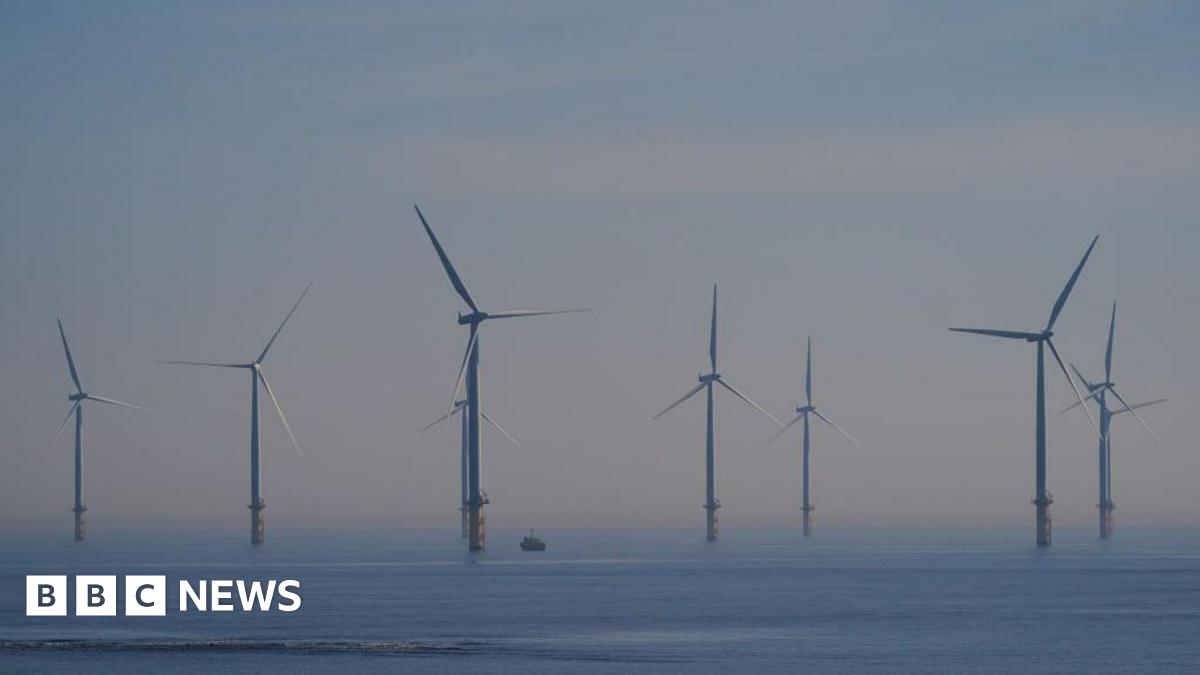
Wind was the biggest single renewable source of electricity, according to the provisional figures from the National Energy System Operator (Neso).
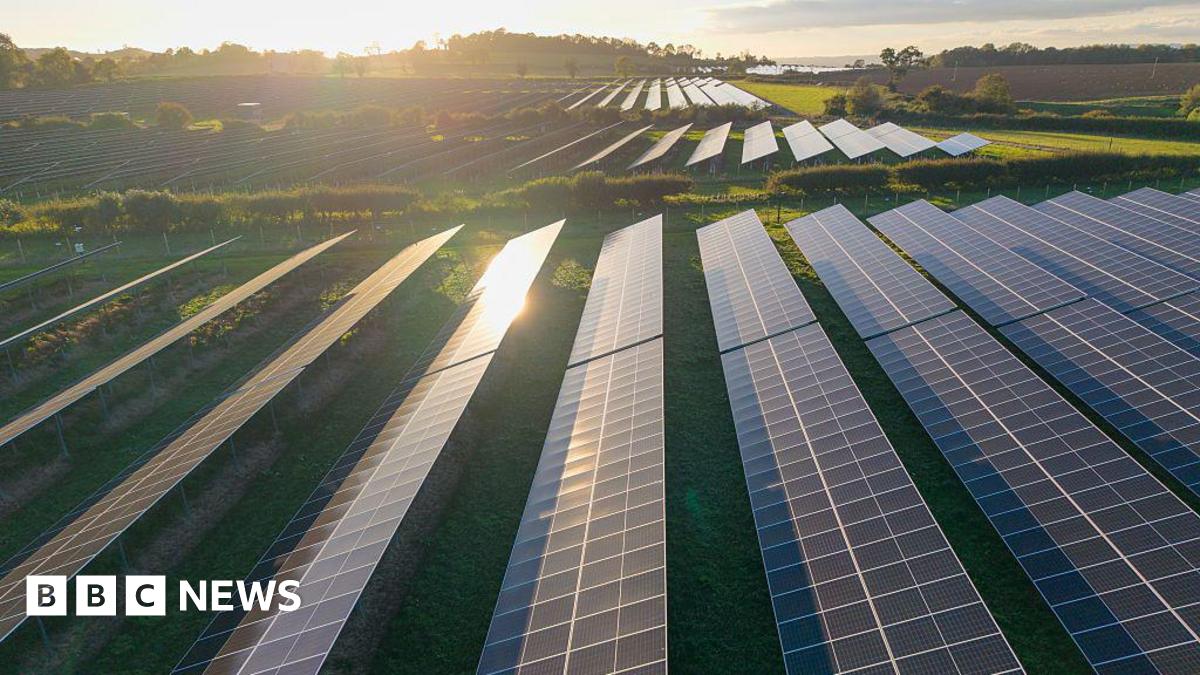
But solar-powered electricity rose by nearly a third on 2024 levels, helped by the UK's sunniest year on record and the expansion of solar panels around the country.
While behind renewables, electricity from fossil gas also rose slightly, highlighting the challenge of reaching the government's "clean power" target by 2030.
"It has been quite a strong year in terms of deployment of renewables," said Pranav Menon, research senior associate at the Aurora Energy Research think tank.
"[But] what we're not seeing is kind of the exponential scale-up that you'd need to get to clean power 2030, because those targets are very, very ambitious," he added.
Under its "clean power" target, the government aims to use hardly any polluting gas to produce electricity by 2030. It is also under pressure to meet its pledge to bring energy bills down by up to £300 by then and has argued that clean power can achieve this.
Neso data - and the clean power target - only cover Great Britain and not Northern Ireland, which has its own electricity transmission system operator.
The recent growth of renewables has been one of the strongest areas of progress in the world's attempts to tackle climate change.
The trend has been notable in Great Britain over the past decade too. The government wants to ramp up renewables even more quickly to help meet its own clean power goal and reduce its planet-warming carbon emissions.
In 2025, wind, solar, hydro and biomass generated more than 127 terawatt hours (TWh) of electricity in Great Britain, according to BBC analysis of provisional Neso data.
That beats the previous high of 119TWh in 2024.

Wind generated more than 85TWh - nearly 30% - of Great Britain's electricity last year, up slightly on 2024, according to analysis of Neso data.

But the most notable change was solar power.

Over the course of the year, solar panels generated more than 18TWh - over 6% of British electricity.

While that is still a relatively small share, it marks a growth of more than 4TWh versus 2024.

At its peak, solar was producing more than 40% of electricity for a small number of half-hour periods in July.

Back in 2013, no such period had more than roughly 5% of electricity generation from solar.

Part of the reason is the expansion of solar panels across the UK. More large solar farms came online this year, including the biggest at Cleve Hill near Faversham, in Kent.

And it was a record year for solar panels on rooftops, with about 250,000 new small-scale installations reported to the Microgeneration Certification Scheme.

With 2025 the UK's sunniest year on record, conditions were ideal for British solar panels to capitalise on long, sunny days through the spring and summer.

"Solar's probably a bigger part of the system than we'd expected, given the cost has come down so much," said Michael Grubb, professor of energy and climate change at University College London.

Renewables can generate significant amounts of electricity when conditions are right. On roughly a third of days in 2025, at least half of Britain's electricity came from renewables, according to BBC analysis of Neso data.

But the British electricity grid often still leans heavily on fossil fuel gas.

Analysis of Neso's figures shows gas generated more than 77TWh - roughly 27% - of electricity, up from 72TWh in 2024.

That increase could be down to several factors, including Britain importing slightly less electricity from Europe, lower nuclear generation, the closure of the last coal power station in 2024 and higher electricity demand.

Driven by the rise in gas, Britain's electricity was slightly more polluting in 2025 than 2024, according to Neso's data.

In 2025, each kilowatt-hour (kWh) of electricity generated 126g of planet-warming carbon dioxide on average - up from 124g/kWh in 2024 but down from 505g/kWh in 2012.
 

Bald Rick

Veteran Member
Joined
28 Sep 2010
Messages
35,574
Officially confirmed that both wind and solar had record generation in 2025. Gas also went up slightly, but as mentioned in the article, lower nuclear output and a reduction in imports could explain this:


The biggest factor is higher demand - up by more than 1GW on average across the whole year. At a guess this will be a combination of data centres, more EVs, and a small fraction is more heatpumps.
 

brad465

Veteran Member
Joined
11 Aug 2010
Messages
11,377
Location
Taunton or Kent
The biggest factor is higher demand - up by more than 1GW on average across the whole year. At a guess this will be a combination of data centres, more EVs, and a small fraction is more heatpumps.
I can see this specifically being a contentious issue in the year(s) ahead: there's already outrage in the US at the effect data centres are having on energy and water demand, and one reason the UK is getting lots of them is US companies outsourcing them to avoid the backlash in the US. This might not be so bad if data centres used their own water (such as from desalination) and were 100% off grid power, but I'd be surprised if we're anywhere near this.
 
Joined
28 Oct 2017
Messages
251
This might not be so bad if data centres used their own water (such as from desalination) and were 100% off grid power, but I'd be surprised if we're anywhere near this.
On the contrary, virtually all comes from public utilities - which is a good thing as far as energy goes, because it at least makes sourcing from renewables possible, rather than locking in to fossil gas (the only realistic alternative for the energy density needed).

There are already significant grid constraints on the west side of London (M4 corridor) where the rapid growth in data centre connections means that new housing developments are being delayed because connection capacity is not available. This didn't create a lot of fuss when it first happened (under the previous government) but any repeat would be likely to become higher political (and rightly so).
 

edwin_m

Veteran Member
Joined
21 Apr 2013
Messages
28,586
Location
Nottingham
Joined up thinking might suggest using the waste heat from the data centre to heat local housing, which in turn would reduce the electricity consumption of the housing.
 

takno

Verified Rep - Traksy
Joined
9 Jul 2016
Messages
6,574
Joined up thinking might suggest using the waste heat from the data centre to heat local housing, which in turn would reduce the electricity consumption of the housing.
You're really up against it technically taking the not-especially-hot heat from the servers and usably distributing it across enough housing to make any difference. We've been round this before in the thread, but silicon doesn't really like getting all that much hotter than the flow rate in a normal domestic heat supply. You would need to successfully transfer the heat from an extremely large data-centre to a really large number of houses, so moving it potentially a mile or more without losing any significant amount of heat.

Even if you do achieve that, most domestic supply isn't used for heat. Even if you assume the new housing will all be heat-pump heated then the majority of the usage will still be for non-heating purposes. This means that grid usage will be somewhere closeish to the joint requirements anyway.

Worse than that, the heat generated by the data-centre is at best 100% efficient. Heat pumps in the houses would be 3-400% efficient, so you really aren't saving that much domestic power at all.

The work which is going on now on using waste heat pretty much green-washing, but in the unlikely event that they manage to deliver more than token amounts of heat to houses, it will still not solve any significant grid demand or grid connection issues.
 

brad465

Veteran Member
Joined
11 Aug 2010
Messages
11,377
Location
Taunton or Kent
The grid just hit 6GW for Solar - a few days into January!
What was the highest individual peak in June (when the sun obviously is highest and up longest)? Last year's record solar was a combo of installed capacity increase and record sunshine, so if we later have a duller year we'll need to keep up high solar installation rates to keep the solar generation trend upwards.
 

Bald Rick

Veteran Member
Joined
28 Sep 2010
Messages
35,574
What was the highest individual peak in June (when the sun obviously is highest and up longest)? Last year's record solar was a combo of installed capacity increase and record sunshine, so if we later have a duller year we'll need to keep up high solar installation rates to keep the solar generation trend upwards.

14GW on 8 July. We’ll go past 15GW this summer at some point, possibly nearly 16.
 

Nottingham59

Established Member
Joined
10 Dec 2019
Messages
3,326
Location
Nottingham
I see total demand peaked at ~51GW on 5 Jan at 1300h. The Day Average was ~42GW, which is higher than any day last year.


InTheEastMids

Established Member
Joined
31 Jan 2016
Messages
1,382
I see total demand peaked at ~51GW on 5 Jan at 1300h. The Day Average was ~42GW, which is higher than any day last year.

Whilst there still quite a lot of this year left, it is entirely possible that this is as high as we'll see all year*
Peak demand was 47.3 GW between 1700-1730 on 05/01, if I have correctly interpreted Elexon's chart linked below

*Obviously there's a chance of a Beast from the East event later in the winter e.g. Feb/Mar 2018, but NESO typical peak demand in January.

NESO do now think that electricity demand is now returning to growth because of things like EVs and heat pumps, after many years of declining demand.
 

hwl

Established Member
Joined
5 Feb 2012
Messages
8,232
The latest round of (wind) auction results announced:

Prices up 8% on last auction (2025)

(I'm not sure all of the existing capacity numbers are correct though, probably journalists doing a quick google and getting old numbers)
 

jon0844

Veteran Member
Joined
1 Feb 2009
Messages
30,836
Location
UK
The latest round of (wind) auction results announced:

Prices up 8% on last auction (2025)

(I'm not sure all of the existing capacity numbers are correct though, probably journalists doing a quick google and getting old numbers)

Let's wait and see what the Daily Telegraph says... (Sarcasm intended).
 

CdBrux

Member
Joined
4 Mar 2014
Messages
919
Location
Munich
How do prices compare to current prices we pay, how much will be needed to connect these into the grid (on top of what is already budgeted) and/or provide battery backup so the turbines turn as much as possible?
For me UK has 2 issues: 1 energy security where this obviously helps and 2: very high cost of energy
 

Trainbike46

Established Member
Joined
18 Sep 2021
Messages
4,359
Location
belfast
How do prices compare to current prices we pay, how much will be needed to connect these into the grid (on top of what is already budgeted) and/or provide battery backup so the turbines turn as much as possible?
For me UK has 2 issues: 1 energy security where this obviously helps and 2: very high cost of energy

A strike price of £91/MWh in 2024 prices, while higher than last year's auction, is not terrible, and is much cheaper than some other projects (e.g. Hinkely point C). For costs, CfDs, as have been used for these subsidies for renewables and nuclear energy, have a very significant advantage as they buffer prices for consumers by paying money back if wholesale prices exceed the strike price.

In general, gas power is the most expensive electricity generator on the grid (as well as the most volatile one in price terms), so anything that reduces the amount of gas in the grid reduces prices as it drives the most expensive gas generators out of the market. The BBC article states the government says that new gas power plants would cost £147/MWh, suggesting that both offshore wind, renewables, and new nuclear are cheaper.

For some comparison, I have attached the day-ahead and forward market electricity prices below. Note how during 2022, the prices hit £500/MWh in the forward market and hit £300/MWh monthly average in the day ahead market . Figures are from OfGem. These extreme costs have since come down somewhat, but they are still higher than before Russia's invasion of Ukraine. That increase is entirely driven by gas prices.
1768394722089.png1768394831948.png
 

Bald Rick

Veteran Member
Joined
28 Sep 2010
Messages
35,574
The latest round of (wind) auction results announced:

Prices up 8% on last auction (2025)

(I'm not sure all of the existing capacity numbers are correct though, probably journalists doing a quick google and getting old numbers)

Great news.

The current offshore capcity is 17GW; under construction I have it as around 12GW, so I think the BBC’s numbers are broadly right.
 

HSTEd

Veteran Member
Joined
14 Jul 2011
Messages
20,262
As a nuclear engineer and amateur historian of the industry, I do see parallels between the current offshore wind experience and the nuclear experience in the mid 20th Century

Stage 1. Rapidly falling costs and optimism driving rapidly accelerating build-out
Stage 2. Large scale deployment, but the technology has matured and cost reductions start to go into reverse
Stage 3. Disillusionment? (Happened for nuclear, but time will tell if it happens for Offshore wind too)
 
Last edited:

brad465

Veteran Member
Joined
11 Aug 2010
Messages
11,377
Location
Taunton or Kent
As a nuclear engineer and amateur historian of the industry, I do see parallels between the current offshore wind experience and the nuclear experience in the mid 20th Century

Stage 1. Rapidly falling costs and optimism driving rapidly accelerating build-out
Stage 2. Large scale deployment, but the technology has matured and cost reductions start to go into reverse
Stage 3. Dissolutionment? (Happened for nuclear, but time will tell if it happens for Offshore wind too)
Are there any hidden problems that might damage trust in offshore wind (other than wind not blowing all the time)? Nuclear had setbacks from Chernobyl and Fukushima, and while they were as a result of issues not seen in the other 99% of nuclear power plants, they had significant impact on nuclear power deployment.
 

edwin_m

Veteran Member
Joined
21 Apr 2013
Messages
28,586
Location
Nottingham
Are there any hidden problems that might damage trust in offshore wind (other than wind not blowing all the time)? Nuclear had setbacks from Chernobyl and Fukushima, and while they were as a result of issues not seen in the other 99% of nuclear power plants, they had significant impact on nuclear power deployment.
There have been concerns about interference with radar and also birds flying into the blades. I suspect the first has been overcome and the second was never much of a problem. I guess sabotage of transmission cables might become an issue for offshore wind.
 

Top