
-
Our new ticketing site is now live! Using either this or the original site (both powered by TrainSplit) helps support the running of the forum with every ticket purchase! Find out more and ask any questions/give us feedback in this thread!
You are using an out of date browser. It may not display this or other websites correctly.
You should upgrade or use an alternative browser.
You should upgrade or use an alternative browser.
What would the ideal Oxbridge Arc look like?
- Thread starter PTR 444
- Start date
Sponsor Post - registered members do not see these adverts; click here to register, or click here to log in
R
RailUK Forums
The Planner
Veteran Member
- Joined
- 15 Apr 2008
- Messages
- 19,723
Re-routing entirely? How are you replacing the connectivity lost?I think post-HS2 rerouting the Bournemouth service to Paddington would be more useful to provide a link with OOC from Dorset/Hampshire.

ExactlyRe-routing entirely? How are you replacing the connectivity lost?
Post HS2 it should definitely remain for connectivity purposes (even if cut back to Bournemouth - Birmingham). Birmingham International will then become a useful interchange for faster onward travel to Manchester via HS2.

Sad Sprinter
Established Member
Re-routing entirely? How are you replacing the connectivity lost?
Extend London to Oxford fasts to Birmingham? Surely it'll be quicker to get from South of Basingstoke to Birmingham/northwards via OOC.
== Doublepost prevention - post automatically merged: ==
I couldn't disagree more.
I have used it to travel between Oxford and Hampshire, Birmingham, Stafford and Manchester. Send it up the GWML (in what paths?) and it's all but useless.
Yes but surely you'd rather get to Manchester via HS2 if you live in Oxford.
The Planner
Veteran Member
- Joined
- 15 Apr 2008
- Messages
- 19,723
You would go via MK.Extend London to Oxford fasts to Birmingham? Surely it'll be quicker to get from South of Basingstoke to Birmingham/northwards via OOC.
== Doublepost prevention - post automatically merged: ==
Yes but surely you'd rather get to Manchester via HS2 if you live in Oxford.
HS2 will be no use at all for Oxford.
I suppose you could extend the Padd - Oxford service to Birmingham, but that will still represent a reduction in capacity between Reading and Oxford. Which is (anecdotally) quite a popular journey.
I suppose you could extend the Padd - Oxford service to Birmingham, but that will still represent a reduction in capacity between Reading and Oxford. Which is (anecdotally) quite a popular journey.
Sad Sprinter
Established Member
HS2 will be no use at all for Oxford.
I suppose you could extend the Padd - Oxford service to Birmingham, but that will still represent a reduction in capacity between Reading and Oxford. Which is (anecdotally) quite a popular journey.
Surely it will. Are you saying so because the interchanges are bad?
From Oxford station, Birmingham New Street is about 1h15 away, and Paddington is around an hour. So going all the way to one end to get a train to the other isn't going to be how anyone gets anywhere.
Oxford to Manchester Piccadilly is 2h50 by Cross Country. Let's be generous and say Oxford to OOC is 50 minutes, then allow 15 minutes to change to the HS2 train - is OOC to Manchester going to be faster than the remaining 1h45? Will it be by enough to make it worth the hassle of changing?
That's just Oxford of course, which (along with Banbury) is perfectly located that HS2 will not be any use to replace existing direct trains. I did find that Oxford to Glasgow made sense via Euston. It's not especially faster, but the Birmingham to Glasgow trains are tedious with their stopping everywhere... So OOC would make sense for that, unless the WCML post HS2 service has something useful at MK.
Oxford to Manchester Piccadilly is 2h50 by Cross Country. Let's be generous and say Oxford to OOC is 50 minutes, then allow 15 minutes to change to the HS2 train - is OOC to Manchester going to be faster than the remaining 1h45? Will it be by enough to make it worth the hassle of changing?
That's just Oxford of course, which (along with Banbury) is perfectly located that HS2 will not be any use to replace existing direct trains. I did find that Oxford to Glasgow made sense via Euston. It's not especially faster, but the Birmingham to Glasgow trains are tedious with their stopping everywhere... So OOC would make sense for that, unless the WCML post HS2 service has something useful at MK.

Topological
Established Member
Birmingham via MK to EWR and Bristol via Didcot to EWR make sense.Why stop at Bristol, we might as well start from Cardiff and continue on to Cambridge.
Cardiff would be another via Didcot to EWR (you wouldn't go via Temple Meads) so of the two Bristol makes more sense. Bristol also houses the better university because it makes more sense.
Cardiff would also need investment at Cardiff Central to handle more trains, where Bristol Temple Meads is more ready to go with capacity for terminating trains from the East.
Cardiff would be another via Didcot to EWR (you wouldn't go via Temple Meads) so of the two Bristol makes more sense. Bristol also houses the better university because it makes more sense.
Cardiff would also need investment at Cardiff Central to handle more trains, where Bristol Temple Meads is more ready to go with capacity for terminating trains from the East.
[/QUOTE]
== Doublepost prevention - post automatically merged: ==
'Bristol also houses the better university because it makes more sense.'
What does that mean?
Cardiff would also need investment at Cardiff Central to handle more trains, where Bristol Temple Meads is more ready to go with capacity for terminating trains from the East.
[/QUOTE]
== Doublepost prevention - post automatically merged: ==
'Bristol also houses the better university because it makes more sense.'
What does that mean?
Farnborough
Member
Absolutely not! We do not need yet another London service. And OOC will be available by changing at ReadingI think post-HS2 rerouting the Bournemouth service to Paddington would be more useful to provide a link with OOC from Dorset/Hampshire.
The Bournemouth/Basingstoke/Reading service provides the only north/south route from out this way...

Mgameing123
Member
Just because there is no north curve doesn't mean you can't run a Cambridge - MK train. Just let the train reverse at Bletchley...The proposed service in the non-statutory consultation is:
2tph Oxford-Cambridge
2tph Oxford-Milton Keynes
2tph Cambridge-Stewartby
1tph Bedford-Bletchley stopper
If the consolidated stations option is chosen then the stopper gets dropped and one of Cambridge-Stewartby trains runs through to/from Bletchley.
In the absence of a north curve at Bletchley, there are no Cambridge-Milton Keynes direct trains.
Bristol and Birmingham are not in the corridor, and they weren't in the arc. They are not essential for developing the corridor.
== Doublepost prevention - post automatically merged: ==
I mean providing a new service could be looked at?Absolutely not! We do not need yet another London service. And OOC will be available by changing at Reading
The Bournemouth/Basingstoke/Reading service provides the only north/south route from out this way...
== Doublepost prevention - post automatically merged: ==
Could a reversal at Bletchley help?That is one issue with the idea, though it should be possible to get an extra pair of tracks between Bletchley and MKC, and another one or two platforms at MKC, without significant demolition. That would of course push the cost up somewhat. But I think there's enough demand from the east to MKC to cover a fair whack of that cost - the Marston Vale is only a basket case because it goes to Bletchley which is not where most want to go. If it went to MKC I think it would be a very typical provincial DMU commuter service - sure, not 12 car trains, but the 2 car ones wouldn't give everyone 4 or 6 seats each.
The railway doesn't operate by "just let the train reverse". It needs track, points, signalling and line capacity.Just because there is no north curve doesn't mean you can't run a Cambridge - MK train. Just let the train reverse at Bletchley.
The only possible platform for reversal at Bletchley Low Level is platform 5, and the only possible track between platform 5 and Denbigh Hall is the reversible No2. The other option is to reverse at the High Level, but that obstructs the Oxford trains.
Either also need paths between Denbigh Hall and Milton Keynes.
So it isn't possible to "just let the train reverse" at Bletchley.
WCML paths are one thing, but reversing at Bletchley is a much more probable way to get a Cambridge to MK service than demolition of the depot and some surrounding buildings.
It'd be a big project, but smaller than a north curve.
It'd be a big project, but smaller than a north curve.
Jim the Jim
Member
One very big question for me is how do you avoid overwhelming Cambridge and Oxford with more motor traffic from surrounding settlements (both cities are already struggling with traffic levels).
Also not continuing to neglect facilities for local people in both cities, particularly those in poorer areas.
Also not continuing to neglect facilities for local people in both cities, particularly those in poorer areas.
A Bedford - Cambridge alignment as straight as possible. Development pattern mainly focused on repairing the suburbanisation damages to existing settlements - Bedford St Johns - Tesco infilled with mixed-use developments, Central Milton Keynes rebuilt to continental densities from the station to the John Lewis.
By investing in new transport infrastructure.One very big question for me is how do you avoid overwhelming Cambridge and Oxford with more motor traffic from surrounding settlements (both cities are already struggling with traffic levels).
The other place has what looks to me like a well thought out transport strategy which is being discussed here:
OxRail 2040 - plan from Oxfordshire County Council
Oxfordshire County Council have published a consultation on what they've called "OxRAIL 2040: Plan for Rail" which can be found here: https://letstalk.oxfordshire.gov.uk/oxrail-2040?utm_term=0_-022585ebdb-408523454&goal=0_206c6fb447-6187f9f7e2-408523454 Introduction This summary report of our...
 www.railforums.co.uk
I thought that the most unlikely bit of the strategy was reopening Cowley, but that was announced last week.
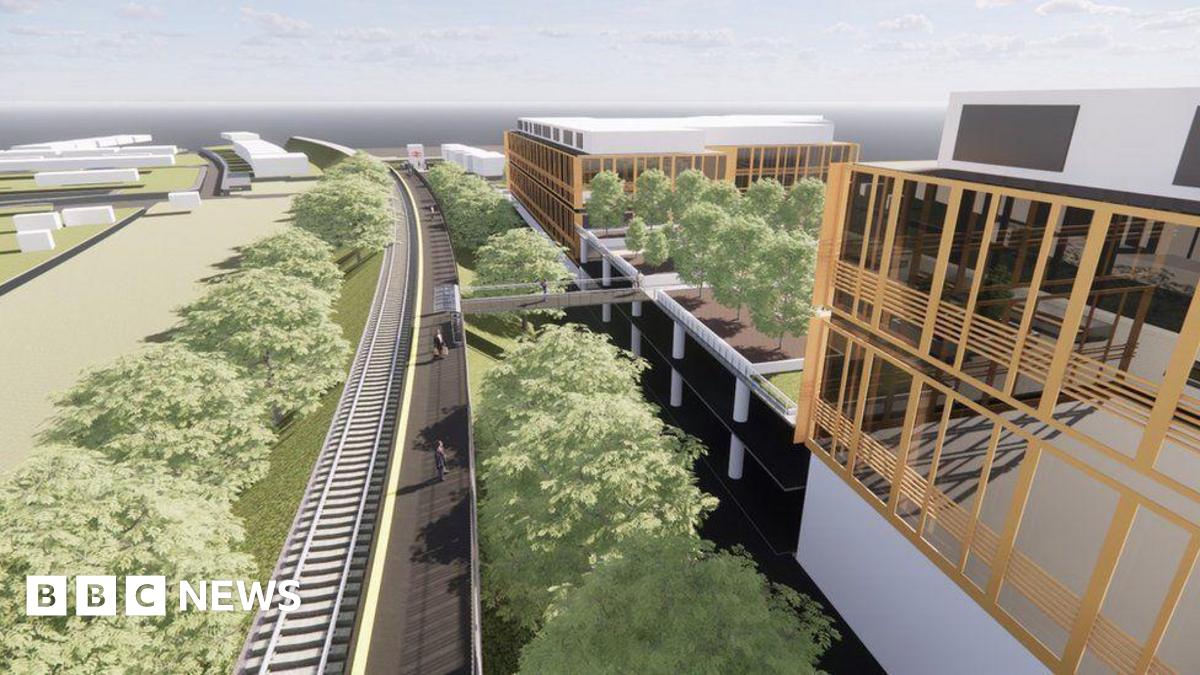
Cowley Branch Line to reopen after 60 years in £120m project
The Cowley Branch Line is currently only used by freight going to and from the BMW Mini Plant.
 www.bbc.co.uk
There is no similar strategy for Cambridge yet, that probably awaits the Cambridge Growth Company turning into a Development Corporation. In the meantime heavy rail does most of the heavy lifting in Cambridge with the main station having more than 10 million entrances and exits and Cambridge North more than 1 million. When Cambridge South opens next year we will be part way towards having a north-south Cambridge Metro. East West Rail, Tempsford and Cambourne are going to be critical for future growth in Cambridge without overwhelming the road network.An Oxford railway line closed to passengers since 1963 is being reopened.
The Cowley Branch Line is currently only used by freight going to and from the BMW Mini Plant, but new stations will be opened in Cowley and Littlemore in south-east Oxford.
The government has pledged £120m in funding, part of a £500m investment in infrastructure to link up Oxford and Cambridge and turn the region into the "European Silicon Valley".
Why? Straightness is not a key feature. What matters for the route is for it to pass through Tempsford and Cambourne, then enter Cambridge from the south.A Bedford - Cambridge alignment as straight as possible.
Bedford and Milton Keynes have the opportunity to benefit hugely from East West Rail by being the prime locations with good access to both Oxford and Cambridge.repairing the suburbanisation damages to existing settlements - Bedford St Johns - Tesco infilled with mixed-use developments, Central Milton Keynes rebuilt to continental densities
This is an important issue, Cambridge is one of the most unequal cities in the UK.Also not continuing to neglect facilities for local people in both cities, particularly those in poorer areas.
Absolutely this. Instead of as bendy as possible, which appears to have been the main design goal for the current route. Does anyone know what the ratio of crow-flies to track distance, from Bedford (central station) to Cambridge (central station) with the current plan will be, and the expected journey times from Bedford (central) and MK (central) to/from Cambridge (central)? Horribly high, I fear. The consequent slow end-to-end journeys will mean that many (probably including me) will simply choose to (continue to) use the (by that time all expressway-grade from MK at least) A421 in our (electric) cars, to move between Oxfordshire/Buckinghamshire/Bedfordshire and Cambridge. Hey ho.A Bedford - Cambridge alignment as straight as possible.
The "outer suburb" settlements around Cambridge definitely deserve decent public transport into the city, of course! For me it's just extremely unfortunate that EWR has decided its primary aim is to provide only that, instead of a fast mid-distance connection to Bedford and MK. Well, given the speed at which the project is progressing, I will have retired before it's open end-to-end anyway. Shrug.
The design goal is to include Tempsford and Cambourne then to approach Cambridge from the south.Instead of as bendy as possible, which appears to have been the main design goal for the current route.
Does anyone know what the ratio of crow-flies to track distance, from Bedford (central station) to Cambridge (central station) with the current plan will be, and the expected journey times from Bedford (central) and MK (central) to/from Cambridge (central)?
The non statutory consultation did give some estimated journey times. Bedford-Cambridge is 35 minutes.
Good luck trying to beat that to Central Cambridge or the Biomedical Campus by road at commuting times. You might get to Madingley quite quickly but then what?
The Planner
Veteran Member
- Joined
- 15 Apr 2008
- Messages
- 19,723
You cannot reverse at high level without shunting out the station behind a ground position signal.The railway doesn't operate by "just let the train reverse". It needs track, points, signalling and line capacity.
The only possible platform for reversal at Bletchley Low Level is platform 5, and the only possible track between platform 5 and Denbigh Hall is the reversible No2. The other option is to reverse at the High Level, but that obstructs the Oxford trains.
Either also need paths between Denbigh Hall and Milton Keynes.
So it isn't possible to "just let the train reverse" at Bletchley.
But once you factor in getting from home to Station, parking up etc any train time advantage starts evaporating. Add in the better ambience and comfort of your car, plus not being beholden to the rail industry and the @gallafent scenario becomes much more likely.The design goal is to include Tempsford and Cambourne then to approach Cambridge from the south.
The non statutory consultation did give some estimated journey times. Bedford-Cambridge is 35 minutes.
Good luck trying to beat that to Central Cambridge or the Biomedical Campus by road at commuting times. You might get to Madingley quite quickly but then what?
Not if the car journey takes all of those 35 minutes, and more, to get from Madingley to the final destination in Cambridge. Buses taking 30 minutes just to do the main station to the Addenbrookes roundabout is a common occurrence.But once you factor in getting from home to Station, parking up etc any train time advantage starts evaporating.
I suspect that there will be a lot of driving to stations with good road access especially Tempsford and Ridgmont.
This is why East West Rail needs to be kept as self contained as possible so that it does not import delays from elsewhere.not being beholden to the rail industry
== Doublepost prevention - post automatically merged: ==
People I know who commute into Cambridge by car don't describe the experience that way!Add in the better ambience and comfort of your car,
I know, my observation about the circuitous route being the _goal_ was tongue-in-cheek, I'm aware that it's actually a _consequence_ of the desire to serve those locations.The design goal is to include Tempsford and Cambourne then to approach Cambridge from the south.
That's faster than I expected, and good news ... I really hope that this service will be able to make sense for longer-distance commuters like me (I'd generally be using the route from one station out of Oxford / Bletchley (changing from Leighton Buzzard) / Ridgmont)! Even if it doesn't work out door-to-door for my (I'm aware relatively rare!) use-case, of course, if it takes traffic of the A421 (and A14, and A34, and M40, and A43!) then so much the better for those that end up still using the car!The non statutory consultation did give some estimated journey times. Bedford-Cambridge is 35 minutes.

Then unless the weather is _really_ bad, I get on a bike (my own folder or a rental electric-assist), which gets me to the office in central Cambridge in 17 minutes (it's 5 minutes by bike, on the other hand, from central railway station). Otherwise the P&R bus then walk, 19 minutes. And so yes, there's more than just the drive time to consider (same as there is more than just the station-to-station train time), but Madingley Road Park & Ride is well-connected, thankfully. I'm guessing that it would be better to use a different P&R (Trumpington) when coming from the west to the biomedical campus, but I'm less familiar with that part of town.Good luck trying to beat that to Central Cambridge or the Biomedical Campus by road at commuting times. You might get to Madingley quite quickly but then what?
Speaking of the latter, I just found while doing some planning for this week and next that it's £114.20 for an anytime day return Oxford-Cambridge, which isn't particularly encouraging (even in my old petrol car I was spending about £45-£55 each week on petrol for my usual pattern of three days in one or other of our offices, and the electric car costs substantially less to fuel per mile). Even booking a bit further out and allowing splits, I've not managed less than £60. I hope that the "Not London" fares on the route will be _substantially_ cheaper!Add in the better ambience and comfort of your car, plus not being beholden to the rail industry
People I know who commute into Cambridge by car don't describe the experience that way!
Each to its own I guess. My car (even the old one!) definitely has a better ambience than even the newish park and ride buses (I used a little bluetooth monitor to measure 11degC and 100% humidity in one such, last winter), and certainly the older diesel ones. Both crash and rock enjoyably along the cratered surface of Madingley Road. I hope that the trains which operate the route to Cambrige will have a decent interior ambience, better than the buses, at least, time will tell. I wonder if they'll have a diesel engine under each carriage (as those chosen to operate Oxford-MK do), to add a nice relaxing foot massage and drown out the people playing social media or music out loud on their phones, that would be something at least. 
I'm aware that my tone around this project is sometimes negative. That arises from what feels like the incredibly slow speed with which the project makes progress (the reopening of the entire route has been mooted for my whole adult life, and so far, decades in, we have only got as far as an upgrade to the line between Bicester and Oxford, and that's it!), as well as from my disappointment about the motivations for the Bedford-Cambridge section (prioritising local commuting rather than medium distance / regional).
Also let’s remember this is not one single Travel to Work area, or sphere of influence. There are three: Oxford, Milton Keynes and Cambridge.
MK and Cambridge are basically unrelated in this axis and project. Not commutable or really compatible, and that is fine. MK and Oxford relate much more realistically. And that train will do gang busters.
Anyone doing MK - Cambridge might be better via London. The Cambridge TTW daily sphere will end at Bedford in practice, and then we will see more distinct incremental paired demand, like Oxford. But that isn’t the daily journey.
It’s fine that this doesn’t do all things to all people. The two hubs are at either end and demand will reflect that.
MK and Cambridge are basically unrelated in this axis and project. Not commutable or really compatible, and that is fine. MK and Oxford relate much more realistically. And that train will do gang busters.
Anyone doing MK - Cambridge might be better via London. The Cambridge TTW daily sphere will end at Bedford in practice, and then we will see more distinct incremental paired demand, like Oxford. But that isn’t the daily journey.
It’s fine that this doesn’t do all things to all people. The two hubs are at either end and demand will reflect that.
The Whippet electric buses are good, with fantastic aircon in last summer's heatwaves.My car (even the old one!) definitely has a better ambience than even the newish park and ride buses (I used a little bluetooth monitor to measure 11degC and 100% humidity in one such, last winter), and certainly the older diesel ones.
As a cyclist I agree that the state of the roads in Cambridge is dreadful, and there is an interesting question on how much electric buses are contributing to that.Both crash and rock enjoyably along the cratered surface of Madingley Road.
I share your frustrations about how long it is taking. But on their own, the medium distance and regional links have never been enough to make a strong case for the Bedford-Cambridge section, and that's one of the reasons for the historical delays. The commuting from Cambourne and especially Tempsford facilitates the medium distance and regional links.I'm aware that my tone around this project is sometimes negative. That arises from what feels like the incredibly slow speed with which the project makes progress (the reopening of the entire route has been mooted for my whole adult life, and so far, decades in, we have only got as far as an upgrade to the line between Bicester and Oxford, and that's it!), as well as from my disappointment about the motivations for the Bedford-Cambridge section (prioritising local commuting rather than medium distance / regional).
Having two hubs at either end does make East West Rail an unusual project, and I'll happily admit to looking at it mainly from the Cambridge end.Also let’s remember this is not one single Travel to Work area, or sphere of influence. There are three: Oxford, Milton Keynes and Cambridge.
MK and Cambridge are basically unrelated in this axis and project. Not commutable or really compatible, and that is fine. MK and Oxford relate much more realistically. And that train will do gang busters.
Anyone doing MK - Cambridge might be better via London. The Cambridge TTW daily sphere will end at Bedford in practice, and then we will see more distinct incremental paired demand, like Oxford. But that isn’t the daily journey.
It’s fine that this doesn’t do all things to all people. The two hubs are at either end and demand will reflect that.
East West Rail have been quite specific on getting Stewartby into Cambridge Travel to Work range.
My feeling is that Cambridge-Milton Keynes journeys will use East West Rail, but with Ridgmont as a de facto Milton Keynes Parkway.
The Oxford-Cambridge corridor is going to get a forest see here:

 www.gov.uk
However, no specific location is identified.
Nation to benefit from two new national forests backed by £1 billion investment in tree planting
Millions of trees to help get Britain growing through billion-pound investment in green jobs and nature restoration, creating thousands of jobs
Millions of trees to help get Britain growing through billion-pound investment in green jobs and nature restoration, creating thousands of jobs
From:Department for Environment, Food & Rural AffairsPublished5 November 2025

- Second new national forest will be in the Oxford-Cambridge corridor.
- A competition will be launched for a third new national forest in the Midlands or North of England in early 2026
However, no specific location is identified.
The exact location of the Ox-Cam national forest award is subject to design work and discussion with partners. The forest will embed nature recovery into development, with green spaces designed alongside new homes, jobs, and infrastructure.
Technologist
Member
- Joined
- 29 May 2018
- Messages
- 467
It always makes my heart sink when I see "creating thousands of jobs" in any government announcement. Jobs are a cost and it leads us to a "broken windows" theory of public investment (break windows, fix windows, jobs created).The Oxford-Cambridge corridor is going to get a forest see here:
Nation to benefit from two new national forests backed by £1 billion investment in tree planting
Millions of trees to help get Britain growing through billion-pound investment in green jobs and nature restoration, creating thousands of jobs
However, no specific location is identified.
The Pelican
Member
An actually ambitious Oxford-Cambridge arc forest would be to build a wildlife corridor (not nessicarily covered in trees, as most of Southern england has been deforested since at least Celtic times) joining University Parks in Oxford to Coe Fen in Cambridge, both pieces of green land near the centre of each city already connected by greenery to the countryside. It looks like the Chiltern National Landscape already covers the route from Oxford to Luton. They used to say that you could walk between the two cities entireley over land owned by the St John's colleges at each, so letting people walk between them over a national park could be a good idea!
The Oxford Cambridge growth corridor was debated in parliament yesterday, motion moved by Daniel Zeichner MP for Cambridge, with Matthew Pennycook responding for the government. See here:
Daniel Zeichner
(Cambridge) (Lab)
Sharethis specific contribution
I beg to move,
That this House has considered the Oxford to Cambridge Growth Corridor.
There was a new announcement about the Oxford Cambridge Forest earlier this week see here:
www.gov.uk
New national forest in the OxCam Corridor moves a step closer
Bids must be able to demonstrate they have the capacity, experience, and knowledge to deliver a new national forest
A new national forest in the Oxford-Cambridge Corridor has moved a step closer today (Monday 12 January) with the announcement that the search for official delivery partners has begun.
The Department for Environment, Food and Rural Affairs has opened an Expression of Interest process with interested parties needing to demonstrate they have the capacity, experience, and knowledge to deliver the outcomes required for a new national forest in the Oxford-Cambridge Growth Corridor – along with expertise in large-scale woodland creation, community engagement, and cross-sector partnerships.