• Our new ticketing site is now live! Using either this or the original site (both powered by TrainSplit) helps support the running of the forum with every ticket purchase! Find out more and ask any questions/give us feedback in this thread!

Lisbons funicular suffers catastrophic runaway (03/09)

Status
Not open for further replies.

Cowley

Forum Staff
Staff Member
Global Moderator
Joined
15 Apr 2016
Messages
18,856
Location
Devon
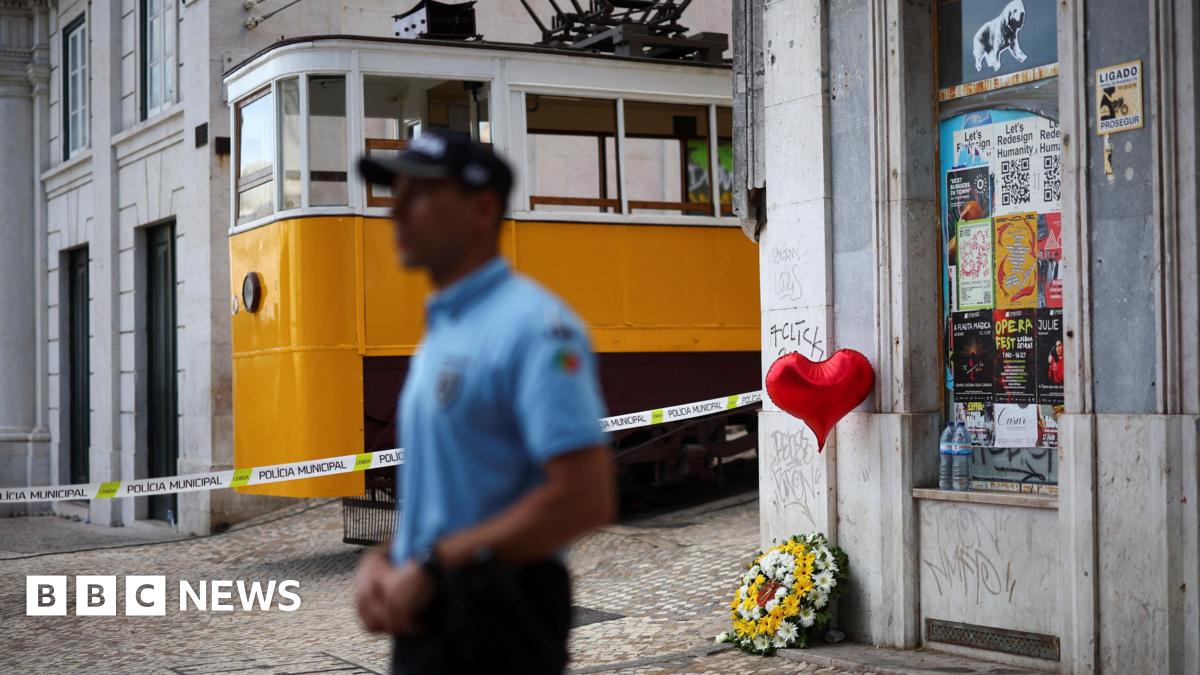
Rather upsetting news coming in that Lisbons famous Gloria funicular has run away after a possible cable break this afternoon.

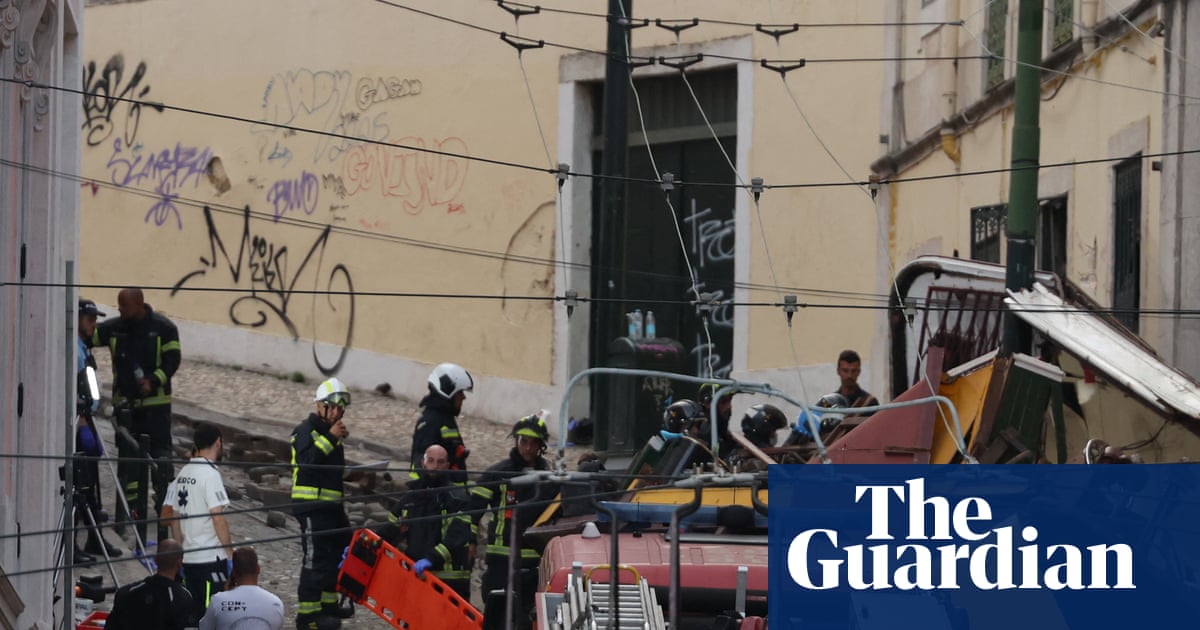
It’s reported that three people have died so far with more people injured and potentially trapped.


At least three people have been killed and 20 others injured after Lisbon's famous Gloria funicular cable railway derailed and crashed, emergency services said.
In an earlier statement, the head of Portugal's Civil Protection Authority said that several people remained trapped at the scene and two people were in a serious condition.
Portuguese newspaper Observador reported that a cable came loose along the railway's route, causing it to lose control and collide with a nearby building.
The incident happened near the Avenida da Liberdade around 18:05 on Wednesday evening.
 
Sponsor Post - registered members do not see these adverts; click here to register, or click here to log in
R

RailUK Forums

christopher

Member
Joined
22 Aug 2006
Messages
409
Location
Over there
Just risen to 15 people died on BBC news, both on board and pedestrians


  • At least 15 people have been killed after Lisbon's famous Gloria funicular cable railway derailed and hit a building, emergency services say
  • Eighteen others have been injured, they add, including a child
  • Authorities add that they don't yet know the cause of the crash
 
Last edited by a moderator:

NCT

Established Member
Joined
18 Apr 2025
Messages
2,095
Location
London
Ow this is bad :(

Had many happy memories of going up and down that hill, mostly on foot but also in one of those lovely vehicles.

Thoughts with those affected and their close ones ...
 

Gostav

Member
Joined
14 May 2016
Messages
541
CC1CB09C193BED52A33AC0C891DBAFE2.png

It seems that the cable carriage at the top (below the map) lost control after the cable broke, and it overturned and derailed when it slid down the curve (the top of the map) near the bottom at speed, and the old carriage immediately broke into pieces.

I think the biggest question is why is the brake not working.
 
Last edited:

amarshe

Member
Joined
7 Dec 2009
Messages
99
Horrendous. I

was there just two weeks ago and used that tram many times.

At the top there are two tracks which merge into one later after about fifty metres (the whole length is around 250m).

There is a security guard who looks after the top tram when it closes between about 2100 to 0700 (i spoke to him as the tram is easily accessible and wondered about his role).

No expert but from what i could see it is single speed, submerged cable driver traction upwards and braked by recessed cables I saw in ducts - the driver simply released the brakes and relied on a dead mans brake all the way down.

The wooden body of the two trams from what I learnt at the time are about 100 years old - just two; one up, one down.
 

John R

Established Member
Joined
1 Jul 2013
Messages
6,058
I suspect authorities around the world will be looking at the crashworthyness of their historic vehicles. Especially those on incline railways.

Desperately sad for all affected.
 

edwin_m

Veteran Member
Joined
21 Apr 2013
Messages
28,586
Location
Nottingham
I suspect authorities around the world will be looking at the crashworthyness of their historic vehicles. Especially those on incline railways.

Desperately sad for all affected.
The reason for the runaway is probably the bigger concern. A vehicle with all modern crashworthiness design features would still cause a multiple casualty event if it descended with apparently no way of stopping.
 

endecotp

Member
Joined
23 Apr 2014
Messages
339
Don't funiculars normally have a grab-the-rail type of emergency brake, somewhat like a lift?

A vehicle with all modern crashworthiness design features would still cause a multiple casualty event if it descended with apparently no way of stopping.

As in Croydon.
 

Tetchytyke

Veteran Member
Joined
12 Sep 2013
Messages
17,443
Location
Isle of Man
I suspect authorities around the world will be looking at the crashworthyness of their historic vehicles
Historic vehicles are not strong, the runaway on the Snaefell Mountain Railway proved that ten years ago. In that case thankfully nobody was on board but the tram was turned into matchsticks.

The real question is why in this case the runaway was unable to be stopped before it crashed.

Desperately sad news and thoughts to all involved.
 

61653 HTAFC

Veteran Member
Joined
18 Dec 2012
Messages
19,347
Location
Yorkshire
Historic vehicles are not strong, the runaway on the Snaefell Mountain Railway proved that ten years ago. In that case thankfully nobody was on board but the tram was turned into matchsticks.

The real question is why in this case the runaway was unable to be stopped before it crashed.

Desperately sad news and thoughts to all involved.
A stronger, more modern vehicle would likely have been of little help to the passengers on board unfortunately. The sudden deceleration of a runaway cabin hitting whatever obstacle stopped its descent would still result in a large number of casualties.

From what I can gather, this system seems quite unusual in a number of ways. The cars acting as counterbalances to each other, but being powered by onboard motors fed via an overhead wire. As well as running on street a bit like the Great Orme cable tramway, rather than in a dedicated (and straight-line) right-of-way like most UK funiculars.
 

Giugiaro

Established Member
Joined
4 Nov 2011
Messages
1,310
Location
Valongo - Portugal
The Office for the Prevention and Investigation of Accidents in Civil Aviation and Rail (GPIAAF in Portuguese) will conduct an investigation into the crash of car 1 of the Graça funicular.
 

Bikeman78

Established Member
Joined
26 Apr 2018
Messages
6,169
A stronger, more modern vehicle would likely have been of little help to the passengers on board unfortunately. The sudden deceleration of a runaway cabin hitting whatever obstacle stopped its descent would still result in a large number of casualties.
A stronger body would definitely help though. In February 2018, there were two serious accidents in Antwerp on the same day, both involving PCC trams. One was a near head on collision with a bus, and the other arrived at the turning circle at the end of line 8 much too fast and turned on its side. Those trams are built like tanks. There were no fatalities.

That said, I'm sure that tourists will continue to ride on historic trams. There are always long queues for the cable cars in San Francisco, and you can hang onto the outside of them!
 

Taunton

Veteran Member
Joined
1 Aug 2013
Messages
12,218
The San Francisco historic cablecars, similar but not the same approach, normally rely also on being able to grip the cable and thus not exceed the 9 mph cable speed on steep hills, in addition to multiple other brakes, but if there were to be a cable break (as described above) there is a specific emergency "hot lever" the gripman can pull which jams the cable grip into the slot, and apparently requires the use of a cutting torch to get it out again in the extremely unlikely situation of it being used.
 

HighlandStorm

Member
Joined
27 Sep 2024
Messages
147
Location
Inverness
Videos showing the bottom car looks like it rolled back off end of track?

On the SF cable cars, my understanding is they don’t always run on the haul rope when travelling downhill but rely on tread brakes to control speed - hence the smell of burning!
 
Last edited:

Taunton

Veteran Member
Joined
1 Aug 2013
Messages
12,218
On the SF cable cars, my understanding is they don’t run on the haul rope when travelling downhill but rely on tread brakes to control speed - hence the smell of burning!
No, keeping grip of the 9 mph cable is an intrinsic part of their downhill travel and a safety requirement. Same speed down and up. The separate brakes are for stopping when they 'let go' the cable (official term). There are just a couple of blocks, not the steepest, with no cable by the power house where they run by gravity.
 

DDB

Member
Joined
11 Sep 2011
Messages
726
The Office for the Prevention and Investigation of Accidents in Civil Aviation and Rail (GPIAAF in Portuguese) will conduct an investigation into the crash of car 1 of the Graça funicular.
From early witnesses reports it sounds like there was a problem with both cars as people were trying to help people in one car when they saw the other car descending at speed towards them before it derailed?
 

edwin_m

Veteran Member
Joined
21 Apr 2013
Messages
28,586
Location
Nottingham
Don't funiculars normally have a grab-the-rail type of emergency brake, somewhat like a lift?
Yes. I believe there is usually a spring-loaded mechanism that is held off by the tension in the cable, so applies if it breaks.
From early witnesses reports it sounds like there was a problem with both cars as people were trying to help people in one car when they saw the other car descending at speed towards them before it derailed?
The two cars will be linked by a cable that goes over a pulley at the top. If one car detached then the cable would go slack, and if the other car was ascending it would probably be unable to continue on its electric motors alone. Also the slack cable might bunch up in its conduit and stop the vehicle that way.
 

Tetchytyke

Veteran Member
Joined
12 Sep 2013
Messages
17,443
Location
Isle of Man
Videos showing the bottom car looks like it rolled back off end of track?
From what witnesses have said, it looks like that the bottom car bumped off the end when the cable snapped, which would make sense as it would have lost its counterbalance. The other one then came down the hill out of control and hit the building.

The questions will no doubt be why the cable snapped and why they were unable to stop the car once it had.

An awful incident, what the people on the crashed car must have experienced gives me the chills.
 

bahnause

Member
Joined
30 Dec 2016
Messages
1,010
Location
bülach (switzerland)
The questions will no doubt be why the cable snapped and why they were unable to stop the car once it had.
It might have to do with how the cables are attached to the vehicles. That's usually where the weak points are found. I assume that the cable is not continuous and that the vehicles are attached to the ends of the cable. In such cases, a safety brake is also required for aerial cableways, so it's likely that this is also the case for the funicular. The initial and final sections, which are embedded in the anchors, are more difficult to control – even with highly reliable magnetic induction methods.

Many modern aerial cableways with continuous cables no longer have a safety brake. When calculating such systems, the worst-case scenario must always be assumed in terms of loading and load distribution. It would not be the first time that a safety brake has engaged "into nothing" because the gondola has been lifted off the cable by the jolt. I am wondering if something similar might have happened with the funicular. To my knowledge, the safety brake on this funicular acts on the cable groove.
 
Last edited:

Gag Halfrunt

Member
Joined
23 Jul 2019
Messages
970
From the BBC liveblog, the death toll is now 16 17. The public prosecutor's office has opened an investigation "as required by law". According to a Portuguese trade union, the brake guard was killed.

Portuguese transport union Sitra say a man who worked for Carris, the company who run the Gloria funicular, was killed in the crash.

They say André Jorge Gonçalves Marques, who worked as a brake guard, is one of the 15 people killed in Wednesday's crash.

Police have not yet confirmed the identities of those who lost their lives in the incident.

In a statement on Facebook, Sitra say: "We also send our condolences to the families and friends of the victims of the accident and wish them a speedy recovery as well as the best recovery to the others injured in the accident."


ETA: The Portuguese government has declared a day of national mourning today.

 
Last edited:

Towers

Established Member
Joined
30 Aug 2021
Messages
2,964
Location
UK
Truly awful, that death toll is quite the eye opener. The thing must have been shifting at quite some speed. I wonder if any were able to jump clear; what a tragedy.
 

StoneRoad

Member
Joined
6 Jan 2010
Messages
479
Location
Haltwhistle
I take it those vehicles have wooden bodies? Looks awful.
I thought that might be the case, but some of the images look like the side / end panelling is actually metal sheet - not saying whether some of the bodywork structure is or isn't timber
 

Taunton

Veteran Member
Joined
1 Aug 2013
Messages
12,218
I still can't get how this works mechanically. The cars are connected by cable over a top pulley but are overhead electrified and described as having electric motors, so not apparent how they keep the cable taut. There's a midpoint passing loop where they don't stop but that requires the cable to be guaranteed taut. The crewman on the accident car is described as a "brakeman".
 

Towers

Established Member
Joined
30 Aug 2021
Messages
2,964
Location
UK
I still can't get how this works mechanically. The cars are connected by cable over a top pulley but are overhead electrified and described as having electric motors, so not apparent how they keep the cable taut. There's a midpoint passing loop where they don't stop but that requires the cable to be guaranteed taut. The crewman on the accident car is described as a "brakeman".
Is it possible that the motors are provided merely as assistance on the ascent, set up in such a way so as not to ‘overspeed’ the cable?
 

Bikeman78

Established Member
Joined
26 Apr 2018
Messages
6,169
Yes. I believe there is usually a spring-loaded mechanism that is held off by the tension in the cable, so applies if it breaks.

The two cars will be linked by a cable that goes over a pulley at the top. If one car detached then the cable would go slack, and if the other car was ascending it would probably be unable to continue on its electric motors alone. Also the slack cable might bunch up in its conduit and stop the vehicle that way.
Reading the witness reports, it appears that the cars were stationary at opposite ends of the line when the incident happened. The bottom car dropped just over a metre until it ran out of track. The top one then hurtled down the hill. I'm rather surprised that the brakes were not applied when the cars were stopped at the termini.
Truly awful, that death toll is quite the eye opener. The thing must have been shifting at quite some speed. I wonder if any were able to jump clear; what a tragedy.
There is a steep hill near me. I can get from zero to 25 mph rolling on my bike in a matter of seconds over a distance of 130m before I have to brake for the T junction. The gradient in Lisbon looks similar but the distance is 190m so I would guess the impact speed to be high 30s. Look on the bright side. The cable snapped with one car at the bottom. It would have been much worse if both cars were part way up.
 
Last edited:

edwin_m

Veteran Member
Joined
21 Apr 2013
Messages
28,586
Location
Nottingham
I still can't get how this works mechanically. The cars are connected by cable over a top pulley but are overhead electrified and described as having electric motors, so not apparent how they keep the cable taut. There's a midpoint passing loop where they don't stop but that requires the cable to be guaranteed taut. The crewman on the accident car is described as a "brakeman".
Is it possible that the motors are provided merely as assistance on the ascent, set up in such a way so as not to ‘overspeed’ the cable?
Possibly the motors aren't enough to move a vehicle on their own, so a single vehicle trying to motor won't go anywhere unless the other vehicle is also motoring and the cable is taut. That means either vehicle cutting power and applying brake would also stop the other one, and probably also open its circuit breakers as the motor back EMF disappears.

Edit: Maybe not quite like this, don't have time to think about it more right now.
 

Bikeman78

Established Member
Joined
26 Apr 2018
Messages
6,169
The San Francisco historic cablecars, similar but not the same approach, normally rely also on being able to grip the cable and thus not exceed the 9 mph cable speed on steep hills, in addition to multiple other brakes, but if there were to be a cable break (as described above) there is a specific emergency "hot lever" the gripman can pull which jams the cable grip into the slot, and apparently requires the use of a cutting torch to get it out again in the extremely unlikely situation of it being used.
They have to let go of the cable to stop at the stops so the combined wheel and track brakes must be able to stop the cars on downhill gradients without any input from the cable. Some of the gradients are similar to the one in Lisbon.
 

bahnause

Member
Joined
30 Dec 2016
Messages
1,010
Location
bülach (switzerland)
Is it possible that the motors are provided merely as assistance on the ascent, set up in such a way so as not to ‘overspeed’ the cable?
The cable primarily serves to balance the mass between vehicles travelling downhill and uphill. Since electrification, traction is provided by traction motors on the carriages. To drive, the motors of both cars are connected in series. For this reason, they have two-pole overhead lines, with the negative line of the first car connected directly to the positive line of the second.
 

Beebman

Member
Joined
17 Feb 2011
Messages
962
Location
Twyford
Lisbon's public transport operator Carris has paid tribute to the driver (English language version):
https://www.carris.pt/en/discover-lisbon/news/statement-obituary/

Yesterday, September 3, 2025, at 6:00 p.m., while working on the Glória Funicular, André Marques, Tram Driver at Santo Amaro Station, suffered a tragic accident that resulted in his death.


André Marques distinguished himself by his loyalty and dedication. For 15 years at CARRIS, he performed his duties with excellence, serving as an outstanding representative of CARRIS throughout the city's history, making an essential contribution to the excellence of the service we provide daily to our customers and to Lisbon.


He represented us at the controls of the iconic Funiculars. His courage and professionalism, recognized by all, came to a tragic end with the loss of his life in the accident that claimed his life.


He was a dedicated, kind, smiling professional, always willing to contribute to the greater good.


It is with deep sadness that we express our sorrow and condolences to André Marques' family and friends.
 
Status
Not open for further replies.

Top