
• Our new ticketing site is now live! Using either this or the original site (both powered by TrainSplit) helps support the running of the forum with every ticket purchase! Find out more and ask any questions/give us feedback in this thread!

What implications does the latest battery train results have on future UK electrification ?.

Status
Not open for further replies.

Peter Sarf

Established Member
Joined
12 Oct 2010
Messages
9,677
Location
Croydon
Took the following posts from the class 230 thread as it looks like these will feed speculation on UK electrification. which risks pulling the 230 thread off topic.

My reply at the bottom but quoted all these to keep context.
It did complete its Reading, Paddington, Oxford, Paddington, Reading trip last night
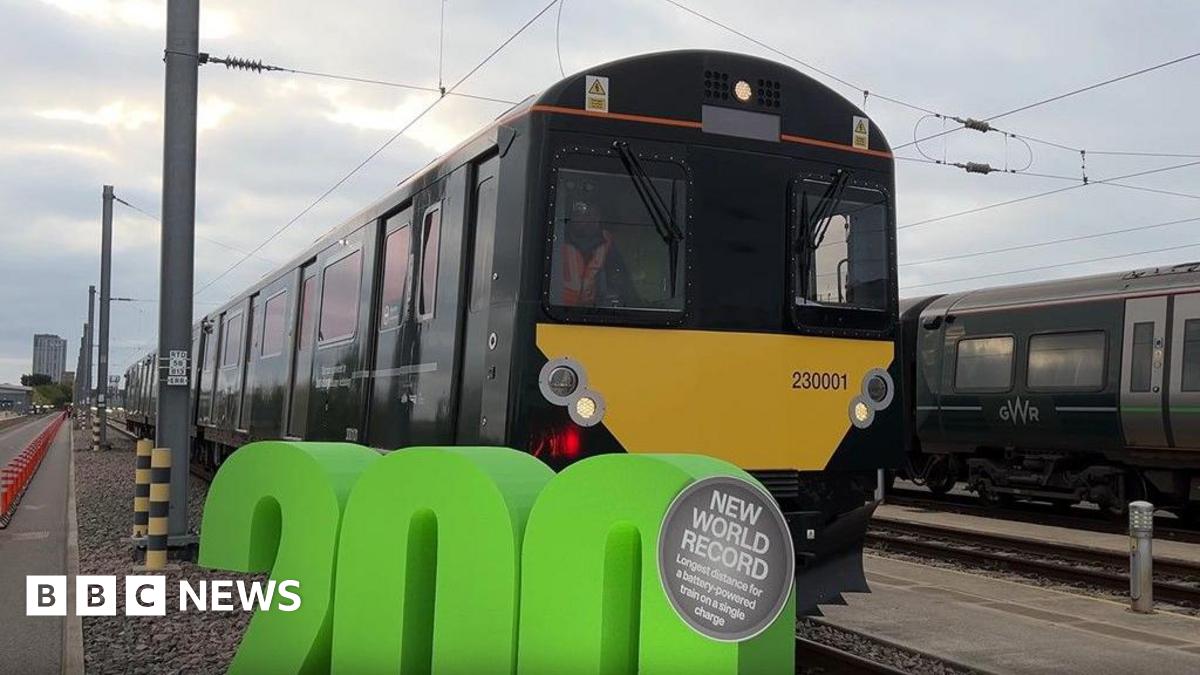


Important to realise that this was done without any internal train lighting, heating or air-con, no doors opening and closing etc.
Still impressive but more a PR stunt than real life.

Does anyone know if the existing record by Stadler was also done without heating/air con.
I would imagine lights and doors would have a relatively low impact (although keeping the doors closed would make heating/air con less power intensive)

none of these are as important as not calling at any stations though!

Yes, of course.
Although I imagine the Stadler test did the same, that's the main thing I'm wondering about.

It had 22% charge remaining at the end of the test, enough for anther 58 miles.

Stopping and starting again, like what a train normally does at stations and signals, would use a hell of a lot more energy than just cruising at a constant speed. I see it ran overnight, presumably to avoid all that.
And how long would it take to recharge from fully depleted?

Regenerative braking would recoup some of the energy from a more stop start journey. I wonder how much ?.

Some, but not enough to cover the subsequent acceleration as nothing is 100% efficient.
Then of course you have the extra load of the passengers, on both the traction motors and the aircon.
Would be interesting to see how far these can go in real world conditions and not just a range cruise.

Used by some (govt) as an excuse not to electrify to Oxford?

Exactly what I was thinking. Battery trains have their place but Oxford needs wires.

Yep can imagine the Treasury seeing this with glee. No need to electrify let's keep putting projects off.

Batteries have their place but it's not hard to imagine HMT using this as an excuse to fund little, anywhere.

Is it impressive? Electric buses are going further in the real world and they have far greater rolling resistance with rubber wheels rather than steel.

To be honest, I don't understand why the public sector is spending any money on battery train trials at all. Surely it is for the private train manufacturers to demonstrate that their products work if they want to win tenders?

I think battery technology should not affect core route electrification. So getting to Oxford for example is a core route. Furthermore Oxford has not been electrified yet due to the impending re-build and layout changes, whenever that happens. Indeed getting beyond to Birmingham is also core and I would see Birmingham suburbs through Snow Hill to Stratford-Upon-Avon as a precursor.

I see battery technology allowing for services that start on the core ideally or use fast charge as demonstrated by the GWR class 230 trial. This would apply to the Thames and Cornish branches. Another example would be through electric services beyond Oxenholme to Windermere as these spend plenty of time under the wires so will get plenty of charge for the battery pack.

I do not think intercity routes should be viewed as appropriate for battery technology at the expense of putting wires up. For difficult parts maybe (plus allows for coping with overhead failures) and also for diversionary routes if short enough.

So I can see modern battery technology will cope with the Midland Main Line when most of it is electrified (so just diversionary routes and a few hard bits to wire on battery). THEN the Bi-Mode 810s would be more useful on longer non-electrified stretches like cross country where there are a lot more gaps in the electrification (to put it mildly). That would work for the foreseeable future but especially where some is already electrified (say Manchester to the South coast) but not enough for battery. The North-East to South-West services would gradually work more cleanly with more electrification (Particularly in deepest South-West but parts in central England are more likely). That's using diesel Bi-Modes as having enough electrified to allow battery charging is a long long way off.
 
Last edited:
Sponsor Post - registered members do not see these adverts; click here to register, or click here to log in
R

RailUK Forums

The exile

Established Member
Joined
31 Mar 2010
Messages
9,434
Location
Somerset
This particular stunt - none- as all it has done is exploit what the experts already know!
 

Sorcerer

Established Member
Joined
20 May 2022
Messages
2,117
Location
Liverpool
Hopefully none. Batteries along with bi-modes should be considered a stop-gap to allow for decarbonisation until routes can be fully electrified. They are not a panacea or substitute for electrification and therefore should not be treated as such.
 

HSTEd

Veteran Member
Joined
14 Jul 2011
Messages
20,342
Just another demonstration of the potential of battery trains to travel very long distances.
 

pokemonsuper9

Established Member
Joined
20 Dec 2022
Messages
4,630
Location
Greater Manchester
Hopefully none. Batteries along with bi-modes should be considered a stop-gap to allow for decarbonisation until routes can be fully electrified. They are not a panacea or substitute for electrification and therefore should not be treated as such.
But sometimes the economics will work out that batteries are cheaper than wires, especially for lines with very low service like the Bentham, Settle-Carlisle, Far North, Kyle of Lochalsh, West Highland, Oban, Cambrian, Heart of Wales, Fishguard, Conwy Valley, most Cornish branches, and more.
Batteries absolutely have long-term place on the railway.
 

The exile

Established Member
Joined
31 Mar 2010
Messages
9,434
Location
Somerset
They are not a panacea or substitute for electrification and therefore should not be treated as such.
Although in some circumstances they are. Not just the low frequency lines mentioned elsewhere but also for bridging gaps where resolving clearance issues really would be prohibitively expensive and even short neutral sections impractical.
 

Class15

Established Member
Joined
30 Dec 2021
Messages
4,160
Location
North London or Mildmay line
But sometimes the economics will work out that batteries are cheaper than wires, especially for lines with very low service like the Bentham, Settle-Carlisle, Far North, Kyle of Lochalsh, West Highland, Oban, Cambrian, Heart of Wales, Fishguard, Conwy Valley, most Cornish branches, and more.
Batteries absolutely have long-term place on the railway.
On these lines maybe, but obviously not on the Oxford line for example.
Although in some circumstances they are. Not just the low frequency lines mentioned elsewhere but also for bridging gaps where resolving clearance issues really would be prohibitively expensive and even short neutral sections impractical.
Core freight routes must be electrified in full though in my opinion.
 

zwk500

Veteran Member
Joined
20 Jan 2020
Messages
18,600
Location
Northampton
Hopefully none. Batteries along with bi-modes should be considered a stop-gap to allow for decarbonisation until routes can be fully electrified. They are not a panacea or substitute for electrification and therefore should not be treated as such.
They are neither a panacea nor a substitute for proper electrification but they are an important piece of the long-term solution for decarbonisation for areas where full OLE would be uneconomical, technically challenging, or pose long-term extreme maintenance liabilities.
 

bspahh

Established Member
Joined
5 Jan 2017
Messages
2,440
Regenerative braking would recoup some of the energy from a more stop start journey. I wonder how much ?
For electric cars, I have seen 70% quoted as the amount of energy that you get back from regenerative braking. That would depend on the efficiency of the motors and charger, and the battery chemistry.
 

The exile

Established Member
Joined
31 Mar 2010
Messages
9,434
Location
Somerset
On these lines maybe, but obviously not on the Oxford line for example.

Core freight routes must be electrified in full though in my opinion.
Though the yards at either end are ideal stomping ground for batteries!
 

zwk500

Veteran Member
Joined
20 Jan 2020
Messages
18,600
Location
Northampton
On these lines maybe, but obviously not on the Oxford line for example.
Didcot-Oxford could hardly be described as having a 'very low service', tbf. And yes, Didcot-Oxford-Birmingham should absolutely be electrified.
Core freight routes must be electrified in full though in my opinion.
Less convinced about this. Freight is going to need last-mile batteries anyway, so short gaps can be coped with. That being said I'd want freight to have a high proportion of electrification to avoid issues with lots of trains trying to charge batteries up simultaneously.
 

Peter Sarf

Established Member
Joined
12 Oct 2010
Messages
9,677
Location
Croydon
On these lines maybe, but obviously not on the Oxford line for example.

Core freight routes must be electrified in full though in my opinion.
But with the class 93 and more so the 99 small gaps in electrification are no longer a problem.

I can see being able to economically (I hope) get past a mile gap in electrification might heavily reduce the costs of electrification of the overall route. Perhaps 40% of the cost saved by missing 5% of the route. I would then expect some gaps to be filled in at a later date if traffic levels make it useful.
For electric cars, I have seen 70% quoted as the amount of energy that you get back from regenerative braking. That would depend on the efficiency of the motors and charger, and the battery chemistry.
That is a reasonable amount of energy no longer going up in smoke (via the exhaust).
 

Sorcerer

Established Member
Joined
20 May 2022
Messages
2,117
Location
Liverpool
Okay, so I've seen mention of freight yards, and in that situation I do have to somewhat alter my position. If overhead lines are an obstacle to the efficiency of railway freight operations at the terminals then batteries clearly have the edge for decarbonisation. The only real exception to this would be the Royal Mail trains but I don't really know if that's going to be a factor in future.

But outside of some maybe small breaks in routes where overhead might not be possible (such as a tunnel with insufficient clearance) batteries should still not be the primary source of power. If we cannot achieve full electrification then they should fill the gaps, but the impression I get is that they along with bi-modes are often treated as alternatives (and in the case of bi-modes were sometimes cited as reason to pause electrification of the GWML and MML).
 

Topological

Established Member
Joined
20 Feb 2023
Messages
4,316
Location
Swansea
Electrification should be used on Didcot-Birmingham (including via Coventry), Birmingham - Derby, South Wigston - Doncaster via Sheffield, Erewash and the MML to Nottingham. Exeter to Bromsgrove via Bristol Temple Meads (including via Weston-super-Mare). Swindon to Bristol Temple Meads via Bath and Cardiff to Swansea.

The B and H and the Basingstoke-Exeter would be the last strongholds of diesel (as would be Oxford to Hereford via Worcester)

I think we can see now that Swindon - Gloucester could be battery-operated between the wires at Cheltenham and Swindon. Likewise, Gloucester to Severn Tunnel Junction would work as a battery.

I think it would be a massive surprise if there was other electrification of mainlines beyond that outlined in my first paragraph.
 

Class15

Established Member
Joined
30 Dec 2021
Messages
4,160
Location
North London or Mildmay line
Electrification should be used on Didcot-Birmingham (including via Coventry), Birmingham - Derby, South Wigston - Doncaster via Sheffield, Erewash and the MML to Nottingham. Exeter to Bromsgrove via Bristol Temple Meads (including via Weston-super-Mare). Swindon to Bristol Temple Meads via Bath and Cardiff to Swansea.

The B and H and the Basingstoke-Exeter would be the last strongholds of diesel (as would be Oxford to Hereford via Worcester)

I think we can see now that Swindon - Gloucester could be battery-operated between the wires at Cheltenham and Swindon. Likewise, Gloucester to Severn Tunnel Junction would work as a battery.

I think it would be a massive surprise if there was other electrification of mainlines beyond that outlined in my first paragraph.
I reckon the B&H should probably be prioritised over the Bristol to Taunton line, but not totally sure. Just strikes me as higher speed and direct London trains.
 

Topological

Established Member
Joined
20 Feb 2023
Messages
4,316
Location
Swansea
I reckon the B&H should probably be prioritised over the Bristol to Taunton line, but not totally sure. Just strikes me as higher speed and direct London trains.
My logic for Taunton to Bristol is that you would be able to run EMUs on all CrossCountry services (bar Plymouth, which would presumably get cut as Laira would not be a factor and the B&H Exeter terminators could continue in lieu)

Although I can see why B&H could be done over Taunton to Exeter if CrossCountry were using meaningful battery trains.
 

CMS1

Member
Joined
15 Feb 2025
Messages
245
Location
uk
Possibly not the right thread, but what is the current 'fuel' cost comparison of a modern electric vs modern diesel multiple unit, using today's diesel/electricity rates, and excluding fuel duty as this goes back to the government (and in the context of GBR we need to look at the relevant cost to the country's purse)? No maintenance cost comparisons, just the cost of powering one vs the other.
 

Topological

Established Member
Joined
20 Feb 2023
Messages
4,316
Location
Swansea
Possibly not the right thread, but what is the current 'fuel' cost comparison of a modern electric vs modern diesel multiple unit, using today's diesel/electricity rates, and excluding fuel duty as this goes back to the government (and in the context of GBR we need to look at the relevant cost to the country's purse)? No maintenance cost comparisons, just the cost of powering one vs the other.
Not sure you can ignore fuel duty.

Even if money is moving from government to government, it is really moving between departments and all budgets have to be accounted for. In the case of fuel duty there will be environmental policies linked to fuel duty that will reflect fuel use. Whilst I appreciate the desire to make fuel seem cheaper, the reality will always be that the railway needs to pay all relevant taxes.

Others may know, but it appears both the police and NHS pay fuel duty on behalf of the drivers who are actually using the fuel.
 

CMS1

Member
Joined
15 Feb 2025
Messages
245
Location
uk
True, but the treasury (who fund electrification) will lose the income so they will consider it. But if we leave fuel duty in, what is the current fuel cost between the 2?
 

pokemonsuper9

Established Member
Joined
20 Dec 2022
Messages
4,630
Location
Greater Manchester
Not sure you can ignore fuel duty.

Even if money is moving from government to government, it is really moving between departments and all budgets have to be accounted for. In the case of fuel duty there will be environmental policies linked to fuel duty that will reflect fuel use. Whilst I appreciate the desire to make fuel seem cheaper, the reality will always be that the railway needs to pay all relevant taxes.

Others may know, but it appears both the police and NHS pay fuel duty on behalf of the drivers who are actually using the fuel.
True, but the treasury (who fund electrification) will lose the income so they will consider it. But if we leave fuel duty in for now, what is the current fuel cost between the 2?
Do trains pay fuel duty? I thought they were able to use red diesel?
 

CMS1

Member
Joined
15 Feb 2025
Messages
245
Location
uk
The red rate is 10.18p per litre vs the standard 52.95p
 

Topological

Established Member
Joined
20 Feb 2023
Messages
4,316
Location
Swansea
Do trains pay fuel duty? I thought they were able to use red diesel?
It looks like it, but it is reduced duty rather than 0.

Link: Red Diesel

2.2 Vehicles​

The types of vehicles that can use red diesel are:

  • vehicles designed to operate on a railway
  • agricultural vehicles
  • special vehicles
  • mowing machines
  • unlicensed, including SORN (Statutory Off Road Notification) vehicles
 

HSTEd

Veteran Member
Joined
14 Jul 2011
Messages
20,342
Yes, trains now pay fuel duty, although at such a low rate that they functionally don't.
 

SynthD

Established Member
Joined
4 Apr 2020
Messages
2,042
Location
UK
The amount of money the government were willing to spend on key freight routes was already highly changeable. The Southampton to Coventry route, where Didcot to Oxford is one small part, is a prime example. That was dropped from electrification plans without talk of batteries, it was one of the lines assigned a magical solution like ‘bionic duckweed’, or just more diesel.

The price per mile was worked out and shared in one of the class 230 threads.
 

Peter Sarf

Established Member
Joined
12 Oct 2010
Messages
9,677
Location
Croydon
Electrification should be used on Didcot-Birmingham (including via Coventry), Birmingham - Derby, South Wigston - Doncaster via Sheffield, Erewash and the MML to Nottingham. Exeter to Bromsgrove via Bristol Temple Meads (including via Weston-super-Mare). Swindon to Bristol Temple Meads via Bath and Cardiff to Swansea.

The B and H and the Basingstoke-Exeter would be the last strongholds of diesel (as would be Oxford to Hereford via Worcester)

I think we can see now that Swindon - Gloucester could be battery-operated between the wires at Cheltenham and Swindon. Likewise, Gloucester to Severn Tunnel Junction would work as a battery.

I think it would be a massive surprise if there was other electrification of mainlines beyond that outlined in my first paragraph.
I would agree with the first paragraph. But add in electrification as a priority over steeply graded parts in the South-West such as the Devon banks between Exeter and Plymouth.
 

Magdalia

Established Member
Joined
1 Jan 2022
Messages
7,392
Location
The Fens
The PM programme on Radio 4 this evening had a report on this, just before the weather forecast at the end of the programme. Evan Davis interviewed Paul Gentleman of GWR.

He said that the old Stadler record was 139 miles.

One key point emphasised was fast charging, taking about 3 minutes.

A battery train with a 200 mile range that can charge in 3 minutes will be a much cheaper option than electrification on many routes.

The key issue that will determine the extent of the feasibility of using battery trains is going to be their cost, in comparison to straight electric trains. That's mostly the cost of the batteries. In a lot of cases the extra cost of the batteries is going to be cheaper than the cost of installing overhead line.
 

Peter Sarf

Established Member
Joined
12 Oct 2010
Messages
9,677
Location
Croydon
The PM programme on Radio 4 this evening had a report on this, just before the weather forecast at the end of the programme. Evan Davis interviewed Paul Gentleman of GWR.

He said that the old Stadler record was 139 miles.

One key point emphasised was fast charging, taking about 3 minutes.

A battery train with a 200 mile range that can charge in 3 minutes will be a much cheaper option than electrification on many routes.

The key issue that will determine the extent of the feasibility of using battery trains is going to be their cost, in comparison to straight electric trains. That's mostly the cost of the batteries. In a lot of cases the extra cost of the batteries is going to be cheaper than the cost of installing overhead line.
Obviously the busier a line then the more attractive the cost of electrification will be compared to the cost of more and more batteries for trains using the line. Wonder where "main line" becomes more cost effective to electrify.

Another cost is the weight and space for the batteries. Not sure that is significant.

There are also the costs of wasted electrical energy. The energy put into charging a battery is greater than the energy returned from that battery for use. I think the waste manifests itself in the form of heat.
 

HSTEd

Veteran Member
Joined
14 Jul 2011
Messages
20,342
Obviously the busier a line then the more attractive the cost of electrification will be compared to the cost of more and more batteries for trains using the line. Wonder where "main line" becomes more cost effective to electrify.
I guess, given current electrification costs, it will be somewhere in the vicinity of 10-15 trains per hour.

Batteries aren't that expensive compared to electrification these days.
Even a million pounds only gets a few hundred track metres of electrification.
 

BayPaul

Established Member
Joined
11 Jul 2019
Messages
1,517
I'm going to disagree with the consensus here. I don't see that electrifying Didcot to Oxford makes much sense.

Yes, it would be lovely to have an all electric network, but the costs are just astronomical, so a good cold hard look at the different options needs to be considered. Transpenine electrification makes a lot of sense - a relatively short and very busy diesel line between two large electrified networks at each end, so for a (relatively) low cost you can replace several fleets of diesels with all electric trains (perhaps with batteries for extensions to Hull etc)

But Oxford isn't like that. Almost all trains to Oxford continue on somewhere else. So as lots of people on this thread say, why not electrify Didcot to Oxford to Birmingham NS, via Solihull and Coventry. The problem is, as far as I can see, thst still only allows the Didcot - Oxford stoppers to go fully electric. All other trains would still need to be bi-mode! Manchester - Bournemouth would also need Reading - Basingstoke to be wired, whilst North East to Reading needs MML to be finished and Birmingham to Derby to be done. GWR long distance trains generally carry on towards Worcester (OK, there are a few Banburys that would be fully electric).

Most of the low hanging fruit of electrification that allows huge numbers of trains on fully contained diagrams to be replaced for short lengths of wiring has already been done. Battery tech seems to me to be ideal for places like Oxford, where it could reconnect the stoppers at didcot and remove all that pollution from the air just as well as a billion pounds of wiring.

We should then concentrate on where electrification genuinely is the only option. For me discontinuous electrification on the Chiltern mainline would be a far bigger priority than Oxford, coupled with batter technology - wire the cheap bits from Marylebone to High Wycombe and the Snow Hill core, and with decent batteries you could replace every Chiltern and West Midland Snow Hill train with BEMUs.
 
Status
Not open for further replies.

Top