Good idea for a thread, kudos to the OP
It also seems to put paid to the oft-used line that 'the government don't care about XC because it doesn't serve London; if MPs had to use it then it would suddenly get massive investment'
Some history is probably required. I think BR had the Cross Country and Midland Mainline in the same business division, they had more in common with each other than they did with the 'flagship' bits of InterCity. The restaurant cars and superior First Class offerings on the ECML/ GEMLs have never in the same ballpark as these routes
Both lines did well in the early tranche of privatisation though. I'm not convinced that the transformational investments would have happened otherwise, after decades of relying on cascades under BR
Both lines used their new trains to double frequencies on their core sections with a token expansion beyond (Matlock, Swansea etc)
XC went for a fully new fleet and attracted a lot of criticism. MM less so, possibly because their short DMUs (two coach 170s) were in addition to their HSTs (whilst XC were directly replacing theirs)
XC saw a big boost to passenger numbers but the government wouldn't back their plans for follow up investment
MM were allowed to have two further capacity boosts. Three coach 170s replaced two coaches. Then four coach 222s to replace those, with some nine coach ones introduced for the planned hourly London - Leeds service (one of my favourite "what if" scenarios)
The Leeds service wasn't allowed, and the franchise stopped it's boom era. The 222s were reformed into four, five and seven carriages, partly replacing some HSTs on the existing timetable (with the token extensions to Matlock etc removed)
I don't remember the other bidders when Stagecoach won the EMT franchise, were there any optimistic alternatives? Whilst people complained about the "no growth" Northern and Wales & Borders franchises let around the same time, the East Midlands got a similarly unambitious winner
In fairness to them, they did get their hands on the Hull Trains 222s, which were pretty much used up by the new Corby service (the introduction of which messed up the simple half hourly service pattern at stations south of Leicester)
But, whilst Hull Trains went from zero to three two coach 170s to four four coach 222s to five five coach 180s to five five coach 802s, the semi fast services on the Midland Mainline didn't keep pace - comparing the line to the fast Anglo-Scottish seems fanciful when the MML can't even compete with Hull services
Maybe Chiltern is a benchmark. They're still running Turbo stars from London to the West Midlands, but avoid criticism because they offer cheaper fares than Avanti (and possibly also because they have a small number of loco hauled trains a day, so avoid so much enthusiast criticism?)
Today, neither EMR or XC are particularly enjoyable journeys
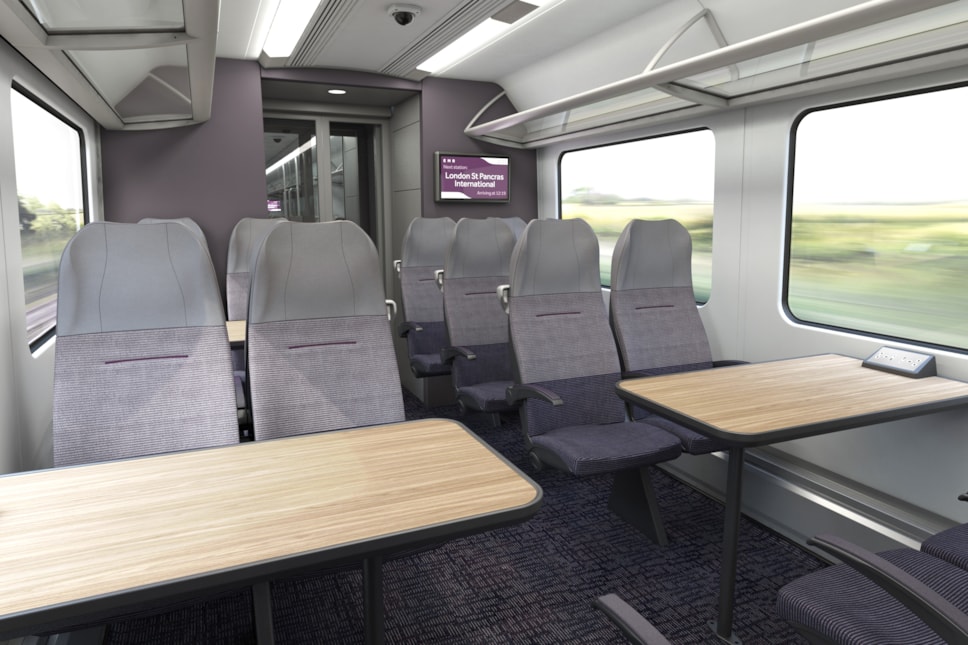
The good news for EMR passengers is that there is light at the end of the tunnel. 143 carriages of 222s will be replaced by 165 carriages of 810s (and with better internal design/ a better ratio of first: standard). Introduce more seats, improved reliability, that'll solve most of the problems. The limited capacity at St Pancras (and on the line through St Albans etc) stop longer term growth, but with one type of train on long distance service the platform capacity should be better used than the days when the 'fast' Nottingham HST regularly sat at St Pancras for sixty five minutes
XC looks a much harder nut to crack. The huge fleet size/ large number of depots/ huge number of pinch points/ almost always being at the mercy of other services...
At least EMR have some flexibility to improve their timetables. Even if you build nine coach 802s for every service, XC seem stuck with poor paths/ long intermediate dwell times/ inevitable staff swaps that often leave crew and trains in the wrong place for each other as a northbound delay can mean no staff to take over a southbound service (or no train for that driver to take over)
Plus, whilst the raison d'être of the MML services seems fairly straightforward, XC are trapped between being focusing on busy routes between cities (Bristol/ Manchester/ Leeds/ Oxford etc into Birmingham - relatively middle distance journeys) with the romantic notions of trains providing facilities needed for direct services from Aberdeen to Penzance
So by 2030, EMR should be looking better. Fifteen percent more carriages on long distance services (with better capacity/ dwells at the London end) should solve a lot of their problems, if the 810s are reasonably reliable. But they've got some short term pain to endure, with the longest 222s snapped up by Open Access
TL;DR - They're both pretty rubbish experiences right now but they were both pretty rubbish thirty years ago - the huge improvements in the early years of privatisation weren't didn't receive the necessary government guarantees/ funding to sustain them