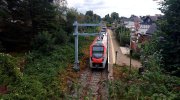
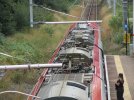
I have a photo from the bridge at Coryton but not a lot of use as the platform is quite far away from the bridge so you cant see properly.Have you or anyone got any photos looking down onto the roof of the Power Pack vehicle of a 231 or 756? I still haven't got round to doing so myself - I've only done so with a 755/4, and I really liked how the 4 exhaust pipes looked. I can tell from the ground that 231s and 756s have different exhaust pipes to 755s, so I'd like to see what they look like from above (a 756 only has a singular pipe, but it will still be the same different design).

-
Our new ticketing site is now live! Using either this or the original site (both powered by TrainSplit) helps support the running of the forum with every ticket purchase! Find out more and ask any questions/give us feedback in this thread!
You are using an out of date browser. It may not display this or other websites correctly.
You should upgrade or use an alternative browser.
You should upgrade or use an alternative browser.
Transport for Wales Class 231 / 756 Stadler FLIRTs
- Thread starter DaveHarries
- Start date
Sponsor Post - registered members do not see these adverts; click here to register, or click here to log in
R
RailUK Forums

tfw756rider
On Moderation
Many thanks, it's still a nice photoI have a photo from the bridge at Coryton but not a lot of use as the platform is quite far away from the bridge so you cant see properly.

No worries. I only had a few minutes as didnt want to miss it back! Otherwise id have been stuck in Coryton for half an hour and the next train was a 150!Many thanks, it's still a nice photo

Kite159
Veteran Member
I have a photo from the bridge at Coryton but not a lot of use as the platform is quite far away from the bridge so you cant see properly.
Very similar to the one I took earlier

Takes up pretty such the entire platform and 006 was the only one out today on those services that I could tell.
I was on the 1218 Cardiff Central to Coryton.Very similar to the one I took earlier
Takes up pretty such the entire platform and 006 was the only one out today on those services that I could tell.
I also got 756002 and 756004 out of the 3 cars but they were on other routes not Coryton.
Very similar to the one I took earlier
I expect quite a few people have a photo like that! (I do)
Takes up pretty such the entire platform and 006 was the only one out today on those services that I could tell.
Yes it's just been one diagram per day (the same one) so far.
tigermonstera
Member
Now that a 756 is regularly running Coryton-Penarth-Caerphilly, does anyone know if, in practice, they can get to Penarth and back on battery alone? Or does the engine need to top the battery up?
756006 is out today.
Also worth noting that the Penarth branch is quite steep, so with regenerative braking they can recover quite a lot of power as they trundle back down the hill towards Cardiff.
I took it from Penarth on the second day in service and it was all battery. The battery capacity on the 756s is substantial, so the 3-cars are unlikely to use their diesel whilst on the current route.Now that a 756 is regularly running Coryton-Penarth-Caerphilly, does anyone know if, in practice, they can get to Penarth and back on battery alone? Or does the engine need to top the battery up?
Also worth noting that the Penarth branch is quite steep, so with regenerative braking they can recover quite a lot of power as they trundle back down the hill towards Cardiff.
No point in rushing.I went on one today and was a bit surprised that between the Ty Glas crossing and Coryton it stopped accelerating as soon as it reached 30 mph between stations.
I think the line limit is 40 mph. I've certainly seen 150s go faster than 30 mph between stations on that line, and I had assumed with the better acceleration that the 756s would get up to a higher speed between stations than that before slamming on the brakes.
tigermonstera
Member
Good to see electric operation on Penarth — it will be interesting to see at what point the engines kick in when they enter service on the VoG.I took it from Penarth on the second day in service and it was all battery. The battery capacity on the 756s is substantial, so the 3-cars are unlikely to use their diesel whilst on the current route.
Also worth noting that the Penarth branch is quite steep, so with regenerative braking they can recover quite a lot of power as they trundle back down the hill towards Cardiff.
chargesmith
Member
I think this happens when the train is stopped in a non-electrified part of track. Have seen this happen myself at Taffs Well.Good to see electric operation on Penarth — it will be interesting to see at what point the engines kick in when they enter service on the VoG.
Makes sense to me as the biggest drains on the battery will be accelerating away from being stopped at stations.
The two variants of the 756s have different sizes of battery, too - the 3-cars have 480kWh and the 4-cars have 600kWh. (see attached)Good to see electric operation on Penarth — it will be interesting to see at what point the engines kick in when they enter service on the VoG.
Attachments

nigelsporne
Member
Not knowing much about all this but do the 756s change automatically between diesel and electric? Is there a track side sensor to activate this?
There's automatic power changeover, which changes between "pantograph up" and "pantograph down" automatically, and that's activated by a device on the track that the train talks to. Changing from battery to diesel I'm less sure of, but it's likely that an engine start will be triggered if the battery drops below a certain state of charge (especially if the temperature is also low). That'll vary from unit to unit and from day to day, so it's unlikely to always be in the same place.Not knowing much about all this but do the 756s change automatically between diesel and electric? Is there a track side sensor to activate this?
I have never heard the diesel engine start on any of the class 756 that I have travelled on. I expect that it happens automatically when the charge drops below a defined level. I doubt that a round trip to Penarth will be a challenge.Not knowing much about all this but do the 756s change automatically between diesel and electric? Is there a track side sensor to activate this?
nigelsporne
Member
Thank you both.
They dont run on diesel on the TAM at all. On battery 100% of the time unless there's a fault and specific instruction received to start engine's.I think this happens when the train is stopped in a non-electrified part of track. Have seen this happen myself at Taffs Well.
Makes sense to me as the biggest drains on the battery will be accelerating away from being stopped at stations.
== Doublepost prevention - post automatically merged: ==
Yes that's correct, 20% charge then they start. They don't get near that on the TAM at all.I have never heard the diesel engine start on any of the class 756 that I have travelled on. I expect that it happens automatically when the charge drops below a defined level. I doubt that a round trip to Penarth will be a challenge.
tfw756rider
On Moderation
Presumably you mean electric in general, whether in OverHead Line Equipment (OHLE) or battery mode?They dont run on diesel on the TAM at all. On battery 100% of the time unless there's a fault and specific instruction received to start engine's.
== Doublepost prevention - post automatically merged: ==
Yes that's correct, 20% charge then they start. They don't get near that on the TAM at all.
Reminds me of the discussion in this thread a while back of whether 756s can run "directly" off the OHLE or if they have to run on "battery power" even with the pantograph up, with the OHLE always providing power to the charging circuit / batteries (even when charging isn't needed), rather than straight to the transformers etc. (or something like that).
Last edited:
chargesmith
Member
Must have had low state of charge or they were deliberately running a test when I saw it then.They dont run on diesel on the TAM at all. On battery 100% of the time unless there's a fault and specific instruction received to start engine's.
Mind you I didn't see / hear the engine running but I did see a shadow of the vapours coming from the power pack car, can't think what else this could be though unless it was an air conditioning vent of some sort?
I read somewhere before the diesels aren't for general use, the plan is that they'll be running on electric (ole/battery) almost always, even on the Bridgend trips, the diesel is mostly a backup incase of disruption. I guess before they're built and tested they can't fully know if the battery will be up to scratch so best to play to safe and include the diesel.
If it turns out the diesel does end up getting used more than hoped I guess they could potentially add a fixed conductor bar to the Bridgend platform like at Caerphilly (though idk if there's a sufficient electrical supply nearby).
== Doublepost prevention - post automatically merged: ==
Good to see the 3 car 756s out on their proper routes. Hopefully it won't be long till the 4 cars make their way over to Rhymney too.
If it turns out the diesel does end up getting used more than hoped I guess they could potentially add a fixed conductor bar to the Bridgend platform like at Caerphilly (though idk if there's a sufficient electrical supply nearby).
== Doublepost prevention - post automatically merged: ==
Good to see the 3 car 756s out on their proper routes. Hopefully it won't be long till the 4 cars make their way over to Rhymney too.
The wires north of Caerphilly are due for energisation in December, so it'll be at least the spring before you start getting 756s over there. It's also contingent on 398s being ready to take over from them on the TAM lines, and they're due to start in service in early November.Good to see the 3 car 756s out on their proper routes. Hopefully it won't be long till the 4 cars make their way over to Rhymney too.
== Doublepost prevention - post automatically merged: ==
Siemens were at Rail Live demonstrating their new static converter setup which would make that a lot easier. It hooks up to the grid's local three-phase supply and makes 25kV single phase to power the trains. This is much easier for the power companies to attach to the grid than a conventional railway substation.If it turns out the diesel does end up getting used more than hoped I guess they could potentially add a fixed conductor bar to the Bridgend platform like at Caerphilly (though idk if there's a sufficient electrical supply nearby).
Last edited:
nigelsporne
Member
So am I reading this correctly, will the 756s operate on battery from the finish of the wires north of Queen Street all the way to Bridgend?
Will there be sufficient wires north of Caerphilly to charge the battery? Quite impressive if this is the case.
Will there be sufficient wires north of Caerphilly to charge the battery? Quite impressive if this is the case.
No point in rushing.
Perhaps not but it wasn't keeping to the timetable, though it mostly made it up by Heath since it missed out Ty Glas.
It did accelerate straight out of Coryton though rather than waiting until the rear was clear of the 5 mph limit.
When I've previously used 756s between Radyr and Cardiff they seem to have just gone flat out and arrived at stations early.
Yes, that was mePresumably you mean electric in general, whether in OverHead Line Equipment (OHLE) or battery mode?
Reminds me of the discussion in this thread a while back of whether 756s can run "directly" off the OHLE or if they have to run on "battery power" even with the pantograph up, with the OHLE always providing power to the charging circuit / batteries (even when charging isn't needed), rather than straight to the transformers etc. (or something like that).
== Doublepost prevention - post automatically merged: ==
The engines will be required on a trip to BridgendI read somewhere before the diesels aren't for general use, the plan is that they'll be running on electric (ole/battery) almost always, even on the Bridgend trips, the diesel is mostly a backup incase of disruption. I guess before they're built and tested they can't fully know if the battery will be up to scratch so best to play to safe and include the diesel.
If it turns out the diesel does end up getting used more than hoped I guess they could potentially add a fixed conductor bar to the Bridgend platform like at Caerphilly (though idk if there's a sufficient electrical supply nearby).
== Doublepost prevention - post automatically merged: ==
Good to see the 3 car 756s out on their proper routes. Hopefully it won't be long till the 4 cars make their way over to Rhymney too.
== Doublepost prevention - post automatically merged: ==
This type of post is why drivers dont like train spottersPerhaps not but it wasn't keeping to the timetable, though it mostly made it up by Heath since it missed out Ty Glas.
It did accelerate straight out of Coryton though rather than waiting until the rear was clear of the 5 mph limit.
When I've previously used 756s between Radyr and Cardiff they seem to have just gone flat out and arrived at stations early.
Yes, that was me
== Doublepost prevention - post automatically merged: ==
The engines will be required on a trip to Bridgend
== Doublepost prevention - post automatically merged: ==
This type of post is why drivers dont like train spotters
Could you explain what I said that was so offensive please?
tfw756rider
On Moderation
Why? And that's a very basic statement. Some drivers do like trainspotters, and others don't. And actually, I find that more do than don't.This type of post is why drivers dont like train spotters

Here's a photo I took of 756005 at Birchgrove on 23rd July 2025 showing the roof of the power pack.I have a photo from the bridge at Coryton but not a lot of use as the platform is quite far away from the bridge so you cant see properly.
Attachments
tfw756rider
On Moderation
Many thanksHere's a photo I took of 756005 at Birchgrove on 23rd July 2025 showing the roof of the power pack.
On the bottom-left of the Power Pack vehicle, I can see one familiar set of "two the same and one different" fan / vent grilles for the one diesel engine (with 755/3s having two sets of those grilles for their two diesel engines, and 755/4s and 231s having four for their four diesel engines). Behind the "two the same" fan / vent grilles, I think I can just see what's presumably the exhaust silencer; obviously I can't see the pipe at all.
On the right of the Power Pack vehicle, I can see more unfamiliar looking modules, which I presume are something to do with thermal management for the batteries and associated components?
I read somewhere before the diesels aren't for general use, the plan is that they'll be running on electric (ole/battery) almost always, even on the Bridgend trips, the diesel is mostly a backup incase of disruption. I guess before they're built and tested they can't fully know if the battery will be up to scratch so best to play to safe and include the diesel.
If it turns out the diesel does end up getting used more than hoped I guess they could potentially add a fixed conductor bar to the Bridgend platform like at Caerphilly (though idk if there's a sufficient electrical supply nearby).
So am I reading this correctly, will the 756s operate on battery from the finish of the wires north of Queen Street all the way to Bridgend?
Will there be sufficient wires north of Caerphilly to charge the battery? Quite impressive if this is the case.
KeolisAmey's winning ODP (Operator & Development Partner) bid to replace Arriva Trains Wales in 2018 included 100% electric operation (whether OHLE or battery) across the 'Core Valley Lines' (presumably the sections owned by WAG/TfW as opposed to Network Rail). While the original plan didn't feature 756s on the TAM lines, since the battery capacity is significantly larger than a 398 it should be no surprise that they don't need to fire up the 756's diesel engine on the TAM lines (assuming all the planned OHLE has been completed for 398s).They dont run on diesel on the TAM at all. On battery 100% of the time unless there's a fault and specific instruction received to start engine's.
I think I did read somewhere here on RailUK forums that they might even make it to Bridgend without needing to use the diesel at all, but I think that was a rumour/speculation and don't remember it being officially confirmed by TfW.
nigelsporne
Member
Thank you for this.
Having just spent a week travelling over the Valley lines I was surprised how many gaps there were in the wiring. I can understand those areas where there are complex layouts or bridges but there did seem to be some simple areas that didn't on the face of it have any major obstacles . The 756s obviously could cope and I assume the 398s will in the future.
Having just spent a week travelling over the Valley lines I was surprised how many gaps there were in the wiring. I can understand those areas where there are complex layouts or bridges but there did seem to be some simple areas that didn't on the face of it have any major obstacles . The 756s obviously could cope and I assume the 398s will in the future.