
• Our new ticketing site is now live! Using either this or the original site (both powered by TrainSplit) helps support the running of the forum with every ticket purchase! Find out more and ask any questions/give us feedback in this thread!

How should the Crewkerne issue be resolved both short and long term?

Status
Not open for further replies.

Bletchleyite

Veteran Member
Joined
20 Oct 2014
Messages
113,752
Location
"Marston Vale mafia"
Network Rail Wessex route have announced that Crewkerne station will close from Monday 28th July until further notice to improve punctuality as a result of a four mile long 40mph TSR in place west of Salisbury due to dry track beds.
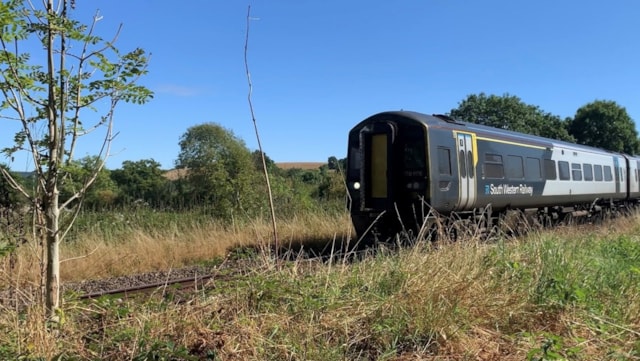

As the station is on the edge of town, a stop nearer town would to some extent offset the inconvenience of the change. It might mean them needing to register it as a local bus service, though?

Anyone driving to the station will probably just drive to a different one during the period of closure.

I honestly think they'd be better running a 2 hourly service west of Yeovil with plenty of padding, the problem with the West of England line (well, one of the many problems) is that there really isn't any margin for error with the passing loops, an example, in the past twelve months I don't think I've departed from Pinhoe on the up without being delayed by a down train, admittedly it's mostly 1-4 minutes, but its just an example of how tightly timed everything is along there.

Skipping Crewkerne isn't going to go down well, we're talking of a relatively busy station with a fair catchment area that could potentially be train-less for months if the weather stays dry.

Indeed - the idea of extending the double track to run... exactly the same service as today is never going to find it easy to demonstrate value for money... Yes, performance is obviously a meaningful benefit, as is being able to flex the timetable structure slightly to accommodate constraints elsewhere. But it's still hard to show that many tens of millions of pounds are well spent on that.

A slight increase to permissible speeds might be easier to demonstrate value from, as you may be able to get all the same benefits only with saving three lots of half a minute in various places along the single line. However to be realistic this would need several sections of at least a few kilometres where there are no level crossings or risky earthworks / structures. I suspect such stretches just don't exist along the parts where the time needs to be saved. You may also only see this benefit once modern rolling stock is introduced to the line, which is still years and years off.

The current 158/9s are about to commence a C6 which will give 8 years more service, and they’ll then be 40 years old when next due a C6.

The proposed doubling on the WofE route in NR studies is to provide an all-day half-hourly service west of Axminster / Honiton, and east of Yeovil, plus resilience for GWR diversions, which is where improvements between Yeovil and Axminster are required. That’s not the same service, though there would, of course, be performance benefits.

They all justify 6 cars, but the performance will still fall apart with skipping Crewkerne, so now there will be late trains and no trains for Crewkerne, there's also no college kids for 6 weeks.

A train every 2 hours isn't going to cut it, but one every 90 minutes would be better, it's just a question of would that be good enough to impact the whole line.

As I said by cutting from 1tph with 6 coaches to 1 train every 90 minutes you might be able to run the trains as 9 coaches long.

(Train of 6 coaches with a 4.5 hour round trip between Exeter and Salisbury at an hourly frequency requires 9 sets, change that to 90 minutes and you could run all the services as 9 coaches - assuming that the 2tph frequency is retained Waterloo to Salisbury).

You could potentially see if there's scope for extra services at the Exeter end, although that would either require some of the through trains to be shorter and/or to use trains which otherwise would be sat idle during the off peak and/or GWR to run (say extend some of the Okehampton services).

If you could get a 60 minute frequency at the western end, then you could look to run some extra buses between Honiton and Yeovil to improve local connections (anyone heading to London would likely wait for the next service or make sure they're on the earlier service).

Much as I've shouted in favour of "Takt" before, I think on lines like this (see also the Borderlands line) it is more important to offer a decent service than to run clockface particularly in these days of journey planners. Thus I think this idea of running through every 90 minutes with a longer train could be a good one.

Any other thoughts?
 
Sponsor Post - registered members do not see these adverts; click here to register, or click here to log in
R

RailUK Forums

Hellfire

Member
Joined
14 Dec 2012
Messages
573
Much as I've shouted in favour of "Takt" before, I think on lines like this (see also the Borderlands line) it is more important to offer a decent service than to run clockface particularly in these days of journey planners. Thus I think this idea of running through every 90 minutes with a longer train could be a good one.

Any other thoughts?
There might well be scope for extra services from Cranbrook into Exeter. The population is now over 7,000 and they are building like mad at the moment.
 

Starmill

Veteran Member
Joined
18 May 2012
Messages
27,332
Location
Bolton
Much as I've shouted in favour of "Takt" before, I think on lines like this (see also the Borderlands line) it is more important to offer a decent service than to run clockface particularly in these days of journey planners. Thus I think this idea of running through every 90 minutes with a longer train could be a good one.

Any other thoughts?
I have a feeling it'd need the end to end Salisbury - Exeter to slow down if you did that as the journeys between loops aren't all ~27 minutes. However, perhaps on this hypothesis, that's a price worth paying given the alternatives. Certainly you'd save no units or crews out of it. The post above also rightly highlights that a 90 min service would struggle to show value for Honiton, Cranbrook or Pinhoe.
 

cjw714

Member
Joined
4 Nov 2024
Messages
127
Location
South-East Asia
There might well be scope for extra services from Cranbrook into Exeter. The population is now over 7,000 and they are building like mad at the moment.
Then they need to squeeze the developers for a contribution towards doubling the track - as should have happened when the town and station were originally built.
 

Bletchleyite

Veteran Member
Joined
20 Oct 2014
Messages
113,752
Location
"Marston Vale mafia"
I have a feeling it'd need the end to end Salisbury - Exeter to slow down if you did that as the journeys between loops aren't all ~27 minutes. However, perhaps on this hypothesis, that's a price worth paying given the alternatives. Certainly you'd save no units or crews out of it. The post above also rightly highlights that a 90 min service would struggle to show value for Honiton, Cranbrook or Pinhoe.

Though I think long term just closing a station because it's a bit inconvenient reeks a bit of 1960s decisions and not the present day, so while I accept it is a reasonable short term option (as we have had before for other infrastructure issues like collapsing footbridges) it isn't really acceptable to just close a station in 2025 permanently or indefinitely because it's a bit awkward to serve it - better to spread the pain across several so they all get *a* service.

I'm assuming a 50-50 skip stop with another station doesn't work due to the locations of the loops?
 

cactustwirly

Established Member
Joined
10 Apr 2013
Messages
8,424
Location
UK
Much as I've shouted in favour of "Takt" before, I think on lines like this (see also the Borderlands line) it is more important to offer a decent service than to run clockface particularly in these days of journey planners. Thus I think this idea of running through every 90 minutes with a longer train could be a good one.

Any other thoughts?

It would interfere with the service east of Basingstoke. It needs to be a regular clock face timetable to provide Basingstoke a regular fast service to London and to fit in standardised paths in the congested mainline
 

Bletchleyite

Veteran Member
Joined
20 Oct 2014
Messages
113,752
Location
"Marston Vale mafia"
It would interfere with the service east of Basingstoke. It needs to be a regular clock face timetable to provide Basingstoke a regular fast service to London and to fit in standardised paths in the congested mainline

It doesn't. It needs to be 2tph clockface east of Salisbury, but it would be possible to split it there or to have varying length dwells there (or just operate every 90 minutes past there) to fit the paths east thereof.

This sort of adjustment was for years practiced at Northampton to fit the differing patterns north thereof into those south thereof, and indeed still is in the early morning and late evening when the Birmingham-Northampton that normally continues semifast to Euston instead drops into a local path for that section.
 

cactustwirly

Established Member
Joined
10 Apr 2013
Messages
8,424
Location
UK
It doesn't. It needs to be 2tph clockface east of Salisbury, but it would be possible to split it there or to have varying length dwells there (or just operate every 90 minutes past there) to fit the paths east thereof.

This sort of adjustment was for years practiced at Northampton to fit the differing patterns north thereof into those south thereof, and indeed still is in the early morning and late evening when the Birmingham-Northampton that normally continues semifast to Euston instead drops into a local path for that section.
How does that work when there's an uneven amount of services through Salisbury?
Unless it switches between the stopper and semi fast service east of Salisbury?
How would that work on Sundays as you would have alternating services to Waterloo/Reading and a restriction on train length for the latter
 

Zomboid

Established Member
Joined
2 Apr 2025
Messages
2,310
Location
Oxford
The positioning of the loops will only work for particular sectional running times. Add 3-4 minutes to one section for every train and the whole thing will collapse into a heap.

I would expect that all the sensibly conceivable timetable options that don't involve canning the station stop at Crewekerne have been investigated and either wouldn't work at all or would have an unacceptable detrimental effect on journeys from all the stations on the line. And the option selected is the least bad of all the options considered.

The optimum solution would have been for the world to stop emitting carbon dioxide several decades ago, as this is climate change in action. Since that's obviously not possible, the only way to avoid this happening again is to spend money on the infrastructure - be that shoring up the affected earthworks in a manner that TSRs shouldn't be required, or looking at where the loops would need extension to make a contingency timetable that takes account of the TSRs work. Both of which will cost a lot of money - which would pay for a lot of weeks of bustitution...
 

Bletchleyite

Veteran Member
Joined
20 Oct 2014
Messages
113,752
Location
"Marston Vale mafia"
How does that work when there's an uneven amount of services through Salisbury?
Unless it switches between the stopper and semi fast service east of Salisbury?

It could do that, yes.

How would that work on Sundays as you would have alternating services to Waterloo/Reading and a restriction on train length for the latter

You could split the Sunday service at Salisbury. Less convenient but arguably better than losing the entire service at a not insubstantially sized town.

Note also that Network Rail suggest the situation may worsen (presumably if the TSR needs to be slower, longer or the line closed entirely) - so these types of solution might be required anyway.
 

devon_belle

Member
Joined
21 Jul 2022
Messages
660
Location
Surrey
Thanks for making this thread. A friend at SWR says Axminster to Seaton Junction and Semley to Motcombe are also under investigation, with a test train to run next week to decide whether more TSRs are needed. If they are, that would presumably mean more station closures or moving to 0.5 tph (or both). Unsure positioning of loops allows for a reliable 90 min service? Ticket acceptance via Westbury should be adequate, but running more trains to Yeovil via Westbury, and finding a way to do 1 tph Salisbury-Gillingham & Exeter-Honiton would be better, if possible. The bay at Exeter Central and the second platforms at Gillingham and Honiton must be useful in some way?

Long term, the line obviously needs more loops and extensions of existing loops/double track for desired service enhancement and resilience against increasingly extreme climate trends. Remember that the WoE Line is possibly most important to Network Rail as a diversionary route for the GWR mainline, at least judging by the route studies which prioritise more regular GWR diversions over other enhancements. Fortunately GWR seems to fall over in the Winter more than the Summer, so our dry embankments shouldn't be a huge issue. I don't know the engineering problem with these embankments, but I would guess fixing them all is out of the question?

Realistically, I guess we're going to get used to seasonal TSRs and hope that local MPs kick up enough fuss to fund some more loops for a more resilient 1 tph.
 

brad465

Veteran Member
Joined
11 Aug 2010
Messages
11,543
Location
Taunton or Kent
If the problem is geology in extreme weather conditions, then the direct answer is some major structural reinforcement of the trackbed to make it more resilient to ground stress. This of course though will be very expensive, especially considering how long the affected stretch is.

An alternative answer that doesn't solve the problem, but mitigates its impact and provides benefits all the time, is at least completing the redoubling NR recommend. From memory that's a dynamic loop at Tisbury with a reinstated down platform, extending double track a mile west of Yeovil Jct, extending the Axminster loop east and a few miles of extension to the Honiton loop westbound, plus a dynamic loop centred on Crewkerne.

Then they need to squeeze the developers for a contribution towards doubling the track - as should have happened when the town and station were originally built.
I don't know if all the new towns the government want have been decided, but if at least a couple of them are going to be somewhere along the WEML route, I would hope this strengthens the case for route enhancements.
 
Joined
3 Apr 2024
Messages
52
Location
SE London, ex NW UK
With regards the replacement bus route, providing a stop in Crewkerne town centre seems like a very sensible approach. The bus will presumably have to run through there anyway.
 

Three-Nine

Member
Joined
5 Aug 2015
Messages
177
I’ve mentioned this in the other thread, but apparently theres roadworks in the Crewkerne town area during the first few weeks of the train alterations, so this may have influenced the bus calling point decision.
 

embers25

Established Member
Joined
16 Jul 2009
Messages
2,178
Thanks for making this thread. A friend at SWR says Axminster to Seaton Junction and Semley to Motcombe are also under investigation, with a test train to run next week to decide whether more TSRs are needed. If they are, that would presumably mean more station closures or moving to 0.5 tph (or both). Unsure positioning of loops allows for a reliable 90 min service? Ticket acceptance via Westbury should be adequate, but running more trains to Yeovil via Westbury, and finding a way to do 1 tph Salisbury-Gillingham & Exeter-Honiton would be better, if possible. The bay at Exeter Central and the second platforms at Gillingham and Honiton must be useful in some way?

Long term, the line obviously needs more loops and extensions of existing loops/double track for desired service enhancement and resilience against increasingly extreme climate trends. Remember that the WoE Line is possibly most important to Network Rail as a diversionary route for the GWR mainline, at least judging by the route studies which prioritise more regular GWR diversions over other enhancements. Fortunately GWR seems to fall over in the Winter more than the Summer, so our dry embankments shouldn't be a huge issue. I don't know the engineering problem with these embankments, but I would guess fixing them all is out of the question?

Realistically, I guess we're going to get used to seasonal TSRs and hope that local MPs kick up enough fuss to fund some more loops for a more resilient 1 tph.
Ticket acceptance via Westbury has never been granted for works on this line as GWR are so much mor expensive and don't take network cards bar in disruption (and long term disruption has never previously qualified). I agree this would help but only if it covered via Reading to Basingstoke due to the infrequent often cancelled Exeter-Westbury service, poor connections at Westbury and poor connections from Westbury on to Waterloo at Salisbury.

If acceptance is allowed via Reading GWR will see a huge drop off in Revenue.
 

Starmill

Veteran Member
Joined
18 May 2012
Messages
27,332
Location
Bolton
Journeys from Exeter St Davids to Salisbury via Warminster aren't that impractical. Obviously they're far worse than the direct services but there are connections at:

0552 change at Westbury 0811
0639 change at Westbury 0833
0752 change at Taunton & Westbury 1033
0943 change at Westbury 1132
1143 change at Westbury 1334
1342 change at Westbury 1532
1443 change at Westbury 1632
1542 change at Westbury 1732
1651 change at Westbury 1832
1752 change at Westbury 1934
1955 change at Westbury 2136

Is that perfect? No. Is there a guarantee of the connection being held at Westbury? No. But it's clearly viable to travel via Warminster instead if it comes to it.

In the gaps above it's also possible to travel via Bristol Temple Meads, although that is even slower and more capacity constricted than via Bruton.

Ticket acceptance via Pewsey can probably be ruled out.
 

embers25

Established Member
Joined
16 Jul 2009
Messages
2,178
The other way is not as good though with trains arriving Westbury just as Exeter trains leave. Also this only works for Exeter passengers.
 

BerkshireRails

On Moderation
Joined
4 Apr 2021
Messages
889
Location
United Kingdom
An alternative answer that doesn't solve the problem, but mitigates its impact and provides benefits all the time, is at least completing the redoubling NR recommend. From memory that's a dynamic loop at Tisbury with a reinstated down platform, extending double track a mile west of Yeovil Jct, extending the Axminster loop east and a few miles of extension to the Honiton loop westbound, plus a dynamic loop centred on Crewkerne.
Network Rail suggests;
That is correct, here is the lengths of the upgrades, all point work would be designed for a minimum of 50mph running.
New 6km Loop at Cranbrook,
Honiton Country end Loop extension to 3.9km past the platforms,
Axminster London end Loop extension to 142 milepost,
Yeovil Junction double track extended by 1 mile at the Country end,
Tisbury Loop is extended by 5.5km in the country direction, which will see an extra platform at Tisbury on the Down Exeter, with the Up Exeter using the existing platform.
 

Starmill

Veteran Member
Joined
18 May 2012
Messages
27,332
Location
Bolton
The other way is not as good though with trains arriving Westbury just as Exeter trains leave. Also this only works for Exeter passengers.
So does going via Pewsey. At the end of the day SWR are obliged to arrange this alternative if a delay over an hour is expected to a customer who's already booked so I'm not sure what the problem is with it. I would expect they would also provide road transport in any circumstances where the line is blocked or services heavily reduced.
 

embers25

Established Member
Joined
16 Jul 2009
Messages
2,178
So does going via Pewsey. At the end of the day SWR are obliged to arrange this alternative if a delay over an hour is expected to a customer who's already booked so I'm not sure what the problem is with it. I would expect they would also provide road transport in any circumstances where the line is blocked or services heavily reduced.
Each time the train was missed at Salisbury passengers had to wait for the next train, no other option was allowed. Salisbury to Exeter via Westbury is never permitted except during extreme disruption and never when a connection is missed at Exeter or Salisbury which results in a more than 1 hour delay.

Whenever they reduce to 2hrly the service is almost always not supported by buses either. One time they ran buses that didn't connect with trains meaning Basingstoke to Exeter could take up to 5 hours not 2.5 and wouldn't allow via Westbury.
 

Starmill

Veteran Member
Joined
18 May 2012
Messages
27,332
Location
Bolton
Each time the train was missed at Salisbury passengers had to wait for the next train, no other option was allowed. Salisbury to Exeter via Westbury is never permitted except during extreme disruption and never when a connection is missed at Exeter or Salisbury which results in a more than 1 hour delay.

Whenever they reduce to 2hrly the service is almost always not supported by buses either. One time they ran buses that didn't connect with trains meaning Basingstoke to Exeter could take up to 5 hours not 2.5 and wouldn't allow via Westbury.
I'm saying SWR are obliged to pay for / otherwise arrange alternatives if a delay exceeds 60 minutes. Not that they actually do.
 

The Ham

Veteran Member
Joined
6 Jul 2012
Messages
12,039
Long term the line needs to be (at least significantly, if not entirely) redoubled.

That would allow 2tph west of Salisbury, one which would be the slow service calling at all the stations, the other would be an express calling at a limited number of stations.

The latter, without the dwell times due to the passing loops and fewer station stops (only calling at Honiton and Yeovil between Exeter and Salisbury would cut 10 station stops, so about 30 minutes faster), that's likely to be slightly quicker than 3 hours.

You could even get a bit quicker still with some linespeed upgrades.

Whilst that's never going to beat the 2 hours time of the fastest GWR service, that's not the plan (or even needed).

First off, as long as a passenger can leave later than they could from the previous service and arrive earlier than they could from using the latter services that's enough for people to use a train which takes longer.

Whilst that's never going to be the case from Paddington, depending on the time of departure there's potential for that to be the case from Waterloo and other areas of London.

Next up is that whilst the GWR services are faster, they are often much busier, people would rather sit on a train for 3 hours than stand in one for 1 hour. As such as long as there's reasonable capacity then people are likely to use it.

The main thing to factor in is that GWR isn't really where the service has to do better, rather car travel.

For example, from Basingstoke if the train was closer to the 2:30 journey time of car travel (which a 30 minute faster train journey could match or nearly match) then the fact that road congestion can often extend that journey time and so rail has the potential to be a fairly reliable journey time.
 

brad465

Veteran Member
Joined
11 Aug 2010
Messages
11,543
Location
Taunton or Kent
What did engineers do to the trackbed on the S&C line between Kirby Thore and Appleby to remove the permanent 30mph restriction that was due to poor ground stability? That cannot have been cheap work and on what is a subsidiary line. If it were possible to combine ground reinforcement work with redoubling track, then both the resilience in extreme weather and resilience in timetabling, with potential for service upgrades, could be done in one job.
 

HSTEd

Veteran Member
Joined
14 Jul 2011
Messages
20,365
Could you install a watering system to ensure the embankment doesn't dry out again?

Its probably cheaper than most other engineering options. Network Rail could probably pay for a desalination plant and still have it be cheaper than extensive structural changes on the railway.
 
Last edited:

yorksrob

Veteran Member
Joined
6 Aug 2009
Messages
44,414
Location
Yorks
Could you install a watering system to ensure the embankment doesn't dry out again?

Its probably cheaper than most other engineering options. Network Rail could probably pay for a desalination plant and still have it be cheaper than extensive structural changes on the railway.

Or run a nightly train spraying water on the embankment during dry spells.
 

Three-Nine

Member
Joined
5 Aug 2015
Messages
177
May be a bit of a tangent but Jeremy Clarkson tried this on his fields with water sprayed from a bowser on “Clarksons Farm” during a dry spell. It was pointed out that this could in no way substitute for the volume of water provided by the weather over the required time period. Obviously not the same situation but I suspect it’s a bit more complicated than just spraying water on the affected areas.
 

HSTEd

Veteran Member
Joined
14 Jul 2011
Messages
20,365
May be a bit of a tangent but Jeremy Clarkson tried this on his fields with water sprayed from a bowser on “Clarksons Farm” during a dry spell. It was pointed out that this could in no way substitute for the volume of water provided by the weather over the required time period. Obviously not the same situation but I suspect it’s a bit more complicated than just spraying water on the affected areas.
Well a road mobile bowser can't really carry that much water. Even a garden hose can put out 20 tonnes of water per day (at 15L per minute).

I think it would either have to be a pipe based system or you'd need a 3000 tonne train running daily or something.
 

MarkyT

Established Member
Joined
20 May 2012
Messages
7,601
Location
Torbay
Long term the line needs to be (at least significantly, if not entirely) redoubled.

That would allow 2tph west of Salisbury, one which would be the slow service calling at all the stations, the other would be an express calling at a limited number of stations.
The alternative of running skip stop patterns west of Salisbury or Yeovil might be better, offering accelerated London journeys for a range of different stations on alternate trains while the overall Exeter-London time would be the same for all trains, likely easier to plan with sections of single track remaining. Then, an hourly all-stations could run between from Exeter to Axminster or Yeovil, picking up local traffic between towns that would otherwise lose a direct connection.
The latter, without the dwell times due to the passing loops and fewer station stops (only calling at Honiton and Yeovil between Exeter and Salisbury would cut 10 station stops, so about 30 minutes faster), that's likely to be slightly quicker than 3 hours.You could even get a bit quicker still with some linespeed upgrades. Whilst that's never going to beat the 2 hours time of the fastest GWR service, that's not the plan (or even needed).
...
Next up is that whilst the GWR services are faster, they are often much busier, people would rather sit on a train for 3 hours than stand in one for 1 hour. As such as long as there's reasonable capacity then people are likely to use it.
It's not just time. Price and availability play a part in individual travel decisions. Tickets via Salisbury are invariably cheaper than via Westbury, especially for non-quota off-peak fares a passenger might want to buy at short notice. For journeys to many parts of the south east, cheaper non-London routed fares may be used that way, changing at Clapham Jn for the Brighton line for example, avoiding the tube transfer between central London terminals, which often brings down the total journey time via Salisbury closer to GWR alternatives for some journeys.
For example, from Basingstoke if the train was closer to the 2:30 journey time of car travel (which a 30 minute faster train journey could match or nearly match) then the fact that road congestion can often extend that journey time and so rail has the potential to be a fairly reliable journey time.
Reliability is more important than time alone, I suggest.
 

Bald Rick

Veteran Member
Joined
28 Sep 2010
Messages
35,942
Or run a nightly train spraying water on the embankment during dry spells.

You couldn’t get enough water this way. You’d need over 1000 tonnes of water, per night, per mile of route, and it has to be sprayed at a slow rate to soak in, otherwise it will wash ballast and the formation away, block drains, flood neighbours, etc.
 
Status
Not open for further replies.

Top