DaleCooper
Established Member
A question that came to me out of the blue. When did railways in the UK start using the 24 hour clock?

ThanksBritish Rail started this on 14 June 1965.

That’s correct in terms of the National Rail Network. However, London Underground certainly used to show 00:00 departure times on public timetables and may well still do.A presumably oft-asked question.... Be right in saying that the public timetable never normally shows an 00:00 (or 24:00) arrival or departure time? Or, is that not necessarily the case?
In the public timetables it was usually avoided by not advertising anything with a midnight arrival/departure time.A presumably oft-asked question.... Be right in saying that the public timetable never normally shows an 00:00 (or 24:00) arrival or departure time? Or, is that not necessarily the case?

LU still useHowever, London Underground certainly used to show 00:00 departure times on public timetables and may well still do.


Apologies, I had it in my mind that LU use the rarer showing of midnight and they do use 24:00Note the use of 24.00 in the fifth column and 00.00¼ in the eighth. I can't see any use of 00.00 without a fraction anywhere in the publication.

Whereas many years later there would be confusion in East Anglia whenever the 20.40 “One” service was announced (other round times are available)I remember a letter in (I think) Railway Magazine of the time, suggesting that trains timetabled as 22:11 and 22:12 should be retimed to 22:10. A passenger misinterpreting the spoken time would then turn up half an hour early, rather than half an hour or an hour and a half late.
There was similar confusion when the first train was a Cross country service and the second train was a First Great Western train.Whereas many years later there would be confusion in East Anglia whenever the 20.40 “One” service was announced (other round times are available)

It's not just the public timetable. The operating timetable also avoids 00:00/24:00.A presumably oft-asked question.... Be right in saying that the public timetable never normally shows an 00:00 (or 24:00) arrival or departure time? Or, is that not necessarily the case?
Not sure how many trains will be running at this time, probably sleepers and I know TPE North used to be pretty much 24 hour on the core route
While risking going off. topic, the Military don't use 0000 or 2400 either, AIUI - Events will happen at 2359 or 0001, in order to avoid confusionThat’s correct in terms of the National Rail Network. However, London Underground certainly used to show 00:00 departure times on public timetables and may well still do.
Usually it didn't make much difference as any train starting before the clock change would be safely arrived before the next morning's service started. The empty stock off the newspaper trains would be retimed an hour earlier or later and shown in special traffic notices.To take this a bit further how do timetables cope with that bi-annual farce of clocks change, clocks forward (at least you miss an hour) and clocks back, the hour repeats. Not sure how many trains will be running at this time, probably sleepers and I know TPE North used to be pretty much 24 hour on the core route
When I worked there in the late 60s the last train (until 3 ish in the morning) from Northampton to London was 22.11. No matter how carefully you explained to prospective passengers that it left at about ten past ten at night there were those, recognised as being amongst that number, who still turned up expecting a twenty to eleven at night service. Tipping out time at the Black Lion nearby may have been a factor, thoughI remember a letter in (I think) Railway Magazine of the time, suggesting that trains timetabled as 22:11 and 22:12 should be retimed to 22:10. A passenger misinterpreting the spoken time would then turn up half an hour early, rather than half an hour or an hour and a half late.
 .
. AIUI summer time came into use during WW1, so timetabling had to accommodate seasonal clock changes long before the 24 hour clock was adopted.Usually it didn't make much difference as any train starting before the clock change would be safely arrived before the next morning's service started. The empty stock off the newspaper trains would be retimed an hour earlier or later and shown in special traffic notices.
The ÖBB app shows the Hamburg – Vienna sleeper as leaving Altona at 19:56 on 25 October and arriving at 09:17 (duration 14:21); for the 26 October departure it says leaving 19:56, arriving 09:17, duration 13:21.To take this a bit further how do timetables cope with that bi-annual farce of clocks change, clocks forward (at least you miss an hour) and clocks back, the hour repeats. Not sure how many trains will be running at this time, probably sleepers and I know TPE North used to be pretty much 24 hour on the core route
Usually it didn't make much difference as any train starting before the clock change would be safely arrived before the next morning's service started. The empty stock off the newspaper trains would be retimed an hour earlier or later and shown in special traffic notices.
I think all daylight savings changes in Australia happen at the same time, but without any DST in Queensland, Northern Territory or Western Australia.It got more even complicated for European International trains; different countries had different start and end dates for Summer Time. This affected British trains, too, that connected at Den Haag or Dunkerque. Perhaps it's all been co-ordinated now.
They just stick a few extra trains in the WTT for the autumn change. If you look up the Thameslink route on RTT for the morning of 27 Oct, (as an example of a service that runs overnight), in the detailed view it will show that such and such a service is in the WTT for that day only. In the spring they knock a few out. It’s been happening for many years so I’d assume they have fairly well rehearsed processes. As it’s a Sat/Sun there’s all the normal alterations due to engineering work as well.To take this a bit further how do timetables cope with that bi-annual farce of clocks change, clocks forward (at least you miss an hour) and clocks back, the hour repeats. Not sure how many trains will be running at this time, probably sleepers and I know TPE North used to be pretty much 24 hour on the core route


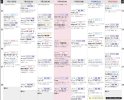
Similarly TV programme guides in Japan show times going beyond 24:00. I've attached a screenshot of the current Fuji TV listings (in Japanese) showing programmes scheduled up until 28:45 (i.e. 04:45):Not GB, and not railway, but.....
In Japan it is not unusual to see opening hours for bars etc. 'going round the clock' - so somewhere open from 1730 to 0130 will show 1730-2530.
I have never seen this anywhere else.
Yes, since 1995.It got more even complicated for European International trains; different countries had different start and end dates for Summer Time. This affected British trains, too, that connected at Den Haag or Dunkerque. Perhaps it's all been co-ordinated now.