• Our new ticketing site is now live! Using either this or the original site (both powered by TrainSplit) helps support the running of the forum with every ticket purchase! Find out more and ask any questions/give us feedback in this thread!

Battery units - are they really going to fix everything?

Status
Not open for further replies.

Class15

Established Member
Joined
30 Dec 2021
Messages
4,134
Location
North London or Mildmay line
So here we are with electrifications now being cancelled, paused or only partially completed due to ‘battery EMUs’ or ‘BEMUs’ which will be able to run off both battery and the overhead wires.

Of course, this helps decarbonise the railways, but there are many other benefits of electrification that can’t be gained by using battery trains. These include better acceleration, higher reliability and easier maintenance. They are also virtually untested, at least in this country. Are battery trains really the future, or is it another excuse for not continuing with actual proper electrification?
 
Sponsor Post - registered members do not see these adverts; click here to register, or click here to log in
R

RailUK Forums

frankmoh

On Moderation
Joined
7 May 2025
Messages
823
Location
London
I have a feeling that the "ban" (but technically not a ban) on new third rail developments has had something to do with this, even for companies that mostly use overhead AC.
 

Harpo

Established Member
Joined
21 Aug 2024
Messages
3,859
Location
Newport
there are many other benefits of electrification that can’t be gained by using battery trains.
Particularly, electric freight. But obviously not a problem on most branches and rural bits.
 

Nottingham59

Established Member
Joined
10 Dec 2019
Messages
3,333
Location
Nottingham
Are battery trains really the future, or is it another excuse for not continuing with actual proper electrification?
From my point of view, they really are a substantial part of the future. With "proper electrification" still costing around £4m/STK, the economics of battery operation are overwhelming.

Arriva have ordered tri-modes for their Grand Central operation out to 2038. Hard-nosed transport companies like Arriva don't commit £300m without having confidence in the technology.
 

Zomboid

Established Member
Joined
2 Apr 2025
Messages
2,294
Location
Oxford
No.

They're a big part of the future, but they're not magic.

In a sensible world, the answer would be electrification of trunk routes and batteries for the backwaters (or alternative non-carbon power sources for the long & remote routes).
 

HSTEd

Veteran Member
Joined
14 Jul 2011
Messages
20,321
The railway can't deliver third rail installations due to the regulator, and 25kV costs have increased to levels where full electrification is extraordinarily expensive.

The only way to deliver an electric railway at a reasonable cost is battery operation.
Meanwhile battery technology derived from electric cars already has the performance required.
 

HSTEd

Veteran Member
Joined
14 Jul 2011
Messages
20,321
….huge cost of complying with the Electricity At Work regulations.
Third rail projects were undertaken (primarily on Merseyside) after the Electricity at Work regulations were promulgated in 1989/1990, before the ORR decided to reinterpret them to ban third rail.
 

JonathanH

Veteran Member
Joined
29 May 2011
Messages
23,336
Are battery trains really the future, or is it another excuse for not continuing with actual proper electrification?
Battery buses are certainly being seen as the future for that sector. There is no sign of trolley wires making a return to the (urban) road network.

As some have posted previously, battery trains can be implemented a whole lot quicker than the infrastructure needed for full electrification.
 

gingertom

Established Member
Joined
19 Jun 2017
Messages
1,335
Location
Kilsyth
Arriva have ordered tri-modes for their Grand Central operation out to 2038. Hard-nosed transport companies like Arriva don't commit £300m without having confidence in the technology.
not so much has having confidence in the technology but lack of confidence in the govt committing to putting the wires up.
 

ac6000cw

Established Member
Joined
10 May 2014
Messages
3,910
Location
Cambridge, UK
battery trains can be implemented a whole lot quicker than the infrastructure needed for full electrification.
I agree, and are also built and tested in factories so don't disrupt railway operation like installing electrification does. (Electrification also has on-going maintenance costs, made more expensive because it's outdoor work, often done at unsocial hours).

No, battery powered trains are not "going to fix everything", but they are a very useful tool in the context of transport de-carbonisation - why wouldn't we use them where it makes sense?

They are also virtually untested, at least in this country.
Everything is 'virtually untested' when it's new - steam locomotives were in the 1820s, as was railway electrification at the end of the 19th century and internal-combustion powered trains in the 1920s. It's not a reason for not trying new methods of propulsion - making new things work is what good engineers are good at...
 

MarkyT

Established Member
Joined
20 May 2012
Messages
7,571
Location
Torbay
Battery buses are certainly being seen as the future for that sector. There is no sign of trolley wires making a return to the (urban) road network.
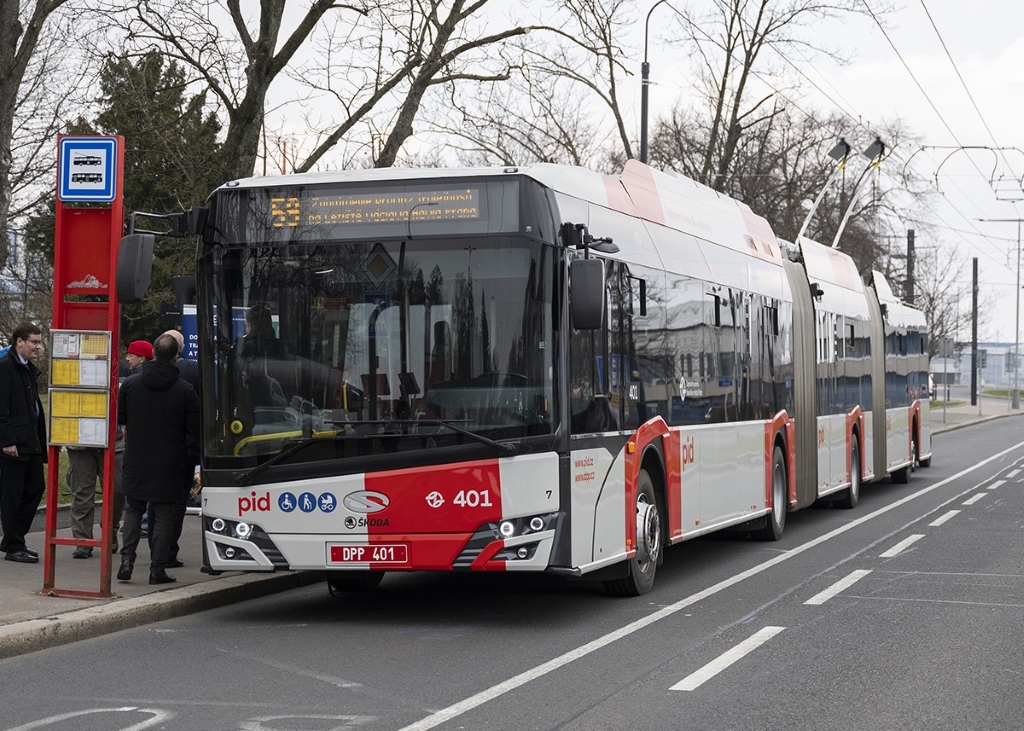
Although battery-assisted trolley buses are gaining traction in other parts of the world, usually as extension to existing trolley networks, but Prague is building an entirely new network of 14 lines, debuting airport route 59 in 2024, which is about 50% electrified and uses double artic vehicles from Skoda. En route charging infrastructure can significantly reduce the installed capacity and weight of batteries while allowing slower less damaging routine charging.
 

EMU303

Member
Joined
24 Aug 2016
Messages
296
Surely BEMUs are a faster route to decarbonisation.
If passenger volumes increase - and funding becomes available- then over time you can fill the gaps in “discontinuous electrification” and make the busier lines fully electrified. And maybe some BEMUs can be designed to allow them to be fully electric in the future.
Scotland for example with its mix of suburban and rural lines seems intent on going down that road, with its intent on new EMUs and BEMUs albeit with (allegedly) diesel/ electric 222s as a stop gap for HST replacement.
 

Trackbasher84

Member
Joined
25 Apr 2023
Messages
13
Location
Glasgow
Highly unlikely the workforce exists in sufficient numbers to electrify everything now anyway, the rate the remaining experienced people are ditching antisocial hours and being treated poorly by greedy PCs..
 

Snow1964

Established Member
Joined
7 Oct 2019
Messages
11,141
Location
West Wiltshire
….huge cost of complying with the Electricity At Work regulations.
250 regulations, some cover working near live conductors, none say cannot install more overhead wires or third rail.

If I am misunderstanding and there is something saying no more, please advise which number of the 250 says it, because I cannot find it.


Harpo

Established Member
Joined
21 Aug 2024
Messages
3,859
Location
Newport
250 regulations, some cover working near live conductors, none say cannot install more overhead wires or third rail.

If I am misunderstanding and there is something saying no more, please advise which number of the 250 says it, because I cannot find it.

ORR’s policy on third rail electrification is your best starting point.

== Doublepost prevention - post automatically merged: ==

Third rail projects were undertaken (primarily on Merseyside) after the Electricity at Work regulations were promulgated in 1989/1990, before the ORR decided to reinterpret them to ban third rail.
There is no ban. See the Battersea extension to the Northern line.
 

HSTEd

Veteran Member
Joined
14 Jul 2011
Messages
20,321
There is no ban. See the Battersea extension to the Northern line.
Wandering off topic, but the northern line is not third rail on national rail, it is fourth rail operated by London Underground.

As the DECARB report from the RSSB explained, the de facto ban only applies to Network Rail.

pg24/87 of the "Standards Legislation and Policies that Apply to Third Rail DC Electrification T1214" section of the report linked says:
The DLR and London Underground systems are referenced in the policy but not considered to be within its scope, because they were able to make a case around management of risk to ORR, which it accepted.
EDIT:
Added a quote.
 
Last edited:

Harpo

Established Member
Joined
21 Aug 2024
Messages
3,859
Location
Newport
Wandering off topic, but the northern line is not third rail on national rail, it is fourth rail operated by London Underground.

As the DECARB report from the RSSB explained, the de facto ban only applies to Network Rail.

pg24/87 of the "Standards Legislation and Policies that Apply to Third Rail DC Electrification T1214" section of the report linked says:

EDIT:
Added a quote.
You are confusing the scope of a third party report with the scope of ORR who would have approved the safety case for the Battersea extension and confirmed it to be ALARP.
 

Zomboid

Established Member
Joined
2 Apr 2025
Messages
2,294
Location
Oxford
There is nothing stopping NR from making a case that some modification or other to the 3rd rail system means that the risks can be adequately managed and it is now ALARP.

As I understood, the proposal to use 450s converted to BEMUs for Basingstoke to Exeter would require at least one DC charging island somewhere along the way.
 

eldomtom2

On Moderation
Joined
6 Oct 2018
Messages
2,386
Arriva have ordered tri-modes for their Grand Central operation out to 2038. Hard-nosed transport companies like Arriva don't commit £300m without having confidence in the technology.
I'd say the fact that they've ordered tri-modes indicates a lack of confidence in battery technology to meet their requirements - they don't think a BEMU will have enough capacity to run the required distance off the wires and so have ordered trains with diesel engines.
 

HSTEd

Veteran Member
Joined
14 Jul 2011
Messages
20,321
You are confusing the scope of a third party report with the scope of ORR who would have approved the safety case for the Battersea extension and confirmed it to be ALARP.
A third party report, backed by substantial in industry research by the RSSB, which states that ORR's policy specifically does not apply to London Underground installations.

ORR has declared that there will make a strong presumption against Network Rail third rail installations meeting the SFAIRP (So Far As Is Reasonably Practicable) requirement in law. This is, de facto, a ban on such installations.
But again, wandering off topic.

Electrification costs are what they are - and are now so high that battery units are almost certainly more economic.
 
Last edited:

N1

Member
Joined
10 Aug 2022
Messages
385
Trying to stear aqay from another 3rd rail discussion
Everything is 'virtually untested' when it's new - steam locomotives were in the 1820s, as was railway electrification at the end of the 19th century and internal-combustion powered trains in the 1920s. It's not a reason for not trying new methods of propulsion - making new things work is what good engineers are good at...
Battery trains have been around for over 100 years. Wittfield units were introduced in Germany in 1907, and when they weree refitted with 'modern' batteries had a reported range of 300km. Thats without regen braking.
 

Dr Hoo

Established Member
Joined
10 Nov 2015
Messages
5,658
Location
Hope Valley
Third rail projects were undertaken (primarily on Merseyside) after the Electricity at Work regulations were promulgated in 1989/1990, before the ORR decided to reinterpret them to ban third rail.
But as with the Channel Tunnel related work the Merseyside schemes had been committed, in 1989 I believe, before the Act came into effect.
 

martin butler

Member
Joined
9 Oct 2018
Messages
874
Short term, yes Battery electic traction,could improove things, but, only where there are already OHL, or 3rd rail , and charging stations, or the ability to charge the batteries whilst using main currant, on sections where the units can make use of already operational power systems,

They would not be of any use on say Basingstoke to Exeter, as there is no supply unless there are charging sections, on the route that would enable battery top ups, Longer lines, would be electrified,
 

HighlandStorm

Member
Joined
27 Sep 2024
Messages
163
Location
Inverness
Of course, this helps decarbonise the railways, but there are many other benefits of electrification that can’t be gained by using battery trains. These include better acceleration, higher reliability and easier maintenance. They are also virtually untested, at least in this country.
Why would a pure emu have better acceleration? This will be more a factor of range.

A prototype battery electric loco was demoed on the E&G in 1842 and climbed the incline from Queen St reaching 4mph. Many years after steam locos were still hauled by rope through the tunnel. Aberdeen - Ballater was run by a BEMU in the late 1950s with lead acid batteries. No question there’s big potential with modern batteries let alone rapidly advancing battery tech compared to those !
 

Nottingham59

Established Member
Joined
10 Dec 2019
Messages
3,333
Location
Nottingham
Short term, yes Battery electic traction,could improove things, but, only where there are already OHL, or 3rd rail , and charging stations, or the ability to charge the batteries whilst using main currant, on sections where the units can make use of already operational power systems,
There are enough routes converging on nodes like Exeter or Sheffield to make it worth electrifying a short section of line within each city. I understand that Exeter St Davids to Central carries around 8tph; Sheffield around 9 or 11. If those routes were all served by tri-modes, then the OHLE would be very well used and easily justify the capital expenditure.

They would not be of any use on say Basingstoke to Exeter, as there is no supply unless there are charging sections, on the route that would enable battery top ups, Longer lines, would be electrified,
There is of course the observation that just fitting a single battery pack to 802207 cut the fuel consumption on diesel by between 30% and 50%, because the battery captured the train's kinetic energy through regenerative braking.

So I reckon that the most cost effective way to cut carbon emissions from the rail network would be to put a battery into every 80x in the GWR fleet. Batteries for Great Central's nine new 80x trimodes will cost around £5 million, so doing the same for GWR 33 80x trains would be perhaps £20 million. That money would buy only two or three miles of new OHLE.


Hitachi Rail and Angel Trains say a two-month trial of battery operation in a TransPennine Express Class 802 has exceeded expectation, with fuel cost savings of between 35% and 50%, exceeding forecasts of a maximum of 30%.

No 802207 was fitted with a 700kW battery developed by Turntide Technologies, based in Sunderland. It has proven able to power the train to speeds of more than 75mph while achieving all journey times and performance requirements. The battery weighs the same as the diesel engine and alternator it replaced and was installed in the same underfloor space on the train.
 

2001olib

Member
Joined
5 Jun 2025
Messages
56
Location
East mids
I personal opinion is for a hybrid battery/OHLE future for the network. All core mainlines (mml, xc line, chiltern) with then branch line services coming off them being battery fueled. Probably ~50miles max return journey on battery power.

This being implemented with a rolling nationwide plan. North-south or south-north. Or maybe 2 concurrant schemes running out from a central area (birmingham perhaps). But that would probably cost too much. Mainline electrification funding from the central governement pot and then regional/commuter lines recieving funding from their relevant local transport authorities/regional mayors.

Im no expert but once GBR is fully established in years to come. Cascading stock or moving it around to better support/utilise advances in electrification.
 

Class 317

Member
Joined
7 Jul 2020
Messages
567
Location
Cotswolds
BEMU'S have been in service overseas for quite a number of years in Japan, Korea and now in multiple European countries with no issues.

Combine BEMU'S with limited OHLE (200-300 route miles), uprating existing supplies and installing OHLE in none electrified bay platforms etc and you can cover most of the operations on secondary routes with BEMU'S for far less cost than a rolling installation of OHLE.

Technologies like the Siemens RCC which uprates lower voltage transmission lines to feed 25KV AC at much lower cost than traditional sub stations potentially lowering costs.

In terms of timescales replacing most of the remaining services operated by DMU's with electric operation should be achievable with a combined battery/ electrification strategy within 10 years or so but if you relied on electrification to do most lines than you would have a timescale of at least trice this long.

Also BEMU'S have much lower operating costs than DMU's from memory it's about 40% less or so real savings are available from.a switch to a combined battery/ OLHE strategy.

In reference to the comment above about adding batteries to 80X this is indeed one of the most cost effective ways to reduce railway emissions. If batteries were added to all 80X for cost of something less than £100m or so you would cut emissions by an average of somewhere between 35-50% with greater reductions maybe available as Hitachi is using batteries with greater capability than the test unit on the Grand Central units.

For freight, we need to concentrate on electrification of key routes in combination with the passenger battery/ OHLE hybrid plans. It ideally needs to cover routes like Basingstoke, Reading, Oxford and on to the WCML via EWR to minimise the route miles and costs whilst maximising the benefits.
 

deltic08

On Moderation
Joined
26 Aug 2013
Messages
2,907
Location
North
Battery buses are certainly being seen as the future for that sector. There is no sign of trolley wires making a return to the (urban) road network.

As some have posted previously, battery trains can be implemented a whole lot quicker than the infrastructure needed for full electrification.
Battery buses were introduced on the Leeds-Harrogate-Ripon route in March. Already I have seen with my own eyes two services that have run out of charge on the country roads. Diesel buses breaking down was very rare.
 

brad465

Veteran Member
Joined
11 Aug 2010
Messages
11,476
Location
Taunton or Kent
Schrodinger's BEMUs, are the future and reduce need for electrification but won't commit funding to allow their large scale rollout as not sure the technology is quite ready yet apparently.
 
Status
Not open for further replies.

Top