• Our new ticketing site is now live! Using either this or the original site (both powered by TrainSplit) helps support the running of the forum with every ticket purchase! Find out more and ask any questions/give us feedback in this thread!

GWR Steam Road Vehicles -1905ff

Status
Not open for further replies.
Joined
21 Feb 2018
Messages
926
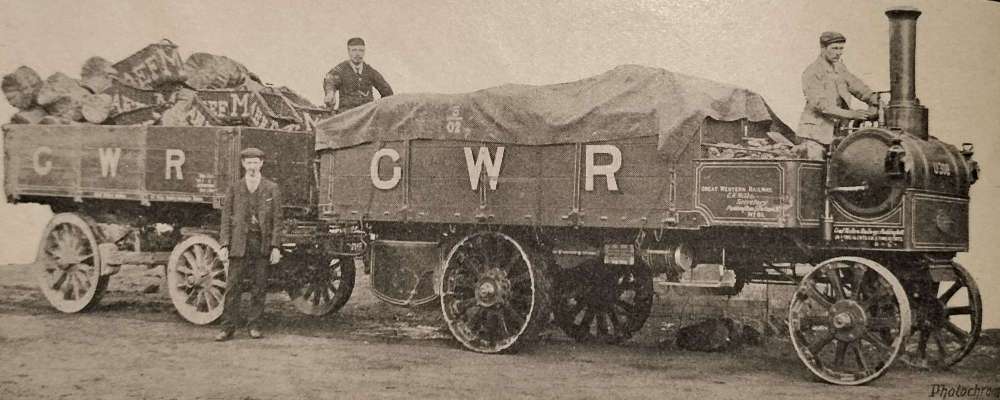
The Railway Magazine of December 1905 included a photograph of a road vehicle powered by steam. The picture in The Railway Magazine is the featured image for this short article.

 
Sponsor Post - registered members do not see these adverts; click here to register, or click here to log in
R

RailUK Forums

WesternLancer

Veteran Member
Joined
12 Apr 2019
Messages
15,363
The Railway Magazine of December 1905 included a photograph of a road vehicle powered by steam. The picture in The Railway Magazine is the featured image for this short article.

An excellent selection of images there Roger. Thank you.
 

Gloster

Veteran Member
Joined
4 Sep 2020
Messages
13,044
Location
Up the creek
Railway-owned Commercial Vehicles (Stevens-Stratten and Aldridge, Ian Allan, 1990) says that U308 was built in 1902. It adds that the trailer is a converted horse dray.
 

Rescars

Established Member
Joined
25 May 2021
Messages
2,585
Location
Surrey
Does anyone know if any other firm apart from Yorkshire used horizontal boilers? IIRC, something similar was used by the original steam trains on the Pilatus rack railway in Switzerland.
 

Prime586

Member
Joined
26 May 2023
Messages
300
Location
Knowsley
The Railway Magazine of December 1905 included a photograph of a road vehicle powered by steam. The picture in The Railway Magazine is the featured image for this short article.

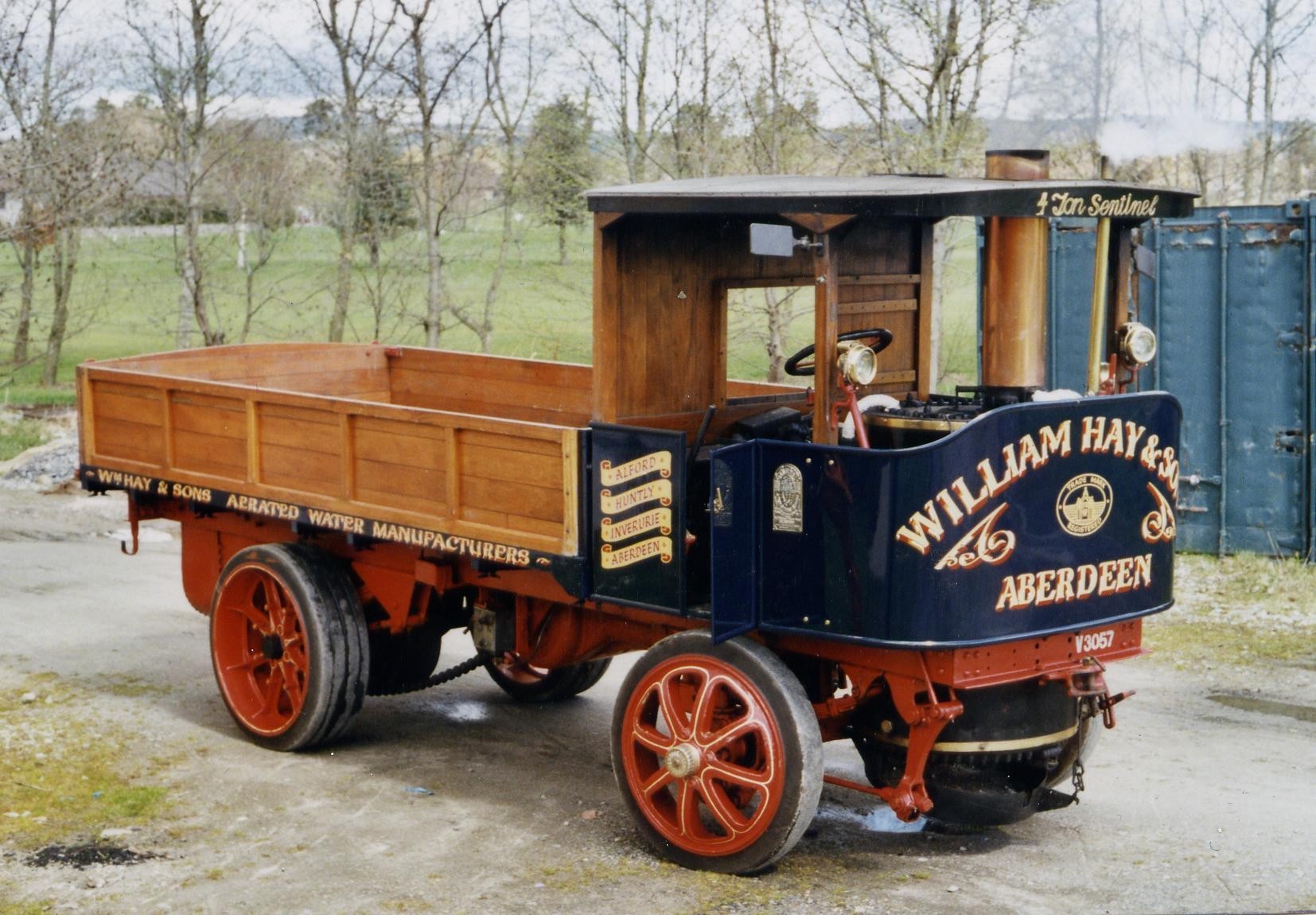
The image of the Corgi 'short wheelbase Sentinel Steam Lorry' was presumably taken from the Hattons website, as they mis-described it. If you look at the box image, it's Corgi CC20204 - Foden C-Type Dropside Wagon. Sentinel never made any steam wogons with horizontal boilers, as Alley and MacLellan (the company later renamed itself after it's main product) had purchased the rights to the Simpson-Bibby steam wagon and it's patented vertical boiler (developed to counter the effect of inclines on the water level) in 1903 from it's inventor Daniel Simpson, which it then produced and sold as 'Sentinel' steam wagons from 1905.
0753-w1654-o.jpg

(one of the many jobs my father had as a young man was as 'second man' on the Sentinel steam tractors operated by Criddles in Liverpool).

In 1924 (once Simpson's boiler patents had expired), Mann's Patent Steam Cart and Wagon Company of Leeds used the design as the basis for their own vertical boiler design for use in their 'Express' wagon (which looked very similar to the early Sentinel wagons, though they used shaft drive instead of chains), but it was not a success.
mann%20express%20steam%20lorry%201924%20jp.jpg

Does anyone know if any other firm apart from Yorkshire used horizontal boilers? IIRC, something similar was used by the original steam trains on the Pilatus rack railway in Switzerland.
The 'patent' in the Yorkshire Patent Steam Wagon Company's name concerned their transverse boiler and prevented anyone else (in the UK at least) using a similar design. It was patented in 1900, 11 years after the Pilatusbahn opened with it's transverse boiler cars.

The 'Yorkshire' transverse boiler was pateneted by Joseph Clayton (of Clayton, Son & Co. Ltd, boilermakers) and George Hutchinson Mann (brother of James Hutchinson Mann, who owned the previously mentioned Mann's Patent Steam Cart and Wagon Company). The boilers were made for the wagon works by Claytons, and all three companies had premises bascially next to each other on Pepper Road in Hunslet.

Another railway based use of a transverse boiler were the railmotors designed for the Taff Vale Railway by Tom Hurry Riches which were built between 1903 and 1905:
Taff_Vale_railmotor_%28Rankin_Kennedy%2C_Modern_Engines%2C_Vol_V%29.jpg

A batch of 6 of these were built by Kerr Stuart, & Co. for the TVR (with 2 other batches coming from other manufacturers), and Kerr Stuart also supplied two examples to the Lancashire & Yorkshire Railway which were used on some branch lines in the north west for a few years before being withdrawn and replaced by steam railmotors of their own, more conventional design in 1909.

 
Last edited:
Joined
21 Feb 2018
Messages
926
If you look at the box image, it's Corgi CC20204 - Foden C-Type Dropside Wagon. Sentinel never made any steam wagons with horizontal boilers, as Alley and MacLellan (the company later renamed itself after it's main product) had purchased the rights to the Simpson-Bibby steam wagon and it's patented vertical boiler (developed to counter the effect of inclines on the water level) in 1903 from it's inventor Daniel Simpson, which it then produced and sold as 'Sentinel' steam wagons from 1905
Thank you for the correction, Prime586. I will adjust the notes accordingly.
 

Rescars

Established Member
Joined
25 May 2021
Messages
2,585
Location
Surrey
The image of the Corgi 'short wheelbase Sentinel Steam Lorry' was presumably taken from the Hattons website, as they mis-described it. If you look at the box image, it's Corgi CC20204 - Foden C-Type Dropside Wagon. Sentinel never made any steam wogons with horizontal boilers, as Alley and MacLellan (the company later renamed itself after it's main product) had purchased the rights to the Simpson-Bibby steam wagon and it's patented vertical boiler (developed to counter the effect of inclines on the water level) in 1903 from it's inventor Daniel Simpson, which it then produced and sold as 'Sentinel' steam wagons from 1905.
0753-w1654-o.jpg

(one of the many jobs my father had as a young man was as 'second man' on the Sentinel steam tractors operated by Criddles in Liverpool).

In 1924 (once Simpson's boiler patents had expired), Mann's Patent Steam Cart and Wagon Company of Leeds used the design as the basis for their own vertical boiler design for use in their 'Express' wagon (which looked very similar to the early Sentinel wagons, though they used shaft drive instead of chains), but it was not a success.
mann%20express%20steam%20lorry%201924%20jp.jpg


The 'patent' in the Yorkshire Patent Steam Wagon Company's name concerned their transverse boiler and prevented anyone else (in the UK at least) using a similar design. It was patented in 1900, 11 years after the Pilatusbahn opened with it's transverse boiler cars.

The 'Yorkshire' transverse boiler was pateneted by Joseph Clayton (of Clayton, Son & Co. Ltd, boilermakers) and George Hutchinson Mann (brother of James Hutchinson Mann, who owned the previously mentioned Mann's Patent Steam Cart and Wagon Company). The boilers were made for the wagon works by Claytons, and all three companies had premises bascially next to each other on Pepper Road in Hunslet.

Another railway based use of a transverse boiler were the railmotors designed for the Taff Vale Railway by Tom Hurry Riches which were built between 1903 and 1905:
Taff_Vale_railmotor_%28Rankin_Kennedy%2C_Modern_Engines%2C_Vol_V%29.jpg

A batch of 6 of these were built by Kerr Stuart, & Co. for the TVR (with 2 other batches coming from other manufacturers), and Kerr Stuart also supplied two examples to the Lancashire & Yorkshire Railway which were used on some branch lines in the north west for a few years before being withdrawn and replaced by steam railmotors of their own, more conventional design in 1909.
Thank you for these details. Presumably the TVR rail motor boilers did not infringe Yorkshire's patent.
You are welcome, Western lancer.
Splendid photos Roger. The churn lifter attached to the Thorneycroft in the final image appears to be a very nifty gadget!
 

norbitonflyer

Established Member
Joined
24 Mar 2020
Messages
5,835
Location
SW London
(one of the many jobs my father had as a young man was as 'second man' on the Sentinel steam tractors operated by Criddles in Liverpool).
My grandfather drove Sentinel steam wagons as a delivery driver for the Morrell jam company of Twickenham. Like many operators, they stopped using steam because of the Road Traffic Act of 1934, which taxed lorries according to gross vehicle weight - putting steam lorries, with their greater unladen weight, at a disadvantage.


I believe the company then contracted out their deliveries rather than invest in a new petrol fleet, as my grandfather was made redundant - he certainly knew how to drive an ic-engined vehicle as he had been a chauffeur when he was younger.
 

Prime586

Member
Joined
26 May 2023
Messages
300
Location
Knowsley
Presumably the TVR rail motor boilers did not infringe Yorkshire's patent.
The boilers used on the TVR and L&Y railmotors look like scaled up versions of the boilers used by Yorkshire on their wagons (with an additional central smokebox door under the chimney). I would not be surprised if the design was licenced from Yorkshire .

In the early 1930s, Yorkshire did supply a number of their boilers to the Birmingham Railway Carriage & Wagon Co. for use in railmotors built for export to Argentina, Egypt and Belgium:
Im1930v149-p349.jpg


My grandfather drove Sentinel steam wagons as a delivery driver for the Morrell jam company of Twickenham. Like many operators, they stopped using steam because of the Road Traffic Act of 1934, which taxed lorries according to gross vehicle weight - putting steam lorries, with their greater unladen weight, at a disadvantage.
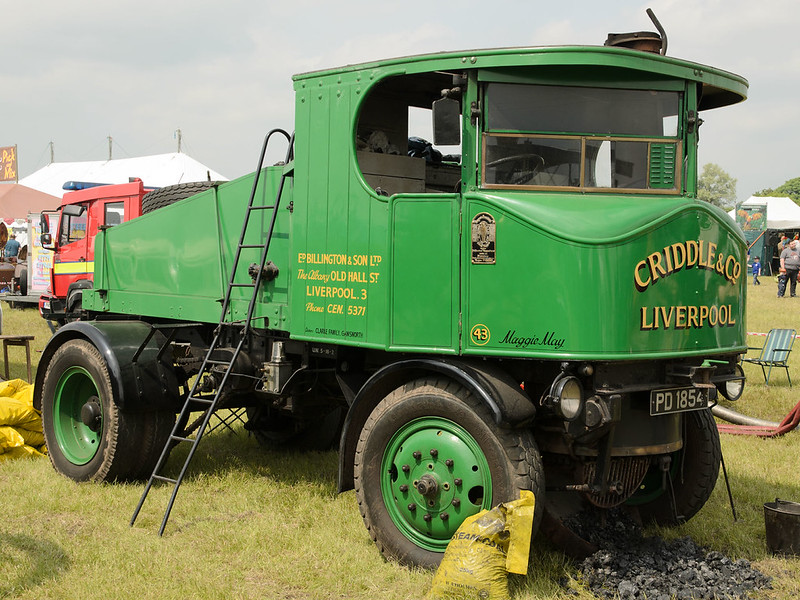
One way to get around the axle weight-based taxation disadvantage for steam lorry operators was to convert them to ballast tractors to pull articulated drawbar trailers by shortening the chassis and adding a ballast water tank over the rear axle. The Criddles Sentinel fleet were a mix of wagon-to-tractor conversions and new-build tractors, which was how they managed to stay in service until the early 1960s (though they were converted to pneumatic tyres in the 1930s).

This is one of the conversions - it was originally delivered in 1924 as a wagon to Higsons Brewery in Liverpool and used as a dray. It was sold to Criddles in 1933 and converted to a ballast tractor.
27809050616_699f4e2347_c.jpg

Below is one of the new-builds, which were supplied in 1927-28 to Simmonds, Hunt & Montgomery, a Liverpool animal feed mill, who sold it's Sentinel fleet to Criddles after WW2.

9c52b18726c24256ac235cbf0ce1bf4e.jpg

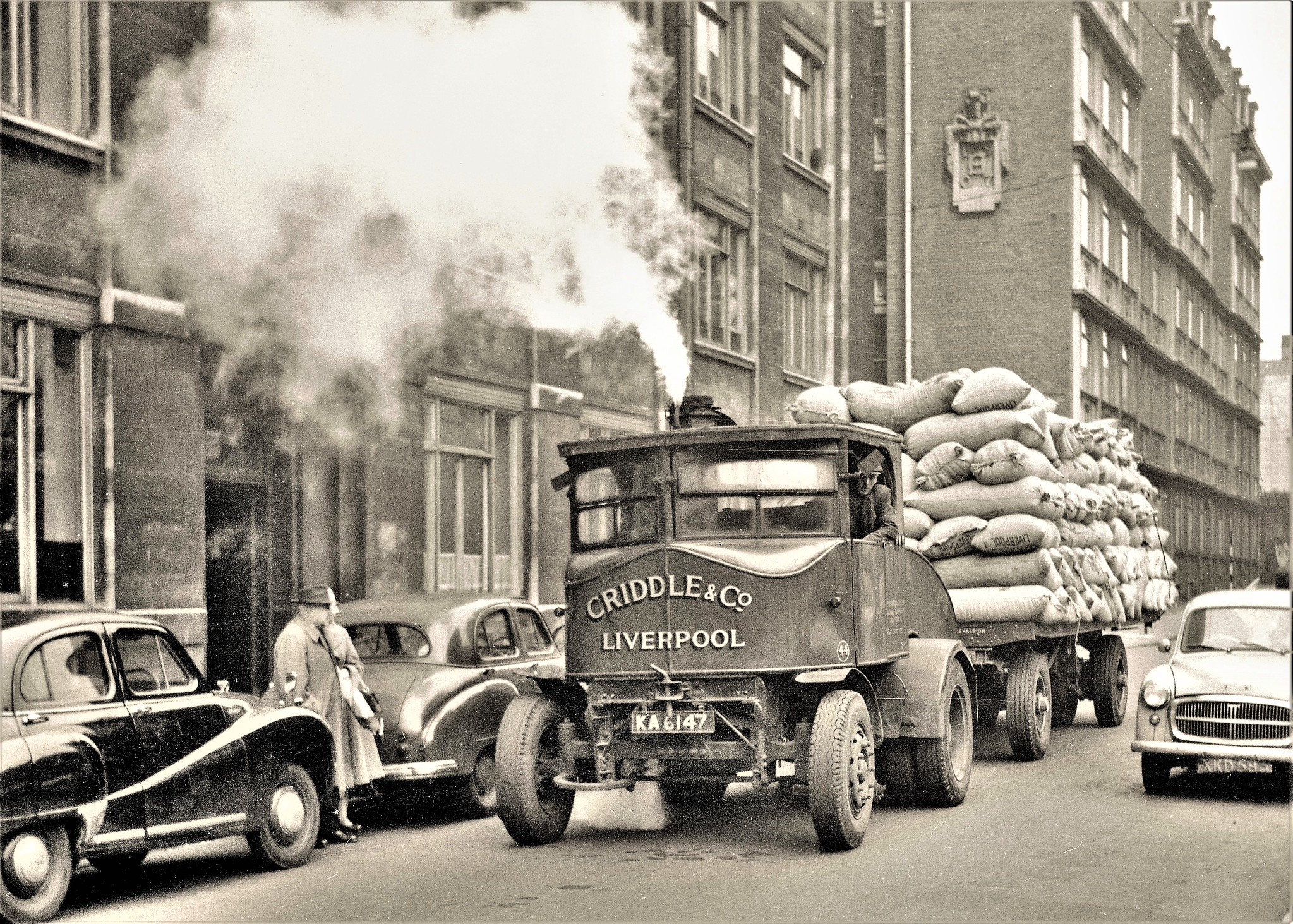
One of the ex-Simmonds, Hunt & Montgomery tractors, pictured working in Liverpool in March 1960:
50002721541_c5da81562f_k.jpg

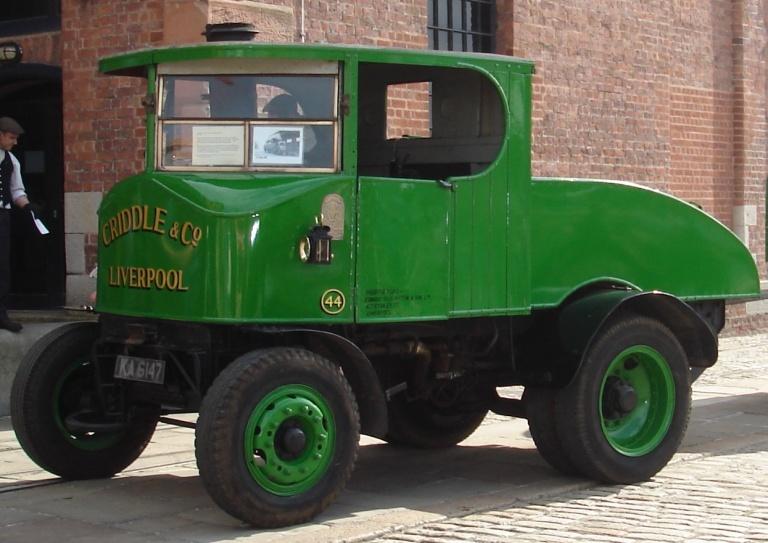
The same vehicle, as preserved in the Museum Of Liverpool:
59974_v0_large.jpg
 
Last edited:

norbitonflyer

Established Member
Joined
24 Mar 2020
Messages
5,835
Location
SW London
I believe the company then contracted out their deliveries rather than invest in a new petrol fleet, as my grandfather was made redundant - he certainly knew how to drive an ic-engined vehicle as he had been a chauffeur when he was younger.
My father was six years old at the time. He always told me his father was made redundant because the jam factory went out of business because people couldn't afford jam during the Great Depression, but I recently found a local history website with people remebering the factory still in business 20 years later - so maybe it was just what my grandparents told him to explain why they couldn't afford jam.
 

Rescars

Established Member
Joined
25 May 2021
Messages
2,585
Location
Surrey
The boilers used on the TVR and L&Y railmotors look like scaled up versions of the boilers used by Yorkshire on their wagons (with an additional central smokebox door under the chimney). I would not be surprised if the design was licenced from Yorkshire .

In the early 1930s, Yorkshire did supply a number of their boilers to the Birmingham Railway Carriage & Wagon Co. for use in railmotors built for export to Argentina, Egypt and Belgium:
Im1930v149-p349.jpg


One way to get around the axle weight-based taxation disadvantage for steam lorry operators was to convert them to ballast tractors to pull articulated drawbar trailers by shortening the chassis and adding a ballast water tank over the rear axle. The Criddles Sentinel fleet were a mix of wagon-to-tractor conversions and new-build tractors, which was how they managed to stay in service until the early 1960s (though they were converted to pneumatic tyres in the 1930s).

This is one of the conversions - it was originally delivered in 1924 as a wagon to Higsons Brewery in Liverpool and used as a dray. It was sold to Criddles in 1933 and converted to a ballast tractor.
27809050616_699f4e2347_c.jpg

Below is one of the new-builds, which were supplied in 1927-28 to Simmonds, Hunt & Montgomery, a Liverpool animal feed mill, who sold it's Sentinel fleet to Criddles after WW2.

9c52b18726c24256ac235cbf0ce1bf4e.jpg

One of the ex-Simmonds, Hunt & Montgomery tractors, pictured working in Liverpool in March 1960:
50002721541_c5da81562f_k.jpg

The same vehicle, as preserved in the Museum Of Liverpool:
59974_v0_large.jpg
What a splendid shot of KA6147 at work in Liverpool. Lovely cars too. There are two parked Austins. The black car is an A40 Somerset, but is the one in front an A70 Hereford? For those who may be interested, the number on the lorry indicates it was registered between June 1925 and December 1927. The Hillman Minx was registered sometime after August 1957. Both are Liverpool registrations.
 
Status
Not open for further replies.

Top