exactly , also not being familiarwith this were they proposing lay flats as an alternative to the none premium rooms ( the ones without the ensuite ) ? or as an additional layer of service ( as iirc the Caledonian offers seats, not ensuite bunk cabin, en suite bunk cabin , en -suite double bed cabin )But this is speculative so would they be viable if permitted? The Australians don't seem to be worried about using them on the Spirit of Queensland

-
Our new ticketing site is now live! Using either this or the original site (both powered by TrainSplit) helps support the running of the forum with every ticket purchase! Find out more and ask any questions/give us feedback in this thread!
You are using an out of date browser. It may not display this or other websites correctly.
You should upgrade or use an alternative browser.
You should upgrade or use an alternative browser.
New routes for sleeper trains
- Thread starter occone
- Start date
- Status
- Not open for further replies.
Sponsor Post - registered members do not see these adverts; click here to register, or click here to log in
R
RailUK Forums

HSTEd
Veteran Member
- Joined
- 14 Jul 2011
- Messages
- 20,319
APparently the seat pitch on airline lie flat seats is about 170cm.But this is speculative so would they be viable if permitted? The Australians don't seem to be worried about using them on the Spirit of Queensland
That means you are going to get something like 11 rows, for 22 total seats.
Indigo Soup
Established Member
- Joined
- 17 May 2018
- Messages
- 1,486
AIUI the issue with them for the Caledonian Sleeper was that the service involves reversal, so it would be impossible to ensure that passengers were always travelling feet first.But this is speculative so would they be viable if permitted? The Australians don't seem to be worried about using them on the Spirit of Queensland
i.e. no greater capacity than conventional sleeping car compartments, though I think Serco's proposal for lie-flat seats was for slightly staggered 2+1 which would give about 30 seats per vehicle. And it still has the issue that it's bespoke rolling stock that can only be usefully employed on one train a day.APparently the seat pitch on airline lie flat seats is about 170cm.
That means you are going to get something like 11 rows, for 22 total seats.
Would you want to travel feet first ? Ambulances and Sleeper (tour) buses tend to be set up so the recumbant passenger is travelling head firstAIUI the issue with them for the Caledonian Sleeper was that the service involves reversal, so it would be impossible to ensure that passengers were always travelling feet first.
i.e. no greater capacity than conventional sleeping car compartments, though I think Serco's proposal for lie-flat seats was for slightly staggered 2+1 which would give about 30 seats per vehicle. And it still has the issue that it's bespoke rolling stock that can only be usefully employed on one train a day.
the stagger / 2 +1 lay flat at 30 ish seats while a drop from the 45 -55 or so in a modern First class carriage ( based on LNER seating plans published on t'internet) could be used gfor a 'better than currewnt first' in the day time
HSTEd
Veteran Member
- Joined
- 14 Jul 2011
- Messages
- 20,319
If you travel head first the ORR believes a collision will break the passengers' neck.Would you want to travel feet first ? Ambulances and Sleeper (tour) buses tend to be set up so the recumbant passenger is travelling head first
the stagger / 2 +1 lay flat at 30 ish seats while a drop from the 45 -55 or so in a modern First class carriage ( based on LNER seating plans published on t'internet) could be used gfor a 'better than currewnt first' in the day time
i wonder what the sums would look like for 1+1 lay flats in a semi open carriage like some ofthe airline business class offerings ? as these could also be used for daytime ' better than current First' use ... but again it requires the maths to math correctly ...
But this is speculative so would they be viable if permitted? The Australians don't seem to be worried about using them on the Spirit of Queensland
The sums look like the sleeper, just worse. Same passenger numbers, much the same cost, but lower income.
Indigo Soup
Established Member
- Joined
- 17 May 2018
- Messages
- 1,486
I was looking at some actual passenger numbers, and I think I may have been a little harsh.The absence of that service is an occasional nuisance to the, oh, six of us that would use it in any given year. That'll be me, @JamieL, and I'm guessing a handful of our colleagues who might deign to travel by train. And to the entire rest of the world, including the unfortunate staff who might be expected to work it, its absence is a blessed relief.
The London-Inverness route, like the Bristol-Central Belt route, is technically possible by day train, but a pain in the backside. And there's competing air travel on both routes.
Combined air traffic from Glasgow and Edinburgh to Bristol is about twice the combined air traffic from Inverness to London. Looked at from the other side, Bristol-Edinburgh day train traffic is a bit more than half of Inverness-London day train traffic.
That suggests that the potential market for a Bristol to Central Scotland sleeper train is comparable (within a factor of two or so) to that of the London to Inverness sleeper. Obviously anyone seriously proposing such a service would want to carry out a more detailed traffic study. And would need a serious pile of money they didn't care about seeing any return on. But there's at least some grounds to think there'd be a reasonable number of passengers.
HSTEd
Veteran Member
- Joined
- 14 Jul 2011
- Messages
- 20,319
Obviously the London-Inverness sleeper would cost an awful lot more if it was operated as an individual train for its entire length, rather than sharing a lot of its costs with the other two arms of the Caledonian Sleeper.That suggests that the potential market for a Bristol to Central Scotland sleeper train is comparable (within a factor of two or so) to that of the London to Inverness sleeper. Obviously anyone seriously proposing such a service would want to carry out a more detailed traffic study. And would need a serious pile of money they didn't care about seeing any return on. But there's at least some grounds to think there'd be a reasonable number of passengers.
Indigo Soup
Established Member
- Joined
- 17 May 2018
- Messages
- 1,486
Which is why the only sensible way to operate it would be as part of the Caledonian Sleeper network. If the timings work out, it might make sense to run from Glasgow and/or Edinburgh with the Lowland sleeper, remarshalling into London and Bristol trains at Carstairs. I'd guess diesel under the wires from Carstairs is operationally simpler than changing locomotives at Birmingham.Obviously the London-Inverness sleeper would cost an awful lot more if it was operated as an individual train for its entire length, rather than sharing a lot of its costs with the other two arms of the Caledonian Sleeper.
It's a total economic basket case, like all UK sleepers, but that's probably how you minimise the additional cost if you insist on running it.
I was looking at some actual passenger numbers, and I think I may have been a little harsh.
The London-Inverness route, like the Bristol-Central Belt route, is technically possible by day train, but a pain in the backside. And there's competing air travel on both routes.
Combined air traffic from Glasgow and Edinburgh to Bristol is about twice the combined air traffic from Inverness to London. Looked at from the other side, Bristol-Edinburgh day train traffic is a bit more than half of Inverness-London day train traffic.
That suggests that the potential market for a Bristol to Central Scotland sleeper train is comparable (within a factor of two or so) to that of the London to Inverness sleeper. Obviously anyone seriously proposing such a service would want to carry out a more detailed traffic study. And would need a serious pile of money they didn't care about seeing any return on. But there's at least some grounds to think there'd be a reasonable number of passengers.
Don’t forget that the Inverness sleeper is also serving Stirling - Inverness stations. There is a fair bit of traffic to Aviemore, Kingussie, Blair and even Dalwhinnie through the year, and the airlines aren’t so competitive in that market.
I'm not convinced that a swap of that nature would be an operational saving as it would involve a very complicated shunt. Carstairs is only 28 miles from Edinburgh.If the timings work out, it might make sense to run from Glasgow and/or Edinburgh with the Lowland sleeper, remarshalling into London and Bristol trains at Carstairs
The lowland sleeper south of Carstairs is clearly already maximum length so a Bristol portion can't be readily tagged on.

MCR247
Established Member
- Joined
- 7 Nov 2008
- Messages
- 10,292
I think the best bet for new night services in the UK would be under GBR running 5 car IEPs along lines with sufficient demand. Far enough into the future that the IEPs have been refurbed with more comfortable seating 
HSTEd
Veteran Member
- Joined
- 14 Jul 2011
- Messages
- 20,319
Is there really a maximum length?The lowland sleeper south of Carstairs is clearly already maximum length so a Bristol portion can't be readily tagged on.
Once you have left Euston there is no pressing need to fully platform the train given the miniscule number of people aboard and the lack of proper intermediate stops.
more pointedly is there a minimum length between relevant features on the track ? without fouling point work or crossing short signalling blocks in stations etc if held at signal / dispatching point on a platform ...Is there really a maximum length?
Once you have left Euston there is no pressing need to fully platform the train given the miniscule number of people aboard and the lack of proper intermediate stops.
What are the possible restrictions if we discount platforms and train berth lengths?Is there really a maximum length?
* tractive effort of the 92 at up to 87.5 mph - I can guess that is easily more than 16 carriages
* the ETS capability of 180 - How far can the ETS go through the carriages?
* the TMS on the Mark 5 carriages which no doubt is set up for a maximum of 16 carriages.
HSTEd
Veteran Member
- Joined
- 14 Jul 2011
- Messages
- 20,319
Strictly speaking, the ETS index and TMS are not necessarily showstoppers, because those systems are not required for a driver to control the trains.What are the possible restrictions if we discount platforms and train berth lengths?
* tractive effort of the 92 at up to 87.5 mph - I can guess that is easily more than 16 carriages
* the ETS capability of 180 - How far can the ETS go through the carriages?
* the TMS on the Mark 5 carriages which no doubt is set up for a maximum of 16 carriages.
We could, for example, order a carriage with a pantograph to provide ETS on this segment.
Indigo Soup
Established Member
- Joined
- 17 May 2018
- Messages
- 1,486
On the other hand, the hypothetical Bristol service also serves Bath, Gloucester, Cardiff, potentially Birmingham or the further southwest, which are also poorly served by air. It's perfectly possible that the potential traffic just isn't there. But I was surprised to find that that isn't obviously the case.Don’t forget that the Inverness sleeper is also serving Stirling - Inverness stations. There is a fair bit of traffic to Aviemore, Kingussie, Blair and even Dalwhinnie through the year, and the airlines aren’t so competitive in that market.
If the Carstairs shuffle is too complicated somehow, then you probably get most of the potential traffic off an Edinburgh train.I'm not convinced that a swap of that nature would be an operational saving as it would involve a very complicated shunt. Carstairs is only 28 miles from Edinburgh.
The lowland sleeper south of Carstairs is clearly already maximum length so a Bristol portion can't be readily tagged on.
The very long train from Carstairs to Crewe was something I assumed was obviously impractical and dismissed!
Isn't the WCML one of the routes planned to be cleared for 775m trains for freight purposes?more pointedly is there a minimum length between relevant features on the track ? without fouling point work or crossing short signalling blocks in stations etc if held at signal / dispatching point on a platform ...
On the other hand, the hypothetical Bristol service also serves Bath, Gloucester, Cardiff, potentially Birmingham or the further southwest, which are also poorly served by air. It's perfectly possible that the potential traffic just isn't there. But I was surprised to find that that isn't obviously the case.
My point was that those from Bath, Glos, Cardiff (and further afield) to the central belt will already be using the flights. (Anecdote alert, I have a friend who regularly flies Bristol to Gladgow, and he lives well into Gloucestershire). Whereas those from London to Aviemore / Dalwhinnie etc are already on the sleeper / day train. (Some will be flying, but I’d bet a decent sum that the proportion on the train is higher than it is for inverness). We already know that Birmingham - Scotland is planned to be served directly.
Isn't the WCML one of the routes planned to be cleared for 775m trains for freight purposes?
It already is.

Tetragon213
Member
Seems quite bizarre. Aviation has had little problem with lay-flats for decades now, and I'd wager that aviation is just as, if not more safety conscious than even the rail industry.Lay flats are unlikely to pass muster with ORR, as Caledonian Sleeper found out when they tried it.
Did ORR give a specific reason, or are they just being obtuse here?
The issue, as mentioned a number of times, is that the trains reverse so passengers aren't always travelling feet first.Seems quite bizarre. Aviation has had little problem with lay-flats for decades now, and I'd wager that aviation is just as, if not more safety conscious than even the rail industry.
Did ORR give a specific reason, or are they just being obtuse here?
zwk500
Veteran Member
A 775m train will typically not remarshal itself en-route in a passenger station.Isn't the WCML one of the routes planned to be cleared for 775m trains for freight purposes?

daodao
Established Member
It might be simpler to run separate electrically-hauled trains from each of Edinburgh (bypassing Carstairs) and Glasgow Central direct to Crewe and remarshal them there into separate trains to each of London Euston and Bristol/Plymouth/Penzance (with the option of running via the North and West main line).If the Carstairs shuffle is too complicated somehow, then you probably get most of the potential traffic off an Edinburgh train.
The very long train from Carstairs to Crewe was something I assumed was obviously impractical and dismissed!
I agree that the Scottish Central Belt to SW England axis is the best one to consider as a potential "new" route for sleeper trains in Great Britain, and one that I used myself several times in the early 1990s. However, various factors have changed in the last 30 years such that benefit-cost ratio of re-introducing it would now be highly unfavourable and cannot be justified. In today's hostile financial climate, British railways need to reduce costs (not increase them) and significant pruning of existing services is required, including scrapping some or all existing sleeper services.
Last edited:
Tetragon213
Member
I'm fairly certain British Airways has half their seats backwards for their business/Club World seats.The issue, as mentioned a number of times, is that the trains reverse so passengers aren't always travelling feet first.
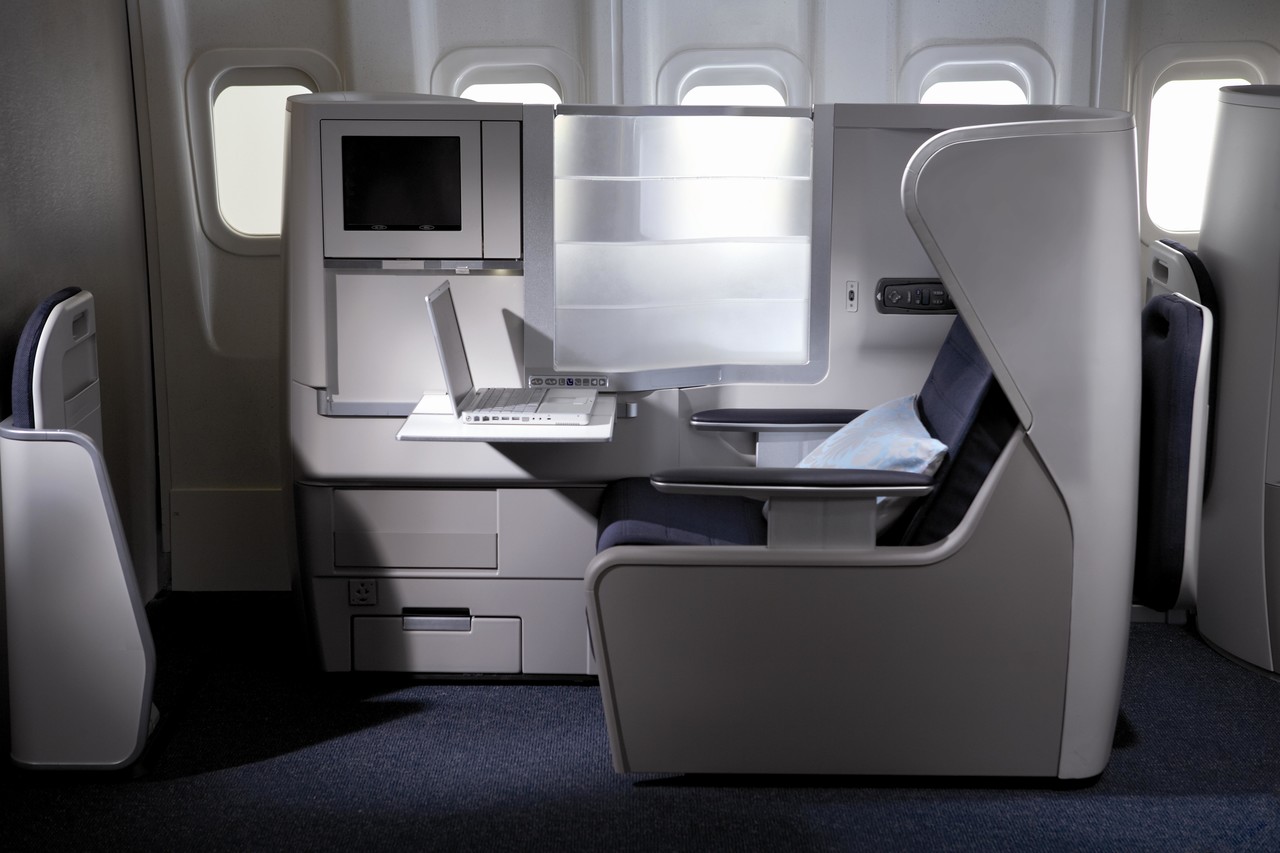
BA was the first airline to do lie-flat beds in business class, hence the odd arrangement where half the seats face backwards (stacking people alternating allows you to pack them in tighter, hence why BA is the only airline on the planet to have 8-across business).
An alternative would be to do what the Japanese do, and make it so you can reverse the seats like they do on the Shinkansen.
I'm fairly certain British Airways has half their seats backwards for their business/Club World seats.
They do. The difference being that if you are in a plane crash, it really doesn’t matter which way round you‘re lying down.
Scene, a frosty Platform 2 at Edinburgh station, inside a dimly lit coach with airline style lie flat seatsAn alternative would be to do what the Japanese do, and make it so you can reverse the seats like they do on the Shinkansen.
HOST: “Good morning Sir. This is Edinburgh. Would you mind awfully getting out of bed and turning yourself and the seat round, so that we can continue our journey to Inverness. No, feet first please, Sir”
PASSENGER: “BUT IT’S 4AM YOU MADMAN !!!!”
Tetragon213
Member
I suppose that's a rather good, if somewhat fatalistic what of looking at it! Point taken.They do. The difference being that if you are in a plane crash, it really doesn’t matter which way round you‘re lying down.
That would be quite the amusing sceneScene, a frosty Platform 2 at Edinburgh station, inside a dimly lit coach with airline style lie flat seats
HOST: “Good morning Sir. This is Edinburgh. Would you mind awfully getting out of bed and turning yourself and the seat round, so that we can continue our journey to Inverness. No, feet first please, Sir”
PASSENGER: “BUT IT’S 4AM YOU MADMAN !!!!”
HSTEd
Veteran Member
- Joined
- 14 Jul 2011
- Messages
- 20,319
Well I guess we could put the lie flats crossways, with dividers between adjacent seats.
Tetragon213
Member
It's at this point I think back on my holiday to Japan, and the bad idea fairy suddenly pops into my head...Well I guess we could put the lie flats crossways, with dividers between adjacent seats.

Capsule hotel sleeper trains, anyone?
Claustrophobia? What's that?
Indigo Soup
Established Member
- Joined
- 17 May 2018
- Messages
- 1,486
One is also required to be sitting, rather than lying, for takeoff and landing - which is the time at which crashing is (a) more likely, and (b) potentially survivable. There are certain safety advantages to being rear facing in an air crash, and military airlifters sometimes have all rear facing seats for that reason, but paying passengers don't like it very much.They do. The difference being that if you are in a plane crash, it really doesn’t matter which way round you‘re lying down.
Been done - OBB Nightjet has capsule-type roomsIt's at this point I think back on my holiday to Japan, and the bad idea fairy suddenly pops into my head...
Capsule hotel sleeper trains, anyone?
Claustrophobia? What's that?
Tetragon213
Member
Just had a quick look, they actually look surprisingly nice.Been done - OBB Nightjet has capsule-type rooms
- Status
- Not open for further replies.