• Our new ticketing site is now live! Using either this or the original site (both powered by TrainSplit) helps support the running of the forum with every ticket purchase! Find out more and ask any questions/give us feedback in this thread!

Evening Standard Story: More Dangerous DOO Chaos

Status
Not open for further replies.

Hydro

Established Member
Joined
5 Mar 2007
Messages
2,204
Hydro -

The problem is that saftey has to be seen to be the number one priority for NR. Consider the breaches of saftey in the past and the consequences they have had. It is a case of once bitten twice shy. I actually agree with you but it wont change, even before you consider the compensation culture in the UK at present.

I agree that the safety of everyone should the priority. I personally believe that many things that aren't laid down in black and white can and should be carried out safely. The problem is that we are seeing additional safety concerns raised by the very nature of keeping everyone safe! A packed commuter train with no ventilation, food or water supplies can become a detriment to safety as well. The key is striking a balance, and being able to act quickly to prevent situations where passengers start forcing doors open and jumping out into what is ostensibly a live railway environment.
 
Sponsor Post - registered members do not see these adverts; click here to register, or click here to log in
R

RailUK Forums

hairyhandedfool

Established Member
Joined
14 Apr 2008
Messages
8,837
....In any case the TIS should not have been activated with passengers onboard. However if this very unusual decision was made the doors should have been locked manually out of use (closed).

You can't manually lock all the doors with people onboard. There must be an escape route incase of fire or accident (unlikely, but you never know).

If you just shut the doors the people can just open them again using the emergency system they have aready used.

The other option is not to move the train, but where does that get you?
 

DarloRich

Veteran Member
Joined
12 Oct 2010
Messages
32,887
Location
Fenny Stratford
Hydro - but the balance (for NR) is always going to fall on the super safe side.

Until i came to work for the railways i would have agreed that after a certain time you cant blame people for bailing out. but now.......... it just seems SO dangerous!

perhaps a little knowledge is a bad thing! ( or a small brain! lol)
 

Skimble19

Established Member
Joined
12 Dec 2009
Messages
1,508
Location
London
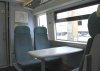
It does seem one of the biggest problems with the 377s (and by default 375/379s too) is their lack of ventilation once the AC packs in.. problem is apart from putting the windows back I can't really see there being any other solution.
Looks very much like an emt member of staff.
If you're referring to the person in the light blue t-shirt, that's FCC ;)
EC have a couple of 67s on standby positioned in a variety of locations normally including Kings Cross, Doncaster, Newcastle and Edinburgh (but not all at the same time).
Last time I checked it was at least 4 around the ECML at any time.. :)
 

j0hn0

Member
Joined
20 Jan 2009
Messages
563
Location
St Albans, England
I was on a 377 today, there is a sign saying "In most cases it is safer to stay on the train"

It then goes on to tell you how best to evacuate the train and walk down the tracks.

Perhaps a pregnant lady and a diabetic being stuck in a boiling hot train for 3 hours is considered an emergency, wouldn't you?

So if the signs tell them to go out on the track in an emergency, what else are they supposed to do?
 

ess

Member
Joined
9 Feb 2010
Messages
572
DOO is a sad change for the railway but it works, generally, but it needs the opportunity to get other staff to trains when needed. So the Friday night services or service after a football match should ALWAYS have an additional staff member (or twelve) where as for a tuesday afternoon journey it's not always necessary. Would be nice (probably only costs the ticket price of three or four passengers on the london commuter routes) but isn't necessary.

However for emergencies like this one DOO areas should be able to get additional staff to a train ANYWHERE to help passengers quickly. I still don't understand why a train which is half in a tunnel can't be assisted from the trackside within an hour. Surely a van can get fairly close to anywhere on the railway due to the... err... tracks for road transport that maintenance crews use. Maybe a van that's prepared and loaded with water
 

michael769

Established Member
Joined
9 Oct 2005
Messages
2,007
I was on a 377 today, there is a sign saying "In most cases it is safer to stay on the train"

It then goes on to tell you how best to evacuate the train and walk down the tracks.

Which many people people will understand to mean... "There are circumstances where it is OK to leave the train"

Perhaps it would be better to word it something like, "It is almost always safer to stay on the train, however in the event of a fire or a major collision you should....".
 

Firestarter

Member
Joined
15 Sep 2009
Messages
554
It does seem one of the biggest problems with the 377s (and by default 375/379s too) is their lack of ventilation once the AC packs in.. problem is apart from putting the windows back I can't really see there being any other solution.

If you're referring to the person in the light blue t-shirt, that's FCC ;)
Blue shirts are not part of the uniform at any level as far as i'm aware. happy to be proved wrong.
Last time I checked it was at least 4 around the ECML at any time.. :)

Quote:
Originally Posted by Surreytraveller View Post
The 377's are very badly designed commuter trains in that the only person who can open the windows in an emergency is the driver, who in an emergency on a packed train cannot walk through the train to open them because a) the train is packed, and b) is busy dealing with the problem. Perhaps the locks on these windows should automatically release if there is a power failure or something?
The 377s might be designed that way but at least they have emergency windows that can be opened. There aren't any in Desiros...

Where are the emergency windows located on a 377 because I've never seen one on a 377?
 

TGV

Member
Joined
25 Nov 2005
Messages
734
Location
320km/h Voie Libre
We use "Berne Keys" for such things - I imagine it's a similar thing. It is T-shaped with a male square drive on one leg, a female square drive on another and a sprung "keyed" fitment on the other.
 

TUC

Established Member
Joined
11 Nov 2010
Messages
5,021
I'm sure being stuck on an overheating train in a tunnel with (possibly) no announcements makes their blood boil as well.

Look we're going over the same ground here... No matter how 'irrational', 'stupid', or 'dangerous' you think the actions of these passengers - you can't take away human psychology from a situation like this. Rightly or wrongly, people will act of their own accord - and nothing you're gonna say is going to make any difference. You're expecting people to behave in a clockwork orange style state of sticking rigidly to the rules and never daring to challenge authority.

[/LIST]
I think this is at the heart of the issue. There still seems to be a fundamental culture issue in the rail industry that sees customers as just one cog in a machine that should stick to the rules and wait their turn just as much as any other part in the process. It fails to recognise that in such an incident getting the customers to where they need to be and, if that can't be done quickly, looking after them well is a priority.

I can understand the reaction of some posts that express concern about the passengers' safety by walking down the track. Its the posts that rather are saying 'they shouldn't have done that. Its the rules' that worry me more and show a fundamental problem..
 

Fincra5

Established Member
Joined
6 Jun 2009
Messages
2,636
You can't manually lock all the doors with people onboard. There must be an escape route incase of fire or accident (unlikely, but you never know).

If you just shut the doors the people can just open them again using the emergency system they have aready used.

The other option is not to move the train, but where does that get you?

In that case the train should have been evacuated. Or passengers moved to the assisting train (which if it didn't should have been empty).
 

moggie

Member
Joined
2 Jan 2010
Messages
426
Location
West Midlands
So the logic of some people is that if you are stuck on a ferry and everyone is feeling sea sick around you making you feel sick you jump overboard and swim to shore?

Maybe if it was absolutely clear (I'd be interested in what the legal position is) that if you choose to leave the train without authority then you or your next of kin / family waive any right to sue the train company and NR in the event you become injured or killed some people might just consider how reckless their actions are.

Like sheep - the more this behaviour is tolerated the more likely people are to resort to abandoning the train when they consider in their own self importance that they have some sort of moral right to do so. So it maybe time for BTP to commence some sample prosecutions if only to serve as a deterent.

No matter how poor the train companies are this bahaviour is tantamount to flouting the law and can only lead one way - anarchy on the raiils every time ther is an incident.

The next thing that will happen is that any time a train is going to be detained for say a period of 10mins then NR will routinely isolate traction current because the likelihood of passengers detraining has now increased.

Predictable, just like the consequences of cutting front line staff to minimum levels.
 

ryan125hst

Established Member
Joined
2 Jun 2011
Messages
1,327
Location
Retford
Let me propose two scenarios and ask what you would do:

1) You are on a train that has failed between stations, but still has power (it could be a signal failure or motor/ engine problems) the A/C and lights are working, the buffet car is selling drinks and a trolley is also bringing drinks and snacks down the train. The toilets are working, there are staff about and there are regular PA announcements.

2) You are on a train that has failed close to a station. The air con has gone off, as have the lights. It is a commuter train and has no buffet car or onboard staff. The toilets aren't working or fitted (eg class 313, 455 or 379) and there are few, if any, PA announcements.

I'm sure everyone would react in a different way if they were on a train in these situations. What if, for example, you were diabetic. You might desperately need the toilet (what about if a this happened to a FCC class 313. Would passengers leave the train to go to the toilet).

I would also stay on the train if I could, but if I was stuck on a train for a long time in uncomfortable conditions with no information, after two or three hours, I'm sure I would try and get out if there was a safe way to do so.

Finally, I am a member of St John Ambulance (I am a cadet) so I would assist any ill passengers eg by opening doors for ventilation, if I needed to.
 

BestWestern

Established Member
Joined
6 Feb 2011
Messages
6,736
To add another dimension to this debate, and particularly in view of the medical needs of some passengers, another big part of the problem is routine train overcrowding. I've known of passengers fainting on a train in normal service conditions due to excessive heat, and there have been real problems in dealing with the situation because the train was packed solid. It might be viewed, currently, as the only solution, but it just isn't safe. Ho hum :roll:

Additionally, here's an interesting 'from the horses mouth' viewpoint of those who self-evacuated during the SWT chaos:

http://uk.travel.yahoo.com/p-promo-3361308
 
Last edited:

O L Leigh

Established Member
Joined
20 Jan 2006
Messages
5,609
Location
In the cab with the paper
In any case the TIS should not have been activated with passengers onboard. However if this very unusual decision was made the doors should have been locked manually out of use (closed).

Your knowledge of the TIS is incorrect. It CAN be used in passenger service and the doors do not require to be locked out of use or the train evacuated where it sits (TW5 33).

I'm afraid that the discussion on the validity of following the rules is moot. The RAIB are going to be looking closely to make sure that all parties involved discharged their duties correctly and attempt to identify where the system broke down. In this particular instance it was not through any failure to adhere to the rules but because the random element introduced by having stroppy passengers onboard derailed the attempts of railstaff to get the train the hell out of there for the benefits of all the passengers onboard.

And this brings me back to a point I have already laboured. Mass break-outs from stranded trains and misuse of on-train equipment (in this instance, the emergency door egress handles to get some fresh air) makes it harder for railstaff to get the train moved and delays the arrival of whatever assistance is required. As with the break-out at Foxton following a dewirement, people getting out onto the tracks just turns an already bad situation worse and everyone suffers. Irrespective of whatever the Sub Standard may say on the matter, the quickest way to resolve a stranding is for the passengers to cooperate with the traincrew. Taking matters into their own hands, no matter how rational or understandable this may be, only serves to introduce further delay, discomfort and misery.

O L Leigh
 

TUC

Established Member
Joined
11 Nov 2010
Messages
5,021
the quickest way to resolve a stranding is for the passengers to cooperate with the traincrew. Taking matters into their own hands, no matter how rational or understandable this may be, only serves to introduce further delay, discomfort and misery.

O L Leigh
Yes but for that to work there has to be a two way process at work. For passengers to cooperate with the traincrew also requires them to feel assured that the traincrew-and the rest of the rail staff involved-is keeping them informed as to progress, is checking on any ongoing needs and is genuinely focused on getting them out of the situation as quickly as possible.. Without that happening passengers perhaps inevitably feel that ''the other side of the deal' isn't happening and so end up taking their own actions out of despiration.
 

ralphchadkirk

Established Member
Joined
20 Oct 2008
Messages
5,754
Location
Essex
Yes but for that to work there has to be a two way process at work. For passengers to cooperate with the traincrew also requires them to feel assured that the traincrew-and the rest of the rail staff involved-is keeping them informed as to progress, is checking on any ongoing needs and is genuinely focused on getting them out of the situation as quickly as possible.. Without that happening passengers perhaps inevitably feel that ''the other side of the deal' isn't happening and so end up taking their own actions out of despiration.

As the people involved in the SWT incident admit, there were announcments every 5 minutes, yet they still decided to get out:
"There were constant announcements every five minutes from the train driver saying he did not know when we would be moving.
http://www.bbc.co.uk/news/uk-england-13726803
 

BestWestern

Established Member
Joined
6 Feb 2011
Messages
6,736
I'm afraid that the discussion on the validity of following the rules is moot. The RAIB are going to be looking closely to make sure that all parties involved discharged their duties correctly and attempt to identify where the system broke down. In this particular instance it was not through any failure to adhere to the rules but because the random element introduced by having stroppy passengers onboard derailed the attempts of railstaff to get the train the hell out of there for the benefits of all the passengers onboard.

And this brings me back to a point I have already laboured. Mass break-outs from stranded trains and misuse of on-train equipment (in this instance, the emergency door egress handles to get some fresh air) makes it harder for railstaff to get the train moved and delays the arrival of whatever assistance is required. As with the break-out at Foxton following a dewirement, people getting out onto the tracks just turns an already bad situation worse and everyone suffers. Irrespective of whatever the Sub Standard may say on the matter, the quickest way to resolve a stranding is for the passengers to cooperate with the traincrew. Taking matters into their own hands, no matter how rational or understandable this may be, only serves to introduce further delay, discomfort and misery.

O L Leigh

Very much in agreement with that. Aside from the unwelcome and totally avoidable extra chaos they have caused, what is particularly worrying are the repeated comments from these people that it was OK for them to leave the train of their own accord, because they 'knew' that the power was off. You cannot look at a third rail or section of OLE and see that there is no power running through it. The only way that even a qualified member of railway staff knows that it is isolated is because the ECO gives them a personal verification of this. One person is responsible for requesting an isolation and asking for it to be withdrawn afterwards, and one person only. Second, third or tenth hand information from people not directly involved is completely worthless. There is absolutely no way at all that a group of untrained commuters who are getting impatient have any assurance whatsoever that the third rails over which they intend to step are safe. How do they do know which particular sections have been isolated, or the boundaries of those sections? They don't. How would they have known if the lines had been re-energised whilst they were walking alongside them? They wouldn't. Aside from electification, if they were stepping over pointwork and the blades had moved somebody could have lost a foot. And, as we all appreciate, if a train had appeared 'from nowhere' it could very easily have had major consequences.

It's fortunate that nobody was killed or injured during this. The Police were absolutely right to collect the details of some of these idiots, they should prosecute each and every one of them.
 

Goldfish62

Veteran Member
Joined
14 Feb 2010
Messages
13,116
As the people involved in the SWT incident admit, there were announcments every 5 minutes, yet they still decided to get out:

http://www.bbc.co.uk/news/uk-england-13726803

In my experience during this past week of hell on SWT (and at other times) when things go wrong the staff on the ground desperately try as hard as they can to keep passengers informed, but are left without any communication about what is happening.
 

sidmouth

Member
Joined
11 Aug 2010
Messages
197
Location
Peterborough
I made a point in an earlier post that such passenger action is entirely predictable (no matter how idiotic others might feel it is), and thus the need for a risk assessment, right back to the initial train design (maintain passenger comfort to minimise a risk of a bail out), to the TOC (ensuring a speedy rescue) to Network Rail (plan to cut the juice). Thus am dumfounded that it appears such risks were not foretold and mitigated against. Trains do break down, and passengers will bail if kept in uncomfortable conditions.
If a passenger was killed I would not be saying it was the passengers fault but examining the circumstances right back to square one. An answer from a TOC of " I was following the rule book" wouldn't be sufficient...
 

1V53

Member
Joined
23 Feb 2011
Messages
368
Oh dear oh dear.

As a guard I know the rules, know the safety aspects, know the deal: the safest place is to stay on the train and evacuation is the last resort. I know about the dangers, the third rail, etc etc. As a professional I follow these rules implicitly and would do my damnedest to ensure my passengers remained safe and followed them too.

However....

We have an incident here where the information flow is one way. Driver making announcements which although regular are basically not helping because all they are saying is "nothing is changing and I don't know when it will". There isn't a "its going to be 30 minutes", it's "who knows? I don't".

As a guard in delay situations I make announcements then if it is an unknown length delay I explain why it is unknown and say I will walk through but "please don't ask me how long the delay will be because I don't know. When I do I will let you know". Walk out into train "how late are we going to be?". "did you hear my announcement sir?". "yes". "Well I did explain we have a broken down train in front, that they are working on that, next plan will be to couple up to that. It could be 30 minutes it could be 2-3 hours, at the moment I really don't know until I get more information, sorry". "but I have a meeting and need to know"......

This is the sort of mentality we are dealing with.

As I guard I am getting frustrated at the sensible people on here explaining why pax detrained themselves being told "but that's not acceptable, it's dangerous and stupid yada yada yada.....". What us railway professionals think/know is irrelevant here.

If we were face to face with these people we could have an exchange: "I'm going to open the door and get out and you can't stop me". "sir I have to tell you that would be illegal, extremely dangerous and you will get yourself arrested". "yeah right". "Sir, please listen. There are rails with enough voltage to kill you, other trains, there is CCTV to identify you - look up - there's a camera - and the police will be waiting for you if you do survive.". Some may still take their chances but I'd suggest there would be some bargaining at this point ie I open door and stand by it, he agrees to take on fresh air and stay put.

However with just the driver, and or cramped conditions so guard can't get through, this isn't going to happen. You remove the interaction and the result is foolhardy actions.

Yes it is stupid but if you can only spout the rulebook and fail to understand the human psychology in this situation that leads people to detrain and walk down the track, then you need to wake up and smell the coffee!
 
Joined
26 Sep 2009
Messages
556
Location
Bishops Stortford
I've followed this thread for a few days now and have resisted the temptation to comment, mainly as a result of my being a lowly traction & rolling stock engineer, rather than an operator.

However, there are some T & RS design issues involved in this as well as ops issues.

Firstly, the issue of hopper windows that provide emergency ventilation. As most people know, air con works best in a "sealed" space, which is why hoppers that can be opened "willy-nilly" are not provided. However, it is simple common sense to provide some hoppers that are under train crew control, and this is usually done with locks that can be operated with a carriage key.

For commuter trains and DOO trains, this is not a practical proposition so it makes sense to fit these trains with hoppers that unlock remotely. I say unlock, because a latch to retain the window in the closed position would still be provided, so that the windows don't simply drop open when the remote control is operated (this was covered in an earlier posting). The remote control should either be an electro-magnet or a solenoid (shoot-bolt), that de-energises on activation, so that in the event of a power failure (and loss of air con) it operates automatically, enabling passengers to open the windows, presumably after being prompted to do so by the driver over the PA.

Regarding manual door release and TIS, the T & RS engineer has little influence on the functionality, as the working practice is set in the Rule Book (I don't intend to delve there!).

From here on in this post, I'm straying into operational matters and I'm prepared to be shot down by the operators. Maybe it's me, but surely, in the time it took for this incident to unfold, it should have been possible for somebody to show some leadership, predict that passengers would de-camp, formulate a plan and de-train under operator supervision, leading the passengers to a place of safety. On is it just me oversimplifying what was probably a very fraught and stressful incident?

I'm sure that whatever the outcome of the investigation, FCC will plan so that this doesn't recur.

 

ralphchadkirk

Established Member
Joined
20 Oct 2008
Messages
5,754
Location
Essex
The passengers excuses of needing to get off for being pregnant/ill or whatever I consider a red herring. If a passenger needed immediate emergency healthcare then the driver can request Network Rail to escort an Ambulance crew to the train. That is the right way round to do things.
 

Goldfish62

Veteran Member
Joined
14 Feb 2010
Messages
13,116
Firstly, the issue of hopper windows that provide emergency ventilation. As most people know, air con works best in a "sealed" space, which is why hoppers that can be opened "willy-nilly" are not provided. However, it is simple common sense to provide some hoppers that are under train crew control, and this is usually done with locks that can be operated with a carriage key.

For commuter trains and DOO trains, this is not a practical proposition so it makes sense to fit these trains with hoppers that unlock remotely. I say unlock, because a latch to retain the window in the closed position would still be provided, so that the windows don't simply drop open when the remote control is operated (this was covered in an earlier posting). The remote control should either be an electro-magnet or a solenoid (shoot-bolt), that de-energises on activation, so that in the event of a power failure (and loss of air con) it operates automatically, enabling passengers to open the windows, presumably after being prompted to do so by the driver over the PA.

Totally agree. I believe that some European suburban stock has this automatic unlocking feature.

Even on 458s with guards I've been on an uncrowded train many a time with no aircon and the windows locked. Unfortunately on some of these occasions I've gone to the guard, who has then taken no notice. Luckily on 458s you can use a key or other metal object top slide the catch across to release the window.
--- old post above --- --- new post below ---
The passengers excuses of needing to get off for being pregnant/ill or whatever I consider a red herring. If a passenger needed immediate emergency healthcare then the driver can request Network Rail to escort an Ambulance crew to the train. That is the right way round to do things.

Yes, getting on the track is stupid, but these people didn't do it because they wanted to. Having been on a 450 with failed aircon for 30 minutes, which was then taken out of service because several people were so uncomfortable, I can only imagine what those poor passengers stuck on that train for several hours were going through.
 

michael769

Established Member
Joined
9 Oct 2005
Messages
2,007
The passengers excuses of needing to get off for being pregnant/ill or whatever I consider a red herring. If a passenger needed immediate emergency healthcare then the driver can request Network Rail to escort an Ambulance crew to the train. That is the right way round to do things.

Yes, but that is not what happens (as history shows) in such incidents. Whether people who know better like it or not passengers will choose detrain without supervision. They will make matters worse and they will put themselves in danger.

Yes it's against the rules, yes in many cases it is stupid and irrational. But do you know what? People do stupid and irrational things in all walks of life and saying that it is against the rules will not stop it. Nor will prosecutions (even if you did manage to get it past a judge who might well be a commuter himself and sympathetic to the accused). It's against the law to speed, but prosecuting speeders does not seem to stop otherwise law abiding people obey the speed limit.

Why is it that the TOCs who claim to have an interest in safety refuse to address and manage this know serious danger? I struggle to understand how the industry can just sit on it's hands and say "it's against the rules" as if that absolves them of any responsibility to safely manage such an incident.

It's also against the rules to open a train door when it is moving, so why bother with locking mechanisms? Because the industry knows that rules or not people do open the doors in such circumstances, and it is far safer (and causes less disruption to the network) if you lock them - that's why.
 
Last edited:

TUC

Established Member
Joined
11 Nov 2010
Messages
5,021
What seems to be missing is an early point in the process where someone determines that, even if the exact length of time to resolve a situation can't be identified, its likely to be several hours rather than a short period. Once its clear that its going to be a long delay that in itself should be regarded as a major incident with set plans already in place for how to either rescue passengers or at least keep them fed, comfortable and with access to toilet facilities.

Whilst I stand to be corrected, it looks to me that rail's major incident planning is all focused on how to deal with accidents as opposed to how to deal with multiple sets of passengers stranded. Both need to be equally well planned for.
 

michael769

Established Member
Joined
9 Oct 2005
Messages
2,007
TUC I think you have hit the nail on the head. As I understand the system of targets and "fines" the industry works to in such incidents, every late or cancelled train counts against their targets, so in a target driven culture the #1 priority will be getting as many trains as possible back to running normally as soon as possible, rather than the safety, and indeed comfort and well being of passengers.

And of course, as I understand it, if passengers detrain then the incident then gets classed as being outside the industries control and suddenly the delays and cancellations no longer count.

Now I have no doubt that the rank and file of the industries first concern in such cases is the safety and well being of people in danger, but I also wonder if deep within the administration departments (where live senior people who have little practical experience of a real life railway) might have an altogether cynical view of this type of incident.

Whatever the truth of that is leaving people trapped inside a stifling hot tube for several hours without water, toilet facilities or hope of escape is quite simply morally indefensible, and anyone in a position to make decisions about how such incidents are managed is by doing so failing to meet even the most basic minimum standards of behaviour, and IMHO are not fit to be in the role they are failing to carry out properly.
 
Status
Not open for further replies.

Top