99% of the vehicles that caught fire in Sweden were ICE vs electric, so I don't think we need concern ourselves with that. Plus we have LFP batteries becoming more common and solid state etc.
Frankly, nobody will want an ICE car by 2030, let alone 2045. We're approaching price parity now and ranges are almost beyond what most people could ever do without a break. Charging is getting faster too.
Anyone continuing to build ICE cars will find it harder and harder to sell them, unless they're very specialist vehicles for the most hardcore petrol heads.
Another reason people will want an EV is as a home battery to reduce energy bills. Who uses their petrol car as a generator to power their home or sell electricity to balance the grid?
My bold
Meaningless unless we know what proportion of cars are EV. Also worth considering relative severity of the fires.
EV is lost on me for charging and also for balancing my home use of the grid because I have no drive. The car will often be too far away. That applies to a lot of people.
Yeah I have to wait till solid state and less flammable batteries come out. I know it’s media fuelled fear but seeing that ev fires happen and are worse than ice fires puts me off considering getting an ev. There are much less ev’s than ice cars in the road so fire stats seem a bit skewed to say ice cars are more likely to catch fire.
The thing with an EV fire in the batteries is that it is very hard to stop the fire once it has started - it does not need oxygen. Most fires (so non-battery) are put out by starving the fire of oxygen (drowning them in Water, Powder or Carbon-Dioxide) that does not work with an EV battery.
How many of them are delivery vans, buses, taxis, minicabs, emergency services vehicles, doctors, shift staff, delivery lorries (eg stocking shops and supermarkets), plumbers and builders vans etc etc which are essential. (Ever seen a plumber on a bike?). It would be useful to know how many were private cars, not used for the purposes outlined above. I would guess at around 750,000, which is less than 1 in 10 of the population.
It is hard to tell and we have evolved into calling on services from further afield rather than sticking with very local. I am thinking of London here.
I have also got a bee in my bonnet about out of town shopping areas which encourage/dictate car use. We planned our way into a mess.
I don't want one now or ever again in the future!
Nope. EVs are something like 800 times less likely to catch fire, at that's accounting for the differenct numbers on the road. Kinda makes sense when you realise they are carrying 50l of flammable fuel around!
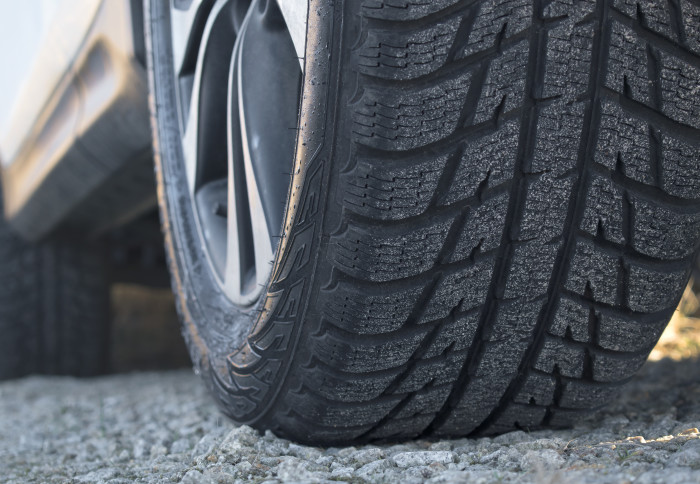
Nope. The tyres actually last longer on EVs. Weight doesn't really cause tyre wear (and the weight thing is largely mythical too). What causes tyre wear is jerky acceleration from changing gears, heavy braking and going round corners too quickly.
EVs have very smooth ascertain and braking.
I bought my Tesla second hand sat 25,000 miles. I replaced the rear tyres at about 50,000 miles. It's now at 68,000 miles and I can get to replace the front tyres. I believe they are the original factory fitted tyres. No ice vehicle tyres have ever lasted that long for me.
Suggest you stop listening to the fud and go have some test drives.
Jerky acceleration is far worse with electric. I use a lot of buses and the electric buses are terrible for vicious acceleration and harsh deceleration. I have an injury leading to deep vein thrombosis to convince me. Electric buses are a veritable fairground ride compared to their ponderous diesel predecessors. I cannot understand why their acceleration is not limited in some way. I am not anti electric BUT they are dangerous.
Irony is that my route (119 Croydon to Bromley) switched over to electric buses a year (or two) back. The last few months, however, we rarely get an electric bus on the route - instead we get a menagerie of various different diesel buses. Now it maybe that it has been decided to put the electric busses on a different route BUT :-
Another route (312 iirc) has reverted to diesel and I have been told it is because the batteries were failing. Apparently they need on average £100k spent to repair each bus.
I fully expect battery tech to improve over time. But I think at the moment there is a risk of battery tech getting a bad image if we progress too fast.
I will say it again - we need to reduce are dependence on road vehicles but instead we are just rushing towards a sticking plaster solution that will not improve congestion.
Most of those tasks can more efficiently be accomplished using smaller, lighter vehicles. Dropping a Streetview pin on a random area in Zone 2 brought up a street filled with parked cars, only one van (belonging to the electricity company) in shot.
You mention doctors, perhaps more would take up cycling to work if it were safer:
Dr Marta Krawiec was dragged under the wheels of an HGV at some traffic lights in central London.

www.bbc.co.uk
Yes, there are quite a few around these days, particularly in London.
Is there still a loophole that allows people to dodge the congestion charge by registering their car as a minicab?
My bold
If the GP is out on visits then they have a driver driving them (that is what I see AND I have been told this is partly for security but also so the GP is less loaded with driving issues). Also I imagine the GP could be taking enough equipment with them that a bicycle is not suitable.
Maybe an EV is suitable ?.
There are actually quite a lot of cargo bikes popping up in London, which is good as they're common elsewhere in the world.
We do seem to believe that children, old people, or anyone needing to carry goods are totally unable to cycle. Or that everyone has a disability. Or that rain stops you being able to cycle...
EVs solve the pollution issue but not congestion and are just part of the jigsaw.
I just wish those Cargo bikes would stay off the pavement and respect the highway code - As a pedestrian I am really getting a lot of near misses these last few years.
For me I mainly walk or use the bus (it is a 20 minute walk into town which trumps the variable bus frequency - actual not planned). For further afield it is train into London then coach for the rest of even longer trips. But my car is used if I have too much to carry. I am quite proud of the fact I use my car as little as possible. It will be a long time before an EV becomes cheap enough for me to buy secondhand but I see progress.
For me I see ecology as avoiding car use as much as possible - that to me is simpler. The car is there for when I really need it.