• Our new ticketing site is now live! Using either this or the original site (both powered by TrainSplit) helps support the running of the forum with every ticket purchase! Find out more and ask any questions/give us feedback in this thread!

What stock will Scotrail procure to replace HSTs?

Status
Not open for further replies.

Dunnyrail

Member
Joined
26 Oct 2017
Messages
151
A few years back I wrote to Scotrail suggesting that any new rolling stock should be based on something that would make train travel a satisfactory experience but also include the ability to take in the superb scenery making train travel a new and exciting experience in Scotland rather than being something to be endured. You would not wish to read the mealy mouthed PR reply I got about my thoughts of something along the lines of the Allegra with Panoramic Windows as used on the RHB in Switzerland.
 
Sponsor Post - registered members do not see these adverts; click here to register, or click here to log in
R

RailUK Forums

nwales58

Established Member
Joined
15 Mar 2022
Messages
1,365
Location
notsure
... something along the lines of the Allegra with Panoramic Windows as used on the RHB in Switzerland.
Or raise some seats 40cm higher than the others and you can charge a supplement of around £20 for them - MOB's new GoldenPass Express coaches.
 

Bletchleyite

Veteran Member
Joined
20 Oct 2014
Messages
113,736
Location
"Marston Vale mafia"
A few years back I wrote to Scotrail suggesting that any new rolling stock should be based on something that would make train travel a satisfactory experience but also include the ability to take in the superb scenery making train travel a new and exciting experience in Scotland rather than being something to be endured. You would not wish to read the mealy mouthed PR reply I got about my thoughts of something along the lines of the Allegra with Panoramic Windows as used on the RHB in Switzerland.

To be fair, the typical UK profile with a tapered bodyside and narrower loading gauge does make quite a lot of "normal" trains effectively panoramic. The Class 397 is basically a wall of glass in this regard, and the slight taper gives you a view out and up. Certainly as good as any Swiss panoramic stock for viewing the Howgills (between Oxenholme and Penrith, one of the most scenic yet unsung parts of the network) and lacking in the optical distortion you get in those Swiss IC coaches with curved windows.
 

RailWonderer

Established Member
Joined
25 Jul 2018
Messages
2,218
Location
All around the network
To be fair, the typical UK profile with a tapered bodyside and narrower loading gauge does make quite a lot of "normal" trains effectively panoramic. The Class 397 is basically a wall of glass in this regard, and the slight taper gives you a view out and up. Certainly as good as any Swiss panoramic stock for viewing the Howgills (between Oxenholme and Penrith, one of the most scenic yet unsung parts of the network) and lacking in the optical distortion you get in those Swiss IC coaches with curved windows.
Not to mention the floor level of our trains is much higher than European standards, meaning we get a better view up high than non panoramic European trains where the windows are taller but much lower to the train's floor.
 

43OO4

Member
Joined
20 Apr 2015
Messages
65
Now, I dislike FLIRTs simply because they make standardising infrastructure - and amending the regulations in order to do so - to train heights significantly harder (the majority of British trains have a floor height around 1m-1.1m, and FLIRTs are very much outliers here), however that isn't to say they wouldn't be suitable. What I do hope, though, is that whatever comes to replace those HSTs has a proper passenger experience offering.

From what I've seen, the shop on the Super Expresses is ridiculously tiny and not a good working environment, and the first class kitchen leaves a lot to be desired too. Now, granted the current I7C trains don't have an excellent catering offering, but I can't be the only person who wants to see the resurgence in proper onboard catering?

EDIT: Double negatives, damnit!
 
Last edited:

Trainbike46

Established Member
Joined
18 Sep 2021
Messages
4,376
Location
belfast
Now, I dislike FLIRTs simply because they make standardising infrastructure - and amending the regulations in order to do so - to train heights significantly harder (the majority of British trains have a floor height around 1m-1.1m, and FLIRTs are very much outliers here), however that isn't to say they wouldn't be unsuitable. What I do hope, though, is that whatever comes to replace those HSTs has a proper passenger experience offering.
In many level boarding threads it has already been covered that you cannot raise platforms to 1000-12000 mm without moving them further away from the platform or fouling the loading gauge. Changing the platforms from the long-established UK standard height of 915mm is a bad idea, especially as every manufacturer offers design with level boarding at the (much lower) EU standard platforms of 550mm/760mm, so they certainly could design trains offering level boarding at a 915mm platform

Changing every platform in the country to meet train heights would also cost significantly more than simply replacing trains with new ones offering level boarding as they reach end of life.
 

MarkyT

Established Member
Joined
20 May 2012
Messages
7,598
Location
Torbay
In many level boarding threads it has already been covered that you cannot raise platforms to 1000-12000 mm without moving them further away from the platform or fouling the loading gauge. Changing the platforms from the long-established UK standard height of 915mm is a bad idea, especially as every manufacturer offers design with level boarding at the (much lower) EU standard platforms of 550mm/760mm, so they certainly could design trains offering level boarding at a 915mm platform

Changing every platform in the country to meet train heights would also cost significantly more than simply replacing trains with new ones offering level boarding as they reach end of life.
Exactly. The UK FLIRT has been engineered to closely match the UK standard platform height and has moving gap filler step boards at doors for horizontal offsets. It is the first of the future generations of rolling stock. Other manufacturers are using similar techniques for low floor in mainland Europe and Alstom is currently producing a British profile bodyshell with level boarding for Ireland.
 

Transilien

Member
Joined
10 Mar 2024
Messages
756
Location
Ayrshire
Alstom is currently producing a British profile bodyshell with level boarding for Ireland.
Perhaps something like a Régiolis currently used in France for Regional and Inter-City routes would work? They could be built in Derby.
 

signed

Established Member
Joined
13 May 2024
Messages
2,387
Location
ROI
Perhaps something like a Régiolis currently used in France for Regional and Inter-City routes would work? They could be built in Derby.
Regiolis platform is now CAF owned and built, was done in order to close the Bombardier merger
 
Joined
1 Nov 2021
Messages
312
Location
Berwick
There is a simple answer going forward is to make it a legal requirement that all new rolling stock has level boarding throughout. Yes it adds to the cost but it is time now that all new trains meet accessibility standards. It would also make it a lot easier for everyone else boarding and alighting. Might of course mean that some existing rolling stock gets a longer lease of life.
 

Mitchell Hurd

On Moderation
Joined
28 Oct 2017
Messages
1,762
In your opinion.

Factually, the 222's are accessible and meet the legislation. Comfort wise I always found them more comfortable than EMT/EMR's HSTs.
They 222's would presumably be more reliable and no doubt better on the hills! Emissions wise not so sure.
 

sannox

Member
Joined
1 Mar 2016
Messages
651
From what I've seen, the shop on the Super Expresses is ridiculously tiny and not a good working environment, and the first class kitchen leaves a lot to be desired too. Now, granted the current I7C trains don't have an excellent catering offering, but I can't be the only person who wants to see the resurgence in proper onboard catering?

I just don't think the Scotrail routes have much of a market for proper catering to be honest. If you can get snacks and coffee / drinks I'd think that was adequate - to be honest stuff off train around stations is often cheaper and better to take on board anyway.
 

computerSaysNo

Established Member
Joined
14 Dec 2018
Messages
1,668
no doubt better on the hills! Emissions wise not so sure.
I can't find the weight of the 222s nor of the 170s to make a comparison, does anyone know these? The total weight per x-car set or average weight per car in a set would be fine.
Otherwise I'll use the weights of Class 220 and Class 171 instead, to do a few calculations when I get the chance.
 

Bletchleyite

Veteran Member
Joined
20 Oct 2014
Messages
113,736
Location
"Marston Vale mafia"
I just don't think the Scotrail routes have much of a market for proper catering to be honest. If you can get snacks and coffee / drinks I'd think that was adequate - to be honest stuff off train around stations is often cheaper and better to take on board anyway.

One thing that's quite key is that it's good coffee - instant doesn't cut it these days - which means a buffet rather than a trolley.
 

sprinterguy

Veteran Member
Joined
4 Mar 2010
Messages
11,574
Location
Macclesfield
I can't find the weight of the 222s nor of the 170s to make a comparison, does anyone know these? The total weight per x-car set or average weight per car in a set would be fine.
Otherwise I'll use the weights of Class 220 and Class 171 instead, to do a few calculations when I get the chance.
170 3-car: Between 132.9t and 138.2t.
222 5-car: 249t
 

sprinterguy

Veteran Member
Joined
4 Mar 2010
Messages
11,574
Location
Macclesfield
Thank you. Do you know which weight the ScotRail 170s in particular are?
It varies by batch, those are both quoted weights for Scotrail 170s.

170393-396: 138.2t
170401-424*: 132.9t
170425-434: 137.0t
170450-461*: 136.1t
170470/471: 132.6t

*No longer all leased by Scotrail
 

Clansman

Established Member
Joined
4 Jan 2016
Messages
2,654
Location
Scotland
Anyone thinking that it should be Mk5s and 222s should really look at the reality rather than the crayon table.

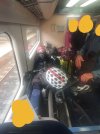
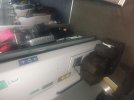
5 coach HSTs full and standing between Edinburgh and Inverness with luggage overflowing into vestibules now a common occurrence. Currently on one just now, as well as last week southbound from Pitlochry - and the photos (taken before full and standing at Haymarket) should tell you all you need to know about how 222s and Mk5s would go.

The HSTs were once thought to be overkill but clearly are now not enough, so how would 222s and Mk5s be an improvement?

Not everything needs to be cast offs or transferred, nor does it have to be an exact follow on order piggy backing from something that currently exists elsewhere.

I can definitely see the tender being for something more bespoke, rather than another whole sale knock offs.

ScotRail procurements since the 2000s have always tended to follow this direction, and for very good reason.
 

Attachments

  • 20240906_133839.jpg
    20240906_133839.jpg
    3.3 MB · Views: 114
  • 20240906_133737.jpg
    20240906_133737.jpg
    2.4 MB · Views: 114
  • 20240906_133521.jpg
    20240906_133521.jpg
    3.1 MB · Views: 114

computerSaysNo

Established Member
Joined
14 Dec 2018
Messages
1,668
Anyone thinking that it should be Mk5s and 222s should really look at the reality rather than the crayon table.

5 coach HSTs full and standing between Edinburgh and Inverness with luggage overflowing into vestibules now a common occurrence. Currently on one just now, as well as last week southbound from Pitlochry - and the photos (taken before full and standing at Haymarket) should tell you all you need to know about how 222s and Mk5s would go.

The HSTs were once thought to be overkill but clearly are now not enough, so how would 222s and Mk5s be an improvement?

Not everything needs to be cast offs or transferred, nor does it have to be an exact follow on order piggy backing from something that currently exists elsewhere.

I can definitely see the tender being for something more bespoke, rather than another whole sale knock offs.

ScotRail procurements since the 2000s have always tended to follow this direction, and for very good reason.
But buying new costs more, and bespoke more than that again, than taking 222s would cost. So for the same amount of money as buying and running brand new 3-carriage trains, you might be able to lease and run 6-carriage 222s.

== Doublepost prevention - post automatically merged: ==

It varies by batch, those are both quoted weights for Scotrail 170s.

170393-396: 138.2t
170401-424*: 132.9t
170425-434: 137.0t
170450-461*: 136.1t
170470/471: 132.6t

*No longer all leased by Scotrail
Thanks, that's very interesting that the weight varies so much.
Do the quoted weights include fuel? I'm thinking that 470-471 were only intended for suburban services so might have been fitted with a smaller fuel tank and thus are lighter?
 

Clansman

Established Member
Joined
4 Jan 2016
Messages
2,654
Location
Scotland
But buying new costs more, and bespoke more than that again, than taking 222s would cost. So for the same amount of money as buying and running brand new 3-carriage trains, you might be able to lease and run 6-carriage 222s.
So by that logic so long as new is more expensive, it shouldn't be an option? That's not really how it works, there's a bigger picture to consider.

If somethings not suitable, then it's not suitable. There's also a long term cost to not spending more in the short term. 222s are a classic example of this, especially seeing them beyond 2030 and decarbonisation targets amidst them being past their half life by this time.

What's cost savings if it wouldn't solve the issues like situations in the pictures above? 222s wouldn't fix that (be it 6 car, 7 car, 8 car), and if you refurbished them to accommodate the needs of Scottish intercity routes then you'd have far fewer passengers per metre which in turn creates a higher unit cost per metre. This is directly the inverse of what you'd be arguing, ironically.

On paper it makes sense only when your paper is confined to crayoning about trying to recycle train fleets of times gone by if they're arbitrarily deemed to be 'young'. Considering the needs of the business, the passengers, and the government... completely different picture.
 
Last edited:

computerSaysNo

Established Member
Joined
14 Dec 2018
Messages
1,668
So by that logic so long as new is more expensive, it shouldn't be an option? That's not really how it works, there's a bigger picture to consider.
I'm just conscious that electrification is not as advanced at the current time as the Scottish Government were hoping it would be, therefore they may feel like going immediately to new-build bi/tri-mode units may not be best.
What's cost savings if it wouldn't solve the issues like situations in the pictures above? 222s wouldn't fix that (be it 6 car, 7 car, 8 car)
I don't understand what you're trying to say here. Your pictures showed a crowded 5-carriage train, why wouldn't a 7- or 8-coach train be an improvement?
if you refurbished them to accommodate the needs of Scottish intercity routes then you'd have far fewer passengers per metre
The Class 222 currently operates limited-stop, fairly long-distance services. Is this much significantly different (passenger-wise) from the work ScotRail would be using them on? Okay, ScotRail might want to replace some of the seats with luggage stacks. What other changes would reduce the number of seats? Do a lot of them have to be changed from airline-style to table seats?
 

Trainbike46

Established Member
Joined
18 Sep 2021
Messages
4,376
Location
belfast
But buying new costs more, and bespoke more than that again, than taking 222s would cost. So for the same amount of money as buying and running brand new 3-carriage trains, you might be able to lease and run 6-carriage 222s.
that is an assumption that is not necessarily true, due to the leasing system we have. There have been multiple instances of perfectly servicable stock returned to ROSCOs because new stock was cheaper than continuing to lease existing stock. especially when taking into account operational costs (e.g. fuel, maintenance, and staffing), which can differ significantly between fleets.

In addition to that, cost isn't the only factor that impacts decisions on rolling stock.

Below is an overview of the equivalent capital cost of various options when the HSTs where initially selected. I think it is quite clear that selecting supposedly cheaper, older trains isn't necessarily the best choice, and was actually the wrong choice in this instance.

By which I'm not saying that the 222s certainly won't be selected, but you're making too many assumptions, all in favour of the 222s. Personally, I think 222s would be the wrong solution for Scottish IC, but we'll see what gets selected.

1725628778426.png
source: https://x.com/GarethDennis/status/1740293127997661443/photo/1
 

sprinterguy

Veteran Member
Joined
4 Mar 2010
Messages
11,574
Location
Macclesfield
Thanks, that's very interesting that the weight varies so much.
Do the quoted weights include fuel? I'm thinking that 470-471 were only intended for suburban services so might have been fitted with a smaller fuel tank and thus are lighter?
I believe weights quoted are with fuel and other sundries on board. The difference is only 100 kilos per carriage compared to the contemporary first batch of 170/4s: I suspect the difference could largely be explained by different internal fittings, or it could even be little more than a rounding error.
 

computerSaysNo

Established Member
Joined
14 Dec 2018
Messages
1,668
A very quick (which turned out to not be very quick) calculation and comparison regarding power and weight between the Classes 222 and 170, in relation to fuel efficiency.

Class 170:
  • Wikipedia reports power output to be 315KW (kilowatt) per engine. A 3-car train has 3 engines so power(total) = power(per engine) * 3 = 315 * 3 = 945KW.
  • @sprinterguy reports these weights for the class 170 per set (3 carriages):
@sprinterguy said:
170393-396: 138.2t (ton)
170425-434: 137.0t
170470/471: 132.6t
  • The bulk of the 170s by count is the 425-434 batch so I've used that weight. So Weight(total) = 137t.
  • Power to weight ratio is power(total) / weight(total) = 945 / 137 = 6.898 watts per kg.
Class 222:
  • For simplicity I'm going to use a 5-car 222 for all calculations.
  • Wikipedia reports power output to be 559KW per engine. A 5-car train has 5 engines so power(total) = power(per engine) * 5 = 559 * 5 = 2795KW.
  • @sprinterguy reports the weight of a 5-car 222 to be 249t.
  • Power to weight ratio is power(total) / weight(total) = 2795 / 249 = 11.225 watts per kg. So significantly more than a 170.
Class 222 (5-car, 4 engines):
  • Next I looked at a 5-car 222 with four engines. If this setup was used then it would be best to remove the unused engine completely. I couldn't quickly find the wet weight of the exact engines used in the 222 but the Cummins website lists a variation of that engine, suitable for construction equipment, as weighting 1928kg which is about 2t.
  • Weight(total) = weight(total with 5 engines) - weight(one engine) = 249 - 2 = 247t.
  • Power(total) = power(one engine) * 4 = 559 * 4 = 2236KW.
  • Ratio = power(total) / weight(total) = 2236 / 247 = 9.05 watts per kg.
Class 222 (5-car, 3 engines):
  • Weight(total) = weight(total with 5 engines) - weight(one engine * 2) = 249 - 4 = 245t.
  • Power(total) = power(one engine) * 3 = 559 * 3 = 1677KW.
  • Ratio = power(total) / weight(total) = 1677 / 245 = 6.845 watts per kg.
So, a 5-car Class 222 with 3 engines installed would have a similar power to weight ratio as a 3-car Class 170 with all engines. However, how efficiently the train can turn the power into acceleration is also important, I don't know how efficiently the transmission in the 170 can put the power down through the entire speed range; if it's not very efficient then the 222 might have an advantage even with the same power output.

== Doublepost prevention - post automatically merged: ==

that is an assumption that is not necessarily true, due to the leasing system we have. There have been multiple instances of perfectly servicable stock returned to ROSCOs because new stock was cheaper than continuing to lease existing stock. especially when taking into account operational costs (e.g. fuel, maintenance, and staffing), which can differ significantly between fleets.
Ah, thanks, yes I'd forgotten that sometimes new could end up being cheaper.
 

sjm77

Member
Joined
8 Jan 2020
Messages
341
Location
Manchester
Anyone thinking that it should be Mk5s and 222s should really look at the reality rather than the crayon table.
Could the current overcrowding be because Scotrail is operating a reduced timetable on many routes? When Scotrail order these trains they should make sure that they order enough to eventually offer an hourly service on the Highland Main Line.

I am not sure that Inverness to Aberdeen warrents IC stock. (Yes I know they are both cities, but so are Newcastle and Carlisle and that doesn't require IC stock either)!

21 units would be required in service at any one time to give hourly services on;
Aberdeen - Edinburgh
Aberdeen - Glasgow
Inverness - Perth - (Edinburgh/Glasgow alternatley)

To cover maintenance and a spare maybe 25 x 5 car trains would be needed

With these frequencies a well designed 5 car train should suffice for the vast majority of the time (granted folk who board at Stirling to travel to Glasgow at 8am may have to stand but this is by choice given the ex-Alloa locals will arrive with many seats spare)

A larger train would not be needed for the majortity of the time and taxpayer money has to be speny wisely (unless it goes on a new ferry).
 

takno

Verified Rep - Traksy
Joined
9 Jul 2016
Messages
6,594
Could the current overcrowding be because Scotrail is operating a reduced timetable on many routes? When Scotrail order these trains they should make sure that they order enough to eventually offer an hourly service on the Highland Main Line.

I am not sure that Inverness to Aberdeen warrents IC stock. (Yes I know they are both cities, but so are Newcastle and Carlisle and that doesn't require IC stock either)!

21 units would be required in service at any one time to give hourly services on;
Aberdeen - Edinburgh
Aberdeen - Glasgow
Inverness - Perth - (Edinburgh/Glasgow alternatley)

To cover maintenance and a spare maybe 25 x 5 car trains would be needed

With these frequencies a well designed 5 car train should suffice for the vast majority of the time (granted folk who board at Stirling to travel to Glasgow at 8am may have to stand but this is by choice given the ex-Alloa locals will arrive with many seats spare)

A larger train would not be needed for the majortity of the time and taxpayer money has to be speny wisely (unless it goes on a new ferry).
The idea that if a service is hourly you can get away with a 4-5 car train is what landed us with hideously overcrowded Voyagers on XC.
 

sjm77

Member
Joined
8 Jan 2020
Messages
341
Location
Manchester
The idea that if a service is hourly you can get away with a 4-5 car train is what landed us with hideously overcrowded Voyagers on XC.
Actually that is not a fair comparison, the 4/5 car voyagers replaced 7 car HSTs and 8 car hauled class 47 and 86 trains. I dispute that the highland main line regularly needs more than 5 coaches per hour in each direction also given now that you sometimes get a 3 car 170 with 2 hour gaps.
 

43096

On Moderation
Joined
23 Nov 2015
Messages
18,863
So by that logic so long as new is more expensive, it shouldn't be an option? That's not really how it works, there's a bigger picture to consider.

If somethings not suitable, then it's not suitable. There's also a long term cost to not spending more in the short term. 222s are a classic example of this, especially seeing them beyond 2030 and decarbonisation targets amidst them being past their half life by this time.

What's cost savings if it wouldn't solve the issues like situations in the pictures above? 222s wouldn't fix that (be it 6 car, 7 car, 8 car), and if you refurbished them to accommodate the needs of Scottish intercity routes then you'd have far fewer passengers per metre which in turn creates a higher unit cost per metre. This is directly the inverse of what you'd be arguing, ironically.

On paper it makes sense only when your paper is confined to crayoning about trying to recycle train fleets of times gone by if they're arbitrarily deemed to be 'young'. Considering the needs of the business, the passengers, and the government... completely different picture.
It also rather depends if they lease or buy. If they lease a new train fleet, on a long term lease, then there's less risk for the ROSCO, so there would be a better price and the Scottish Government wouldn't have to find the cash up front to pay for it. Getting a stop-gap fleet in, with all the training and whatever costs that go with it, then go for a new fleet (with the same costs of training etc) a bit later, then that may not stack up financially either.
 
Status
Not open for further replies.

Top