Yes, costs were rising before the redesigns but that was due to other listed factors (Most of them arguably the result of the current fiscal rules not being suited to allow the government to deliver cost-effective projects.), the redesigns arguably made the problem worse.
The redesigns at least offered potential to make the station deliverable.
The station project was already in serious trouble when the redesign was ordered. After all, projects that go up in price by 45-69% in three months do not tend to end well for anyone concerned.
Only to a point, the protests against HS2 were among the largest and longest protests against a public project in recent history and they engaged in actions (Such as tunnelling under the construction site, and breaching Covid rules.) that no one could have foreseen. On top of that HS2 Ltd itself ended up employing private security at its own expense to keep its workers and the protesters safe, as the police were unwilling or unable to properly deal with unlawful protesters.
Tunneling under sites to prevent construction is a well known protest tactic that has been used in the UK for decades.
Indeed, at least one protestor who used tunneling as a weapon against HS2 ("Swampy") became somewhat famous for doing it in 1996!
Given the size of the works proposed by HS2, it is unreasonable to assume that noone would protest.
The only reason they are the largest in recent history is that noone has built a project this disruptive, arguably since Twyford Down.
And given the backlash over policing of that mess, I don't think its reasonable to assume the police were going to repeat that against the HS2 protestors, in an environment far less permissible towards alleged police misconduct.
Social media means that videos of alleged police heavy-handedness will be everywhere in a matter of hours.
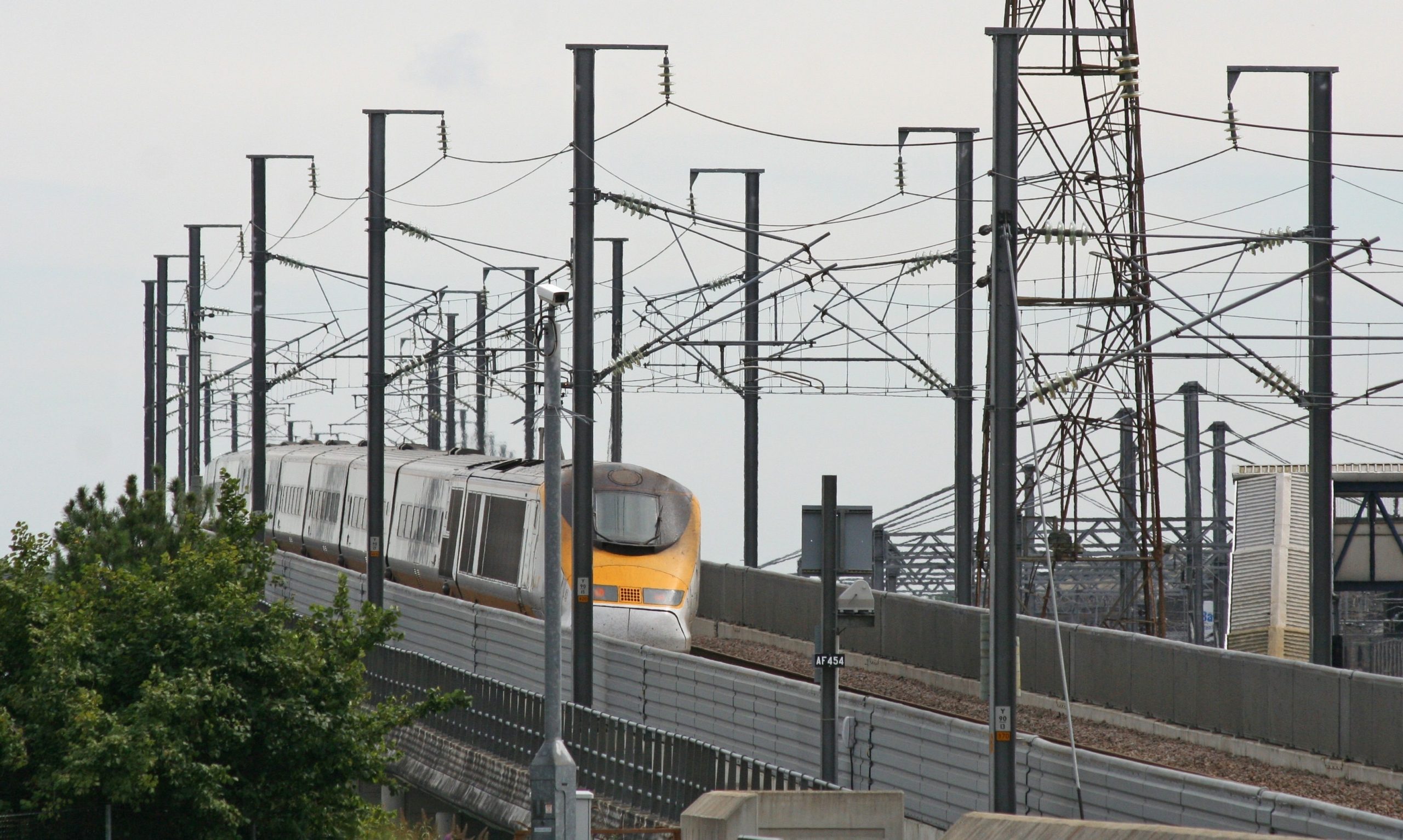
HS2 is being built based on the same concept as other high-speed lines, a dedicated line with limited stations to allow high-speed trains to travel at their top speeds for more of the journey which along with reducing journey times increases capacity as trains clear a section of track sooner allow more trains to operate on a given section of track. The notable difference is its design speed is on the high end.
Capacity for a railway as a function of speed peaks far below 250kph, by HS2 speeds the increased speeds
reduce capacity.
And in any case, as Old Oak Common demonstrates, intermediate stations do not necessarily reduce capacity.
Whilst high speed lines very in design, the "limited station" approach (to the extent seen in HS2) is certainly very much towards the "few stations" end of the scale.
Indeed, the arguably two most succesful high speed systmes in the world make use of more intermediate stations than HS2 does (Japan and China, although the former far more than the latter).
Birmingham trains will be full is not circular reasoning as the premises (That the more stations high-speed trains stop at the more capacity is reduced, and trains between London and Birmingham will be full.) and the conclusion (There is no/limited value for intermediate stations.) are not the same. It is very possible that there are flaws in the conclusion reached but I have not personally seen any credible proposals that have argued that.
If you believe the central conceit that high speed 2 was about capacity rather than speed, the line only has to be fast enough to beat the classic railway.
If you only need to beat the classic railway, there is room for several intermediate stops. The classic railway simply is not very fast compared to what modern trains are capable of.
EDIT: Edited to add some more nuance.


www.newcivilengineer.com


