• Our new ticketing site is now live! Using either this or the original site (both powered by TrainSplit) helps support the running of the forum with every ticket purchase! Find out more and ask any questions/give us feedback in this thread!

UK switching to electric vehicles discussion

jon0844

Veteran Member
Joined
1 Feb 2009
Messages
30,950
Location
UK
I've not yet found a way to fill my petrol car at home, so besides the higher cost of using a charger elsewhere I am not sure what the problem is?

Most people have off road parking so this isn't really an issue for most people anyway.
 
Sponsor Post - registered members do not see these adverts; click here to register, or click here to log in
R

RailUK Forums

The Ham

Veteran Member
Joined
6 Jul 2012
Messages
12,044
I've not yet found a way to fill my petrol car at home, so besides the higher cost of using a charger elsewhere I am not sure what the problem is?

Most people have off road parking so this isn't really an issue for most people anyway.

Also, going forwards there's housing being built with allocated spaces (but not a driveway, or always even within their land ownership) with charging.

As such as time moves on the issue of off road parking will decline (yes it's going to be slow, and I'm not suggesting it's going to be a significant percentage of those without offering road parking in the next 3 years, the point is that it's shifting).
 

renegademaster

Established Member
Joined
22 Jun 2023
Messages
2,223
Location
Croydon
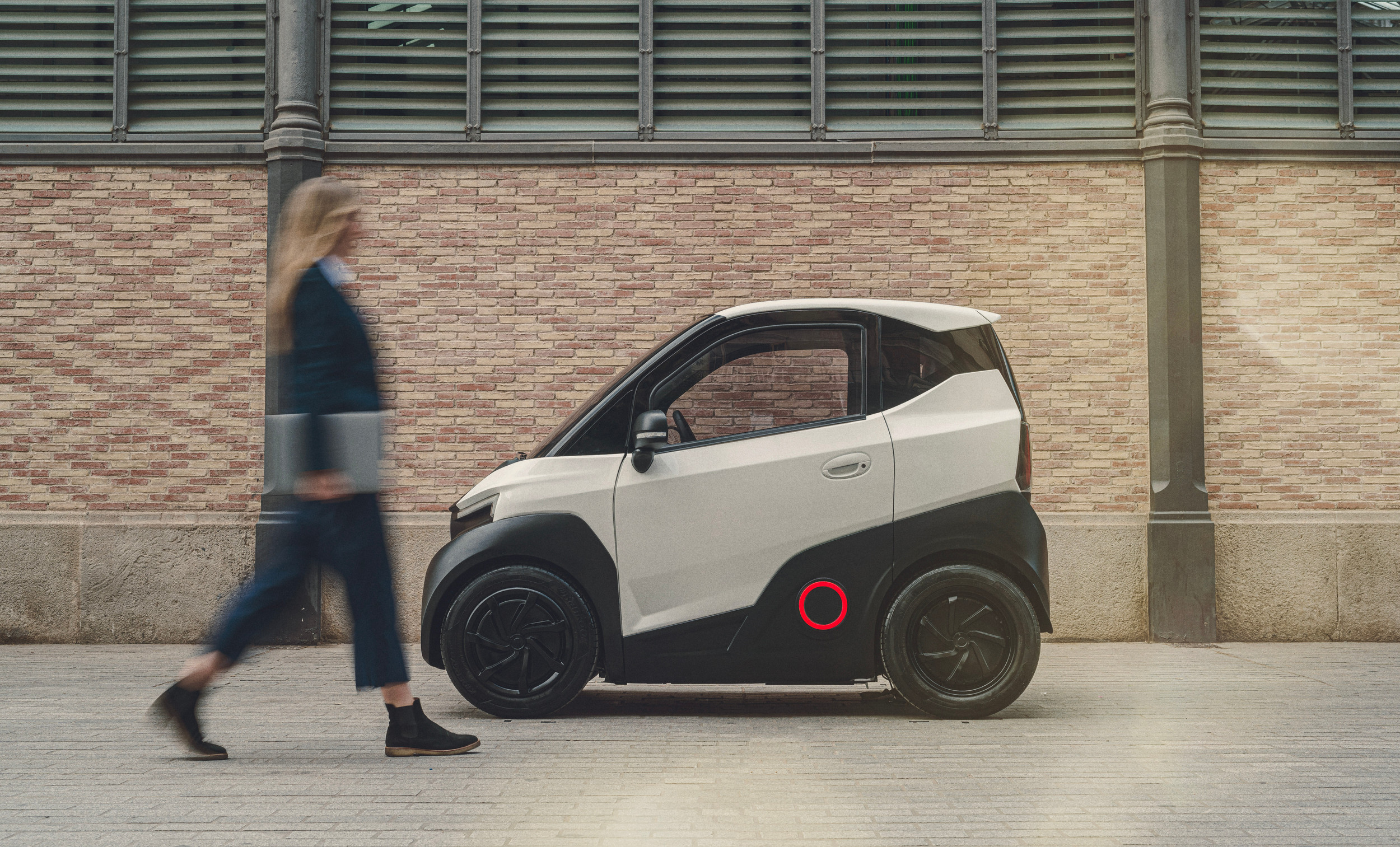
Theirs a Chinese EV you can buy here with a removable battery
Trolley type battery pack. The S04 can be driven with one or two removable trolley-type batteries, which incorporate wheels and a handle to be transported comfortably and safely
Allegedly with a 92 mile ranges, though its only got two seats and is more a covered ebike than a proper family car

== Doublepost prevention - post automatically merged: ==

higher cost of using a charger elsewhere I am not sure what the problem is?
The higher amount of time it takes, especially with the cheaper cars which are slower to charge
 

Bald Rick

Veteran Member
Joined
28 Sep 2010
Messages
35,965
Still only suitable for those who can charge at home though. For all the talk of solutions to the issue of home charging for those who have to use on-street parking such as charger ports installed on lamp-posts, I've yet to see any of these solutions materialise.

You can‘t be looking very hard. I see lampost chargers all over the place. I also see EVs charging away from ‘home’ all over the place - at supermarkets, retail parks, leisure facilities, work place car parks, regular car parks, stations, hotels, and of course roadside cafes / service stations.

It is just a myth that EVs aren‘t suitable for those without home charging.
 

jon0844

Veteran Member
Joined
1 Feb 2009
Messages
30,950
Location
UK
Not all small battery cars have slow charging speeds, and obviously a smaller battery charges quicker anyway (and cheaper as a result).

If I get an EV next year, I have already figured I could initially just charge it fine using a granny charger overnight. There is no real rush to install a 7+ kWh power supply for the sort of mileage I will do over a month.

For rare long drives, I'll stump up for a public charger as required.
 

61653 HTAFC

Veteran Member
Joined
18 Dec 2012
Messages
19,373
Location
Yorkshire
You can‘t be looking very hard. I see lampost chargers all over the place. I also see EVs charging away from ‘home’ all over the place - at supermarkets, retail parks, leisure facilities, work place car parks, regular car parks, stations, hotels, and of course roadside cafes / service stations.

It is just a myth that EVs aren‘t suitable for those without home charging.
Though if you can only charge at supermarkets etc., the cost advantage is greatly reduced.

On the lamppost chargers, they are definitely a rarity in my part of the world. I can't recall ever seeing any, and I have been keeping my eyes out whenever I'm out on foot. There certainly aren't any on the street I live on, and in fact there are only about six lampposts on the street. If the plan is for all cars to be pure electric that means a maximum of twelve vehicles being able to charge overnight if the existing infrastructure is used. You could maybe get more, but only by creating a new problem of cables over the pavement. There's also the problem of crime: it's not uncommon for cars parked on my street to be damaged by criminal activity ranging from broken windows and theft; vehicles being daubed in takeaway detritus; to components being stolen (I had a wing mirror back panel pinched a few months back, for example). Until the state gets a grip on things like this, there's no way I'm risking not being able to get to work because some miscreant tampered with the charging gubbins.

For the bigger picture of reducing CO² emissions, there's definitely a role for battery cars, but I'd rather the focus was on things like power generation (more nuclear) and cargo shipping (could also go nuclear). Oh, and of course electrifying railways and reinstating trolleybus and/or tram systems.
 

Bald Rick

Veteran Member
Joined
28 Sep 2010
Messages
35,965
Though if you can only charge at supermarkets etc., the cost advantage is greatly reduced.

Not necessarily. Plenty of places offering free charging, including places of work. I know people who rarely charge at home - even though they could - simply becasue there’s cheaper optons away from home. And there’s Tesla of course…
 

Mawkie

Established Member
Joined
17 Feb 2016
Messages
1,285
It is just a myth that EVs aren‘t suitable for those without home charging.
It is a myth, however, the astonishing cost savings of petrol over 85p per kWh are undeniable. I would jump tomorrow if I could charge at home for 5p (or even 20p) per kWh.

Zap Map have a handy cost comparison calculator, and I tried to be fair in my selection of (current) petrol Picanto and ev Fiat 500. The inescapable truth is: charging away from home would cost me an additional £471 a year on the 25 miles I do a day. (I acknowledge there are reduced servicing costs etc, but the picanto came with a 3 year service plan anyway).

So it's fine for everyone to say "I don't have a petrol station in my garden", but until the pricing for fast charging comes down significantly, there will be millions of people who can only use public charging that will be reluctant to move to ev.
 

Attachments

  • Screenshot_2024-05-30-21-38-47-95.jpg
    Screenshot_2024-05-30-21-38-47-95.jpg
    401.9 KB · Views: 7

AM9

Veteran Member
Joined
13 May 2014
Messages
16,061
Location
St Albans
Still only suitable for those who can charge at home though. For all the talk of solutions to the issue of home charging for those who have to use on-street parking such as charger ports installed on lamp-posts, I've yet to see any of these solutions materialise.
Well although I've not seen any kerbside chargers in St Albans, @Bald Rick certainly has over his side of the City. Maybe you've yet to see any as there aren't any on Another planet... ;)
 

jon0844

Veteran Member
Joined
1 Feb 2009
Messages
30,950
Location
UK
It is a myth, however, the astonishing cost savings of petrol over 85p per kWh are undeniable. I would jump tomorrow if I could charge at home for 5p (or even 20p) per kWh.

Zap Map have a handy cost comparison calculator, and I tried to be fair in my selection of (current) petrol Picanto and ev Fiat 500. The inescapable truth is: charging away from home would cost me an additional £471 a year on the 25 miles I do a day. (I acknowledge there are reduced servicing costs etc, but the picanto came with a 3 year service plan anyway).

So it's fine for everyone to say "I don't have a petrol station in my garden", but until the pricing for fast charging comes down significantly, there will be millions of people who can only use public charging that will be reluctant to move to ev.

It's no surprise that companies are seeking to price gouge when it comes to charging, and they see fast charging as a way to make more money as some sort of 'convenience fee'. The fact that many are operated by oil companies who can use electric charging as a way to make petrol and diesel seem less of a rip off can't be a coincidence.

Yes there's a cost to install, but usually you'd seek to pay back those costs over a long period - but it seems that they want to recover the costs in minutes. Plus not all chargers can deliver the crazy fast speeds (yet do you get a discount when there's load balancing taking place?).

In the future, I do hope competition will sort things out and we will also see more Tesla like pricing that charges different rates at different times, given wholesale rates for electricity during the night can be almost free (or more likely nearer 2-3p) so why pay the same as charging at 5 or 6pm?

The best thing is that there's not really any way for the Government to impose surcharges on the cost of electricity to charge a car at home, although people do seem to believe fake stories about what smart meters can and will do in the future. For now, a smart meter is dumb unless you opt in to a tariff that can offer timed rates, like Octopus Agile or Tracker, and not having a smart meter is actually costing most people a LOT of money. My bills are now 30% cheaper on Octopus Tracker, although the discounts are reducing in the summer (especially with the new price cap).

Now we're getting £20k cars with a decent range, reasonable charging speeds, and likely extremely low servicing costs, I think more people are going to take the plunge. While I have a love of driving, I simply don't do enough to warrant buying a big EV with a huge range, or loads of performance. I need a vehicle that can do maybe 100 miles PER WEEK. The e-c3 looks to me to be ideal, as I think the Dacia Spring is perhaps a little too low-spec for my needs (but ideal for a second car).

 

PeterC

Established Member
Joined
29 Sep 2014
Messages
4,786
Not necessarily. Plenty of places offering free charging, including places of work. I know people who rarely charge at home - even though they could - simply becasue there’s cheaper optons away from home. And there’s Tesla of course…
I would love to know where all this wonderful free charging is taking place.
 

jon0844

Veteran Member
Joined
1 Feb 2009
Messages
30,950
Location
UK
I would love to know where all this wonderful free charging is taking place.

There are apps to show that.. but I know of a few, although the main one (Hatfield station) started charging a short time ago. Before that, commuters who paid to park as normal could charge their car for free - which was quite popular given the fact it has around 20+ bays and often almost all were used.

Some companies offer free, slow, charging for customers. You won't fully charge your vehicle, but quite likely restore the miles you used to get to/from, and depending on the type of business, the cost of 20-30 minutes of power is negligible.

Meanwhile, Octopus Agile users have been enjoying sessions where they get paid to charge...
 

The Ham

Veteran Member
Joined
6 Jul 2012
Messages
12,044
It is a myth, however, the astonishing cost savings of petrol over 85p per kWh are undeniable. I would jump tomorrow if I could charge at home for 5p (or even 20p) per kWh.

Zap Map have a handy cost comparison calculator, and I tried to be fair in my selection of (current) petrol Picanto and ev Fiat 500. The inescapable truth is: charging away from home would cost me an additional £471 a year on the 25 miles I do a day. (I acknowledge there are reduced servicing costs etc, but the picanto came with a 3 year service plan anyway).

So it's fine for everyone to say "I don't have a petrol station in my garden", but until the pricing for fast charging comes down significantly, there will be millions of people who can only use public charging that will be reluctant to move to ev.

It depends on what car you have to start with, my current car vs a comparable vehicle had the cost per mile from paid for public chargers at about the same cost (about within 1p of the fuel cost, but the electricity was a little cheaper) as my current fuel cost - that could well be due to having a large family car, but the point being that at least some wouldn't find charging away from home all that expensive.

It's also worth noting that the cost per mile for petrol was based on 140p pet litre and was for a newer and more efficient version of my car, so if anything I was calculating it favouring petrol.
 

Darandio

Established Member
Joined
24 Feb 2007
Messages
11,145
Location
Redcar
Just seen this over at the General Election thread so i've moved the quote here to save that one going off topic. https://www.railforums.co.uk/threads/uk-general-election-2024.268081/page-26#post-6791473

The SNP want all the past profit from oil and gas to support independence from the UK government. Which obviously they are not going to get. The greens are idealists a bit like Corbyn was. Taking steps to stop climate change is the right thing to do but, you lead by concencus. Tell the British public your petrol engined car or gas boiler will be obsolete overnight, then tell them it will cost them more to travel or heat their homes. They will be out the door toot sweet. Have you seen Toyota have just launched a new multi fuel engine that people are saying will kill EV? Car companies can't shift EV as nobody is buying them. Rishi knew this which is why the climate targets were pushed back to 2035.

I only glance at this thread occasionally but i'm certain this has been debunked multiple times?

== Doublepost prevention - post automatically merged: ==

You can‘t be looking very hard. I see lampost chargers all over the place.

I have to be brutally honest here and have to say i've never seen one lamppost charger. None, ever. Maybe it's a North-East thing and we're just behind the curve?

I've also got no idea how accurate sites such as ZapMap are but there's very little in the way of public charger coverage here. Looking at where i'm from in Ferryhill, i'm not sure they've even discovered electric charging at all yet! Surely it will catch up over time.

This isn't an anti-EV sentiment here, i'm fully onboard with the whole concept but noting the above and the fact I don't seem to see many EV's around here I can only assume there is some sort of lag in the deployment of infrastructure in this part of the world which in turn is reflected in car sales.
 
Last edited:

Enthusiast

Established Member
Joined
18 Mar 2019
Messages
1,226
I've also got no idea how accurate sites such as ZapMap
Possibly not very accurate.

I have an Aldi and a Lidl near me. Both have two or three charging points and have had for a couple of years (they are both new-build stores and the charging points were installed as part of the construction). Neither appear on ZapMap.

I, too, have never seen a lamp post charging point.
 

Deafdoggie

Established Member
Joined
29 Sep 2016
Messages
3,414
I think lamppost charging is predominantly a London thing & a bit of SouthEast. But I wouldn’t say it's widespread anywhere else.
 

GLC

Member
Joined
21 Nov 2018
Messages
403
Lamppost charging is dependent on how the municipal lighting works. Some councils have lampposts, where the circuit is only live when they want the lights on, i.e the lights themselves are not switched on and off, the entire circuit is, which means that when there is no lighting, there is no electricity. Fine for overnight charging, but why fit chargers in an area when they might only be functional for 6 hours a day in the worst case. That’s why some areas have zero lamppost chargers
 

birchesgreen

Established Member
Joined
18 Aug 2015
Messages
7,685
Location
Solihull
I only glance at this thread occasionally but i'm certain this has been debunked multiple times?
Toyota announced a new hybrid engine a few days ago, i don't know if this is related to the ammonia engine nonsense which got reported awhile ago.
 

Ken H

Established Member
Joined
11 Nov 2018
Messages
6,718
Location
N Yorks
Lamppost charging is dependent on how the municipal lighting works. Some councils have lampposts, where the circuit is only live when they want the lights on, i.e the lights themselves are not switched on and off, the entire circuit is, which means that when there is no lighting, there is no electricity. Fine for overnight charging, but why fit chargers in an area when they might only be functional for 6 hours a day in the worst case. That’s why some areas have zero lamppost chargers
And some places have no lamp-posts. Our village has 5 street lamps and they are all, bar one, attached to houses. Few people have off street parking - they didnt put in parking when building houses in the 19th century.
 

trebor79

Established Member
Joined
8 Mar 2018
Messages
4,912
It is a myth, however, the astonishing cost savings of petrol over 85p per kWh are undeniable. I would jump tomorrow if I could charge at home for 5p (or even 20p) per kWh.

Zap Map have a handy cost comparison calculator, and I tried to be fair in my selection of (current) petrol Picanto and ev Fiat 500. The inescapable truth is: charging away from home would cost me an additional £471 a year on the 25 miles I do a day. (I acknowledge there are reduced servicing costs etc, but the picanto came with a 3 year service plan anyway).

So it's fine for everyone to say "I don't have a petrol station in my garden", but until the pricing for fast charging comes down significantly, there will be millions of people who can only use public charging that will be reluctant to move to ev.
20p a mile means something like 85p/kWh. Yeah, if you charge at Shell etc that's what it'll cost. Less than half that if you charge on AC chargers in car parks etc.
 

Mawkie

Established Member
Joined
17 Feb 2016
Messages
1,285
20p a mile means something like 85p/kWh. Yeah, if you charge at Shell etc that's what it'll cost. Less than half that if you charge on AC chargers in car parks etc.
I think your point is that other chargers are available at different prices? I would hope over the last 3000+ posts we've established that at least ;)

My point is that a person CAN be an advocate for electric cars, AND have a good understanding of the issues (including cost and availability of charging) AND still make the decision that an EV is not for them... yet.
 

jon0844

Veteran Member
Joined
1 Feb 2009
Messages
30,950
Location
UK
I said some years ago on this thread that for people doing relatively low mileage, EVs weren't really viable because of the high cost of purchase and the inability to save enough on the 'fuel' (even taking into account lower servicing costs). Indeed that's why I got a petrol car in 2021, with the plan to get an EV in 2025 (which I will).

But we're now getting cars starting from £15k new, and second hand cars for as little as £500 that will still be fine for a second car/runaround for the shops etc.

The market is changing and EVs are becoming more viable for all because now you can actually benefit from the lower cost per mile, even if you are doing only 5-6,000 miles per annum.

For those doing high mileages, EVs have been more cost effective for some time. But now we're entering the phase where the uptake will rise significantly.
 

Energy

Established Member
Joined
29 Dec 2018
Messages
5,135
I only glance at this thread occasionally but i'm certain this has been debunked multiple times?
Toyota said hydrogen was the future, then alternative fuels, then EVs but with solid-state batteries (while true are quite a way off). They've been betting on hydrogen for years and their first hydrogen car, the Mirai, was expensive and didn't sell particularly well.
I think your point is that other chargers are available at different prices? I would hope over the last 3000+ posts we've established that at least ;)

My point is that a person CAN be an advocate for electric cars, AND have a good understanding of the issues (including cost and availability of charging) AND still make the decision that an EV is not for them... yet.
Operators having more similar charging costs (like petrol stations) would really help. I think having large signs with the price outside rapid charges would really help, having to drive in and park to find out the charge means that many people would accept the extra £1-2 cost rather than go to another charging station.
And some places have no lamp-posts. Our village has 5 street lamps and they are all, bar one, attached to houses. Few people have off street parking - they didnt put in parking when building houses in the 19th century.
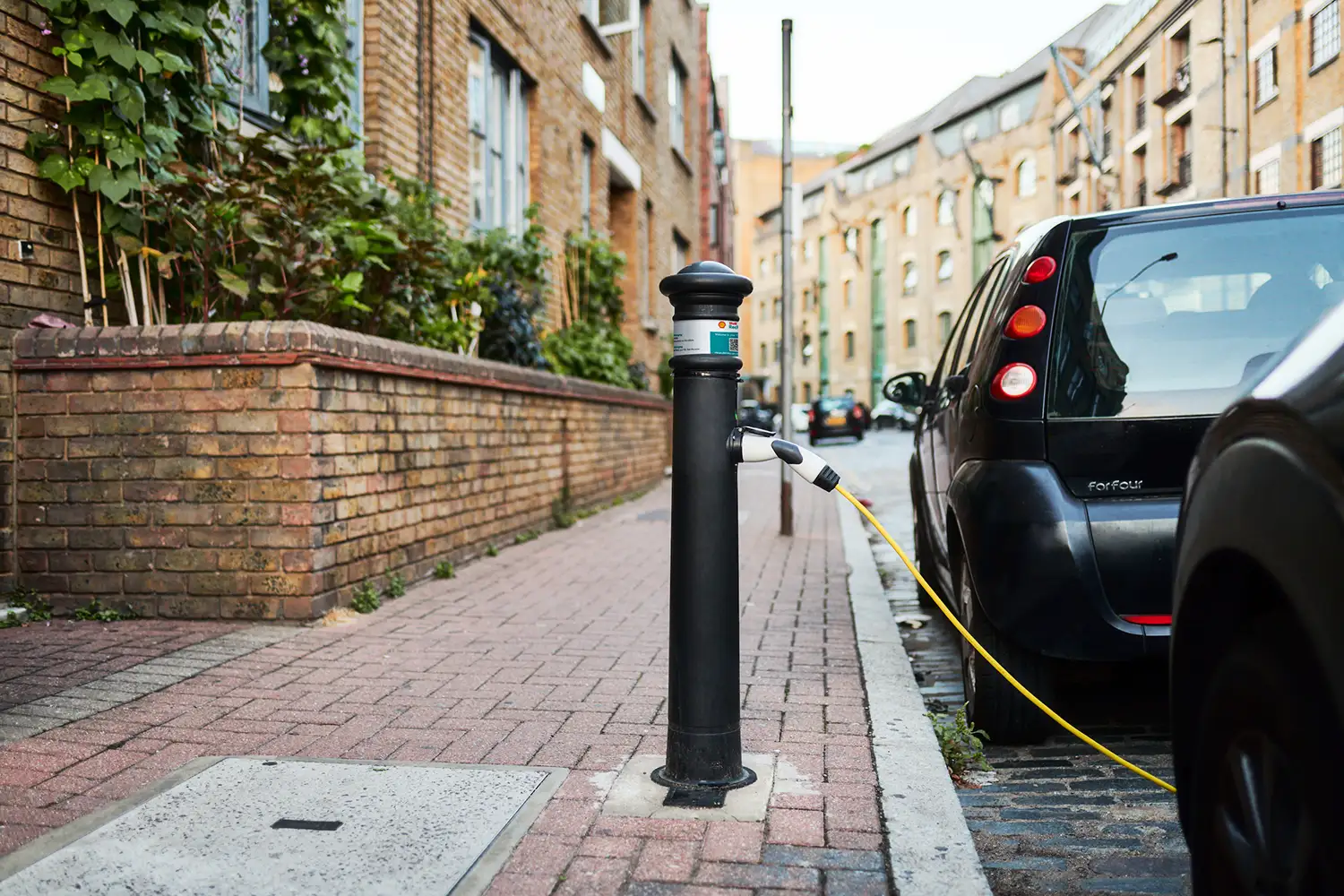
Lamp post charging isn't the only solution, and in most places the plan is deploy it in conjunction with posts like this bollard charger from Ubitricity (other suppliers like connected kerb have similar solutions.

ubitricity_public_ev_charging_solution_bollard_local_authorities.webp

Description: A bollard with a built in EV charger from the company Ubitricity. A car is pictured charging using it.

As always, remember that while this is a potential solution, it is not the only solution. Villages with no lamposts are more likely to be easy to create a small car park for EV chargers.
 
Last edited:

jon0844

Veteran Member
Joined
1 Feb 2009
Messages
30,950
Location
UK
Lamp post charging isn't the only solution, and in most places the plan is deploy it in conjunction with posts like this bollard charger from Ubitricity (other suppliers like connected kerb have similar solutions.

ubitricity_public_ev_charging_solution_bollard_local_authorities.webp

Description: A bollard with a built in EV charger from the company Ubitricity. A car is pictured charging using it.

As always, remember that while this is a potential solution, it is not the only solution. Villages with no lamposts are more likely to be easy to create a small car park for EV chargers.

Seems like the bollard idea might be perfect for villages. They'll have power and many villages have bollards of some sort to stop people parking on verges, so sounds like a double win.

But communal car parks might work too.

I think people need to realise that EV owners don't all need to do a full 0-100% charge every single day.

And the less said about Toyoto and their flip flopping the better. They were wrong to dismiss EVs and go down the hydrogen route for so long, or only develop hybrids. They've been left behind and know it, so they need to try and put people off buying other EVs. Once they catch up, which they have to, they'll be fully preaching the benefits like others.
 

Energy

Established Member
Joined
29 Dec 2018
Messages
5,135
Seems like the bollard idea might be perfect for villages. They'll have power and many villages have bollards of some sort to stop people parking on verges, so sounds like a double win.

But communal car parks might work too.
Indeed. Communal car parks work well if there is a free space of land very nearby, the preference is always to get parking off the road.

The bollards are good as they take up minimal space on the pavement and look fairly nice.
I think people need to realise that EV owners don't all need to do a full 0-100% charge every single day.
With most people doing 50 miles a day, and 200+ mile range cars, a ratio of 1:4 is possible but I think 1:2 is more realistic as many will have shorter ranges and most don't want to coordinate charging.

On a separate note, payment is difficult. There should always be an option for card payments on rapid chargers, but for local charge points, I think accepting Oyster cards (or the local equivalent like Swift in West Midlands) is reasonable.
And the less said about Toyoto and their flip flopping the better. They were wrong to dismiss EVs and go down the hydrogen route for so long, or only develop hybrids. They've been left behind and know it, so they need to try and put people off buying other EVs. Once they catch up, which they have to, they'll be fully preaching the benefits like others.
Oh they know it now, Toyota recently announced their battery roadmap for cars, and its fairly clear that hydrogen will only have a place in commercial vehicles.

What cars can be hydrogen is fairly limiting, the tanks are cylindrical so fitting them in a hatchback is difficult.
 

trebor79

Established Member
Joined
8 Mar 2018
Messages
4,912
On a separate note, payment is difficult. There should always be an option for card payments on rapid chargers, but for local charge points, I think accepting Oyster cards (or the local equivalent like Swift in West Midlands) is reasonable.
All new rapid chargers must accept contactless card payments.
The last lamppost charger I used was simplicity itself - scanned a QR code, entered email address,verified Google Pay with my thumb and that was it. I got sent an email link to view charge status, stop the charge and get a receipt. I usually use electroverse app but in that occasion I couldn't work out which actual lamppost I was at, they seemed a bit muddled up as I saw one down the street change colour when I tried to activate "mine".
 

Energy

Established Member
Joined
29 Dec 2018
Messages
5,135
All new rapid chargers must accept contactless card payments.
Indeed, most have been retrofitted or had them since new. The main outlier being Tesla, with only some chargers being upgraded to the V4 ones with card machines.
The last lamppost charger I used was simplicity itself - scanned a QR code, entered email address,verified Google Pay with my thumb and that was it. I got sent an email link to view charge status, stop the charge and get a receipt.
That's reasonable. I'd still like to see support for Oyster & equivalent in their respective areas, with the charging status in the app.
 

Class 317

Member
Joined
7 Jul 2020
Messages
575
Location
Cotswolds
I have no off street parking and have had a 2018 Zoe now for 6 months.

I charge at 3 main places which are a swimming pool I go to twice per week, supermarket and very occasionally a public car park 5 mins from my girlfriend's. All are 22KW fast chargers and I mainly use the Swimming pool ones as these keep the car fully topped up for my weekly 130 miles or so whilst I have a 30 mins swim. 2 are MER's chargers so I pay £0.46 per KWH as a MER member which works out around 10p a mile.

In terms of chargers required it's not as many as people assume as most overestimate average daily mileage and how often people would charge normally by at least a factor of 3.
 

E27007

Member
Joined
25 May 2018
Messages
1,044
To qualify as a ZEV, the vehicle has meet a standard for durabilty of the traction battery, the ZEV parameters for the traction battery include range in miles/lifetime mileage/ age/not-to-exceed reduction of capacity.
Here are the figures for durabilty to meet ZEV standard for California.


"Enhanced Durability and Warranty Requirements​

The new regulation also takes regulatory steps to assure that ZEVs can be full replacements to gasoline vehicles, hold their market value for owners, and that used car buyers are getting a quality vehicle that will not pollute.

By model year 2030, the rules require the vehicle to maintain at least 80% of electric range for 10 years or 150,000 miles. (Phased in from 70% for 2026 through 2029 model year vehicles.) By model year 2031, individual vehicle battery packs are warranted to maintain 75% of their energy for eight years or 100,000 miles. (Phased in from 70% for 2026 through 2030 model years.) ZEV powertrain components are warranted for at least three years or 50,000 miles."


What are the equvalent figures for UK / EU vehicles ? I believe they are lower, such as 8 years, 100,000 miles , 70% degradation
 
Last edited:

RailWonderer

Established Member
Joined
25 Jul 2018
Messages
2,219
Location
All around the network
I said some years ago on this thread that for people doing relatively low mileage, EVs weren't really viable because of the high cost of purchase and the inability to save enough on the 'fuel' (even taking into account lower servicing costs). Indeed that's why I got a petrol car in 2021, with the plan to get an EV in 2025 (which I will).

But we're now getting cars starting from £15k new, and second hand cars for as little as £500 that will still be fine for a second car/runaround for the shops etc.

The market is changing and EVs are becoming more viable for all because now you can actually benefit from the lower cost per mile, even if you are doing only 5-6,000 miles per annum.

For those doing high mileages, EVs have been more cost effective for some time. But now we're entering the phase where the uptake will rise significantly.
More or less my thoughts on this. Once you start to get a larger variety of EV vehicles as well - crossovers, MPVs, then EV use will increase, but not before infrastructure catches up. In Essex where I live there aren't many charging points and they are all taken up or out of service and it was like that when I was driving in the Bicester area as well.
 

Top