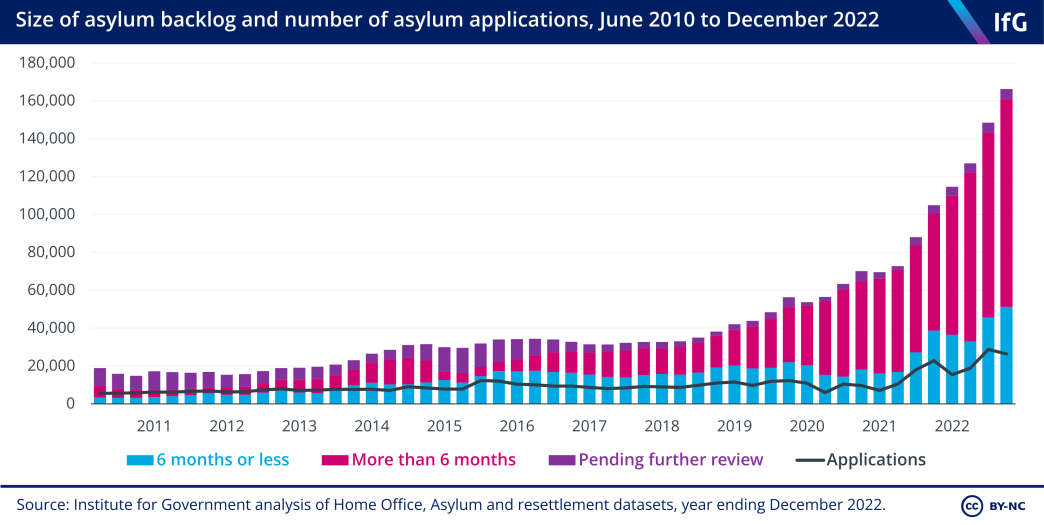
Whilst 2020/2021 are always going be abnormal, the bigger issue is that if you look at the pink segment (over 6 months) it's very small in 2015 and fairly stable between 2010 and 2017 before it starts getting bigger and bigger. Even the blue section (less than 6 months) was broadly equal to the number of applications for 2010 to 2015, it's been typically about 50% bigger since about 2017.
Both of which show a system in about 2017 starting to show signs of needing improvement, the governments reaction was to, in early 2019, abandon the 6 month target:
Department confirms the move, which it says will allow it to prioritise most vulnerable cases

www.civilserviceworld.com
Without that target there's almost nothing stopping people to be held for longer than that.
Obviously targets can be a double edged sword, in that one someone is beyond 6 months there's no incentive to deal with them at all.
However, the increase in backlog is only going to lead to extra costs in housing and providing for people as they wait for a decision.
Whilst case numbers have been growing, that's been made much worse than it needs to be by poor management.
As whilst the numbers displaced worldwide had grown from 43 million in 2010 to 68 million in 2017 and to 108 million in 2022 the vast majority of those are not in another country (2022 had 62 million internally displaced - i.e. they are still in the home nation) , of the rest a significant number stay locally to their country (for example a lot of people from Ukraine or Syria are in the countries which boarder them).