Bletchleyite
Veteran Member
The small cab was modified soon after they started. I have known drivers say they prefer it.


The popularity of steam would suggest that it is a factor.
Steam doesn't equal interesting. Quieter yes pleasing smell yes (most would agree) more comfortable also yes but not interesting imo.The popularity of steam would suggest that it is a factor.
== Doublepost prevention - post automatically merged: ==
I have been on a couple where the blind on the cab door was stuck up. Surprised heritage railways don't do that, or replace the later obscured glass with clear.
As a regular long distance passenger on a 153 I'll freely say I prefer them in double formation to a 150, and would count them as a sprinter as they are mechanically extremely similar.Half a 2-car unit ceases to be a sprinter. How many (hundreds of) hours have you travelled on one? My opinion is sound as far as I am concerned.
I gather the drivers found out that one of the cabs was unacceptably cramped too - as it still is.
Sprinters are second gen.I'd imagine unlikely for preserved railways, given that third gen BR rolling stock look out of place at a 1960s station. I'd imagine it'll be less likely for a mainline charter company to preserve a Sprinter unit in that regard.

Network Rail seem to be using a few already. By the time NR have finished with them they might have a bit more heritage appeal.I'd imagine unlikely for preserved railways, given that third gen BR rolling stock look out of place at a 1960s station. I'd imagine it'll be less likely for a mainline charter company to preserve a Sprinter unit in that regard.
As flawed as they are in some ways, they are still a way better travelling experience than a Pacer, of which many are preserved, so I concur.I reckon somewhere will have a 153 very much sooner rather than later. They've got a bit of an odd cult following and the chances of more of the stored ones seeing use seems to be receding.

There is absolutely no logic to that whatsoever.Half a 2-car unit ceases to be a sprinter. How many (hundreds of) hours have you travelled on one? My opinion is sound as far as I am concerned.

Not on 144s either- they're basically identical to 143s apart from (i) being built by a different contractor; (ii) a difference in ride-height of around 5mm; (iii) ten of them having three cars; and (iv) being slightly less prone to bursting into flames.You also can't on a 143 unsure about 144s
There is absolutely no logic to that whatsoever.
A 153 is still a Sprinter.
So have I. Allegedly the small cab has better ergonomics for drivers, but the secondman's side is hated by guards.The small cab was modified soon after they started. I have known drivers say they prefer it.

Atw really did like them firy huh. Both 143s and 175sNot on 144s either- they're basically identical to 143s apart from (i) being built by a different contractor; (ii) a difference in ride-height of around 5mm; (iii) ten of them having three cars; and (iv) being slightly less prone to bursting into flames.
I'm now trying to remember if 141s ever allowed a view out of the front. I've a vague memory of them having glazing in the cab back wall at least until they were refurbished, but can't rely on that recollection to be accurate. There doesn't seem to be any images available online which would confirm or deny this, unfortunately.
Two 143s met a fiery death, one with ATW and one with FGW near Nailsea & Backwell. The centre car of 144023 caught fire near Rochdale in 2013 but was repaired.Atw really did like them firy huh. Both 143s and 175s

153s and indeed the 156s would be perfect for heritage railways, where seeing out is a major part of the experience, though the higher window line of the 153/155 is a negative. 150s, like their EMU Mk3 cousins and the earlier PEPs, have massive areas taken up by the doors and door pockets which block the view out.
The Aircon is only a relatively small part of the complex hydrostatic system on a 158 which requires a very expensive variable displacement pump. If that system isn't working you're going nowhere as the alternator won't be charging the batteries. They are a completely different kettle of fish to maintain than other 15x.The aircon of the 158s is added cost and complication to maintain, maybe they'll be retrofitted with more opening windows if used by heritage railways?
I could see a 156 being sold as a panoramic unit, reseated to a much smaller number of seats aligned with the massive windows.
150s are harder to sell, the 20m Mk3 derived body just isn't interesting, even though it's been the workhorse of the commuter routes since the 80s. I'm sure someone will preserve one at least, but unlike Pacers they aren't interesting.
153/155 I could see going without any preserved. 158s probably have another 10-20 years before it needs worrying about, though will preserved lines want aircon stock? Similarly I could see 165s all being scrapped, particularly as they're hard to keep going with a lack of electronic spares.
Air-conditioned Mark 2's and Mark 3's are preserved so I can't see why 158's can't be preserved.
Class 141s like 142s had a drivers cab door, with a window in, but solid bulk heads, with advertising on.Not on 144s either- they're basically identical to 143s apart from (i) being built by a different contractor; (ii) a difference in ride-height of around 5mm; (iii) ten of them having three cars; and (iv) being slightly less prone to bursting into flames.
I'm now trying to remember if 141s ever allowed a view out of the front. I've a vague memory of them having glazing in the cab back wall at least until they were refurbished, but can't rely on that recollection to be accurate. There doesn't seem to be any images available online which would confirm or deny this, unfortunately.
It’d be great if the EVR got a 150, but I seriously doubt they’d be interested. They seem to have moved away from DMUs, most sat idle or loaned out, so I can’t see them getting a Sprinter.I would have thought one of the original non-gangway fitted units would be destined for the national collection, as the introduction of sprinters was a big change, they replaced a lot of loco-hauled services more than they did first gen DMUs, running regional services rather than locals. Their appearance was quite exciting at the time, I remember the original unit appearing at Temple Meads on a test run back in the day.
it also appears that 150001 did some special runs on the Wirksworth branch, maybe this history would make it a good fit for the preserved group now running the line, which already has some excellently restored DMUs.
Midland Railway- Butterley does (1st/2nd July is next opportunity to sample them), GCRN did, Mid-Norfolk does.Which preserved railway runs aircon Mk2/3 on service trains?

Tbh, despite their name, I don't think sprinters (apart from maybe 158's) are particularly speedy, not by modern standards anyway. There top speed (75 mph, so motorway speeds) and acceleration is very similar to a pacer, and pacers aren't exactly rapid lol. They might be fast compared to 1st gen DMU's or loco hauled stock, but compared to most modern rolling stock they are quite sluggish. They might have been considered speedy when first introduced, but times have moved on.Having commuted on them, they are most certainly not. Sprinters may be speedy, but a certain level of comfort is implied too!
I don't like facing seats on trains, hate having to look at other people sat opposite me, I feel so awkward. I much prefer trains with seats facing all the same way (like ex-merseyrail 142's for example...)150s are a curious one. The original facing seat layout is fine, but I’ve never been a fan of the 150/2 layout with 2+3 airline seating. GWR and TFL have refurbished theirs to a much better layout, to the point where they’re actually rather nice to travel in - indeed for the first time I’ve actually grown to like 150/2s. I certainly wouldn’t mind some being preserved.
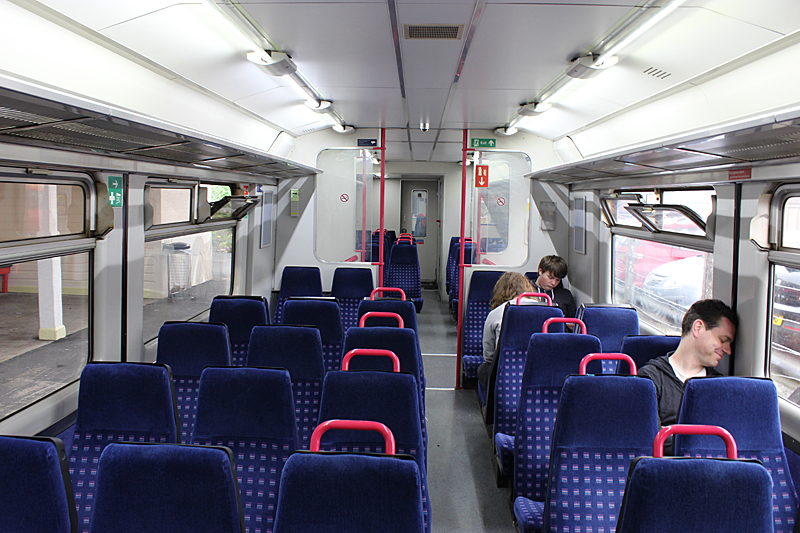
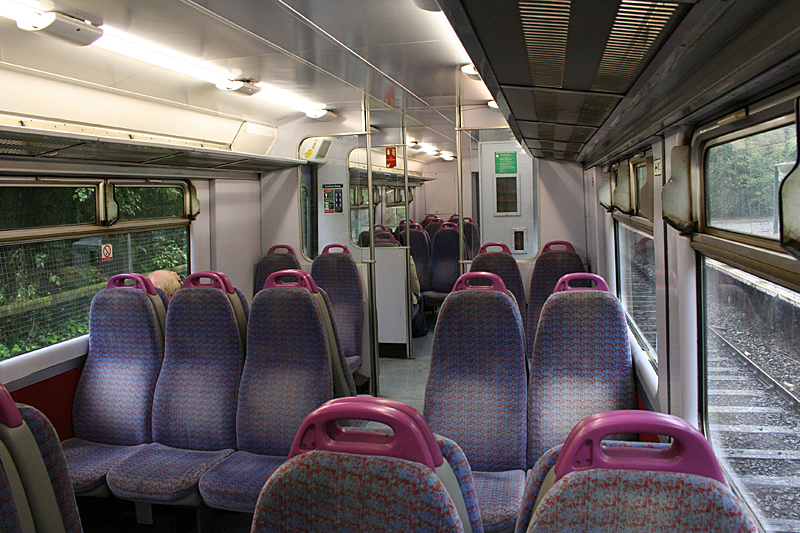
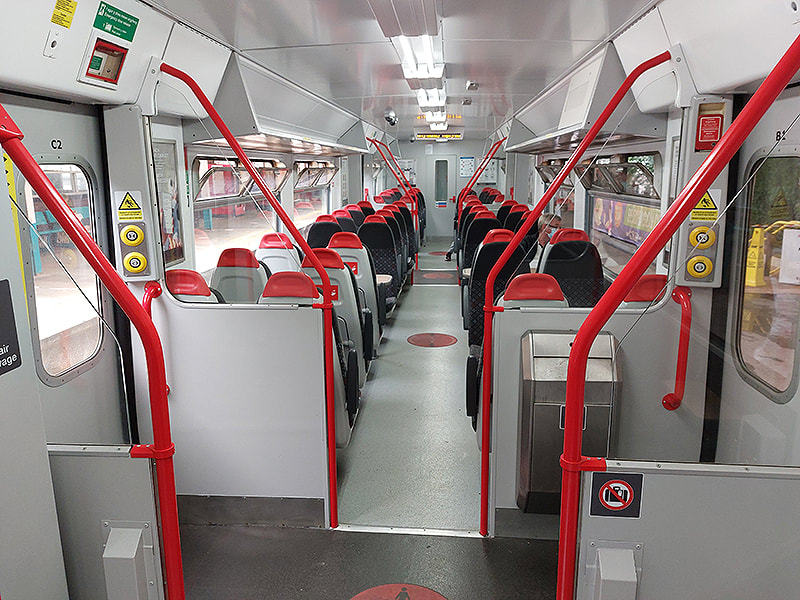
No you cannot, but on the class 142 units with low back seating and plenty of windows, provides excellent visibility.With first gen DMU you can see into the drivers cab and out the front. That makes the view much better than you are going to get in a sprinter.
I can't remember if you can see out the front of a pacer as a passenger?
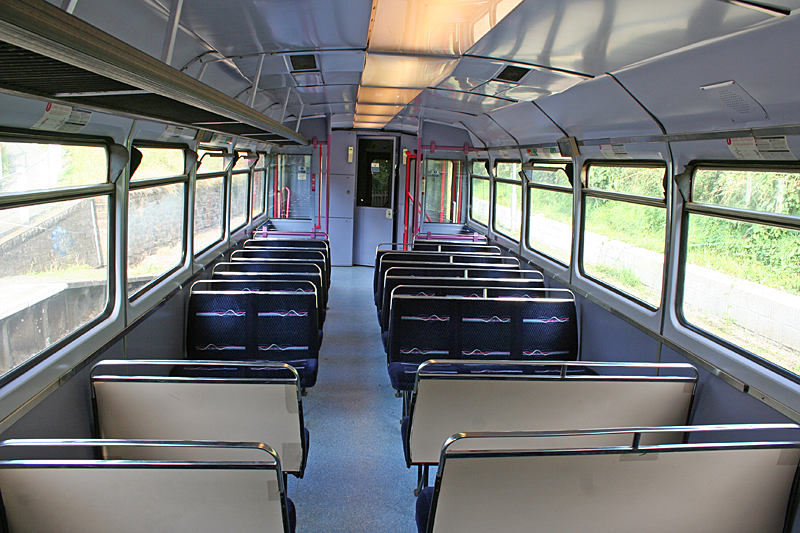
Well I've never heard someone call a pacer "modern" before!Interestingly, I was on a heritage railway recently where a Pacer was in use. The general public was either ambivalent or expressed pleasure at the ride (quote one elderly lady: "Oooh, this is much more modern!"). Maybe the forward view and old-fashioned-ness are not essential in the right circumstances.
 I like pacers because they are old fashioned and feel old fashioned. They might have been considered modern when first introduced, with their bright interiors and automatic doors, but that novelty would have gone away very quickly. They are modern compared to a steam engine or a class 101 lol.
The driver was reading a book while driving the train???Class 141s like 142s had a drivers cab door, with a window in, but solid bulk heads, with advertising on.
I once saw a driver bouncing along happily at linespeed reading a novel through one of those windows, deeply engrossed, not a care in the world or even a glance at it passing by.
Tbh I think sprinters are still too modern for heritage railways. Some people even think pacers are too modern for heritage railways. While the 150's were built around the same time as the pacers, they still feel quite a bit more modern. They don't have that retro feel that the pacer has. What amazes me is that the class 158's were built only a few years after the pacers, but you would never think so, they feel so much more modern, you'd think they were built in the late 90's or early 2000's.It’d be great if the EVR got a 150, but I seriously doubt they’d be interested. They seem to have moved away from DMUs, most sat idle or loaned out, so I can’t see them getting a Sprinter.


But there weren't many Pacer lovers until they were withdrawn either. I think it's a case of you miss it when it's gone.Pacers, while being widely hated, are an iconic and unique train, and in recent years they have got more attention after being on the media and have developed quite a few fans and followers (me being one of them). Class 150's however, while not hated to the same extent as pacers, are not really iconic or unique in any way and are generally not well liked by the public either. They don't have the same character as pacers and there aren't many "sprinter lovers" unlike pacers, which do have a sizable following and have become a kind of marmite train.

I've sometimes wondered whether a leaf could be taken out of the Hastings DEMU people's book, and someone obtain a 150/1, a 150/2 and a 156. It seems to me that these could be marshalled as two car trains, four cars or six cars - with through corridors in the six car formation if the 150/1 was split to have the cabs at each end of the consist. Then this could do mainline stuff in much the same way as the Hastings does - as well as preserving two widespread (even if not iconic) unit types.I'd imagine unlikely for preserved railways, given thatthirdsecond gen BR rolling stock look out of place at a 1960s station. I'd imagine it'll be less likely for a mainline charter company to preserve a Sprinter unit in that regard.
So maybe my cunning plan wouldn't go down too well with the real railway if booked for a mainline excursion.Tbh, despite their name, I don't think sprinters (apart from maybe 158's) are particularly speedy, not by modern standards anyway. There top speed (75 mph, so motorway speeds) and acceleration is very similar to a pacer, and pacers aren't exactly rapid lol. They might be fast compared to 1st gen DMU's or loco hauled stock, but compared to most modern rolling stock they are quite sluggish. They might have been considered speedy when first introduced, but times have moved on.
Their acceleration compared to a first generation power/trailer DMU or loco + a few Mk.Is was certainly a noticeable improvement (about the only one!)Tbh, despite their name, I don't think sprinters (apart from maybe 158's) are particularly speedy, not by modern standards anyway. There top speed (75 mph, so motorway speeds) and acceleration is very similar to a pacer, and pacers aren't exactly rapid lol. They might be fast compared to 1st gen DMU's or loco hauled stock, but compared to most modern rolling stock they are quite sluggish. They might have been considered speedy when first introduced, but times have moved
It’s worth considering that pacers were probably no more hated by commuters than the “dirty, smelly old steam train” that Joe Public now goes on a day trip to ride on had been 40 years previously. Nostalgia always looks through rose tinted spectacles!Pacers, while being widely hated, are an iconic and unique train, and in recent years they have got more attention after being on the media and have developed quite a few fans and followers (me being one of them). Class 150's however, while not hated to the same extent as pacers, are not really iconic or unique in any way and are generally not well liked by the public either. They don't have the same character as pacers and there aren't many "sprinter lovers" unlike pacers, which do have a sizable following and have become a kind of marmite train.
