• Our new ticketing site is now live! Using either this or the original site (both powered by TrainSplit) helps support the running of the forum with every ticket purchase! Find out more and ask any questions/give us feedback in this thread!

UK Rail Passenger Numbers Discussion

Status
Not open for further replies.

lammergeier

Member
Joined
5 Oct 2017
Messages
505
The spreadsheets show usage percentage against a pre pandemic baseline. It's an overall average. It could easily mask one route at 125% and another down 25%.

There are other threads, eg GWR short form (where people have written to their MP about being unable to board), or TPE (have rolling stock, but insufficient trained staff etc). Not going to repeat here, but clearly many of the services are now out of balance with current usage levels

I don't want to turn this into a political debate, but the nearer we get to an election, more likely to get action from MPs. But in short term unclear how the problem will be solved.

Many lines simply have wrong type of train for booming leisure type services, or split of franchises means a now common (and growing in popularity) journey requires to Operators and messy connections or ticket types. Commuter EMUs cannot get to places like Oxford, Bath, Harrogate, etc so go off for scrap (or sit idle like 701, 379s).

If passenger numbers are approaching former levels, and cost of living crisis eases through the year then leisure growth might soon start flying upwards again.
Yes, I'm being facetious of course. But it does grate when you're dealing with the consequences of severe overcrowding on a regular basis to see glib comments about passenger numbers. It's no wonder passenger numbers as a whole are down when the service has been reduced so much but nobody ever seems to make reference to that. It's all a bit chicken and egg really.

== Doublepost prevention - post automatically merged: ==

Problem is that if the XC services are full then you spend a lot of money expanding the service for the existing passengers (revenue) to spread themselves out, and the extra passengers gained are even less likely to be profitable.
If the only thing that matters is profit, why do we even run a service?
 
Sponsor Post - registered members do not see these adverts; click here to register, or click here to log in
R

RailUK Forums

Trainbike46

Established Member
Joined
18 Sep 2021
Messages
4,375
Location
belfast
Problem is that if the XC services are full then you spend a lot of money expanding the service for the existing passengers (revenue) to spread themselves out, and the extra passengers gained are even less likely to be profitable.
Improving frequency has repeatedly and consistently been shown to increase passenger numbers

At the end of the day, a big part of XCs problem is that the 22x are expensive and low capacity (see comparisons of 22x with 80x, for example)
 

SussexSeagull

Member
Joined
13 Aug 2021
Messages
208
Location
Worthing
I used to commute from Durrington to London pre-covid with Thameslink fully functioning (no Crossrail but probably wouldn't have made much difference to my day) and I am not sure that a reduction in commuter numbers is necessarily a bad thing for commuters, although doesn't help train finances due to the reduction in season tickets.
 

43066

Veteran Member
Joined
24 Nov 2019
Messages
12,089
Location
London
You are quite wrong - I'm actually against the 'poor downtrodden northerners oppressed by London' trope.

Well I can only go by what you’ve posted on here.

I disagree, but I sense we wont agree on that! But any major efforts to level up would have to contradict your previous statement about not making London worse off.

Levelling up has been roundly condemned as a joke, largely because the amounts awarded dwarf the cuts that have taken place since 2010.

You have clearly fallen in to the trap of believing that everything is a zero sum game. Of course that’s really what the government wants to achieve by talking about “levelling up”: ie people will believe that services being poor in the north is because too much has been spent in London - not because (in the railway context) the government has an ideological dislike of funding high quality services, no interest in resolving the industrial disputes, and is insisting on cost cutting.

Same logic holds. You only need the previous services back if those particular services are back to planned ridership, not if the Lizzie has warped the top level data.

And yet the services in many places are severely overcrowded - the services should be planned to reflect the ridership as it is now, not some arbitrary figure of what it “should” be based on projections from 2019.

Improving frequency has repeatedly and consistently been shown to increase passenger numbers

At the end of the day, a big part of XCs problem is that the 22x are expensive and low capacity (see comparisons of 22x with 80x, for example)

I rather suspect that the poster you’ve quoted is one of several on here who (like the current government) is ideologically opposed to any form of subsidy, and probably want large parts of the railway closed down! This stance completely misunderstands/ignores the reason we have a subsidised railway in the first place, of course (and isn’t it funny how the same people are almost always in favour of roads being subsided :lol:).
 

Trainbike46

Established Member
Joined
18 Sep 2021
Messages
4,375
Location
belfast
I rather suspect that the poster you’ve quoted is one of several on here who (like the current government) is ideologically opposed to any form of subsidy, and probably want large parts of the railway closed down! This stance completely misunderstands/ignores the reason we have a subsidised railway in the first place, of course (and isn’t it funny how the same people are almost always in favour of roads being subsided :lol:).
I think you are probably right! Their posts do seem to generally align with someone who favours what is known as "small government", which does seem to often favour a rather large roads budget, for some reason
 

Bald Rick

Veteran Member
Joined
28 Sep 2010
Messages
35,852
It's also important that not all Lizzie line passengers are in fact new to rail, some of them would have been on heathrow connect/GWR stoppers/TfL rail before, so just excluding all Lizzie line passengers wouldn't be an equal comparison either.

This is of course true, but the ‘Elizabeth Line effect’ I’m referring to is the net additional passengers compared to those carried pre Covid On the GEML and GWML.

But it does grate when you're dealing with the consequences of severe overcrowding on a regular basis to see glib comments about passenger numbers. It's no wonder passenger numbers as a whole are down when the service has been reduced so much but nobody ever seems to make reference to that.

I‘m sorry if my comments come across as being glib. I see severe overcrowding every weekday (Friday mornings excepted!), on my peak services that are reduced in number by almost half. My trains routinely have 800-1000 people standing on them, including me.

However - the service hasn’t been universally ‘reduced so much’. The number of passenger services in the base timetable is 92% of those in the December 2019 timetable, 95% of May 2018, and as near as makes no difference 100% of May 2017. And on average, the passenger capacity per train is higher than any of those, due to the introduction of several new fleets across the network.

There is no doubt that some of the reduction in passenger numbers is due to service reductions. However by far and away the largest factor is the changes in working patterns.
 

Krokodil

Established Member
Joined
23 Jan 2023
Messages
6,583
Location
Wales
But it does grate when you're dealing with the consequences of severe overcrowding on a regular basis to see glib comments about passenger numbers. It's no wonder passenger numbers as a whole are down when the service has been reduced so much but nobody ever seems to make reference to that. It's all a bit chicken and egg really.
I agree. "Revenue is down so we need to make cuts". No, revenue is down because you've made cuts. If you provide a poor service then customers will go away. Cut route knowledge (hence a higher risk of disruption and no ability to divert around engineering work) then people won't use you because they hate replacement buses. Force people to stand on long journeys and they will avoid your service in future. Regularly cancel trains because you're short staffed and no one is willing to do RDW then people will find alternative ways if they don't trust your trains to turn up.
 

Snow1964

Established Member
Joined
7 Oct 2019
Messages
11,164
Location
West Wiltshire
However - the service hasn’t been universally ‘reduced so much’. The number of passenger services in the base timetable is 92% of those in the December 2019 timetable, 95% of May 2018, and as near as makes no difference 100% of May 2017. And on average, the passenger capacity per train is higher than any of those, due to the introduction of several new fleets across the network.

Using a network wide generalisation is not great, when there are severe local problems with crowding.

Passenger capacity is a contentious one, if the extra capacity is non-seated (standing). No passenger wants a train with few seats, or a newer train with hard uncomfortable seats.

Looking back over last 4 years there are very few new fleets that have boosted seating capacity (and by boosted, I mean at least 5% gain, not a similar or lower number). I doubt if the new fleets even affected 10% of services across all operators.

Finally 92% of Dec 2019 timetable, is 8% of services missing, no train, zero seats. It's not like next train will have doubled in size to absorb two trainloads. Even XC which doubled length generally shortened services so some areas have lost their whole service.
 

Bald Rick

Veteran Member
Joined
28 Sep 2010
Messages
35,852
Using a network wide generalisation is not great, when there are severe local problems with crowding.

Passenger capacity is a contentious one, if the extra capacity is non-seated (standing). No passenger wants a train with few seats, or a newer train with hard uncomfortable seats.

Looking back over last 4 years there are very few new fleets that have boosted seating capacity (and by boosted, I mean at least 5% gain, not a similar or lower number). I doubt if the new fleets even affected 10% of services across all operators.

Finally 92% of Dec 2019 timetable, is 8% of services missing, no train, zero seats. It's not like next train will have doubled in size to absorb two trainloads. Even XC which doubled length generally shortened services so some areas have lost their whole service.

there‘s quite a few new fleets, and the vehicle mileage is a few % higher than service numbers.


one thing I’ve just clocked - the numbers are based on ticket sales, and not people travelling. This was boosted towards the end of Feb by people buying early to counter act the fare rise in early March.
 

43066

Veteran Member
Joined
24 Nov 2019
Messages
12,089
Location
London
I think you are probably right! Their posts do seem to generally align with someone who favours what is known as "small government", which does seem to often favour a rather large roads budget, for some reason

Indeed. Albeit it’s possible to be “small government” politically, as indeed I am myself, and still recognise that public services have to be paid for, and understand why subsidising them is economically beneficial, with the reverse also being true, as we are seeing now!
 

Horizon22

Established Member
Associate Staff
Jobs & Careers
Joined
8 Sep 2019
Messages
11,006
Location
London
Yes, I'm sure that's what the spreadsheets say. Meanwhile, back on the trains...

A lot of previous rail travel and revenue was London and SE peak hour commuting. This is objectively down. Not many are disputing leisure travel is doing very well and in many cases is 100% of pre-Covid demand.
 

lammergeier

Member
Joined
5 Oct 2017
Messages
505
A lot of previous rail travel and revenue was London and SE peak hour commuting. This is objectively down. Not many are disputing leisure travel is doing very well and in many cases is 100% of pre-Covid demand.
And yet it's all operators, including those leisure operators seeing significant levels of overcrowding, who are required to make cuts on the back of nationally "reduced" passenger numbers. Although as I said a few posts later, I was being facetious in my original comment.
 

Meerkat

Established Member
Joined
14 Jul 2018
Messages
9,276
If the only thing that matters is profit, why do we even run a service?
It isn't the only thing that matters, but it is rather important - and more important than just saying more passengers will travel if you run more trains
Improving frequency has repeatedly and consistently been shown to increase passenger numbers
Has it been repeatedly and consistently been shown to increase passengers numbers in proportion to the cost increases?
Levelling up has been roundly condemned as a joke, largely because the amounts awarded dwarf the cuts that have taken place since 2010.

You have clearly fallen in to the trap of believing that everything is a zero sum game. Of course that’s really what the government wants to achieve by talking about “levelling up”: ie people will believe that services being poor in the north is because too much has been spent in London - not because (in the railway context) the government has an ideological dislike of funding high quality services, no interest in resolving the industrial disputes, and is insisting on cost cutting.
This is skirting being off topic as its general politics, but if you fund 'high quality services' everywhere then it isn't levelling up, and if you spend more in the north then the South loses out.
And yet the services in many places are severely overcrowded - the services should be planned to reflect the ridership as it is now
Indeed - use specific overcrowding as evidence, not the national ridership numbers.
ne thing I’ve just clocked - the numbers are based on ticket sales, and not people travelling.
How significant is split ticketing, as that will raise ticket sales more than passengers?
 

Nicholas Lewis

Established Member
Joined
9 Aug 2019
Messages
8,016
Location
Surrey
Latest ORR data released today

https://dataportal.orr.gov.uk/media/2190/passenger-rail-usage-oct-dec-2022.pdf

headlines

A total of 12.7 billion passenger kilometres were travelled in the latest quarter. This is 73% of the 17.5 billion kilometres travelled in the same quarter three years ago. Total passenger revenue was £2.1 billion in the latest quarter. This is 66% of the £3.2 billion three years ago
Yes strikes aren't helping but another Billion pound shortfall on revenue shows the challenge for the industry and how much support the govt is continuing to provide when so many other parts of society are creaking.

Below shows where the problem lies

1678993159919.png
Reality is season ticket revenue is unlikely ever to recover with changes to working practices now embedded in workers psychology so the industry has to match resources to meet the new paradigm albeit that can't be achieved overnight.
 

lammergeier

Member
Joined
5 Oct 2017
Messages
505
Indeed - use specific overcrowding as evidence, not the national ridership numbers.
That's what I've been trying to say on here re. XC yet you continue to claim that better matching supply to demand will impact profitability so it shouldn't happen.
 

Kite159

Veteran Member
Joined
27 Jan 2014
Messages
22,803
Location
West of Andover
Latest ORR data released today

https://dataportal.orr.gov.uk/media/2190/passenger-rail-usage-oct-dec-2022.pdf

headlines


Yes strikes aren't helping but another Billion pound shortfall on revenue shows the challenge for the industry and how much support the govt is continuing to provide when so many other parts of society are creaking.

Below shows where the problem lies

View attachment 131041
Reality is season ticket revenue is unlikely ever to recover with changes to working practices now embedded in workers psychology so the industry has to match resources to meet the new paradigm albeit that can't be achieved overnight.
The rise of advance tickets might be driven by the likes of Northern & other TOCs selling advance tickets on the day for short flows (Shipley to Leeds, Stockport to Manchester) available to purchase quite close to the departure time. Why spend £10 on a return when you live on a route where advances can be purchased for £3 on every train right until departure?
 

43066

Veteran Member
Joined
24 Nov 2019
Messages
12,089
Location
London
This is skirting being off topic as its general politics, but if you fund 'high quality services' everywhere then it isn't levelling up, and if you spend more in the north then the South loses out.

It isn’t because “levelling up” supposedly includes aspects of railway investment.

With respect you’ve (again) completely missed the point I was making: it isn’t a zero sum game. I don’t think you really understand how public finances work.

Indeed - use specific overcrowding as evidence, not the national ridership numbers.

@endicomark69@g cited an example of serious overcrowding earlier, and your response was: “that just shows how busy that location was pre Covid”, which is pretty meaningless.

Do you think railway services should be planned to meet current demand or not?

== Doublepost prevention - post automatically merged: ==

The rise of advance tickets might be driven by the likes of Northern & other TOCs selling advance tickets on the day for short flows (Shipley to Leeds, Stockport to Manchester) available to purchase quite close to the departure time. Why spend £10 on a return when you live on a route where advances can be purchased for £3 on every train right until departure?

That sounds like a good argument for abolishing advances entirely, and adopting the government’s proposed single leg pricing.
 
Last edited:

Kite159

Veteran Member
Joined
27 Jan 2014
Messages
22,803
Location
West of Andover
That sounds like a good argument for abolishing advances entirely, and adopting the government’s proposed single leg pricing.
Or keeping advances for longer distance services, and doing away with them on short journeys (maybe "journey time must be longer than 59 minutes for advances to be available")
 

43066

Veteran Member
Joined
24 Nov 2019
Messages
12,089
Location
London
It isn't the only thing that matters, but it is rather important - and more important than just saying more passengers will travel if you run more trains

This also isn’t true.

Do you think the railway is subsidised because the government wants TOCs to make a profit, or because it generates positive economic externalities by transporting passengers (clue, it’s the latter)?

If you understand that, then it should be obvious why reducing services to stick to an arbitrary level of subsidy, rather than tailoring them to demand, is rather irrational, and focussing on entirely the wrong part of the cost/benefit equation.

== Doublepost prevention - post automatically merged: ==

Or keeping advances for longer distance services, and doing away with them on short journeys (maybe "journey time must be longer than 59 minutes for advances to be available")

There might be an argument for that. They’re supposed to be about getting students etc. to use the railway rather than (say) National Express for specific journeys they can predict and book well in advance.

If people are able to effectively use then to commute then that surely defeats the object.
 
Last edited:

Nicholas Lewis

Established Member
Joined
9 Aug 2019
Messages
8,016
Location
Surrey
This also isn’t true.

Do you think the railway is subsidised because the government wants TOCs to make a profit,
The goal pre covid was across all franchises in aggregate they should cost the taxpayer nil albeit that was starting to breakdown
or because it generates positive economic externalities by transporting passengers (clue, it’s the latter)?
thats the justification to continue to subsidise as well as invest although there is also the political dimension to it as well
If you understand that, then it should be obvious why reducing services to stick to an arbitrary level of subsidy, rather than tailoring them to demand, is rather irrational, and focussing on entirely the wrong part of the cost/benefit equation.
Agree either run a sensible service level to generate demand or shut the route if it has no freight
 

43066

Veteran Member
Joined
24 Nov 2019
Messages
12,089
Location
London
The goal pre covid was across all franchises in aggregate they should cost the taxpayer nil albeit that was starting to breakdown

Whose goal, exactly? When in its history has the UK railway ever genuinely turned a profit, or cost the tax payer nil, when it was performing a useful role?

Some on here (not yourself I realise) seem to be in favour of basically turning it into what can be seen in the USA.

thats the justification to continue to subsidise as well as invest although there is also the political dimension to it as well

The current political (or perhaps ideological) dimension is arguably why many parts of it are running so poorly at the moment.

Agree either run a sensible service level to generate demand or shut the route if it has no freight

The current approach appears to be to reduce the service, and who cares if that suppresses demand. If that approach is taken to its logical conclusion, then we should presumably close the whole thing, other than for freight!
 
Last edited:

Nicholas Lewis

Established Member
Joined
9 Aug 2019
Messages
8,016
Location
Surrey
Whose goal, exactly? When in its history has the UK railway ever genuinely turned a profit, or cost the tax payer nil, when it was performing a useful role?
The railway overall hasn't but my point was franchised operations ignoring the NR grants were actually cash positive in the middle part of the last decade although pre covid it had already gone negative and was deteriorating so not everything can be blamed on covid. Whilst im not happy with the way things are going this right wing govt has remained very supportive of the industry and that can't be ignored either and its really unfortunate they don't adopt more conservative principles and give the industry challenging targets but let them get on with it.
 

Bikeman78

Established Member
Joined
26 Apr 2018
Messages
6,185
This is all very wrong, of course, as timetables and capacity should be driven by demand, not revenue. The rail industry will always need subsidy and it is no good complaining that revenue is down when passengers are having to stand for long periods, or are put off by reduced timetables.
The timing of the cutbacks isn't great. Take the Southern class 455s, for example. They were quite happy to keep them running for two years when there were far fewer passengers but when more people started travelling, they got rid of them. I suppose it's to do with lease dates.

== Doublepost prevention - post automatically merged: ==

I rather suspect that the poster you’ve quoted is one of several on here who (like the current government) is ideologically opposed to any form of subsidy, and probably want large parts of the railway closed down! This stance completely misunderstands/ignores the reason we have a subsidised railway in the first place, of course (and isn’t it funny how the same people are almost always in favour of roads being subsided :lol:).
Imagine how much the road network would cost if it were actually maintained to an acceptable standard. It would cost millions to fix the roads in Cardiff. After they recent cold spell, they are completely broken.
 
Last edited:

modernrail

Established Member
Joined
26 Jul 2015
Messages
1,462
Latest ORR data released today

https://dataportal.orr.gov.uk/media/2190/passenger-rail-usage-oct-dec-2022.pdf

headlines


Yes strikes aren't helping but another Billion pound shortfall on revenue shows the challenge for the industry and how much support the govt is continuing to provide when so many other parts of society are creaking.

Below shows where the problem lies

View attachment 131041
Reality is season ticket revenue is unlikely ever to recover with changes to working practices now embedded in workers psychology so the industry has to match resources to meet the new paradigm albeit that can't be achieved overnight.
Is a more granular breakdown of the season ticket sales drop available, by operator per instance?

I would hazard a guess that out of London into London commuter is where the biggest drop has come from. It would be interesting to see that confirmed though.

Inner London seems very busy to me now. SWT outer is the one that feels quietest.

I assume people using TfL pay as you go and hitting a weekly travel card don’t show up in the figures as a ‘season ticket’?.
 

43066

Veteran Member
Joined
24 Nov 2019
Messages
12,089
Location
London
The railway overall hasn't but my point was franchised operations ignoring the NR grants were actually cash positive in the middle part of the last decade although pre covid it had already gone negative and was deteriorating so not everything can be blamed on covid.

Were all TOCs ever cash positive?

Whilst im not happy with the way things are going this right wing govt has remained very supportive of the industry and that can't be ignored either and its really unfortunate they don't adopt more conservative principles and give the industry challenging targets but let them get on with it.

With due respect, I don’t think that statement really stands up to scrutiny. This government is absolutely not pro public services (unless the public service is increasing tax breaks for wealthy pensioners, of course)...

The best you can say is that they didn’t shut the railway down during Covid, which realistically wouldn’t have been viable, as they clearly realised. Subsequent to that we can all see the mess we are in currently as an industry. Much of Northern England is in chaos, cutbacks are being insisted upon despite rising passenger numbers, the government has openly admitted that perpetuating the railway disputes have cost more than settling them would have, yet identical disputes were resolved many months ago in the devolved nations…

Imagine how much the road network would cost if it were actually maintained to an acceptable standard. It would cost millions to fix the roads in Cardiff. After they recent cold spell, they are completely broken.

True. The railway network can be pretty bumpy too, in places :D.
 
Last edited:

OrangeJuice

Member
Joined
4 Jun 2018
Messages
211
Latest ORR data released today

https://dataportal.orr.gov.uk/media/2190/passenger-rail-usage-oct-dec-2022.pdf

headlines


Yes strikes aren't helping but another Billion pound shortfall on revenue shows the challenge for the industry and how much support the govt is continuing to provide when so many other parts of society are creaking.

Below shows where the problem lies

View attachment 131041
Reality is season ticket revenue is unlikely ever to recover with changes to working practices now embedded in workers psychology so the industry has to match resources to meet the new paradigm albeit that can't be achieved overnight.
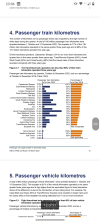
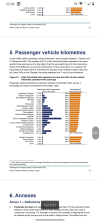
It's worth noting that the revenue and journey figures are against 77% train kilometres from 3 years ago and 81% vehicle kilometres. Therefore 73% passenger journeys isn't nearly as bad comparing against 100%.
What I'm trying to say (not sure I'm doing it well) is that some cuts have already been made in services and carriage lengths so the reduction in journeys/revenue is against a slightly smaller reduction in train services/vehicle kilometres.
Whether increasing services would increase the usage is the multi million pound debate
 

Attachments

  • Screenshot_20230316-230643.png
    Screenshot_20230316-230643.png
    316.6 KB · Views: 34
  • Screenshot_20230316-230653.png
    Screenshot_20230316-230653.png
    269.4 KB · Views: 34

Nicholas Lewis

Established Member
Joined
9 Aug 2019
Messages
8,016
Location
Surrey
Were all TOCs ever cash positive?
No they weren't ie Northern but collectively they were based on franchising payments/subsidies but of course half the industry costs are paid in direct grants to NR.
With due respect, I don’t think that statement really stands up to scrutiny. This government is absolutely not pro public services (unless the public service is increasing tax breaks for wealthy pensioners, of course)...
Correct but its still providing billions in additional support that I would suggest earlier Tory administrations wouldn't have been so generous
The best you can say is that they didn’t shut the railway down during Covid, which realistically wouldn’t have been viable, as they clearly realised. Subsequent to that we can all see the mess we are in currently as an industry. Much of Northern England is in chaos, cutbacks are being insisted upon despite rising passenger numbers,
At the last update of DfT payments (Aug22) they paid Northern Trains 79m that month although im sure it would be less now given increased ridership it will never be enough for some civil servant to sanction extra rolling stock leasing costs. Mind you compared to TPE subsidy per journey they are far more cost effective.
the government has openly admitted that perpetuating the railway disputes have cost more than settling them would have, yet identical disputes were resolved many months ago in the devolved nations…
Agree a couple of percent more would have settled it and paid for itself but maybe now they've moved the bar up for NHS an improved offer will be authorised.
 

Krokodil

Established Member
Joined
23 Jan 2023
Messages
6,583
Location
Wales
Agree a couple of percent more would have settled it and paid for itself
If they simply cut the strings off of the current offer they could probably get it over the line. It's not like the strings offered much in the way of financial savings - in fact the effect upon retention of some of them would probably make them more costly than the status quo.
 
Status
Not open for further replies.

Top