I should think there are a lot of people in this position. It will be those who (singly or in combination) have paid off their mortgage in their 40s, those without children, those in management positions for a longish period (even more likely if both partners), inherited money from parents/relatives etc etc. and who have not blown it on a hedonistic lifestyle. A lot more than you may think!£250,000, before property? Who are these people? Only very senior management and successful entrepreneurs would have that sort of money, presumably - which must be a very small percentage of the population.

-
Our new ticketing site is now live! Using either this or the original site (both powered by TrainSplit) helps support the running of the forum with every ticket purchase! Find out more and ask any questions/give us feedback in this thread!
You are using an out of date browser. It may not display this or other websites correctly.
You should upgrade or use an alternative browser.
You should upgrade or use an alternative browser.
What decisions could the UK actually take to avoid managed decline?
- Thread starter JonathanH
- Start date
- Status
- Not open for further replies.
Sponsor Post - registered members do not see these adverts; click here to register, or click here to log in
R
RailUK Forums
I don't think the majority of people would think the state pension all £9k of it (rounded) per annum was enough to do more than survive on.I was actually being conservative with that figure. We have been told consistently since the 90s that the state pension will either not exist or be worth very little when we retire and therefore you should make your own provision for retirement. People who have been investing a sensible amount of their salary since their 20s should have at least £250K in their funds/portfolios, particularly if they have been getting tax relief and employer contributions.
As it has turned out, despite being told we must save for our own retirement, the state pension has been protected with the triple lock, so the spendthrifts have got away with it anyway.
johncrossley
Established Member
I don't think the majority of people would think the state pension all £9k of it (rounded) per annum was enough to do more than survive on.
But we were told in the 90s it would be much worse than that. Plus there are benefits available, such as Pension Credit and various concessions available.
I am curious, if they only use their car a dozen times a year, what problem do you believe is being solved by taking that away from them?
Car parking spaces each take up a minimum of 10m2 (plus the access road, so at least 17.5m2), that's quite a lot of space.
To put it in perspective the London Plan requires a master bedroom is at least 11.5m2. As such for every car parking space provided you could build a +1 sized flat (i.e. a 2 bed could be a 3 bed). Actually it could be possible to go from a 2 bed flat with double bedrooms to one with 4 bedrooms if two exceed the minimum for single bedroom sizes.
Whilst the cars could be at basement level, this is going to be more costly than above ground construction. As such unless there's limits on building envelope size, there's a good chance you could build bigger flats for less cost.
Of course if someone is willing to pay over the odds for their home and for their travel costs (see my previous post about a likely cost of £2,000 a year of car ownership) then that's fine, however local policy is going to make it very hard for them to have a parking space within their building in a location where there's likely to be an interchange tube station (up to 960m away) as well as lots of buses (up to 480m) within a short walk.
I should think there are a lot of people in this position. It will be those who (singly or in combination) have paid off their mortgage in their 40s, those without children, those in management positions for a longish period (even more likely if both partners), inherited money from parents/relatives etc etc. and who have not blown it on a hedonistic lifestyle. A lot more than you may think!
Still rather hard to believe (not denying it, just very surprised). I don't live a particularly hedonistic lifestyle, I have decent pay, but I am a long, long way from being worth £250,000 - even if I sold my property and someone gave me a free place to live!
And certainly none of the people I mix with would have this kind of money either!
johncrossley
Established Member
Still rather hard to believe. I don't live a particularly hedonistic lifestyle, I have decent pay, but I am a long, long way from being worth £250,000 - even if I sold my property and someone gave me a free place to live!
You need to have at least that amount in your personal pension by 65, preferably much more, if you want a comfortable retirement that is far more generous than the state pension. You don't even have to save that much if you started young, as we were told to do. That is the beauty of compound interest. Knock up a quick spreadsheet if you don't believe me.
Converted into income, that's £250k is only £10k per year...£250,000, before property? Who are these people? Only very senior management and successful entrepreneurs would have that sort of money, presumably - which must be a very small percentage of the population.
Wynd
Member
The primary thing the Uk could do to avoid managed decline is to evict all the charlatans, crooks and idiots from high office.
Has it not occurred to many of us yet, that the people who have been managing the UK economy for the last 50 years, aren't very good at it.
The Uk suffers from chronic mismanagement, and that lays squarely at whitehall and westminters feet.
Its not the general population who are on the whole industrious, hardworking and committed to doing the right thing. Its the so called leadership who have let the Uk slide.
Another thing would be to seriously consider repatriating offshore wealth for use in productive industries.
Has it not occurred to many of us yet, that the people who have been managing the UK economy for the last 50 years, aren't very good at it.
The Uk suffers from chronic mismanagement, and that lays squarely at whitehall and westminters feet.
Its not the general population who are on the whole industrious, hardworking and committed to doing the right thing. Its the so called leadership who have let the Uk slide.
Another thing would be to seriously consider repatriating offshore wealth for use in productive industries.

DynamicSpirit
Established Member
Well, I've always wondered what forty years of unfettered market capitalism has achieved, and now the IMF has an answer - the worst economic forecast of all major economies, including Russia:
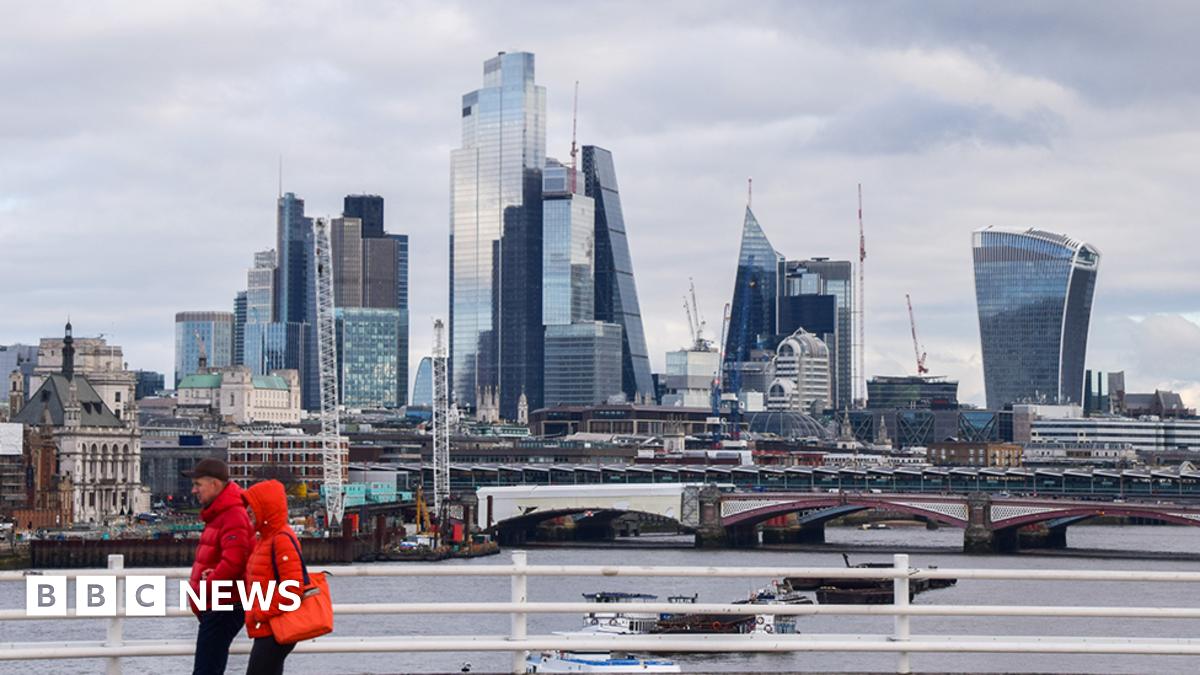
UK expected to be only major economy to shrink in 2023 - IMF
Even sanctions-hit Russia is expected to grow this year, but the IMF says the UK is "on the right track".www.bbc.co.uk
Proof, if needed that over-reliance on the global "free market" has been an unmitigated disaster.
Eh? So you're claiming that market capitalism and the free market is a disaster because the forecast (not an actuality, just a forecast) for just one year (out of 40 years) predicts that in that one year, the UK will perform worse than other countries that, for the most part, also have economies based on market capitalism?
Spot the multiple logical flaws in that reasoning

Everyone needs to have a few thousand saved up regardless of your age to pay for unexpected expenses. A lot of people retiring in their 50s have a net worth excluding housing of at least a quarter of a million. Obviously people living "pay cheque to pay cheque" won't retire early, if ever. That includes a lot of people who have earned a good salary most of their lives but have been unable to resist high spending.
I should think there are a lot of people in this position. It will be those who (singly or in combination) have paid off their mortgage in their 40s, those without children, those in management positions for a longish period (even more likely if both partners), inherited money from parents/relatives etc etc. and who have not blown it on a hedonistic lifestyle. A lot more than you may think!
It wasn't that difficult for anyone earning over or near to the higher rate income tax threshold, especially for those without children (children are VERY expensive). Astute financial players could leverage by investing money borrowed against their main property. And even if not taking that risk, small amounts of monthly savings build into a big portfolio if invested wisely. There was a lot of capital growth to be had in the 1990s, and shrewd investment is all tax free through PEPs, TESSAs and ISAs. Allegedly there are PEP millionaires purely on the growth in their 1990s PEP investments.Converted into income, that's £250k is only £10k per year...
The big financial risk for retired people isn't pension provision it is social care costs. Anyone needing social care needs to be either very rich or very poor.
Getting back to the original topic, one issue is how to get those people to spend their money in ways that benefit the UK economy. Anecdotal evidence suggests that lots of it gets spent on foreign travel, which doesn't help the UK economy very much.
Last edited:
Bletchleyite
Veteran Member
Whilst the cars could be at basement level, this is going to be more costly than above ground construction. As such unless there's limits on building envelope size, there's a good chance you could build bigger flats for less cost.
Or what you do is sell the parking spaces separately from the flats, allowing those who want one to pay for one and those who don't not to.
I would have thought this about myself, but then I stumbled upon two with property portfolios of 3 and another of one 'buy to let'. Another means of amassing some capital has been to get a payoff from work (redundancy etc) and then immediately walk into another job. Plenty of that happened. Obviously the older you are, the more likely! Also work for a few years in the Gulf; another with spouse as well paid public school teacher with house included - blood money during term, but good for wealth creation! I am sure others can come up with other scenarios. Lots of money about!Still rather hard to believe (not denying it, just very surprised). I don't live a particularly hedonistic lifestyle, I have decent pay, but I am a long, long way from being worth £250,000 - even if I sold my property and someone gave me a free place to live!
And certainly none of the people I mix with would have this kind of money either!
And certainly none of the people I mix with would have this kind of money either!
Anyone with a defined benefit pension of £10k per annum or more has that kind of money - albeit it that they may not see it that way
A lot of long-serving railway workers (not just drivers) will have significant pension value
That's not really anything that affects UK plc performance though.Car parking spaces each take up a minimum of 10m2 (plus the access road, so at least 17.5m2), that's quite a lot of space.
To put it in perspective the London Plan requires a master bedroom is at least 11.5m2. As such for every car parking space provided you could build a +1 sized flat (i.e. a 2 bed could be a 3 bed). Actually it could be possible to go from a 2 bed flat with double bedrooms to one with 4 bedrooms if two exceed the minimum for single bedroom sizes.
Whilst the cars could be at basement level, this is going to be more costly than above ground construction. As such unless there's limits on building envelope size, there's a good chance you could build bigger flats for less cost.
Of course if someone is willing to pay over the odds for their home and for their travel costs (see my previous post about a likely cost of £2,000 a year of car ownership) then that's fine, however local policy is going to make it very hard for them to have a parking space within their building in a location where there's likely to be an interchange tube station (up to 960m away) as well as lots of buses (up to 480m) within a short walk.
As a micro change, though, and as your post is indicative of, a great benefit would be for London policy to be kept in London. The issues you're talking about are London issues only. Creating national policy on London circumstance causes all sorts of problems elsewhere.
It wasn't that difficult for anyone earning over or near to the higher rate income tax threshold, especially for those without children (children are VERY expensive). Astute financial players could leverage by investing money borrowed against their main property. And even if not tasking that risk, small amounts of monthly savings build into a big portfolio if invested wisely. There was a lot of capital growth to be had in the 1990s, and shrewd investment is all tax free through PEPs, TESSAs and ISAs.
If we had 2 kids I reckon that we could have (due to inheritance coming to us in my early 40's from grandparents) probably got to near zero mortgage by the time I was 50, even though we first brought our first house in 2010 (anyone earlier than 2000 would have probably found it easier still to pay it off).
However having to increase the size of our house due to there being more than 2 children means that is now impossible.
Having said that, we are likely to be able to down size at a later date (as long as our children can afford to move out), so as long as house prices haven't fallen we'll get a decent amount of the extra mortgage payments back.
Or what you do is sell the parking spaces separately from the flats, allowing those who want one to pay for one and those who don't not to.
Realistically parking spaces cost about 1/4 of the floor space of a 2 bed flat, whilst flats will have extra fittings pushing the costs up, most car parking spaces cost the developer more than they benefit from selling them (obviously for some not having any space would mean not buying that property so they are worth building) this is the same with garages with houses, of the cost was spent on more house space rather than a garage it's likely that they would get more for it (again some just wouldn't buy the house without a garage, so it does have some benefit - just not as much as if they could use that build cost to build a bigger house or other houses).
Bletchleyite
Veteran Member
Realistically parking spaces cost about 1/4 of the floor space of a 2 bed flat
Though put underground they don't, because they're using space that nobody would even countenance living in.
this is the same with garages with houses
Garages are an odd one as hardly anyone ever puts cars in them. A properly secure "front shed" for bicycles and junk, much smaller than a garage (maybe a third of the size of a typical single garage?), would suit most people just as well, yet the incredibly conservative housebuilding industry never does such things.
To be fair increasingly these days it's just allocated parking in a communal area round the back.
That's not really anything that affects UK plc performance though.
As a micro change, though, and as your post is indicative of, a great benefit would be for London policy to be kept in London. The issues you're talking about are London issues only. Creating national policy on London circumstance causes all sorts of problems elsewhere.
I never said that it was viable outside of London (or even outside of highly accessable locations within London).
However there are benefits on reducing our reliance on cars (in part due to the cost of fuel and the cars - much of which is money which can end up overseas). For example if we could use less oil than we extracted from the North sea we could earn money from other countries.
Though put underground they don't, because they're using space that nobody would even countenance living in.
However putting them underground is more costly than above ground construction. However there's also other things which can go below ground (gyms, storage, bin stores, etc.). Likewise is possible to have living spaces partly underground (i.e. having high level windows, say 400mm high) - there's plenty of examples of this across the country. Again this could be utility rooms, bedrooms (even if these are just guest bedrooms), storage spaces, bathrooms, etc.
DynamicSpirit
Established Member
Though put underground they don't, because they're using space that nobody would even countenance living in.
Building stuff underground is pretty expensive though. Getting back to the topic of this thread, if you want ways to make the UK better off, then one part of that is that you need efficient ways of improving people's standards of living. If, in order to enable people to keep using cars, you have to go to the massive expense of building underground car parks, then you have to ask whether it might be more efficient to - ummm - provide better public transport instead

HSTEd
Veteran Member
- Joined
- 14 Jul 2011
- Messages
- 20,343
Underground garages don't consume huge quantities of labour.Building stuff underground is pretty expensive though. Getting back to the topic of this thread, if you want ways to make the UK better off, then one part of that is that you need efficient ways of improving people's standards of living. If, in order to enable people to keep using cars, you have to go to the massive expense of building underground car parks, then you have to ask whether it might be more efficient to - ummm - provide better public transport instead
Extant UK public transport systems do.
Given that we no longer have an unlimited supply of cheap migrant labour to exploit, employing people to run things long term is very expensive compared to building things.
Buses will require huge labour requirements, extant rail systems require large quantities of strongly unionised labour......

Eh? So you're claiming that market capitalism and the free market is a disaster because the forecast (not an actuality, just a forecast) for just one year (out of 40 years) predicts that in that one year, the UK will perform worse than other countries that, for the most part, also have economies based on market capitalism?
Spot the multiple logical flaws in that reasoning
Yes it is, we've been bumping along the bottom for years because we've entrusted all of our basic needs to some fluffy concept called "the market" instead of securing our supply chains and looking after our strategic interest.
DynamicSpirit
Established Member
Underground garages don't consume huge quantities of labour.
Once they are built, no, but building them will require huge quantities of labour.
Extant UK public transport systems do.
Cars arguably require even more labour than public transport per person-mile travelled, if you take into account the work done by the motorist in actually driving - compared to, if you're on a bus or train you don't have to do anything and can (within some limitations, and provided the train isn't too crowded and you have a seat etc.) treat the time as leisure time. Of course time spent by the motorist driving tends not to be assessed because no-one else is paying a salary for it.
Bletchleyite
Veteran Member
Cars arguably require even more labour than public transport per person-mile travelled, if you take into account the work done by the motorist in actually driving - compared to, if you're on a bus or train you don't have to do anything and can (within some limitations, and provided the train isn't too crowded and you have a seat etc.) treat the time as leisure time. Of course time spent by the motorist driving tends not to be assessed because no-one else is paying a salary for it.
Other than a de-minimis purchase such as a book or movie rental, people sitting on trains don't generally make much for the economy, though. A few people do productive work on trains, but most people don't. And people in cars might spend similar money, such as on an e-book or on music to listen to.
The time isn't assessed because it isn't valuable time - people wouldn't be working and earning if they weren't doing it, other than for business travel, and to be honest most business travellers don't do much work on the train either.
Basement flats exist. People buy them.Though put underground they don't, because they're using space that nobody would even countenance living in.
Bletchleyite
Veteran Member
Basement flats exist. People buy them.
They're certainly not desirable, with a lack of natural light and often a serious damp problem. They are tolerated in London because of the housing crisis. They don't really provide acceptable housing.
They're also generally "a floor and a half" because of the traditional tendency to build houses so the front door was a step up of about 2 feet, because that brought prestige. In modern buildings you just make it half a storey higher and nobody has to live in those conditions, and your access is level and wheelchair accessible to boot.
Also, I don't think I ever saw a -2 or -3 basement flat. Parking can go there.
DynamicSpirit
Established Member
Also, I don't think I ever saw a -2 or -3 basement flat. Parking can go there.
If you're going to go that kind of route, I imagine it would be cheaper to just put a car port at ground level and build the houses/flats on top of it, going up a bit higher instead. Also much easier to manage any flood risk, and you don't have to use up land building a ramp to get the cars from street level down to the -2 level.
Personally I'd still prefer we just did more do encourage people to use public transport and deter people from driving though. Most of our cities are still chocking/clogged up under too car journeys.
Bletchleyite
Veteran Member
If you're going to go that kind of route, I imagine it would be cheaper to just put a car port at ground level and build the houses/flats on top of it, going up a bit higher instead. Also much easier to manage any flood risk, and you don't have to use up land building a ramp to get the cars from street level down to the -2 level.
To be fair, yes, for houses this is a good model - build a 2 storey house to 3 storeys with a carport and utility/bicycle room on the ground floor. Lots of houses of that design in the 1970s stock in Milton Keynes, many including desirable features from flats e.g. a reasonable balcony to the lounge as well as house features like a garden. Does also work for flats.
To be fair this is probably best described as a sink estate, hence the junk lying around, but:
Google Maps
Find local businesses, view maps and get driving directions in Google Maps.
 www.google.com
Personally I'd still prefer we just did more do encourage people to use public transport and deter people from driving though. Most of our cities are still chocking/clogged up under too car journeys.
Certainly public transport, cycling and walking should be promoted and improved to make them the modes of choice for journeys within urban areas, but not all journeys are within urban areas even if you live in one, and the uncertainty of car clubs doesn't suit everyone, though I do think they're a great idea and will allow many households to go from two cars to one. (And "traditional" hire companies are shysters).
Legal methods for collecting unpaid debt assume that the person has the money. If forfeiture isn’t an option, how does the debt ever get reclaimed from someone who resides in the property without paying service charges and who, bluntly, can’t afford them?ban forfeiture entirely (there are perfectly good legal methods for collecting unpaid debt)
I understand that it’s not great to take someone’s home from them, but it’s also unacceptable to increase the charges on other leaseholders, which in any case may not even be possible depending on lease wording (many leases allows only a fixed percentage of specific costs incurred to be recharged, leaving the development unfunded).
I totally agree with the intentions behind disallowing forfeiture, but unless another solution is found to the impact on other leaseholders I don’t think it can be removed. (I would support its immediate removal for things like ground rent by the way, that’s easy; it’s service charges that are the pickle).
Bletchleyite
Veteran Member
Legal methods for collecting unpaid debt assume that the person has the money. If forfeiture isn’t an option, how does the debt ever get reclaimed from someone who resides in the property without paying service charges and who, bluntly, can’t afford them?
Some form of charge on the property might be an option, which could then be enforced through the Courts. That could still result in the home being seized and sold, but they would only lose the part of its value that was necessary to pay the debt.
Ground rent should be abolished. There is no case for it to exist at all in any circumstances whatsoever; the profit is made by selling the leases. The similar rentcharges on freeholds I believe will all be extinguished in (I think) 2030.
In essence, leasehold or its replacement should mean you actually own the flat and what is inside it, and a proportionate (by some legally defined means, possibly square metrage?) amount of the physical building.
Peter Sarf
Established Member
Couple of things I want to note.
Lets not forget houses. Not everyone is going to live in a flat.
We have spent the last 60 years becoming dependant on the car. Town centres are no longer the "centre" for shopping etc so public transport cannot support the travellers needs as the shops etc are dotted about predominantly out of town. People work further from home or live further from work than they used to 60 years ago. People have developed the attitude that they can go into the countryside - travel that is no longer the preserve of the rich (perhaps also the middle classes).
Radical idea is for councils to provide free parking in town centres otherwise the level of business done there will be so low that the town centre will no longer be viable. Keeping the town centres viable will ensure there is somewhere for the public transport to serve. Then look at discouraging car use WITHOUT driving shoppers etc from the town centres (carrot or stick). This is something I see as a problem with Croydon and now even the bus routes are being diverted away from near the centre by bicycle lanes. The bicycle lanes are underused which I am amazed at - there were a lot more buses than bicycles and each bus carries many passengers. I think Croydon has passed the point of no return in that respect and is now about to implode.
Lets not forget houses. Not everyone is going to live in a flat.
We have spent the last 60 years becoming dependant on the car. Town centres are no longer the "centre" for shopping etc so public transport cannot support the travellers needs as the shops etc are dotted about predominantly out of town. People work further from home or live further from work than they used to 60 years ago. People have developed the attitude that they can go into the countryside - travel that is no longer the preserve of the rich (perhaps also the middle classes).
Radical idea is for councils to provide free parking in town centres otherwise the level of business done there will be so low that the town centre will no longer be viable. Keeping the town centres viable will ensure there is somewhere for the public transport to serve. Then look at discouraging car use WITHOUT driving shoppers etc from the town centres (carrot or stick). This is something I see as a problem with Croydon and now even the bus routes are being diverted away from near the centre by bicycle lanes. The bicycle lanes are underused which I am amazed at - there were a lot more buses than bicycles and each bus carries many passengers. I think Croydon has passed the point of no return in that respect and is now about to implode.
I think this is trying too hard to justify eradicating cars. None of it is an ecological problem or a problem for the economy.Part of the issue is that parked cars take up highway space (I would say road space but too often they are parked partway across footways), in many urban streets this results in a single track road for traffic to use.
This massively restricts what can use those streets. They aren't great for cycling along, as other cars can't get past and so get grumpy when they meet a cyclist, when there's two cars going in opposite directions they need to find a gap to pass (sometimes only available at junctions).
Likewise, especially if there's parking of the footways, it doesn't make for a great walking route either. However even if they aren't parked on the footway then just the car being parked right next to the kerb restricted the available footway width (as typically any first with a vertical feature (wall, fence, hedge, parked car, etc.) feels about half a metre narrower than one alongside a grass verge, when the footway is 1.8m that can feel quite narrow. If a car parks 0.25m into it then it ends up feeling about 1m wide, when typically a person needs about 0.6m of width to walk in.
Trouble is the North Sea oil is heavy crude that predominantly refines down to heavier fuel (like diesel). But we need to import lighter oil from the Middle East to refine down to petrol. There is less demand for the UKs kind of crude oil.I never said that it was viable outside of London (or even outside of highly accessable locations within London).
However there are benefits on reducing our reliance on cars (in part due to the cost of fuel and the cars - much of which is money which can end up overseas). For example if we could use less oil than we extracted from the North sea we could earn money from other countries.
Developing underground has costs and where does all the dirt removed go ?. Plus flooding is a growing issue so I would not be interested in a house or flat that had space near or below ground level. As others have said - house one storey up with level access to the garage.However putting them underground is more costly than above ground construction. However there's also other things which can go below ground (gyms, storage, bin stores, etc.). Likewise is possible to have living spaces partly underground (i.e. having high level windows, say 400mm high) - there's plenty of examples of this across the country. Again this could be utility rooms, bedrooms (even if these are just guest bedrooms), storage spaces, bathrooms, etc.
Couple of things I want to note.
Lets not forget houses. Not everyone is going to live in a flat.
We have spent the last 60 years becoming dependant on the car. Town centres are no longer the "centre" for shopping etc so public transport cannot support the travellers needs as the shops etc are dotted about predominantly out of town. People work further from home or live further from work than they used to 60 years ago. People have developed the attitude that they can go into the countryside - travel that is no longer the preserve of the rich (perhaps also the middle classes).
Radical idea is for councils to provide free parking in town centres otherwise the level of business done there will be so low that the town centre will no longer be viable. Keeping the town centres viable will ensure there is somewhere for the public transport to serve. Then look at discouraging car use WITHOUT driving shoppers etc from the town centres (carrot or stick). This is something I see as a problem with Croydon and now even the bus routes are being diverted away from near the centre by bicycle lanes. The bicycle lanes are underused which I am amazed at - there were a lot more buses than bicycles and each bus carries many passengers. I think Croydon has passed the point of no return in that respect and is now about to implode.
Most town centre car parks, if they were free, would just be parked in all day by people spending no more than they currently do in 2 hours. However with less turnover of parking fewer people would actually be able to go shopping, harming the shops and making it worse for them.
I think this is trying too hard to justify eradicating cars. None of it is an ecological problem or a problem for the economy.
There's a big difference between having fewer cars and eradicating them. The latter would be impossible. However having fewer would actually make streets a nicer place to be.
For example, try walking down a road where there's a school nearby at pick up/drop off and then walk the same street at the same time during the school holidays and it's almost certainly going to be more pleasant when there's fewer cars.
OK, that's a little unfair (I'll get accused of wanting to eradicate cars again), so how about during walk to school week when the number of parents who drive to school drops off significantly.
Trouble is the North Sea oil is heavy crude that predominantly refines down to heavier fuel (like diesel). But we need to import lighter oil from the Middle East to refine down to petrol. There is less demand for the UKs kind of crude oil.
There maybe less demand, which presumably also means from the UK, which means that we're importing (and so paying a lot to other countries) most of our fuel. Therefore, reducing our oil use would likely still keep more money within our economy rather than being sent overseas.
Developing underground has costs and where does all the dirt removed go ?. Plus flooding is a growing issue so I would not be interested in a house or flat that had space near or below ground level. As others have said - house one storey up with level access to the garage.
If we're building garages at ground floor then you're building a room which otherwise gets very little use. There's a good chance that someone would convert it into a room, especially given there's fairly few rooms in houses 6m x 3m.
On top of that councils would require a 6m setback from the highway to the garage door, so that a car waiting for the garage door to open isn't blocking the highway. That means they more land used up by cars that either restricts the building space at upper levels, or adds to the construction costs without adding building space.
- Status
- Not open for further replies.