MisterSheeps
Member
Very few gradient profiles I have seen have altitude information, even of major summits. It seems as if it could be useful information e.g. freezing level. Why omit it?


What is this regarding? :-/
 very apt smilie. Just curious, line is surveyed, surveyor knows altitude, why not put it on the diagram? Icy rails above e.g. 800feet, but gradient profile Y (altitude) is neither calibrated nor to scale.
Makes sense, thank you ... I didn't think of it in that wayclutter up a diagram
For most of the UK railway system altitude is not high enough to be significant.Very few gradient profiles I have seen have altitude information, even of major summits. It seems as if it could be useful information e.g. freezing level. Why omit it?
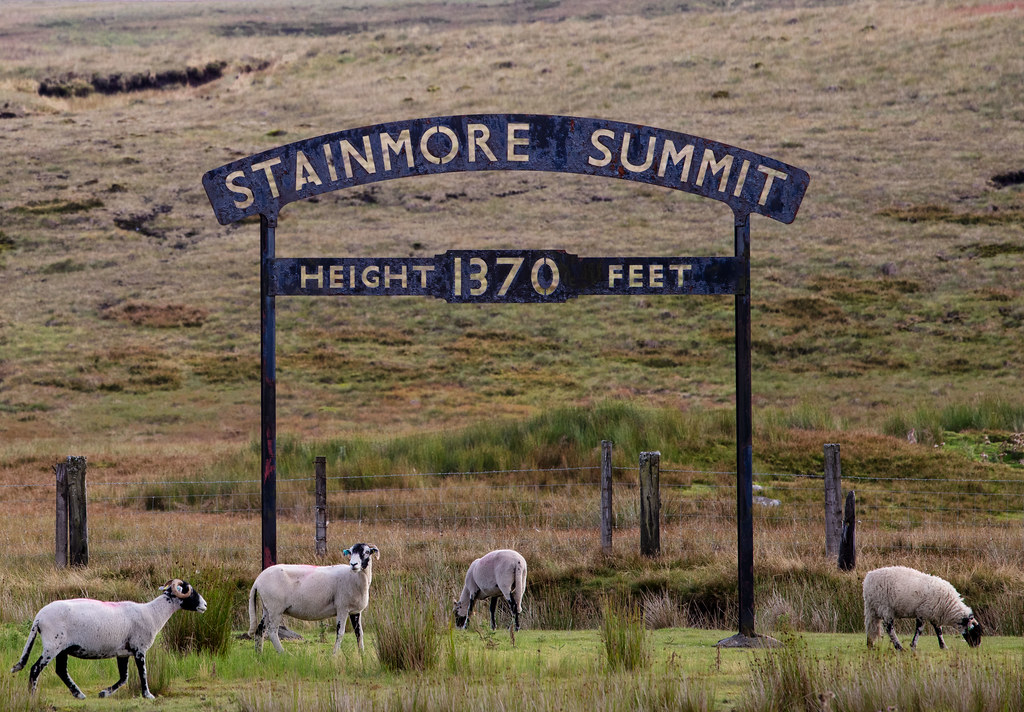
 www.flickr.com
 www.flickr.com

Do train crews get specialised weather forecasts, same as aviation crews? Knowing the expected freezing level on a particular day might be more useful.
I'm not sure how freezing level would help - I imagine it moves so much that it would be effectively useless to display it as a fixed point.
Do train crews get specialised weather forecasts, same as aviation crews? Knowing the expected freezing level on a particular day might be more useful.
I was thinking if the Met Office issued a freezing level then the railway could warn drivers about icy conditions on parts of lines above that level, by reading off the Y scale of the gradient diagram ... I don't know if ice is significant in the way leafmould is; the Southerrn used to de ice conductor rails, have not read if that extends to running rails.I'm not sure how freezing level would help
Interesting ... was it for public use? or internal to the company? I get the feeling the public then were more interested in the travel experience ... I was reading a book on the Bala - Blaenau branch which mentioned a GWR book on the scenery and features to be seen from the train.Midland Railway's 1902 printed book of gradient profiles
I was thinking if the Met Office issued a freezing level then the railway could warn drivers about icy conditions on parts of lines above that level,
Thank you. What do you do then, drive with a view to greater braking distance in mind?My TOC issues ice mode notices
I don't know if ice is significant in the way leafmould is;
That's interesting. Is there anything similar for overhead lines? I seem to recall issues where build up of ice has damaged them?It isn’t at all significant for braking or train handling. “Ice mode” is for third rail units where some traction types, Electrostars for one, can alter their software settings to protect against electrical surges due to ice on the conductor rail (some sub types can also deploy anti icing gel).
That's interesting. Is there anything similar for overhead lines? I seem to recall issues where build up of ice has damaged them?
Thank you. What do you do then, drive with a view to greater braking distance in mind?

Though it can lead to trains being cancelled if the demister stops working, as happened to the 0515 Leeds - Carlisle this morning, as soon as it reached the fog and -7°C at Hellifield!Ice building up on trains doesn’t affect train handling and is far less critical than it is on aircraft, where it can interfere with aerodynamics, and has caused many fatal accidents over the years.


